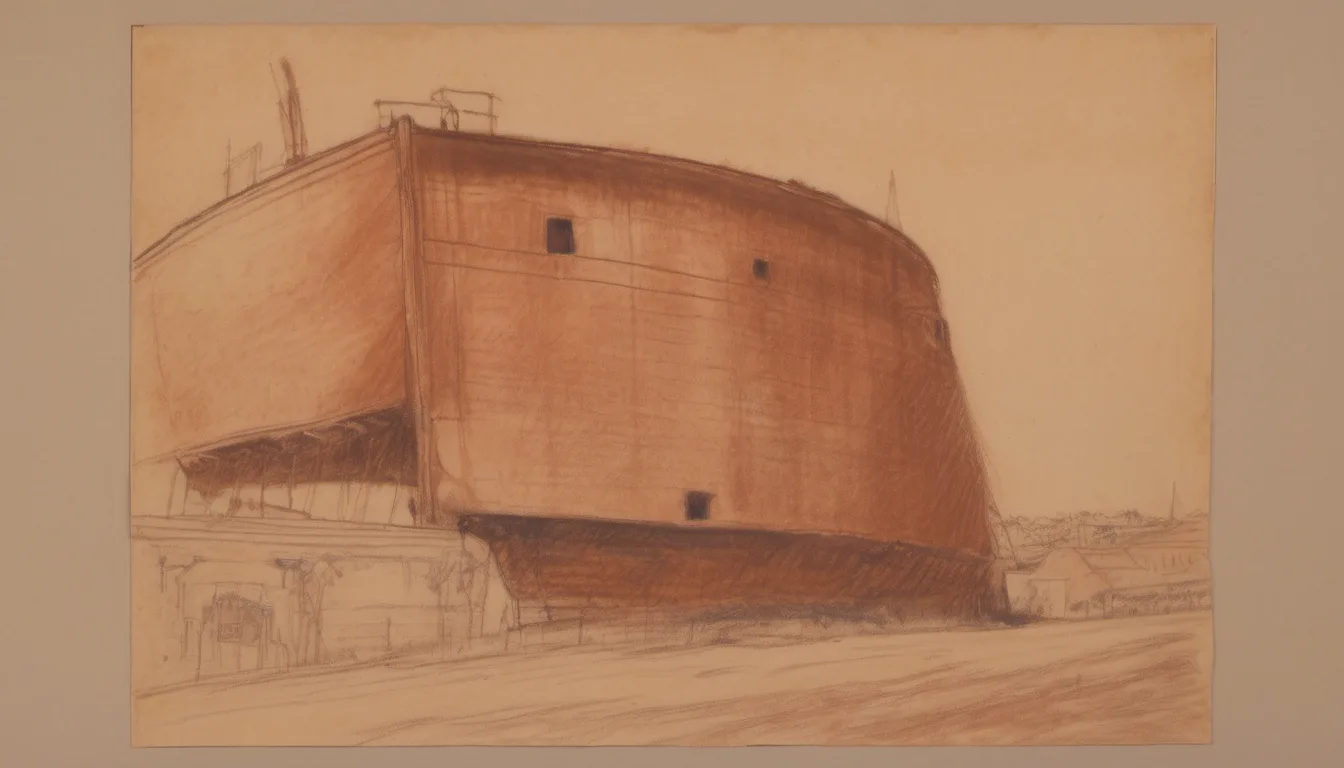
Alexandria, Egypt
Alexandria does not announce itself with the frantic energy of Cairo. It arrives quietly, a ribbon of limestone and salt air stretching along the Mediterranean, where the past is not buried but submerged. To walk here is to move through layers of time, from the Ptolemaic foundations laid by Alexander the Great in 332 BC to the modern silhouette of the Bibliotheca Alexandrina. The city’s identity is defined by its relationship with the sea, which has both sustained and eroded its history.
The singular weight of Alexandria lies in the Phantom of the Pharos. Though the lighthouse itself vanished into the sea floor by 1480, its presence dictates the city’s geography and soul. The Ras el-Tin promontory marks the last remnant of the island of Pharos, the site where the Seven Wonder once stood. Walking the corniche today, you are tracing the path of the Heptastadion, the mole that once connected the island to the mainland, now obliterated by silt and centuries of expansion.
This city rewards the walker who looks down as much as up. In 1994, French archaeologist Jean-Yves Empereur led a team that rediscovered the lighthouse’s remains on the harbor floor, uncovering granite blocks weighing up to 60 tonnes and sphinxes dating to Ramses II. The discovery transformed the harbor from a working port into a submerged museum of sorts, a place where the ancient and modern worlds collide in the water. The city’s narrative is one of loss and recovery, of stone used to build the Citadel of Qaitbay from the ruins of the Pharos.
Walking Alexandria is an exercise in reading the water. The Eastern Harbour holds the secrets of the ancient world, visible only to those willing to dive or look closely at the modern interventions. The 2025 resurfacing of entrance stones aids digital reconstructions, bridging the gap between legend and architectural reality. The city is not merely a destination but a palimpsest, where every street corner hints at the towering structure that once guided mariners for a millennium. It is a place where the sea keeps its promises, slowly reclaiming what was taken, and revealing what was hidden.
Alexandria is a city built on the edge of the world, or at least the edge of the known ancient world. Founded by Alexander the Great in 332 BC on an isthmus opposite the small island of Pharos, it was designed to be a bridge between the Mediterranean and the Nile Delta. The city’s early identity was forged by the Heptastadion, a massive mole spanning over 1,200 meters that connected the mainland to Pharos. This structure created two harbors: the Great Harbour to the east, now an open bay, and the port of Eunostos to the west. Today, the city’s development between the Grand Square and the Ras el-Tin quarter sits atop the silt that has gradually widened and obliterated this ancient connection, leaving only the Ras el-Tin promontory as a fragment of the original island.
The heart of Alexandria’s historical significance is the Lighthouse of Alexandria, or Pharos, a structure that dominated the ancient world for over a millennium. Commissioned by Ptolemy I Soter around 305 BC and completed under his son Ptolemy II Philadelphus in 247 BC, the lighthouse was a marvel of engineering. It took twelve years to build at a cost of 800 talents of silver, using limestone and granite from the Wadi Hammamat quarries. Standing at least 100 meters tall, it was one of the Seven Wonders of the Ancient World and remained one of the tallest man-made structures for centuries. The light was produced by a furnace at the top, with a mirror reflecting sunlight by day and fire by night, guiding ships through the dangerous shallow shoals of the northern African coast.
The architectural details of the Pharos were meticulously recorded by ancient and medieval scholars. Strabo, visiting in the late first century BC, noted an inscription by the architect Sostratus of Cnidus, dedicated to the 'Saviour Gods.' Pliny the Elder and Lucian later debated Sostratus’s role, with Lucian claiming the architect hid his name under plaster bearing Ptolemy’s name, so that when the plaster fell, his true authorship would be revealed. Arab travelers provided some of the most detailed descriptions. Al-Idrisi, visiting in 1154, noted the tower’s three tapering tiers: a square base, an octagonal middle, and a circular top. Abou Haggag Youssef Ibn Mohammed el-Balawi, in 1166, described an internal ramp wide enough for two horsemen, leading to storeys containing dozens of rooms.
The lighthouse’s destruction was a gradual process, driven by the tectonic forces of the African–Arabian and Red Sea Rift zones. Earthquakes in 796, 951, and 956 caused increasing damage, with the 956 quake collapsing the top 20 meters. Repairs included an Islamic-style dome after the statue of Zeus or Poseidon fell. The final blow came from the 1303 Crete earthquake, which had an intensity of VIII+ and originated 280–350 km away. By 1480, the sultan Qaitbay used the remaining stones to build the Citadel of Qaitbay on the site, effectively recycling the wonder into a medieval fort. A legendary tale recorded by al-Mas’udi in the 10th century attributes the collapse to a Byzantine eunuch agent who undermined the foundations while searching for treasure under Caliph Abd al-Malik ibn Marwan, a story that underscores the city’s reputation for intrigue and hidden depths.
For centuries, the Pharos existed only in texts and legends, until 1968 when UNESCO sponsored an expedition led by Honor Frost, who confirmed the existence of submerged ruins. However, the definitive rediscovery occurred in late 1994, when French archaeologist Jean-Yves Empereur and cinematographer Asma el-Bakri explored Alexandria’s Eastern Harbour. Using 35 mm cameras, they captured the first underwater images of scattered columns and statues. Empereur’s team catalogued granite blocks weighing 49–60 tonnes, 30 sphinxes, 5 obelisks, and columns carved during the reign of Ramses II (1279–1213 BC). This work transformed the harbor into a site of active archaeological interest, revealing the scale of the ancient city’s maritime infrastructure.
The physical remnants of the Pharos are now part of a larger underwater museum project. In 2016, Egypt’s Ministry of State of Antiquities announced plans to turn these submerged ruins into a museum, making the ancient harbor accessible to scholars and visitors alike. In 2025, efforts continued with the resurfacing of entrance threshold and foundation stones to aid digital reconstruction. These interventions allow scholars to visualize the lighthouse’s original form, bridging the gap between the fragmented stones on the sea floor and the towering structure that once defined the skyline. The city’s modern identity is thus inextricably linked to this underwater heritage, where the past is not just remembered but physically present beneath the waves.
Alexandria’s urban fabric reflects this layered history. The Ras el-Tin Palace, built in the 19th century on the promontory representing the last remnant of Pharos, stands as a symbol of the city’s royal and political past. The area’s development has been shaped by the gradual silting of the Heptastadion, forcing the city to expand outward. Walking the corniche today, one can trace the path of the ancient mole, now invisible but felt in the layout of the streets and the orientation of the buildings. The city’s architecture is a mix of Ptolemaic, Roman, Arab, and Ottoman influences, with limestone and sandstone dominating the landscape, echoing the materials used in the Pharos itself.
The cultural currents of Alexandria have always been intertwined with its maritime role. As a hub of trade and knowledge, it attracted scholars, merchants, and rulers from across the Mediterranean. The Bibliotheca Alexandrina, a modern revival of the ancient library, stands as a testament to this intellectual legacy. It is a place where the city’s past as a center of learning is honored, even as the physical library of antiquity was lost. The city’s narrative is one of resilience and reinvention, where each era has left its mark, from the statues of Triton on the lighthouse’s corners to the modern digital reconstructions that seek to restore its image.
Legends persist in Alexandria, often tied to its water and its losses. The tale of the Byzantine eunuch who undermined the Pharos to steal treasure speaks to the city’s reputation for hidden riches and political maneuvering. Similarly, the story of Sostratus hiding his name under Ptolemy’s reflects the complex relationships between power and artistry. These stories are not mere folklore but are embedded in the historical record, offering insights into the social and political dynamics of the time. They remind visitors that Alexandria is a place where history is not static but is constantly being reinterpreted and rediscovered.
To walk Alexandria is to engage with a city that is both present and absent. The lighthouse is gone, but its influence remains in the harbor’s layout, the city’s orientation, and the ongoing archaeological efforts to recover its memory. The 1994 discovery by Empereur and el-Bakri marked a turning point, allowing the city to reclaim its ancient heritage in a tangible way. The underwater ruins are a reminder of the fragility of human achievement and the power of the sea to reclaim what is taken. Alexandria invites the walker to look beneath the surface, to see the city not just as it is, but as it was, and as it might be reconstructed in the mind’s eye.