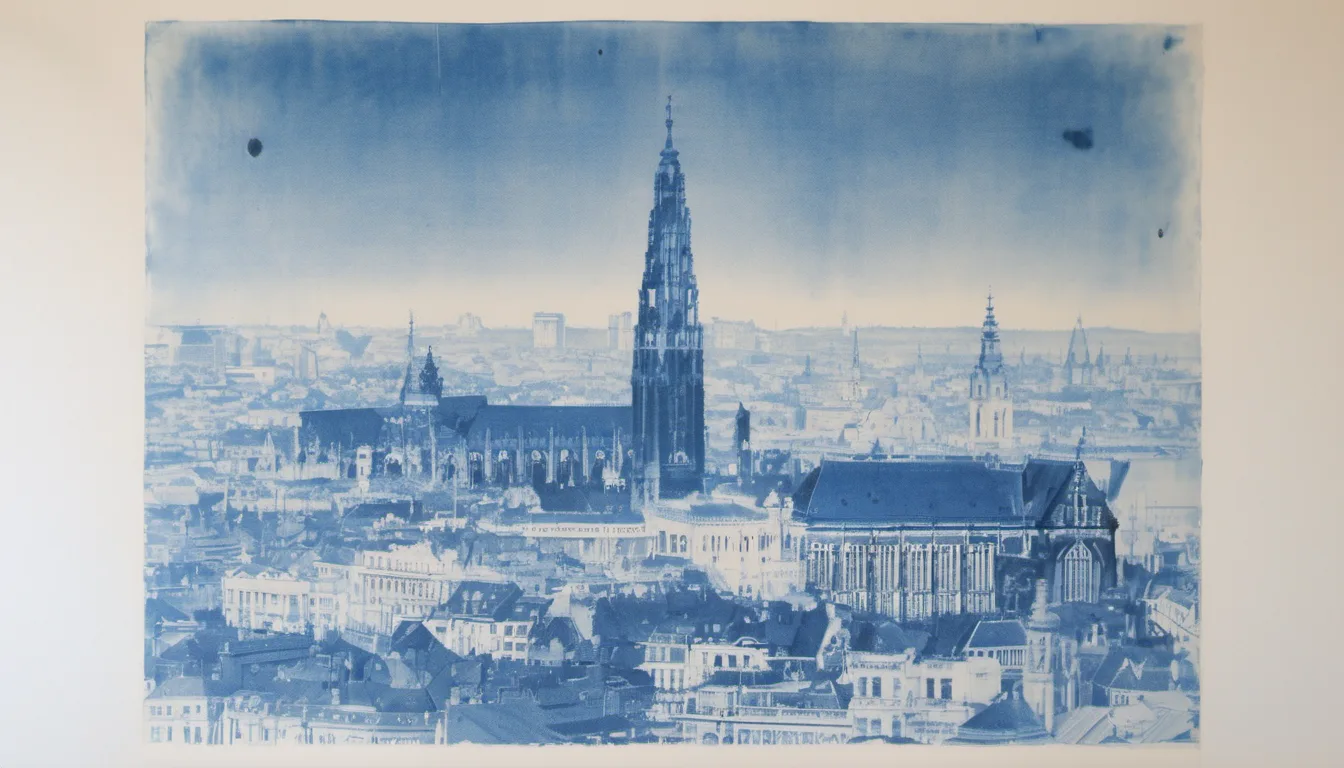
Antwerp, Belgium
Antwerp is not a city that announces itself with fanfare. It is a place of quiet, dense accumulation, where history sits heavily on cobblestones and the air smells faintly of salt, coffee, and polished stone. To walk here is to move through layers of time, from the medieval heart to the modern port that defines its economic pulse. The city does not ask for your admiration; it offers you its substance, expecting you to look closely.
The one thing that makes Antwerp matter is its dual identity. It is simultaneously a historic jewel box of Flemish art and architecture, and a gritty, sprawling industrial engine. The Port of Antwerp-Bruges is the second-largest in Europe, a labyrinth of cranes and containers that contrasts sharply with the Baroque splendor of the Grote Markt. This tension between the ornate and the utilitarian is the city’s defining characteristic. You cannot understand Antwerp by looking at only one side.
Walking the city rewards you with a sense of scale. In the center, you find the Cathedral of Our Lady, housing Rubens’ altarpieces, and the historic diamond district, where light is fractured in shop windows. Outside, the port stretches to the horizon. The walk connects these worlds. You move from the intimate, human scale of the artisan’s workshop to the monumental scale of global trade. It is a physical reminder that beauty and industry are not opposites, but partners in this city’s survival.
There is a specific rhythm to Antwerp. It is slower than Brussels, less polished than Amsterdam, but more intense. The streets are narrow, the buildings lean in, and the history is palpable. You will find yourself lingering in squares, watching the light change on stone facades, or standing by the Scheldt river, watching the massive ships pass. The city invites you to slow down, to observe, and to appreciate the complexity of a place that has been a crossroads of Europe for centuries. It is a city that reveals itself to the patient walker.
Antwerp’s story is written in stone, diamond dust, and steel. To walk its streets is to traverse the history of Europe itself. The city’s origins are rooted in the legend of Brabo, a Roman soldier who cut off the hand of a giant and threw it into the Scheldt river, giving the city its name, *Antwerpen*, from *hand werpen*. Whether fact or folklore, the myth underscores Antwerp’s historical role as a place of conflict and control over the waterways that made it wealthy. For centuries, the Scheldt was the lifeblood of the city, allowing it to become one of the most important trading hubs in the world.
In the 16th century, Antwerp was the capital of the world. It was the center of the spice trade, the diamond market, and the banking system. The wealth generated here funded the Flemish Primitives, artists like Jan van Eyck and Hieronymus Bosch, whose works still hang in the city’s museums. The architecture of this era is still visible in the grand guild houses along the Grote Markt, their facades adorned with intricate carvings and statues. This was a time when Antwerp’s influence stretched from the Americas to Asia, and its cultural output rivaled that of Florence and Venice.
However, the city’s golden age was short-lived. The Siege of Antwerp in 1585, led by the Duke of Parma, marked the beginning of its decline. The Spanish forces cut off the Scheldt, stifling trade and causing many merchants to flee to Amsterdam. The city’s population halved, and it never fully recovered its global dominance. Yet, the scars of this period are visible in the city’s layout and its resilient spirit. The destruction of the cathedral’s spire during the siege is a stark reminder of the violence that shaped the city’s modern identity.
Today, Antwerp has reinvented itself as the diamond capital of the world. The diamond district, with its narrow streets and secure vaults, is a place of intense activity and secrecy. Here, stones are cut, polished, and traded, often without the buyer ever seeing the seller. The city handles a significant portion of the world’s rough diamonds, and this trade has brought immense wealth and a cosmopolitan flair. The Jewish community, particularly from Poland and Russia, has played a crucial role in this industry, adding to the city’s diverse cultural fabric. Walking through the district, you can feel the tension between tradition and modernity, between the old ways of the guilds and the high-stakes world of global finance.
But Antwerp is more than diamonds. It is a city of art, with a rich collection of works by Peter Paul Rubens, the city’s most famous son. His masterpiece, *The Descent from the Cross*, hangs in the Cathedral of Our Lady, and his other works are scattered throughout the city’s museums. Rubens’ influence is seen in the Baroque architecture that defines much of the city center. The city’s museums, including the Royal Museum of Fine Arts and the MUSEUM ANTIQUARIUM, offer a deep dive into the region’s artistic heritage. The city’s commitment to preserving its artistic legacy is evident in the care with which its buildings are maintained.
The Port of Antwerp-Bruges is another defining feature of the city. As the second-largest port in Europe, it is a testament to the city’s enduring importance in global trade. The port’s expansion into the Scheldt river has allowed it to handle larger and larger vessels, from container ships to oil tankers. The industrial landscape of the port, with its cranes and storage tanks, contrasts sharply with the historic center. Yet, this contrast is what makes Antwerp unique. It is a city that embraces both its past and its future, its art and its industry. The port is not just a place of work; it is a source of pride for the city’s residents, a symbol of their resilience and adaptability.
The city’s cultural scene is vibrant and diverse. Antwerp is known for its fashion industry, with the Royal Academy of Fine Arts producing some of the world’s most innovative designers. The city’s fashion week is a major event, attracting buyers and enthusiasts from around the globe. The architecture of the city reflects this creativity, with modern buildings like the Middelheim Museum and the MAS (Museum aan de Stroom) standing alongside historic structures. The MAS, with its distinctive copper-clad facade, is a landmark that symbolizes the city’s blend of old and new. It houses exhibitions on the city’s history and its role in the world, offering a comprehensive view of Antwerp’s identity.
Walking through Antwerp, you will encounter a city that is constantly evolving. The city’s neighborhoods, from the historic center to the trendy district of Zuid, each have their own character. The Zurenborg district, with its Art Nouveau houses, is a testament to the city’s wealth in the late 19th century. The city’s Jewish quarter, around the Meir, is a place of community and tradition, with synagogues and kosher shops. The city’s multicultural population, including significant communities from Turkey, Morocco, and the Middle East, adds to its dynamic atmosphere. The city’s food scene reflects this diversity, with a wide range of cuisines available, from traditional Flemish stews to international dishes.
The city’s relationship with the Scheldt river is central to its identity. The river has been both a blessing and a curse, providing trade routes and protection, but also flooding and invasion. The construction of the Scheldt tunnel and the expansion of the port have changed the city’s relationship with the water, but the river remains a vital part of its life. The waterfront area, with its parks and promenades, is a place for leisure and reflection. The city’s efforts to reconnect with the river, through projects like the Scheldt Park, show a commitment to creating public spaces that are accessible and enjoyable for all.
Antwerp is a city of contradictions, where the old and the new coexist in a delicate balance. It is a place where history is not just preserved, but lived. The city’s residents are proud of their heritage, but they are also forward-looking, embracing innovation and change. The city’s festivals, from the Antwerp Jazz Festival to the Christmas market, bring the community together, celebrating the city’s culture and spirit. To walk through Antwerp is to experience a city that is constantly reinventing itself, while staying true to its roots. It is a city that challenges you to look deeper, to see beyond the surface, and to appreciate the complexity of its history and its present.