Pasul TransRarău
You are standing in the Moldo-Transylvanian Carpathians. The air here is thin and sharp. The Rarău Massif rises around you, a subgroup of the Eastern Romanian Carpathians. The highest peak, Rarău, reaches 1,651 metres. The lowest point drops to 600 metres in the Moldova River valley. You are in the historical region of Bukovina, specifically Suceava County. The landscape is defined by limestone. It is not soft earth. It is hard, ancient stone. The total surface area is approximately 160 square kilometers. You are in a place of verticality. The slopes change the weather. Northern and southern orientations create significant temperature differences. In January, the average is minus 7 degrees Celsius. In July, it is 11.4 degrees. The cold is a constant companion.
Look at the road behind you. The Transrarău road, designated DJ175B, climbs to an altitude of 1,520 metres. This is as far as a car can go. The engine cuts out. The silence takes over. From here, you must walk. The peak is easily accessible on foot via marked trails. The path is not a hike for the faint of heart, but it is not a technical climb. It is a walk through the clouds. The precipitation here is high. The multi-annual average is 909 millimetres. Snow covers the ground for an average of 163 days per year. You are walking on a timeline of ice and stone. The ground is uneven. The limestone formations are picturesque, but they are also sharp. They have been shaped by wind and water over millennia.
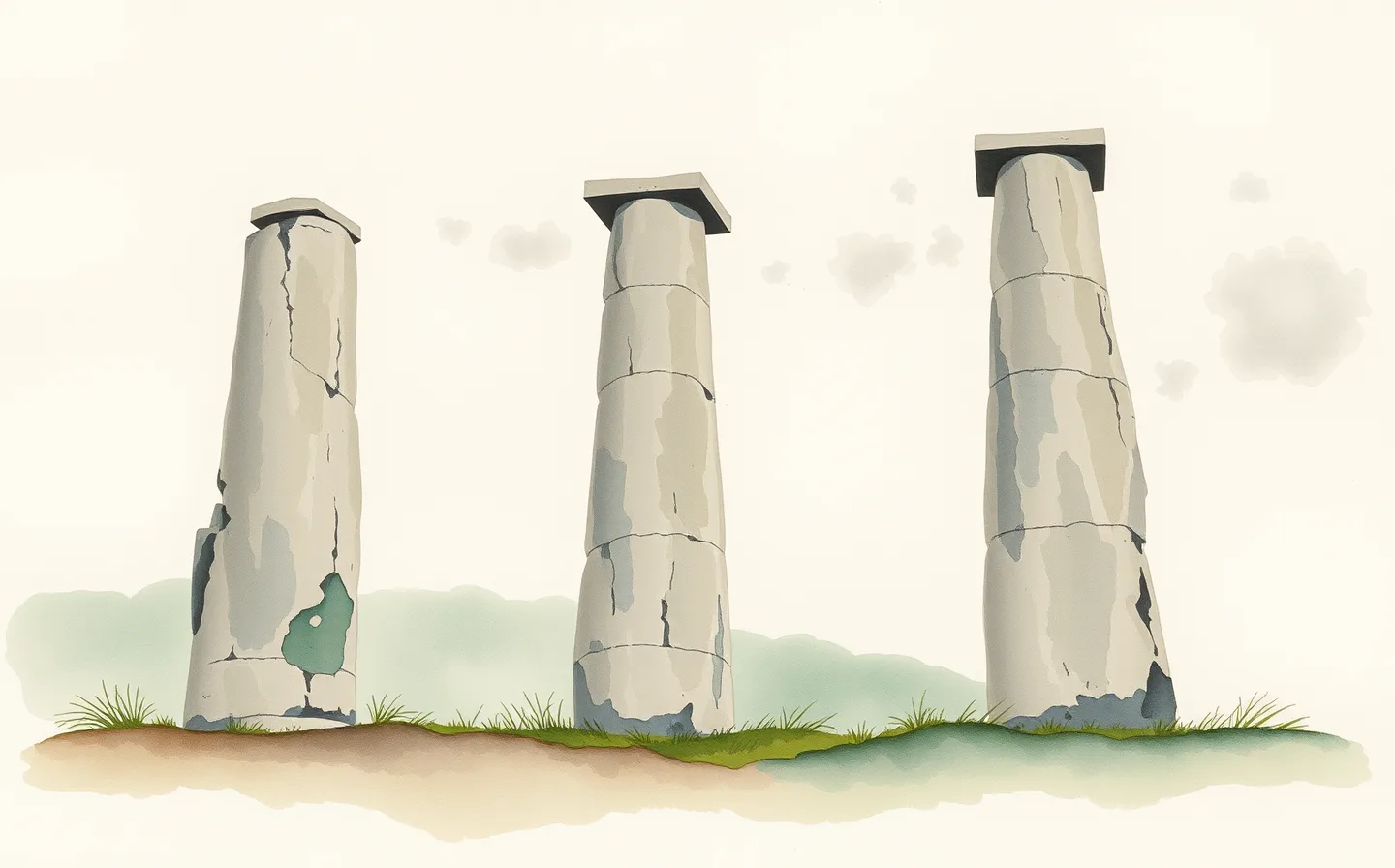
The key feature of this massif is Pietrele Doamnei. This translates to the Lady’s Rocks. They are a group of three large limestone pillars. They stand at a height of 1,400 metres. They are close to the peak, but they are not the highest point. They are the most recognizable. They rise from the ground like broken teeth or ancient monoliths. They are the signature of Rarău. You look at them and you see the geology of the region exposed. They are not built. They are eroded. They are what remains after the softer rock has been washed away. They stand in the wind. They are the landmark that defines the massif for those who know the Carpathians.
There is a legend surrounding these stones, though the source does not detail the myth. The name Pietrele Doamnei suggests a feminine presence. In Romanian tradition, 'Doamna' often refers to a lady, a queen, or a divine figure. The stones are anthropomorphized. They are seen as figures standing guard. You can imagine them as three sisters, or a queen and her attendants. The wind whistling through the gaps between the pillars sounds like voices. This is the local lore. The stones are not just rock. They are characters in the landscape. They give the massif its name and its identity. Without them, Rarău is just a high point. With them, it is a place of story.
The climate here is severe. The Rarău Meteorological Station records the data. The differences between the slopes are significant. The northern slopes are colder. The southern slopes are slightly warmer. But in winter, the difference is minimal. The snow is deep. The 163 days of snow cover mean that for half the year, the massif is white. The limestone turns grey and black under the snow. The pillars are buried. In summer, they emerge. The green of the grass contrasts with the grey of the stone. The temperature in July is cool, 11.4 degrees. It is not a place for sunbathing. It is a place for walking. For breathing. For looking at the horizon. The view from the peak is vast. You can see the valleys of the Moldova and Bistrița rivers. You can see the towns of Câmpulung Moldovenesc and Vatra Dornei. You can see the commune of Pojorâta. You are above them all.
The Rarău Massif is a subgroup of the Moldo-Transylvanian Carpathians. It is located in the Eastern Romanian Carpathians. The geography is specific. It sits in northern Romania, in Suceava County. This is the historical region of Bukovina. The massif is positioned between the valleys of the Moldova and Bistrița rivers. These rivers define the boundaries of the landscape. The total surface area is approximately 160 square kilometers. This is not a small place. It is a significant landform. The highest peak is Rarău itself, with an altitude of 1,651 metres. The lowest altitude is 600 metres, found in the Moldova River valley. This range of 1,050 metres creates a steep vertical gradient. The landscape changes rapidly as you ascend.
The access to this massif is unique. By car, you can reach an altitude of 1,520 metres via the Transrarău road. The road is designated DJ175B. This is a high mountain pass. It is one of the highest paved roads in the region. The drive takes you up into the clouds. The air becomes thinner. The vegetation changes. The trees disappear. The rock is exposed. At 1,520 metres, the road ends. You must park. You must walk. The peak is easily accessible on foot on marked trails. The walk is short, but the elevation gain is significant. You are walking to the top of the world, in this corner of Romania. The trail is well-defined. It is not a scramble. It is a walk. But the terrain is limestone. It is hard and uneven. The footing can be tricky. The wind is strong at this altitude. You feel the exposure.
The defining feature of the Rarău Massif is its limestone formations. The rock is picturesque. It is sculpted by nature. The most famous formation is Pietrele Doamnei. This translates to the Lady’s Rocks. It is a group of three large limestone pillars. They are located at a height of 1,400 metres. They are close to the peak, but they are not the summit. They are the landmark. They stand out against the sky. They are vertical. They are massive. They are the result of erosion. The softer rock has been washed away by rain, snow, and ice. The harder limestone remains. These pillars are the bones of the mountain. They are exposed to the elements. They are battered by the wind. They are covered in snow for 163 days a year. They emerge in the summer, grey and stark against the green grass.
The climate of the Rarău Massif is harsh. The Rarău Meteorological Station provides the data. The average temperature in January is minus 7 degrees Celsius. This is cold. The snow is deep. The average temperature in July is 11.4 degrees Celsius. This is cool. It is not hot. The summer is short. The precipitation is high. The multi-annual average is 909 millimetres. This is a wet place. The rain falls heavily. The snow falls heavily. The humidity is high. The clouds are low. You are often walking in the mist. The visibility can be poor. But when the sky clears, the view is spectacular. You can see the valleys below. You can see the rivers. You can see the towns. The contrast between the high, cold peak and the low, warm valleys is striking. The temperature differences between the slopes with northern and southern orientation are significant in winter. In summer, the differences are minimal. The sun warms the rock, but the air remains cool.
The location of the massif is central to the region. It is between the Moldova and Bistrița rivers. These rivers are major waterways in Bukovina. They flow through the Carpathians. They carve deep valleys. The towns of Câmpulung Moldovenesc and Vatra Dornei are the closest population centers. They are at the base of the massif. The commune of Pojorâta is also nearby. These towns are gateways to the mountains. They are places where people live and work. They are not tourist traps. They are real communities. The people here know the mountain. They know the weather. They know the trails. They respect the power of the landscape. The massif is not just a place for tourists. It is part of the local identity. It is a place of work, of play, of memory.
The limestone pillars of Pietrele Doamnei are the subject of local legend. The name suggests a feminine presence. 'Doamna' means lady. It can refer to a queen, a noblewoman, or a divine figure. The stones are seen as figures. They are anthropomorphized. They are given human characteristics. The wind whistling through the gaps between the pillars is heard as voices. This is the local lore. The stones are not just rock. They are characters. They are part of the story of the mountain. The legend adds a layer of meaning to the landscape. It transforms the geology into mythology. It makes the place sacred. It invites interpretation. You look at the stones and you see faces. You see stories. You see the past. The legend is not documented in the source, but the name implies it. The name is the clue. The stones are the Lady’s Rocks. They belong to a lady. Who is she? The answer is in the wind.
The geology of the Rarău Massif is complex. The limestone is ancient. It was formed in the sea. The Carpathians were once underwater. The sediment accumulated over millions of years. The pressure turned it into rock. The tectonic forces lifted it. The erosion shaped it. The result is a landscape of peaks and valleys. Of pillars and caves. Of sharp edges and smooth surfaces. The limestone is porous. It absorbs water. It freezes and thaws. It cracks. It breaks. The pillars are the survivors. They are the strongest. They are the most resistant. They are the monuments of the mountain. They stand as a testament to the power of nature. They are a reminder of the age of the earth. They are a connection to the deep past. They are a window into the geological history of the region.
The accessibility of the massif is a key feature. The Transrarău road allows cars to reach 1,520 metres. This is unusual for a mountain peak. Most peaks require a long hike from the valley. Here, you can drive most of the way. This makes the peak accessible to a wider range of people. It is not just for hikers. It is for families. For photographers. For anyone who wants to see the view. The road is well-maintained. It is safe. It is scenic. The drive is part of the experience. The views from the road are stunning. You see the valleys unfolding below. You see the clouds rolling in. You feel the altitude. The road ends at the parking area. From there, the trail leads to the peak. The walk is short. It is manageable. It is rewarding. The effort is minimal. The reward is maximal. The view from the top is worth the drive. The view from the pillars is worth the walk.
The meteorological data from the Rarău station is precise. The average temperature in January is minus 7 degrees Celsius. The average temperature in July is 11.4 degrees Celsius. The precipitation is 909 millimetres per year. The snow cover lasts 163 days. These numbers define the climate. They are not just statistics. They are the reality of life on the mountain. They determine the vegetation. They determine the animal life. They determine the human activity. The cold is a factor. The wet is a factor. The wind is a factor. The mountain is a place of extremes. It is a place of challenge. It is a place of beauty. The data is a guide. It helps you prepare. It helps you understand. It helps you appreciate. The numbers are the language of the mountain. They are the facts. The legends are the poetry. Both are true. Both are necessary.
The Rarău Massif is a place of contrast. High and low. Hot and cold. Wet and dry. Ancient and modern. Natural and human. The limestone pillars stand as a symbol of this contrast. They are natural, but they have a human name. They are ancient, but they are accessible by modern road. They are cold, but they are visited in summer. They are remote, but they are close to towns. They are silent, but they speak through the wind. They are simple, but they are complex. They are a place of many layers. They are a place of depth. They are a place of meaning. You come to Rarău to see the view. You stay for the feeling. You leave with a story. The story is yours. The mountain is the setting. The pillars are the characters. The wind is the voice. The snow is the blanket. The rock is the stage. You are the actor. You are the witness. You are the visitor. You are the one who stops. You are the one who looks. You are the one who listens. You are the one who remembers.
The view from the peak is the final reward. You look out over the Moldo-Transylvanian Carpathians. You see the valleys of the Moldova and Bistrița rivers. You see the towns of Câmpulung Moldovenesc and Vatra Dornei. You see the commune of Pojorâta. You see the landscape of Bukovina. It is a vast panorama. It is a sweeping vista. It is a moment of clarity. The air is clear. The light is bright. The colors are vivid. The green of the valleys. The grey of the rocks. The white of the clouds. The blue of the sky. It is a painting. It is a photograph. It is a memory. It is a moment. It is a place. It is Rarău. It is the Lady’s Rocks. It is the mountain. It is the end of the road. It is the beginning of the story. You stand there. You breathe. You look. You feel. You are alive. You are here. You are now. This is the walk. This is the point. This is the reason to stop.