Abbazia di Pomposa
The abbey where Guido d'Arezzo invented musical notation and got run out for it. Pomposa stands on what was once an island, walled in by the waters of the Po di Goro, the Po di Volano, and the Adriatic itself, on the marshy edge of the Ferrara plain. Monks are thought to have settled the site during the Lombard period, in the wake of the sack of Classe, Ravenna's port, in 574 — though the first solid record of a Benedictine house here dates only to 874, a letter from Pope John VIII to Emperor Louis II. By then, Pomposa was already producing sophisticated Carolingian art.
What the monks built here mattered far beyond the marsh. Pomposa's library became one of the richest Carolingian repositories anywhere, and its cartulary — the abbey's record of properties — stretched across the whole of Italy, including a saltworks at Comacchio, until the 14th century. A letter from around 1093 lists what its abbot Girolamo had copied or acquired for the shelves: Horace, Virgil's Georgics, Juvenal, Persius, Quintilian, Terence, Cicero's De officiis and De oratore, an abridgement of Livy, and the Mathematica of Julius Firmicus Maternus. Scribe monks, not swords, were what made Pomposa's name.
Its strangest legacy came from a single frustrated monk. In the early 11th century, Guido d'Arezzo devised here the system of notation still used to read music today, and gave the notes their names. His fellow Benedictines did not thank him for it: his strict, innovative method drew such hostility from suspicious brothers that he was forced to leave Pomposa, taking refuge with the bishop of Arezzo, Teodaldo. The abbey's other resident scholar fared better — Peter Damian stayed two years in the 1040s, brought in to instruct the monks.
By 1026 the abbey had been rebuilt to the scale you see now, consecrated by its own abbot Guido, with a narthex added by the Ravenna-trained architect Mazulo. But the geography that had sheltered Pomposa turned against it. The Po shifted course in 1152, the coastline retreated, and malaria crept through the lower Po Valley; the surrounding land grew poorer, and the abbey with it. By 1650 the monks had migrated to Ferrara, leaving Pomposa empty. It passed to a Ravenna family in 1802, then to the Italian state by the century's end.
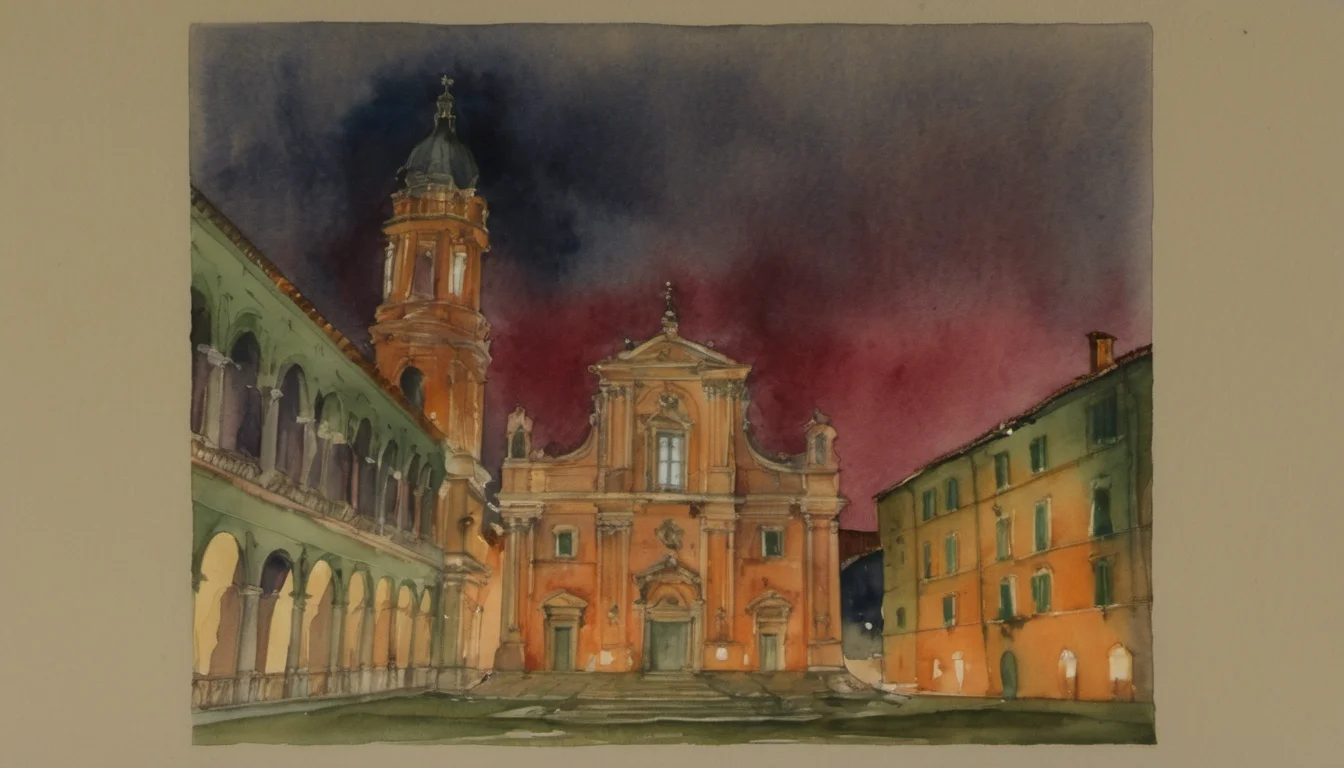
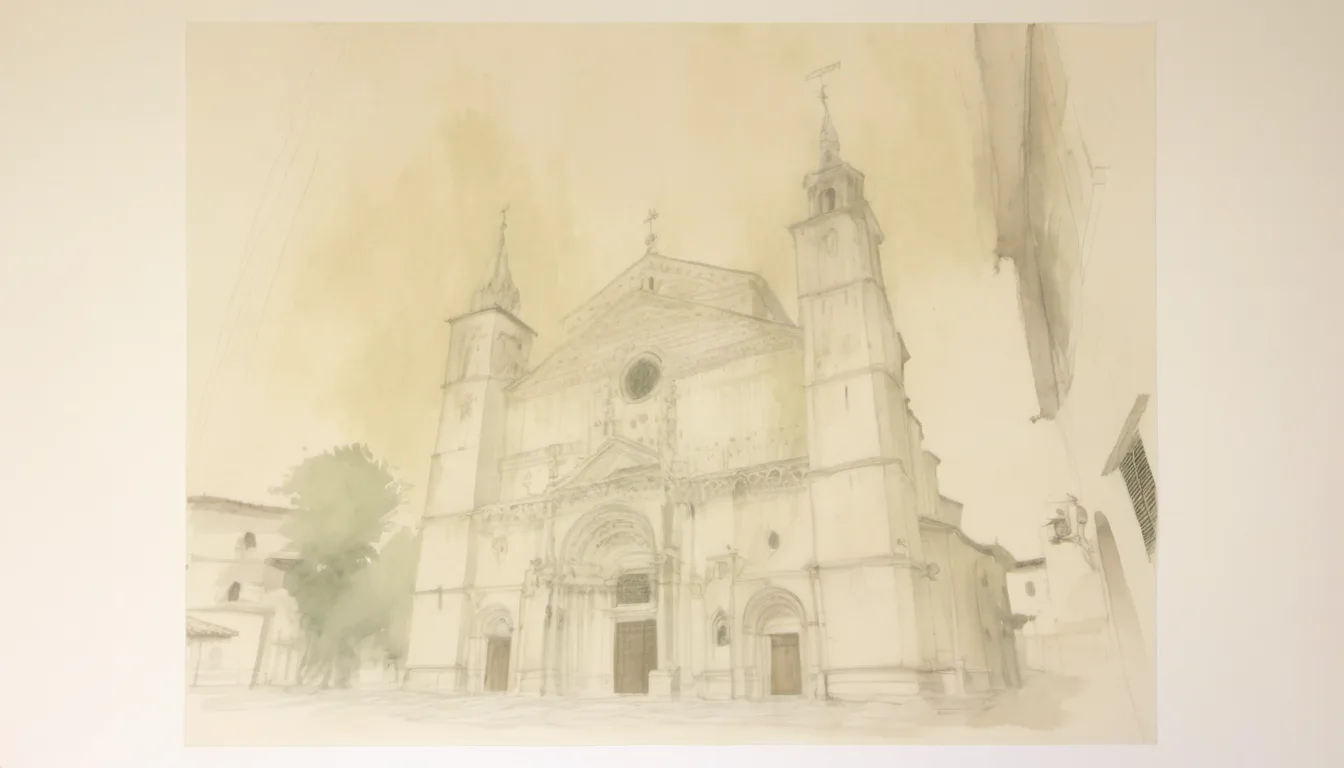
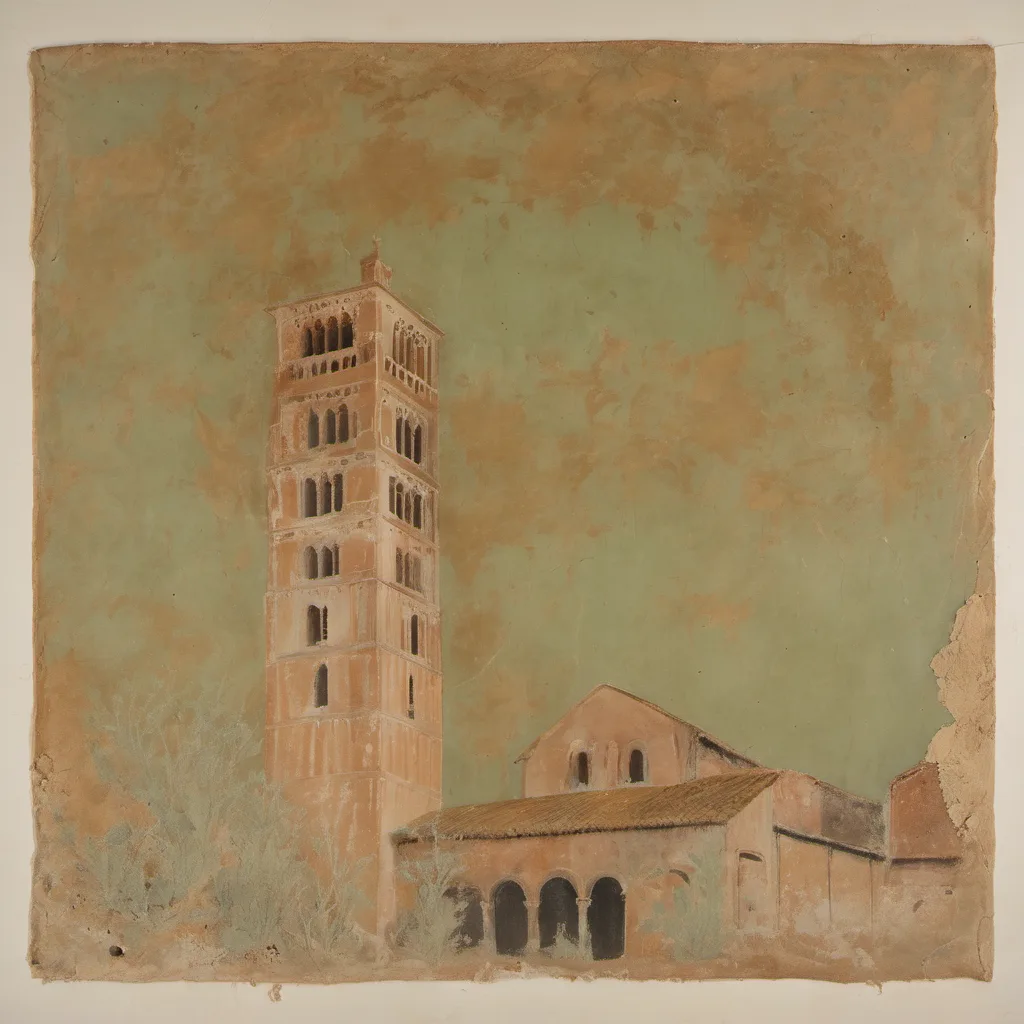
What survives is a triple-nave Ravennate basilica with an 11th-century atrium of terracotta friezes — Persian griffins, Syriac ribboned borders, a tree of life set into stone oculi — a marble floor inlaid with allegorical beasts, and a free-standing campanile that, at 48 metres, ranks among the finest to survive from the Romanesque. In the early 2010s, Russian internet users noticed that one of its frescoed devils bore an unmistakable resemblance to Vladimir Putin — a footnote nobody who built this place could have anticipated.
The abbey where Guido d'Arezzo invented musical notation and got run out for it. Pomposa rises where the Po delta meets the Adriatic, on ground that was once an island — the insula Pomposiana, ringed by the waters of the Po di Goro, the Po di Volano, and the sea. Monks are thought to have settled here during the Lombard period, followers of the Irish missionary Columbanus, in the wake of the sack of Classe, Ravenna's port, in 574. The first solid documentary trace is later: a fragment of a letter Pope John VIII sent to Emperor Louis II in 874. By then Pomposa was already producing sophisticated Carolingian art — a monastery that had arrived, not one starting out.
Its early government moved between powers. In 981, Pomposa passed under the dependency of the Pavian monastery of San Salvatore; eighteen years later it fell under the jurisdiction of the archdiocese of Ravenna, administered by Gerberto di Aurillac, archbishop and abbot of Bobbio. It later broke free of both, and, buoyed by private donations, entered its most prosperous period.
Its influence outran its size. Pomposa's library ranked among the richest Carolingian repositories anywhere, and its cartulary — the ledger of the abbey's holdings — recorded property across the whole of Italy, not just the marsh around it: farmland, a saltworks at Comacchio, endowments from private donors who kept the place flush through the 10th and 11th centuries. A letter of around 1093 lists what abbot Girolamo had copied or acquired for the shelves: Horace's Carmen Saeculare, Satires and Epistles, Virgil's Georgics, Juvenal, Persius, Quintilian, Terence's Andria, Jerome's preface to Eusebius, Cicero's De officiis and De oratore, an abridgement of Livy known as the Periochae, and the Mathematica of Julius Firmicus Maternus. This was a monastery collecting pagan poets and Roman rhetoric as readily as scripture.
Pomposa's strangest export, though, was a system of notes. In the early 11th century the monk Guido d'Arezzo worked out here the notation still used to read music today, and gave the notes the names they still carry. It did not win him friends. His method was strict and unfamiliar, and it drew such hostility from suspicious fellow Benedictines that he was pushed out of the abbey, taking refuge with Teodaldo, the bishop of Arezzo who happened to be his patron. The invention outlived the argument by about a thousand years.
A few decades later Pomposa hosted another difficult mind. Peter Damian, the Ravenna-born reformer, stayed at the abbey between 1040 and 1042, brought in to instruct the resident monks. Between Guido's notation and Damian's teaching, Pomposa's scribes did more to shape medieval culture than most institutions many times its size.
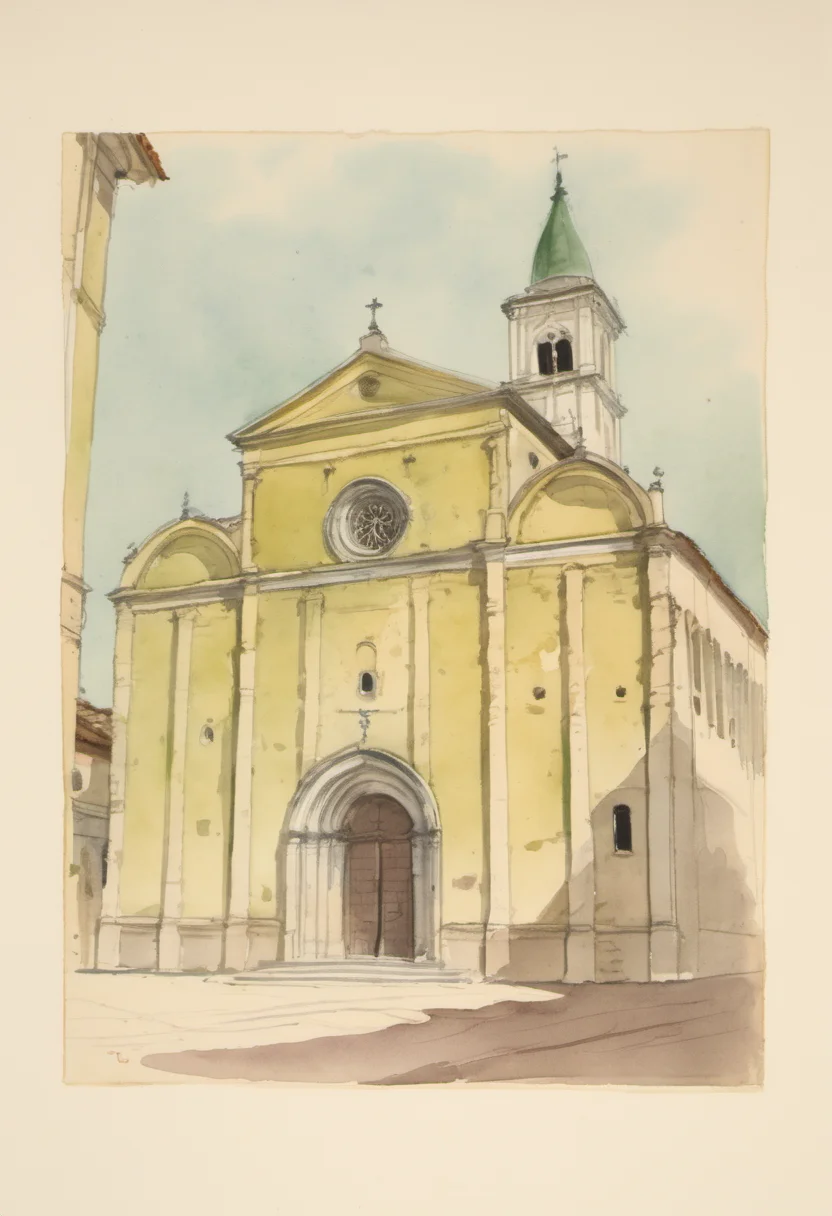
The church of Santa Maria that anchors the complex is a triple-nave basilica in the Ravennate Romanesque style, arcaded aisles under timber rafters, its oldest core dating to the 7th to 9th centuries and enlarged repeatedly as the abbey's fortunes grew. It reached its present form, with a segmental apse, in the 11th century, and was consecrated on 7 May 1026 by its own abbot, Guido — meaning the building itself predates the ceremony.
In front of it stands an atrium the 11th century added, and it is the strangest part of the visit. Its brick friezes, ceramic oculi and majolica bowls carry a menagerie of animals loaded with religious symbolism, and the tree of life fills the arches' round windows. The ornamental vocabulary is foreign: Persian in the two circular stone screens where winged griffins eat the fruit of the tree of life, Syriac in the ribbon-like borders that enclose those screens, and generally Eastern in the horizontal bands of vine-scroll running across the whole facade. The narthex's form echoes, in embryo, the westwerks of Carolingian architecture further north.
Inside, three naves divided by Roman and Byzantine columns lead to a marble opus sectile pavement laid down in stages between the 6th and 12th centuries, and it rewards a slow look. A lion stands for Christ's resurrection; a dragon, for evil perpetually defeated; a stag is Christ himself; birds with folded wings represent the human condition; an eagle flying above the earth stands above human lowliness; a phoenix rising from its own ashes gestures at the Resurrection; a hare caught mid-flight is human restlessness; two vultures locked in combat are conflict; an elephant appears to shoulder two decorative bands, a symbol of human fragility. Solomon's knots recur throughout, marking the bond between human and divine.
Outside, the free-standing campanile begun in 1063 took several decades to finish and still stands 48 metres tall — one of the two finest bell towers to survive the Romanesque period intact, matched only by the campanile of the Abbey of San Mercuriale in Forlì, at 75 metres. Facing the church across the forecourt is the mid-11th-century Palazzo della Ragione, built before the church's 1026 consecration by Mazulo, an architect trained in Ravenna.
The apse carries frescoes by Vitale da Bologna and his workshop; the refectory has paintings by an unnamed master from Rimini; the chapter hall holds frescoes from the early 14th century by a pupil of Giotto, with further Bolognese-school scenes from the Old Testament on the walls of the church itself. Layer by layer, the decoration tracks four centuries of Italian painting under one roof.
The same geography that had sheltered Pomposa eventually strangled it. The Po shifted its course at Ficarolo in 1152, the coastline retreated, and malaria spread through the lower Po Valley; the land around the abbey grew poor, and the monastery declined with it. By 1650 its monks had migrated to San Benedetto in Ferrara; Pope Innocent X suppressed the monastery in 1653, and the buildings sat empty. A Ravenna family, the Guicciolis, bought the property in 1802; the Italian state acquired it by the end of the 19th century. In 1965 Pope Paul VI granted the bishops of Comacchio the honorary title of abbot of Pomposa, a privilege that passed to the archbishops of Ferrara-Comacchio in 1986; since December 2014 the site itself has been run as a state museum. Its latest chapter is odder than any of that: in the early 2010s, Russian internet users noticed that one of the frescoed devils bore a striking resemblance to Vladimir Putin, and the meme resurfaced briefly after Russia's invasion of Ukraine.