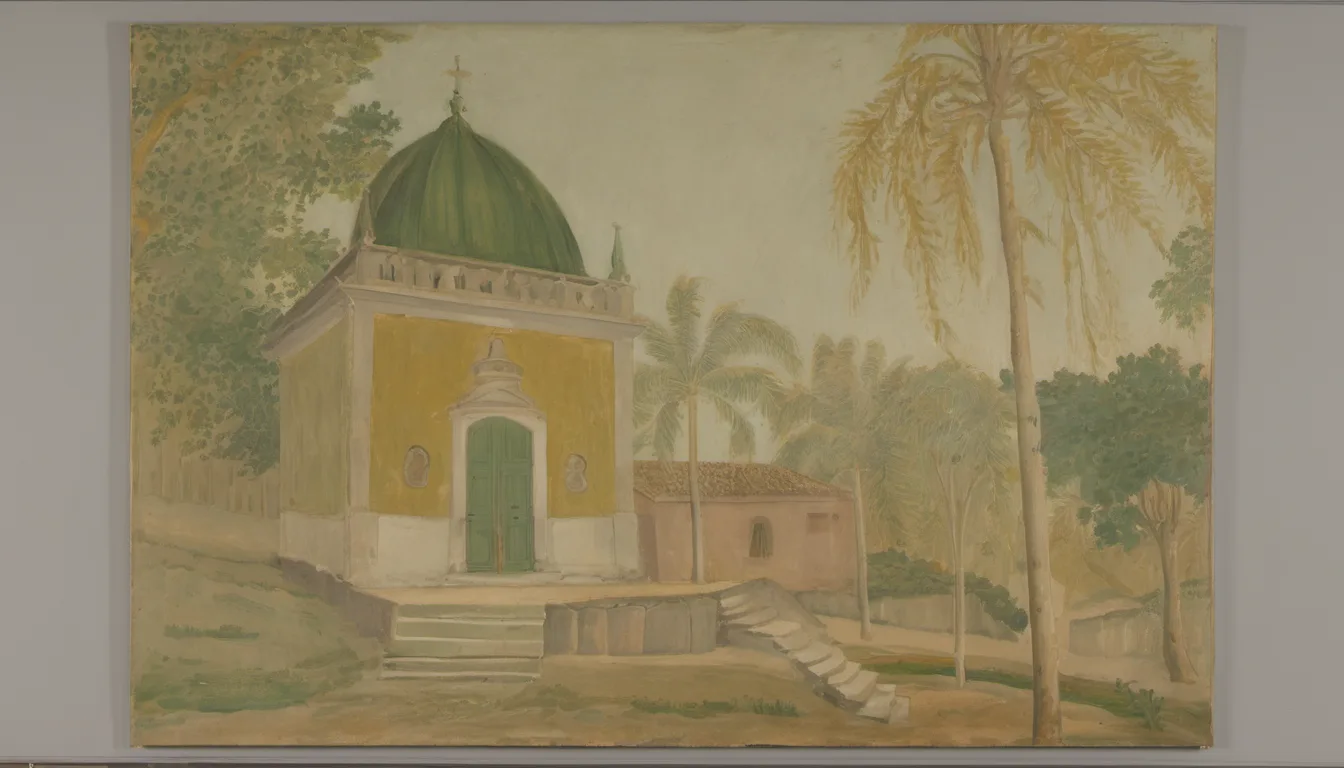
Congonhas, Brazil
Congonhas do Campo does not announce itself with fanfare. It sits in the central hills of Minas Gerais, a municipality of just over fifty thousand souls, defined less by its size than by the weight of its history. Here, the air is thick with the memory of gold rush fervor and the quiet, enduring presence of stone. To walk here is to move through layers of time, from the muddy tracks of the bandeirantes to the polished steps of a UNESCO World Heritage site. It is a place where the earth yielded its treasures, and in return, the earth provided the material for its spiritual expression.
The town’s identity is inextricably linked to Aleijadinho, the eighteenth-century sculptor whose hands seem to have breathed life into soapstone. His twelve colossal figures stand guard before the Sanctuary of Bom Jesus de Matosinhos, their weathered faces turned toward the sky in eternal supplication. These are not merely decorations; they are the town’s heartbeat. The prophets, with their twisted postures and expressive hands, tell a story of suffering and faith that resonates long after you leave the sanctuary grounds. It is this singular artistic achievement that draws pilgrims and tourists alike, but the true reward lies in understanding the context of their creation.
Walking through Congonhas reveals a narrative of resilience and transformation. The town grew from the chaotic search for gold, a period marked by conflict and the War of the Emboabas, leaving behind ruins like the Cadeia in Alto Maranhão. Yet, as gold faded, iron rose. The industrial ingenuity of Baron von Eschwege in the nineteenth century laid the groundwork for Brazil’s modern iron industry, a legacy visible in the landscape and the very name of the nearby airport. This shift from extraction to industry mirrors the town’s own evolution, from a mining outpost to a cultural sanctuary.
The journey up to the Sanctuary is a physical meditation. You pass through the town’s historic center, where the open span of the mother church’s nave stands as one of the largest in the country, its soapstone portal a testament to Aleijadinho’s early work. The ascent is steep, demanding, and ultimately rewarding. It forces you to slow down, to notice the interplay of baroque and rococo styles, and to reflect on the figures of men like Cônego Luís Vieira da Silva, a thinker of the Inconfidência Mineira, whose intellectual legacy lingers in the region’s political consciousness. This is a city that demands your attention, offering not just sights, but a profound sense of place.
To understand Congonhas do Campo, one must first look to the ground beneath it. The name itself, derived from the congonha shrub, hints at an indigenous heritage that predates the colonial rush. Tea made from this plant was part of regional culture long before the bandeirantes arrived in 1691. The first contacts between these explorers and the Indigenous Carijós peoples occurred at Passagem do Gagé, a location that would become a flashpoint for conflict and change. It was here, following the basin toward the Doce River, that the first gold declaration in Minas Gerais was made, setting in motion a cascade of events that would reshape the region’s geography and economy.
The search for gold was not a solitary pursuit but a chaotic scramble. Expeditions moved northward, using the Serra do Ouro Branco as a guide, eventually finding significant deposits along the Ribeirão do Carmo. This discovery led to the emergence of Mariana in 1696, the first town in Minas Gerais, and dozens of smaller settlements sprang up along the route. The routes opened during this gold rush formed the main gold road until the early eighteenth century, linking Vila Rica to Paraty. This artery, known as the Caminho Velho of the Estrada Real, became the lifeline of the region, carrying wealth, people, and conflict in equal measure.
The struggle for gold was violent and divisive. Between 1707 and 1709, the War of the Emboabas erupted, a conflict involving clashes between settlers from São Paulo, outsiders known as emboabas, and Indigenous groups. The violence left scars on the landscape, quite literally. In the present-day district of Alto Maranhão, the ruin of the Cadeia, or jail, still stands, a stark reminder of the detentions and persecutions that occurred during the fighting. In 1718, a sesmaria was granted for the creation of the settlement of Redondo, now Alto Maranhão, by Portuguese brothers José and João da Silva Redondo. Their devotion to Nossa Senhora da Ajuda established roots that would endure through centuries of change.
The formal creation of Congonhas do Campo began in 1734 with the construction of the second hermitage of the mother church of Nossa Senhora da Conceição. This settlement, then belonging to Vila Rica, was marked by an open span of the church’s nave, considered one of the largest in the country. The soapstone portal, attributed to Aleijadinho during his first period of work in the region, signaled a new artistic era. The interior, blending baroque and rococo features, included work attributed to the Portuguese artist Francisco Vieira Servas. Around this time, chapels dotted the surrounding area, including Nossa Senhora da Ajuda in Redondo, Santa Quitéria, dated 1717, and Nossa Senhora da Soledade in Lobo Leite.
Amidst this religious and architectural flourishing, intellectual currents were also stirring. Cônego Luís Vieira da Silva, born in Lobo Leite in 1735, became a canon in the Archdiocese of Mariana. Renowned for his intellectual ability and extensive book collection, he is regarded as one of the principal thinkers of the Inconfidência Mineira, a movement for independence. His death in 1805 as a political prisoner in a convent underscores the political tension that simmered beneath the town’s surface. This intellectual legacy is part of what makes Congonhas singular, a place where art and politics intersected in profound ways.
The town’s economic identity shifted dramatically with the rise of iron. In 1750, Portuguese landholder Manoel José Monteiro de Barros obtained possession of three sesmarias in the region, becoming the guarda-mor of mining activity. His sons, Lucas Antônio Monteiro de Barros and Romualdo José Monteiro de Barros, became prominent figures. Lucas, the first Baron and Viscount of Congonhas, served as one of the early presidents of the Supreme Court of Justice and as the first governor of the province of São Paulo. The name of São Paulo–Congonhas Airport derives from this title, a curious link between local aristocracy and modern infrastructure.
The industrial revolution arrived in Congonhas through the vision of German geologist Baron Wilhelm Ludwig von Eschwege, who settled here in 1812 with the pioneering intention of producing iron in Brazil. His Fábrica Patriótica, organized in partnership with Friedrich Ludwig Wilhelm Varnhagen and Intendant Câmara, was a landmark of industrial innovation. Von Eschwege’s writings reveal a man frustrated by the barbarous process of iron production common at the time, where each blacksmith built furnaces according to their own ideas. He introduced hydraulic hammers and mechanized extraction, producing more iron at lower costs than Swedish factories. His work laid the foundation for Brazil’s modern iron industry, with sites like Mina da Fábrica now belonging to Vale.
The Sanctuary of Bom Jesus de Matosinhos stands as the town’s spiritual and artistic crown. Inscribed on the UNESCO World Heritage List in 1985, it is famous for Aleijadinho’s twelve soapstone figures. These prophets, with their twisted postures and expressive hands, are a pilgrimage site that draws visitors from around the world. The sanctuary’s location on the left bank of the Maranhão River caused tension between Congonhas and the neighboring settlement of Queluz, now Conselheiro Lafaiete, leading to a dispute that lasted until Congonhas’ emancipation in 1938. The sanctuary’s isolation from both towns added to its mystique, making it a unique entity in its own right.
Silvério Gomes Pimenta, born in Congonhas in 1840, became Brazil’s first Black bishop, serving in the Archdiocese of Mariana. He was instrumental in introducing the railway to Congonhas at the end of the nineteenth century, sponsoring a branch line connecting the Estrada de Ferro Central do Brasil to the settlement. This infrastructure greatly increased the number of pilgrims visiting the Sanctuary of Bom Jesus de Matosinhos. Dom Silvério was elected a member of the Brazilian Academy of Letters in 1919, further cementing the town’s cultural significance. His legacy is one of connection, linking the remote sanctuary to the wider world.
Walking through Congonhas today is an exercise in layers. You walk on roads laid by bandeirantes, past ruins of the War of the Emboabas, through towns built on gold and iron, and up to a sanctuary that defies time. The town’s history is not just in its buildings but in its landscape. The Serra do Deus te Livre, the Soledade, Macaquinhos, and Maranhão rivers all played roles in the region’s development. The division of lands between Congonhas and Queluz, based on the right and left banks of the Maranhão River, is a testament to the complex political geography of the time. This history is palpable, inviting you to look closer, to listen to the stones, and to understand the depth of this remarkable place.
The final reward of visiting Congonhas is the sense of continuity. From the indigenous congonha shrub to the gold rush, from the iron factories to the modern airport, the town has continuously reinvented itself while holding onto its core identity. The twelve prophets of Aleijadinho stand as silent witnesses to this journey, their soapstone forms weathered by time but unbroken in spirit. To walk here is to walk through the heart of Minas Gerais, to feel the weight of history, and to appreciate the enduring power of art and industry. It is a place that stays with you, not just for its beauty, but for its profound sense of place.