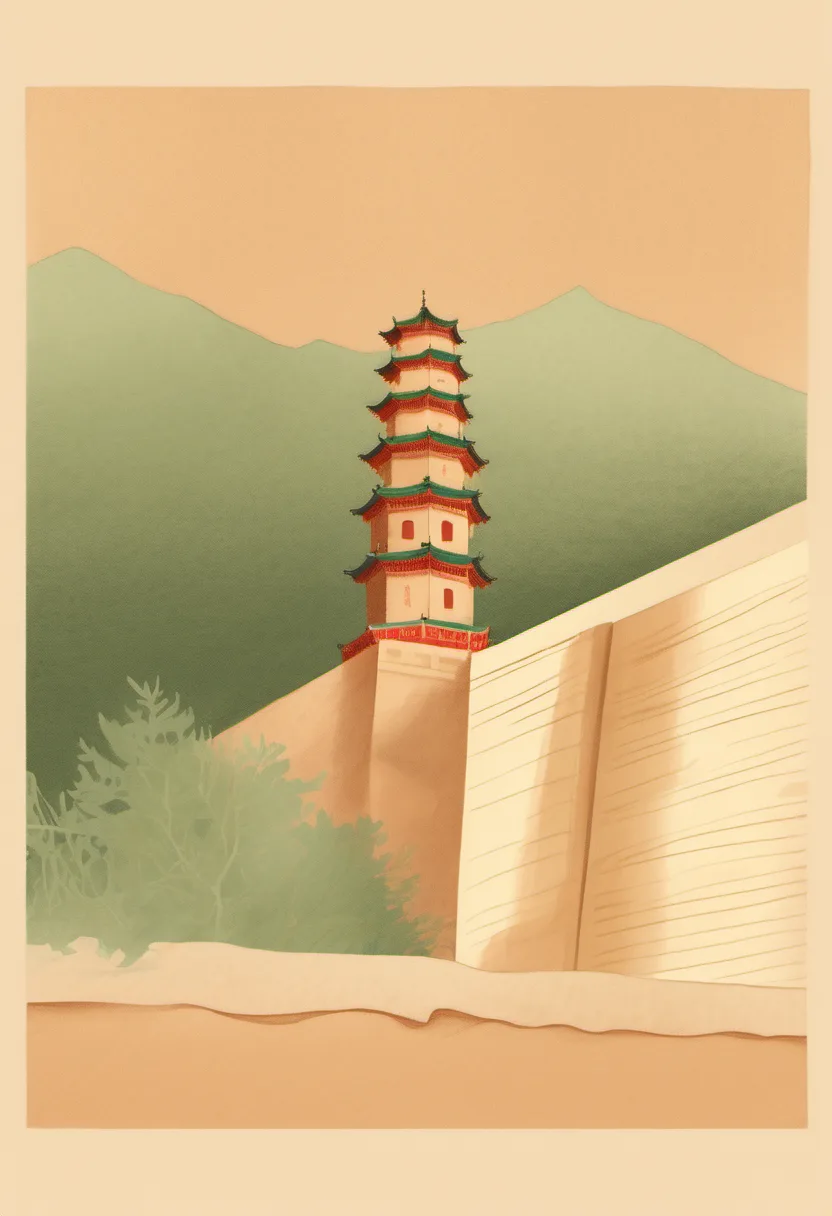
Datong, China
Datong sits in the Datong Basin at 1,040 meters, a high-altitude threshold that separates the agricultural heart of China from the nomadic steppe. It is not a city that reveals itself gently. The air is dry, the winters are severe, and the landscape is defined by the looming presence of mountains on three sides. To walk here is to understand the weight of geography. This is a place where history was not just written, but carved into rock and defended by stone walls against the wind from the north.
The city’s singular value lies in its role as a crucible of cultural exchange. For centuries, it was the frontier between the settled Chinese and the nomads of the Great Steppe. This tension produced the Yungang Grottoes, a UNESCO World Heritage site located 16 kilometers west of the city center. Here, over 50,000 carved images of Buddhas and bodhisattvas range from four to 700 centimeters in height. These icons, mostly 1,500 years old, are not merely religious artifacts; they are a testament to the Northern Wei dynasty’s ambition to fuse Indian, Central Asian, and Chinese artistic traditions into a new imperial language.
Walking the city rewards you with layers of time. The Ming dynasty defensive wall, reconstructed in the final phase of 2014 after a controversial project led by Mayor Geng Yanbo, encloses a historic core. Within these walls, you find the Nine-Dragon Wall, the Huayan Monastery, and the Shanhua Temple. Further afield, the Hanging Temple clings to a cliff face near Mount Heng, dating back to the Northern Wei era. These structures are not static museums; they are active participants in a city that has been sacked, rebuilt, and reimagined repeatedly since the Han dynasty’s founding of Pingcheng County in 200 BC.
There is a quiet resilience to Datong. It is a coal-mining city, often cited for its pollution, yet it is also an emerging economy seeking to pivot toward tourism and logistics. The local culture offers simple pleasures: knife-cut noodles and Shanxi mature vinegar, staples that ground the visitor in the daily rhythm of the basin. The city is small by Chinese standards, with a metro population of under 1.8 million, allowing for an intimacy that larger metropolises lack. It is a place where the past is not buried but built upon, layer by layer, stone by stone.
To understand Datong, one must first look north. Located in Shanxi Province, this prefecture-level city occupies the Datong Basin at an elevation of 1,040 meters. It is the northernmost city of the province, bordering Inner Mongolia to the north and west, and Hebei to the east. The geography is unforgiving. The urban area is surrounded on three sides by mountains, with passes only to the east and southwest. This topography has defined its destiny for millennia. Datong is not a destination for the faint of heart; it is a frontier city, a place where the agricultural Chinese world met the nomadic Great Steppe. The air here is thin, the winters are long and very dry, with monthly mean temperatures dropping to −10.5 °C in January. Yet, it is precisely this harshness that forged Datong’s historical significance. It was a strategic choke point, a place where empires were made and broken by the control of trade routes and military passes.
The story of Datong begins in the shadows of the Han dynasty. In 200 BC, following a victory against the Xiongnu nomads at the Battle of Baideng, the Han founded a site within present-day Datong, known then as Pingcheng County. It was part of the Qin commandery of Yanmen, but it was under Han rule that Pingcheng blossomed. Located near a pass to Inner Mongolia along the Great Wall, it became a vital stop-off point for camel caravans moving from China into Mongolia and beyond. The area was well known for its trade in horses, a commodity that fueled the economies of both settled and nomadic societies. However, this prosperity was fragile. The city was sacked at the end of the Eastern Han, a recurring fate for frontier outposts. Yet, from these ruins, a new identity emerged, one that would reshape the spiritual landscape of East Asia.
In 398 AD, Pingcheng became the capital of the Xianbei-founded Northern Wei dynasty, a position it held until 494 AD. This was a period of profound transformation. The Xianbei, a nomadic clan, had conquered the area in 386, establishing the Northern Wei. Under their rule, the city became a laboratory for cultural synthesis. The most enduring legacy of this era is the Yungang Grottoes, constructed during the later part of the Northern Wei period, specifically between 460 and 494 AD. Located 16 kilometers west of the city, these shallow caves contain over 50,000 carved images and statues of Buddhas and bodhisattvas. The statues range from four to 700 centimeters in height. Most are around 1,500 years old. These are not merely religious icons; they are political statements. The Northern Wei emperors used these carvings to legitimize their rule, blending Indian Buddhist iconography with Central Asian artistic styles and Chinese craftsmanship. The result is a unique aesthetic that stands as one of the most important attractions in Datong and a UNESCO World Heritage Site.
As the capital moved south to Luoyang in 494, Datong’s political importance waned, but its religious and military significance persisted. During the Tang dynasty, it became the seat of the Tang prefecture of Yunzhou, and the original Guandi temple was built, reflecting the growing importance of Confucian and folk religious traditions. However, it was during the Liao, Jin, and Ming dynasties that the city’s current architectural character took shape. In 1048, the city was renamed Datong, meaning 'Great Peace.' It served as the Xijing, or Western Capital, of the Jurchen Jin dynasty. This period saw the construction of many of the structures that define the city today. The Ming dynasty, recognizing Datong’s strategic value against the Mongols to the north, reinforced its status as an important military stronghold. It was during this era that the Drum Tower and the Nine-Dragon Wall were built. The Nine-Dragon Wall, a vibrant mosaic of glazed tiles, remains a striking example of Ming-era craftsmanship, symbolizing imperial power and protection.
The city’s history is also marked by destruction and rebirth. Datong was sacked again at the end of the Ming in 1649, but it was promptly rebuilt in 1652. This cycle of destruction and reconstruction is a hallmark of frontier cities. The city walls, which enclose the historic core, are a testament to this resilience. In 2010, work began on reconstructing the city’s 14th-century Ming dynasty defensive wall. The project was controversial, documented in the film *The Chinese Mayor*, which chronicles the efforts of Mayor Geng Yanbo. Geng, known as the 'Demolition Mayor,' oversaw the redevelopment of over 3 square kilometers of the inner city. The project involved the summary demolition of about 200,000 homes, leading to a complicated legacy. By 2013, Geng had left office, and much of the city remained under construction. Critics argued that enormous sums of money had been spent with little to show for it. By 2020, the population of the old city was below 30,000, and governmental facilities were scarce. Yet, the reconstructed walls stand as a physical boundary between the old and the new, the historic and the modern.
Beyond the city walls, Datong offers other singular experiences. The Hanging Temple, built into a cliff face near Mount Heng, is a marvel of engineering and faith. Dating back to the Northern Wei dynasty (386–534), it is one of the few surviving structures from that era. The temple clings to the rock, supported by wooden beams that seem to defy gravity. It is a place of quiet contemplation, where the wind howls through the canyon and the views are breathtaking. Further afield, the railway locomotive works have attracted railway enthusiasts since the 1970s. When the construction of steam locomotives was phased out, the authorities sought to preserve this tourism market by developing a steam railway operating center. Study visits were undertaken to the East Lancashire Railway at Bury, England, leading to a twinning arrangement. This connection highlights Datong’s global reach, however niche.
Culturally, Datong is defined by its simplicity and its depth. The city is known for its knife-cut noodles and Shanxi mature vinegar, staples that reflect the agricultural richness of the basin. These are not just foods; they are expressions of local identity. The city’s economy has long been dominated by coal mining, with the Datong Coal Mining Group being China’s third largest such enterprise. This reliance on coal has given Datong a reputation as one of China’s most polluted cities. However, the city is also an emerging economy, seeking to loosen its dependence on coal. The local government has been upgrading its pillar coal sector while developing substitute industries such as machinery manufacturing, tourism, and logistics. Datong is a pilot city for rehabilitation studies, working with other cities worldwide to address environmental challenges. This transition is ongoing, and the city’s landscape reflects both its industrial past and its uncertain future.
Demographically, Datong is small by Chinese standards. As of the 2020 census, the built-up area, comprising the Pingcheng and Yungang districts, had a population of 1,790,452. The prefecture-level city as a whole had 3,105,591 people. This scale allows for a more intimate exploration of the city’s history. The urban area is surrounded by the Datong Volcanic Arc, a geological feature that adds to the region’s unique character. The climate is continental and monsoon-influenced, with abundant sunshine year-round. The diurnal temperature variation is large, averaging 13.2 °C annually. These environmental factors shape the way people live and move through the city. The city receives 2,671 hours of bright sunshine per year, making it a place of light and shadow, where the starkness of the landscape is softened by the warmth of the sun.
Administratively, Datong is divided into several districts and counties, including Pingcheng, Yungang, Xinrong, and Yunzhou. The Kuang District, largely made up of separate mines, is defunct, reflecting the changing nature of the city’s economy. The city’s administrative map shows its strategic position as a distribution and warehousing center for Shanxi, Hebei, and Inner Mongolia. This role continues to evolve, as the city seeks to balance its industrial heritage with its cultural and tourism potential. The city’s twin towns, including Bury in England and Ōmuta in Japan, reflect its international connections. These relationships are not just symbolic; they are practical, facilitating exchanges in technology, culture, and urban planning. Datong is a city in transition, navigating the complexities of modernization while preserving its rich historical legacy.
In conclusion, Datong is a city of contrasts. It is a place of harsh winters and warm summers, of coal dust and clear skies, of ancient temples and modern construction. It is a city that has been sacked and rebuilt, destroyed and reconstructed. Yet, it endures. The Yungang Grottoes, the Ming walls, and the Hanging Temple stand as testaments to the resilience of the human spirit. To walk through Datong is to walk through time, to see the layers of history embedded in the stone and the soil. It is a city that demands attention, that rewards the curious traveler with insights into the complex interplay of culture, politics, and geography. Datong is not just a destination; it is a lesson in the enduring power of place.