Dublin, Ireland
Dublin does not announce itself with the aggressive verticality of London or the Mediterranean sprawl of southern capitals. It reveals itself gradually, a city built upon layers of water, stone, and memory. To walk Dublin is to traverse a timeline where the ancient meets the modern without friction. The city’s identity is rooted in its geography: the black pool (Dubh Linn) where the Poddle meets the Liffey, a site chosen by Vikings for its strategic defensibility and later by Normans for its administrative power. This confluence of rivers created a natural choke point, a ford of obstacles (Áth Cliath) that dictated the city’s growth for a millennium.
What makes Dublin singular is not merely its age, but its resilience and its capacity for reinvention. From the Viking trading post to the English Pale, from the devastation of the Black Death to the Georgian splendor of the eighteenth century, the city has absorbed shock after shock. It is a place where the medieval walls still stand, where the spirit of the siege mentality lingers in the narrow streets, yet where the light falls on terracotta and sage green facades with a distinctively Irish softness. The city is an open book of architectural eras, each layer preserving the scars and triumphs of its inhabitants.
Walking Dublin rewards the observer with a tangible sense of continuity. You move from the Viking Triangle, where the city’s Norse origins are etched in stone, to the Georgian squares that represent the height of colonial ambition and aesthetic refinement. The route is not just a physical journey but a historical one. You pass Christ Church and St. Patrick’s, their spires piercing the sky, standing as testaments to a time when religious authority shaped urban planning. The streets whisper stories of the Fitzgeralds, of Cromwell’s siege, and of the literary giants who found inspiration in the city’s damp, grey light.
The city’s character is defined by its riverside promenade and its dense, walkable core. There is no need for haste here. The pace is set by the flow of the Liffey and the rhythm of daily life. You will find yourself drawn to the quiet corners, the hidden courtyards, and the bustling pubs that serve as modern-day gathering places, continuing a tradition that dates back to the medieval inns. Dublin is a city that invites you to linger, to look closer, to understand the complex tapestry of its past. It is a place where history is not confined to museums but is lived in the architecture, the street names, and the enduring spirit of its people. To walk Dublin is to walk through time, guided by the stones and the stories that remain.
Dublin’s narrative begins in the water. The name itself, derived from the Old Irish Dubh Linn, translates to 'black pool,' referring to the deep, dark waters where the River Poddle flowed into the Liffey. This geographical feature was the catalyst for the city’s existence. Around 888 AD, Vikings established a settlement here, recognizing the strategic advantage of a ford that could be defended and controlled. This was not merely a trading post; it was a base for raids and a hub for the slave trade, a dark origin that would haunt the city’s conscience for centuries. The Norse name, Dubhlind, merged with the native Gaelic Áth Cliath, or 'ford of the hurdles,' creating a linguistic and cultural hybrid that defines Dublin to this day.
The Norman invasion of 1169-1171 fundamentally altered the city’s trajectory. Henry II’s arrival in 1171 marked the beginning of English rule, and Dublin was granted city status, becoming the capital of the Kingdom of Ireland. The Normans fortified the city, building Dublin Castle and establishing the English Pale, a fortified area around Dublin that protected English settlers from the Gaelic Irish. This period saw the construction of Christ Church Cathedral and St. Patrick’s Cathedral, monumental structures that still dominate the medieval core. The city’s layout was dictated by defense, with narrow, winding streets designed to confuse invaders and protect the inhabitants. The medieval city was small, comprising only a few square kilometers, but it was densely packed with life, commerce, and religious activity.
The Middle Ages were a time of siege and survival. The Black Death arrived in 1348, devastating the population and leaving scars that are still visible in place names like Blackpits. The city was frequently besieged, most notably by Scottish forces in 1314, who razed the suburbs. The 'siege mentality' became ingrained in the Dublin psyche, a defensive posture that persisted for centuries. The annual pilgrimage to Cullen Field in Ranelagh, where English settlers were massacred by the O'Toole clan in 1209, symbolized this tension. For centuries, this procession, escorted by militia, ended with a black cloth being spread towards the mountains, a ritualistic defiance against the 'enemy' beyond the Pale. This history of conflict and isolation shaped a city that was inward-looking, yet resilient.
The Fitzgerald dynasty, the Earls of Kildare, played a pivotal role in Dublin’s political history. As 'Kings of the Pale,' they acted as intermediaries between the English crown and the Irish populace. However, their ambition often led to conflict. In 1407, they invaded Dublin with Burgundian allies, proclaiming Lambert Simnel as King of England. Later, Silken Thomas besieged Dublin Castle in 1534, leading to his execution and the dismantling of Fitzgerald power. These events underscored the fragility of Dublin’s position and the constant struggle for autonomy. The Tudor conquest of the sixteenth century further eroded the power of the old English families, replacing them with a new Protestant administration that sought to impose order through law and religion.
The Elizabethan and Jacobean periods brought significant changes. The founding of Trinity College in 1592 by Elizabeth I was a clear attempt to educate Irish Protestants and counter the influence of Catholic universities in Europe. This move was met with resistance, as many Irish families sent their sons to continental Europe for education. The Penal Laws of the eighteenth century further marginalized the Catholic majority, restricting their rights and property ownership. Despite these hardships, Dublin continued to grow, becoming a center of commerce and culture. The city’s architecture began to reflect the wealth and power of the Anglo-Irish ascendancy, who built grand houses and public buildings that would define the city’s Georgian era.
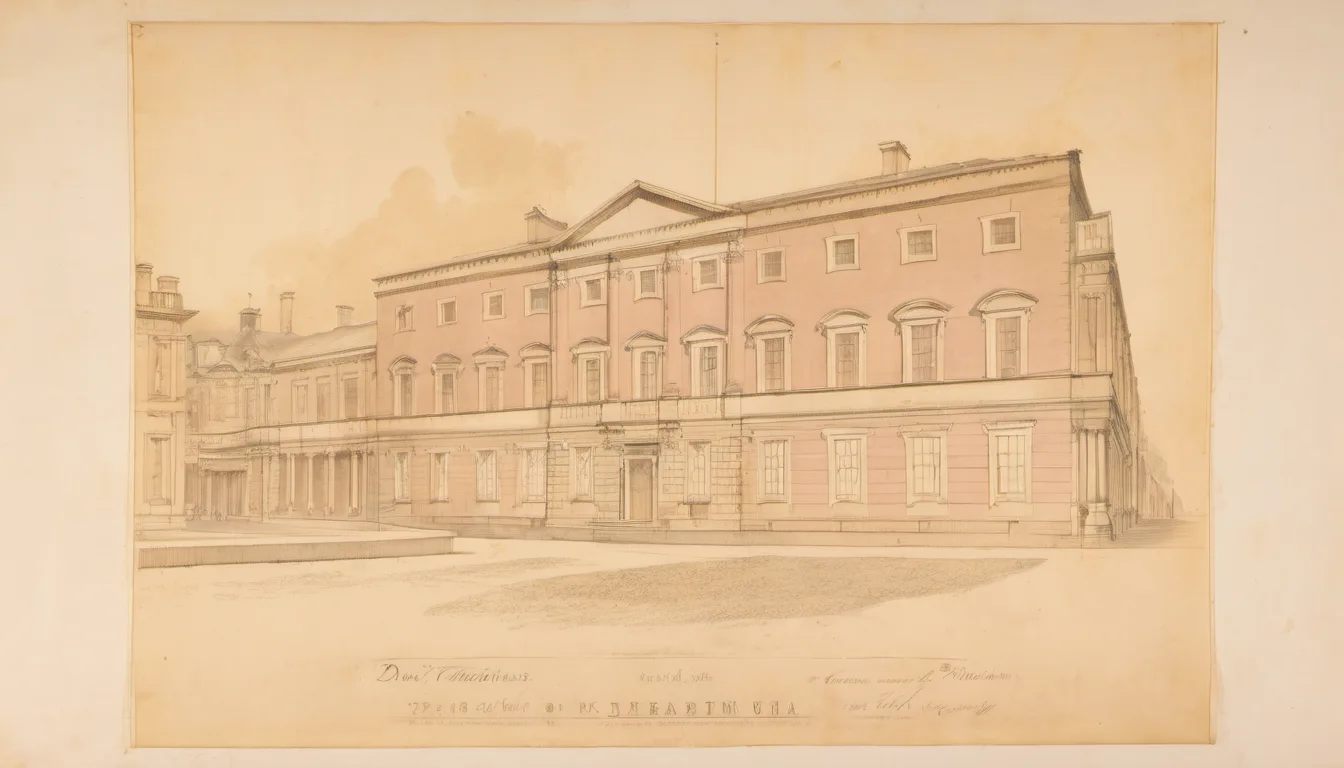
The Georgian period, spanning the eighteenth and early nineteenth centuries, was Dublin’s golden age. The city was transformed through urban planning, with the construction of wide, elegant streets and squares. Streets like Sackville Street (now O'Connell Street), Dame Street, and Henrietta Street were laid out, reflecting the neoclassical ideals of the time. The city’s orientation shifted towards the Liffey, with houses facing the river, a stark contrast to the earlier practice of turning their backs on the water. This era saw the rise of figures like Jonathan Swift and Jonathan Swift, whose satires critiqued the social and political order. The city became a hub of intellectual and artistic life, attracting writers, poets, and philosophers.
The nineteenth century brought both prosperity and turmoil. The Act of Union in 1801 dissolved the Irish Parliament, moving it to London, which had a profound impact on Dublin’s political identity. The city continued to expand, with the construction of public institutions like the Custom House and the Four Courts. The Great Famine of the 1840s had a devastating impact, leading to mass emigration and a decline in population. However, the city also saw the rise of a nationalist movement, with figures like Daniel O’Connell and Charles Stewart Parnell advocating for Irish rights and self-government. The streets became a battleground for political expression, with rallies and protests shaping the city’s modern identity.
The twentieth century was a period of revolution and independence. The Easter Rising of 1916, centered in Dublin, marked a turning point in Irish history. The rebellion, though militarily unsuccessful, galvanized public opinion and led to the eventual establishment of the Irish Free State. Dublin became the capital of the new state, and the city underwent significant changes, including the renaming of streets and the construction of new government buildings. The city’s literary heritage flourished, with writers like W.B. Yeats, James Joyce, and Samuel Beckett drawing inspiration from its streets and landscapes. Dublin became a center of modernist literature, influencing global culture.
Today, Dublin is a city of contrasts, where ancient history meets modern innovation. The Viking Triangle, with its medieval walls and churches, stands alongside the sleek glass structures of the Docklands. The city’s economy has boomed, driven by technology and pharmaceutical industries, attracting a diverse population from around the world. Yet, the city retains its sense of history and community. The pubs, once centers of social life, remain vital spaces for conversation and music. The literary festivals, such as the Dublin Writers Festival, celebrate the city’s rich cultural heritage. Dublin is a city that looks forward while honoring its past, a place where the stones tell stories and the streets invite exploration.
Walking Dublin is an exercise in layering. You move through time, from the Viking pool to the Georgian square, from the medieval cathedral to the modern library. The city’s geography, with its rivers and hills, shapes the experience, guiding you through its neighborhoods and landmarks. The Liffey, once a source of pollution, is now a focus for regeneration, with new developments along its banks. The city’s architecture, from the red-brick Victorian houses to the white-stone Georgian mansions, reflects its complex history. Dublin is a city that rewards the curious walker, offering insights into its past, present, and future. It is a place where history is not just remembered but lived, in the daily rhythms of its streets and the enduring spirit of its people.