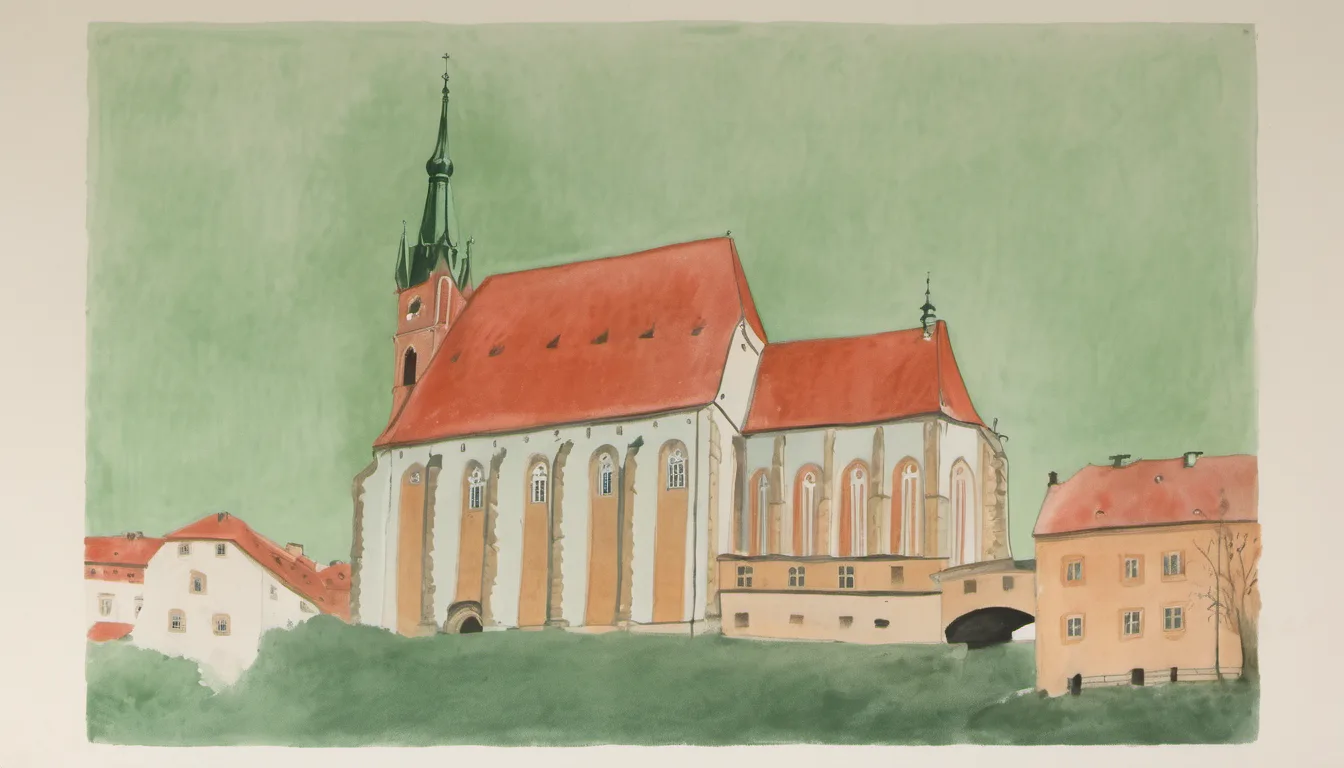
Český Krumlov, Czechia
Český Krumlov does not announce itself with grand boulevards or imposing squares. It reveals itself gradually, a quiet persistence of stone and water nestled in the Bohemian Forest Foothills. The town sits on both banks of the Vltava River, wrapped in a tight horseshoe meander that forces the landscape into an intimate embrace. This is not a city built for speed; it is a place designed for lingering, for tracing the curve of the river and the weight of history that has settled into its cobblestones.
At its heart lies the castle, one of the largest complexes in central Europe, sprawling across seven hectares and forty distinct buildings. But the true singular feature is not the architecture itself, but the moat that surrounds it. Unlike the water-filled ditches of typical fortifications, this one holds bears. It was a deliberate, eccentric choice by the castle’s rulers, who sought to align themselves with the powerful Orsini family of Rome. The name Orsini puns on the Italian word for bear, orso, turning a defensive structure into a statement of lineage and power. Walking past it, you are walking through a layer of political theater that has remained intact for centuries.
The town’s layout is a map of its own evolution. The historic center, protected as an urban monument reservation since 1992, preserves the street patterns of the Middle Ages. You move from the spontaneous settlement of Latrán, built below the castle, to the planned Old Town, unified in 1555 by William of Rosenberg. The architecture is a seamless blend of Gothic, Renaissance, and Baroque styles, with no single era dominating the skyline. This layering is what makes the walk rewarding; every turn reveals a new century, a new style, a new hand shaping the same stones.
Today, Český Krumlov is a tourist center, yet it retains a rhythm that feels earned rather than manufactured. The Five-Petalled Rose Festival transforms the downtown into a medieval scene, with jousting and folk theater, but the city’s true character is found in the quiet moments between the events. It is in the silence of the castle park, the sound of the Vltava flowing around the bend, and the sight of the Baroque theatre, built in 1680, still hosting performances. To walk here is to understand that preservation is not about freezing time, but about allowing the past to remain a living, breathing part of the present.
To understand Český Krumlov is to understand the Vltava River not merely as a geographical feature, but as the primary architect of its identity. The town lies in the Bohemian Forest Foothills, approximately 134 kilometers south of Prague, positioned on a tight horseshoe bend that has dictated its development for nearly eight centuries. This natural curve, derived from the Middle High German term Krumme Aue, meaning crooked meadow, created a defensive advantage and a trade route that ensured the area’s permanent habitation. The oldest settlements here date back to the Older Stone Age, with Celtic communities present by 400 BC, but the town’s specific form emerged in the Early Middle Ages, when trade routes along the Vltava led through this territory.
The castle itself was founded shortly before 1250 by the Vítkovci family, descendants of Witiko of Prčice. The first written mention of the town, then called Chrumbenowe, appears in a 1253 deed. The town developed in two distinct stages: Latrán, a spontaneous settlement below the castle inhabited by those with administrative ties to it, and the Old Town, a planned settlement founded subsequently. From its inception, the town was a meeting point of Czech and German nationalities, with a Jewish community documented as early as 1334. This multicultural foundation shaped the town’s early character, a diversity that would fluctuate dramatically over the centuries.
In 1302, the Vítkovci line became extinct, and King Wenceslaus II acquired the estate, ceding it to the Rosenberg family, who made it their main residence. Under Peter I of Rosenberg, the upper castle was erected in the early 14th century, and the estate flourished. The town reached its peak prosperity in the 15th century under Oldřich II of Rosenberg, who significantly enlarged the estate territory. The Rosenbergs actively promoted trade and crafts, and in the late 15th century, the discovery of gold nearby attracted German miners, shifting the ethnic balance once again. It was William of Rosenberg who, in 1555, unified Latrán and the Old Town, and later had the castle rebuilt in the Renaissance style, laying the groundwork for the architectural diversity seen today.
The political landscape shifted again in 1602, when William’s brother, Peter Vok of Rosenberg, sold Krumlov to Emperor Rudolf II, who granted it to his illegitimate son, Julius d’Austria. Following the Bohemian Revolt and the Battle of White Mountain in 1620, Emperor Ferdinand II awarded Krumlov to the noble House of Eggenberg, making it the seat of the Duchy of Krumlov. The Eggenbergs left their mark on the castle, particularly with the construction of the Baroque theatre between 1680 and 1682 under Prince Johann Christian I of Eggenberg. This theatre, later renovated with modern stage equipment under Joseph I Adam of Schwarzenberg, remains one of the best-preserved of its kind in Europe, a testament to the cultural ambitions of the era.
From 1719 to 1947, the castle belonged to the House of Schwarzenberg. The 19th century brought industrialization and the demolition of most town fortifications, leaving only a few fragments, including a town gate built between 1598 and 1602 and a bastion from 1505. The demographic history of the town is starkly illustrated by the 1910 census, which recorded 8,662 inhabitants, 85 percent of whom were German. After World War I, the region was claimed by German-Austria, but the 1919 Treaty of Saint-Germain-en-Laye recognized it as part of Czechoslovakia. The town was annexed by Nazi Germany in 1938, and after World War II, the German majority population was expelled, returning the town to Czechoslovakia and fundamentally altering its social fabric.
During the Communist era, the historic center fell into disrepair, a common fate for many European towns under state socialism. However, since the Velvet Revolution of 1989, much of the town’s sights have been meticulously restored. The historic center, now known as Vnitřní město or Inner Town, was designated a UNESCO World Heritage Site in 1992, one of the first in the country. This designation recognized the well-preserved Gothic, Renaissance, and Baroque architecture, as well as the medieval street layout. The town’s structures, dating from the 13th through 17th centuries, form a cohesive whole, with the castle complex on one side of the Vltava and the old Latrán town part on the other.
The castle complex is unique in central Europe for its size and its moat. Covering seven hectares and comprising forty buildings and palaces around five courts and a park, it is a sprawling entity. The moat, filled with bears rather than water, was an attempt by the rulers to associate themselves with the powerful Orsini family, whose name puns on the Italian word for bear, orso. This eccentric detail adds a layer of intrigue to the castle’s history, transforming a defensive feature into a symbol of familial pride and power. Walking through the castle precincts, one can sense the weight of these historical narratives, from the Rosenberg crest’s five-petalled rose to the bear-filled moat.
Today, Český Krumlov is a vibrant tourist center, hosting numerous festivals that bring the history to life. The Five-Petalled Rose Festival, held on the summer solstice weekend, transforms the downtown into a medieval town, with craftsmen, artists, and locals in costume. Activities include jousting, fencing, and historical dance performances, concluding with a fireworks display. The International Music Festival Český Krumlov, held annually since 1992, features various genres of international music, while the Open Air Krumlov festival offers blues, rock, and soul in the Eggenberg Brewery Garden. These events do not feel imposed; rather, they utilize the existing architecture and atmosphere to create a seamless blend of past and present.
The town’s economy has also evolved, with notable industrial companies like Linde Pohony, Fronius Česká repubublika, and Schwan-Stabilo divisions operating within its borders. The largest non-industrial employer is the Český Krumlov Hospital. Historically, the town was home to the Pivovar Eggenberg brewery from 1560, which closed in 2014 but was replaced in 2016 by a new small historical brewery in the same premises. This continuity of industry and craft reflects the town’s enduring spirit. Transport links, including the I/39 road and direct bus connections to Prague, Linz, Salzburg, and Munich, as well as railway services, ensure that while Český Krumlov remains a quiet retreat, it is accessible to those seeking its unique charm.
In August 2002, the town was damaged by severe floods, a reminder of its vulnerability to the Vltava’s whims. Yet, the resilience of Český Krumlov is evident in its recovery and continued preservation. The town’s singular quality lies in its ability to balance its historical significance with modern life. It is not a museum piece but a living community, where the past is not just observed but inhabited. The walk through Český Krumlov is a journey through layers of time, from the Bronze Age settlements to the Baroque theatre, from the Rosenberg unification to the modern festivals. It is a place where every stone has a story, and every bend in the river offers a new perspective on the enduring beauty of human craftsmanship and natural geography.