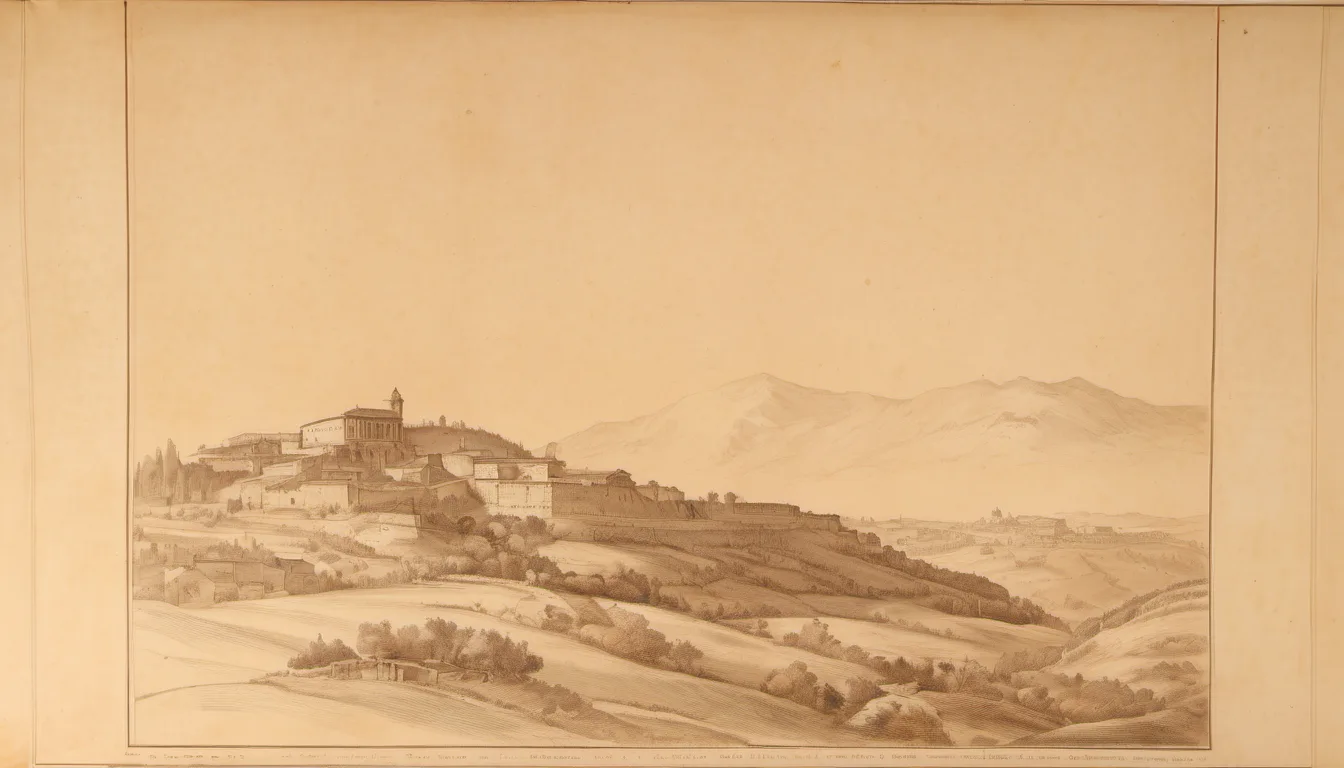
Fermo, Italy
Fermo does not announce itself with the theatrical flair of other hill towns in the Marche. It sits quietly atop the Colle Sabulo, a sandstone peak rising 319 metres above the Adriatic, offering a view that stretches 180 degrees to the coast and, on rare days, to the distant hills of Croatia. This is not a city of immediate spectacle, but of accumulated gravity. To walk here is to move through layers of Roman permanence, medieval ambition, and papal authority, all compressed into a compact, walkable urban fabric that rewards the patient observer.
The city’s singular identity is rooted in its name and its history: Firmum Picenum. Founded as a Latin colony in 264 BC, it was chosen for its strategic position and its unwavering loyalty to Rome. This fidelity became its defining trait, earning it the motto 'Firmum firmae fidei romanorum colonia.' For centuries, this steadfastness meant repeated sieges, from the hands of Emperor Frederick II to the forces of the Holy See, but it also ensured survival. The city’s architecture reflects this resilience, with medieval embattled walls superimposed over Roman limestone blocks, creating a texture of stone that feels both defensive and enduring.
What makes Fermo matter today is its preservation of the everyday grandeur of the Middle Ages. Unlike its neighbors, which have been reshaped by modern tourism, Fermo’s historic center remains largely intact, a living organism of narrow streets and piazzas. The Palio dell'Assunta, held annually on August 15, is not merely a festival but a reclamation of civic pride, a tradition that binds the community to its past. Walking the city allows you to trace the lines of power, from the secular authority of the Palazzo dei Priori to the spiritual dominance of the Cathedral, all within a few hundred meters.
The reward for walking Fermo is the clarity of its spatial logic. You begin at the Roman cisterns, a subterranean marvel of waterproof concrete that once fed the city, and ascend to the Girfalco, the highest point, where the view resets your perspective. You pass through the Gothic arches of San Domenico and the asymmetrical facade of the Cathedral, each building a testament to a different era of political and religious change. Fermo is not a place to rush; it is a place to understand how a community maintains its identity across two and a half millennia, standing firm against the tides of history.
Fermo is a study in endurance. Perched on the Colle Sabulo, a hill of sandstone that rises 319 metres above the Adriatic coast, the city commands a view that is both expansive and intimate. From the Girfalco, the highest point, you can see 180 degrees of landscape, stretching north to Macerata and south to Monterubbiano, with the sea glinting just six kilometers away. On days of exceptional clarity, the relief of Croatia is visible across the water. This vantage point is not merely scenic; it is strategic. Fermo has always been a place of observation and defense, a position that has shaped its architecture, its politics, and its soul. To walk Fermo is to walk through a timeline of European history, compressed into a hilltop city that has refused to be erased.
The story begins in the 9th and 8th centuries BC, with the Villanovan culture, a proto-Etruscan civilization that left behind funerary remains in necropolises like contrada Mossa and contrada Misericordia. These sites, now covered and partially excavated, hint at a deep pre-Roman past. But it was the Romans who gave Fermo its name and its character. In 264 BC, Firmum Picenum was founded as a Latin colony of 6,000 men, a headquarters for Roman power in the Picenum region. It was governed by five quaestors and later became a colony with full rights after the battle of Philippi, when the 4th Legion was settled there. The city’s loyalty to Rome was legendary; Plutarch noted the faith and readiness of the Firman soldiers. This fidelity was rewarded with the title 'Colonia,' a mark of honor that the city still bears in its motto: 'Firmum firmae fidei romanorum colonia.'
The Roman legacy is physically present in the city’s infrastructure. The cisterns of Fermo, located at 310 metres above sea level, are one of the most gigantic and well-preserved examples of Roman engineering in Italy. Built around the 1st century BC, this rectangular structure measures 30 by 70 metres and consists of 30 underground rooms. Made of Opus caementicium, the waterproof Roman concrete, the cisterns held about 3,000 cubic metres of water, distributed through a network of pipes to public fountains. The water level inside the rooms was maintained at 70 centimetres, a testament to the precision of Roman hydraulic engineering. These cisterns are not just archaeological curiosities; they are the lifeblood of the ancient city, still visible and accessible, reminding visitors of the sophistication of early urban planning.
As the Roman Empire declined, Fermo passed under the authority of the Holy See in the 8th century, becoming part of the Pentapolis and later the capital of the Marchia Firmana in the 10th century. The bishops of Fermo rose to become prince-bishops, holding secular rights as counts and later as princes. In 1199, the city became a free commune, a status it maintained until 1550, when it was annexed to the Papal States. This period of independence was marked by conflict. Fermo was besieged and captured multiple times, first by Archbishop Christian of Mainz in 1176, then by Emperor Henry VI in 1192, and by Frederick II in 1241. The city’s resilience was tested by the contest between the Hohenstaufen and the papacy, but it emerged as a powerful entity, governed by lords like the Monteverdi, Giovanni Visconti, and Francesco Sforza.
The political struggles of the late Middle Ages left their mark on Fermo’s architecture. The medieval embattled walls, superimposed over Roman limestone blocks, are still visible outside Porta San Francesco. These walls are picturesque, but they also speak of a city that had to defend itself. The Palazzo dei Priori, built between 1296 and 1525, stands as a symbol of civic power. Its large metal statue of Pope Sixtus V atop the entrance portal is a striking feature, blending religious and secular authority. The palace now houses the town’s civic art gallery and archaeological collections, including inscriptions and antiquities from the Biblioteca Comunale. This building is a microcosm of Fermo’s history, a place where art, politics, and religion intersect.
The Cathedral of Santa Maria Assunta is the spiritual and architectural heart of Fermo. Located on the highest point of the city, its asymmetrical Gothic facade, made of Istrian stone, is a masterpiece of medieval architecture. The church was reconstructed in 1227 by Giorgio da Como after its destruction by Christian of Mainz in 1176. The facade features a central rose window from 1348 and a bell tower of the same age. Excavations in 1934–35 revealed remains of a 2nd-century church from the age of Antoninus Pius and a 6th-century Palaeo-Christian basilica with a mosaic of peacocks. The cathedral also houses a chasuble reputedly belonging to Thomas Becket, presented by Bishop Presbitero after Becket’s death in 1170. This artifact is a tangible link to the broader currents of European religious history.
Fermo’s religious landscape is rich and varied. San Francesco, with its choir dating to 1240, was restored in the 17th century and houses the tomb of Lodovico Euffreducci, attributed to Andrea Sansovino. San Domenico, a concathedral built from 1233, features a facade from 1445 and a portico with the oratory of the Madonna del Rosario. San Filippo, constructed from 1594, is an example of 17th-century Marchigian architecture, with a Doric portal in Istrian stone. These churches, along with San Martino, San Michele Arcangelo, and San Rocco, form a network of sacred spaces that reflect the city’s piety and artistic patronage. The Sanctuary of the Madonna del Pianto, located in Via Garibaldi, adds to the spiritual topography of the city.
The city’s cultural life is vibrant, particularly during the Palio dell'Assunta, held annually on August 15. This modern edition of the Cavalcata dell'Assunta, starting in 1982, is a celebration of civic pride and tradition. The festival draws visitors from across the region, but it is the locals who keep the spirit of the Palio alive. The city’s history is also marked by notable figures, including Blessed John of Fermo (1259–1322), Cardinal Decio Azzolino (1623–1689), and opera singers like Francesco and Lodovico Graziani. These individuals, along with art collectors like Alessandro Maggiori and physicians like Augusto Murri, contribute to Fermo’s rich cultural heritage.
Geographically, Fermo is unique. It is divided into a historic center on the Colle Sabulo and a modern area. The city has 3 kilometers of coastline south of Porto San Giorgio and 4 kilometers north, with beaches like Lido di Fermo and Casabianca. The territory includes exclave areas like Boara and Gabbiano, which are geographically isolated but administratively part of Fermo. The surrounding countryside, known as 'Il Fermano,' is dotted with farmhouses, a remnant of the mezzadria system, where each family tended their own plot of land. This rural landscape contrasts with the urban density of the hilltop, offering a diverse experience for visitors.
In conclusion, Fermo is a city that has stood firm through centuries of change. From its Roman origins to its medieval independence, from its papal annexation to its modern status as a provincial capital, Fermo has maintained its identity. The city’s architecture, from the Roman cisterns to the Gothic cathedrals, reflects this continuity. The Palio dell'Assunta is a living tradition that connects the past to the present. Fermo is not a city of fleeting trends; it is a place of depth and substance. To walk Fermo is to understand the value of steadfastness, of faith, and of community. It is a city that rewards those who take the time to listen to its stones.
Do not miss around Fermo
2 placesEvery place below is a ten-to-fifteen minute walk from the last.