Abbaye Royale de Fontevraud
Robert of Arbrissel, a hermit and preacher, founded this abbey in 1101 in a valley called Fons Ebraldi. His eloquence drew thousands. The community was unusual: men and women lived in separate quarters, but both were ruled by an abbess. Four distinct communities operated under one authority. The first stone buildings rose between 1110 and 1119.
The Plantagenet kings were great benefactors. Henry II, Eleanor of Aquitaine, and Richard the Lionheart were all buried here in the late 12th century. Eleanor even made the abbey her residence. The abbey's influence waned after the Plantagenet line ended, and by the 18th century it held the youngest daughters of Louis XV.
The French Revolution swept away the monastic life. In 1792, the remaining 200 nuns and monks were evicted. The last abbess died in poverty. In 1804, the abbey was turned into a prison. It held up to 2,000 inmates, earning a reputation as one of France's toughest. Political prisoners suffered the worst; Resistance fighters were executed here during the Vichy years.
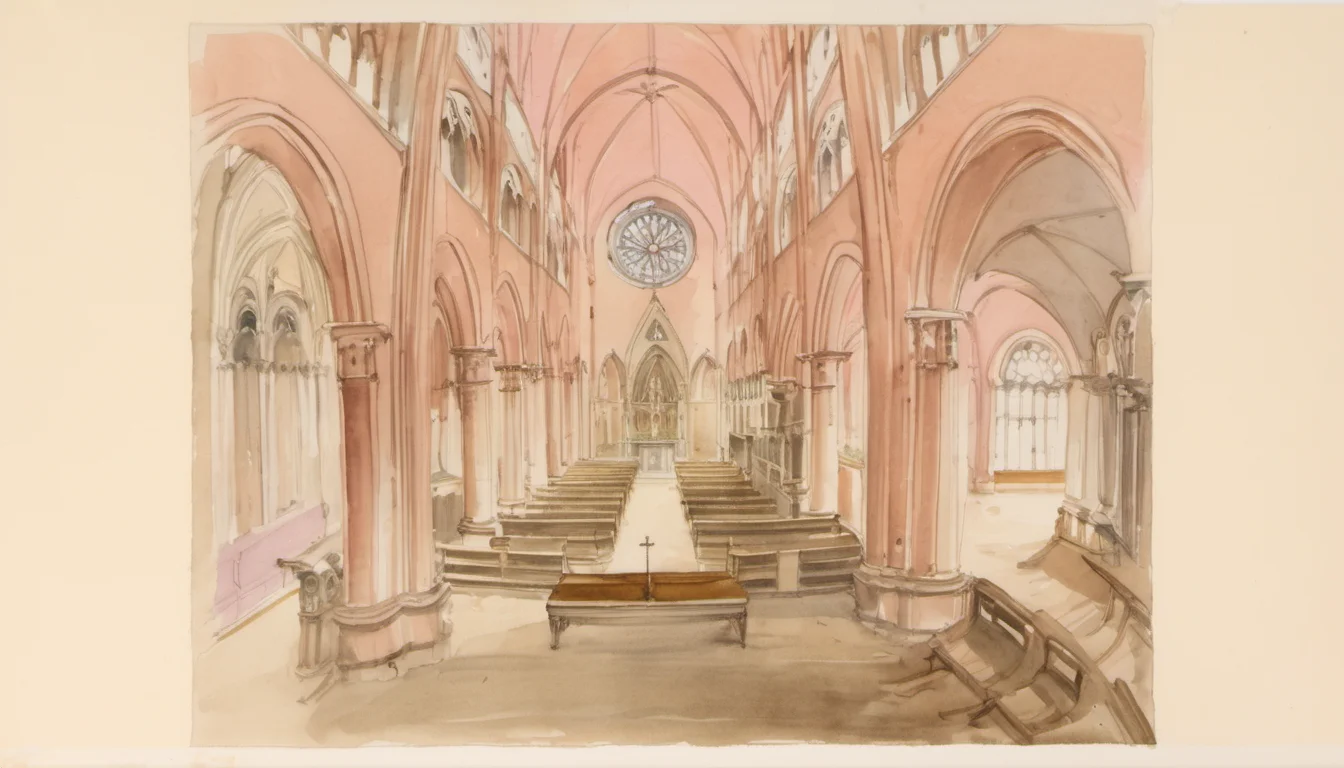
In 1963 the prison closed, and the Ministry of Culture took over. Restoration followed, and in 1975 the Centre culturel de l'Ouest was created. The complex opened to the public in 1985. Today, the abbey church – its tombs intact – stands at the heart of a cultural venue. The prison wings remain, a silent reminder of two very different centuries.
Robert of Arbrissel served as Archpriest of Rennes, carrying out reformist agendas. When the bishop died in 1095, local clergy hostility drove him out. He became a hermit in the forest of Craon, practicing severe penance alongside other men who later founded major monastic institutions. His eloquence and asceticism attracted many followers. In 1096 he founded a monastery of canons regular at La Roë, becoming its first abbot. Pope Urban II summoned him to Angers and appointed him an apostolic missionary. His preaching drew crowds of devoted followers – men, women, even lepers. When the canons at La Roë objected to the influx of lower-status candidates, Robert resigned and left.
Around 1100, Robert and his followers settled in a valley called Fons Ebraldi. Initially men and women lived together in a practice called Syneisaktism. Church authorities condemned this, and under pressure the community segregated by gender, with monks living in small priories serving the nuns. Fulk IV, Count of Anjou, gave a significant property gift before 1106. The community was recognized in 1106 by the Bishop of Angers and Pope Paschal II. Robert soon resumed his itinerant preaching, appointing Hersende of Champagne to lead. Petronilla of Chemillé was elected as the first abbess in 1115. Robert wrote a brief Rule based on St. Benedict, focusing on silence, good works, food and clothing – encouraging utmost simplicity. He directed that the abbess never be chosen from those raised at Fontevraud, but from those with worldly experience; this rule was observed only for the first two abbesses, later cancelled by Pope Innocent III in 1201. By Robert's death in 1117, the community numbered about 3,000 nuns.
The Plantagenets were great benefactors. Henry II's widow, Eleanor of Aquitaine, made the abbey her residence. King Henry II, Eleanor of Aquitaine, and their son Richard the Lionheart were all buried here at the end of the 12th century. Abbess Louise de Bourbon left her crest on many alterations during her term. After the Plantagenet line faded, the abbey fell on hard times. In the late 12th century, Abbess Matilda of Flanders complained of extreme poverty. In 1247, the nuns were permitted to receive inheritances for income – contrary to monastic custom.
By the 18th century, the abbey served the monarchy. The youngest four of the six daughters of Louis XV were sent here to be raised, each until age 15. In November 1789, all Church property was declared national property. On 17 August 1792, a Revolutionary decree ordered evacuation of all monasteries by 1 October. At that time, some 200 nuns and a small community of monks remained. The last abbess, Julie Sophie Charlotte de Pardaillan d'Antin, is said to have died in poverty in Paris in 1797.
The abbey became a prison in 1804. It was planned to hold 1,000 prisoners, requiring major changes: new barracks and transformation of monastic buildings into dormitories, workshops, and common areas. Prisoners – men, women, and children – began arriving in 1814. Eventually the prison held some 2,000 inmates, earning the reputation of being the toughest in France after Clairvaux. Political prisoners were subjected to the harshest conditions. Under the Vichy Government, some French Resistance prisoners were shot here.
In 1963 the prison was given to the French Ministry of Culture, and a major restoration began. The Centre culturel de l'Ouest was formed in 1975 to preserve the abbey and promote it as a cultural venue. The complex opened to the public in 1985. Restoration of the abbey church, according to an earlier plan by architect Lucien Magne, was completed in 2006. Today, the vast halls host exhibitions and concerts. The tombs of kings remain in the church; the prison wings endure. Every stone carries a layered history.