Gaziantep, Turkey
Gaziantep does not announce itself with the frantic energy of Istanbul or the coastal allure of Antalya. It sits in the south-central heart of Turkey, a city that has earned its name through endurance. Historically known as Aintab, and still informally called Antep by those who remember the older days, this place is defined by what it has survived. It is the capital of the province, the fifth-most populous city in the nation, and a place where history is not merely displayed in glass cases but etched into the very stones of the streets. To walk here is to move through layers of empires, each leaving a mark that the next had to build upon, often over the ruins of the last.
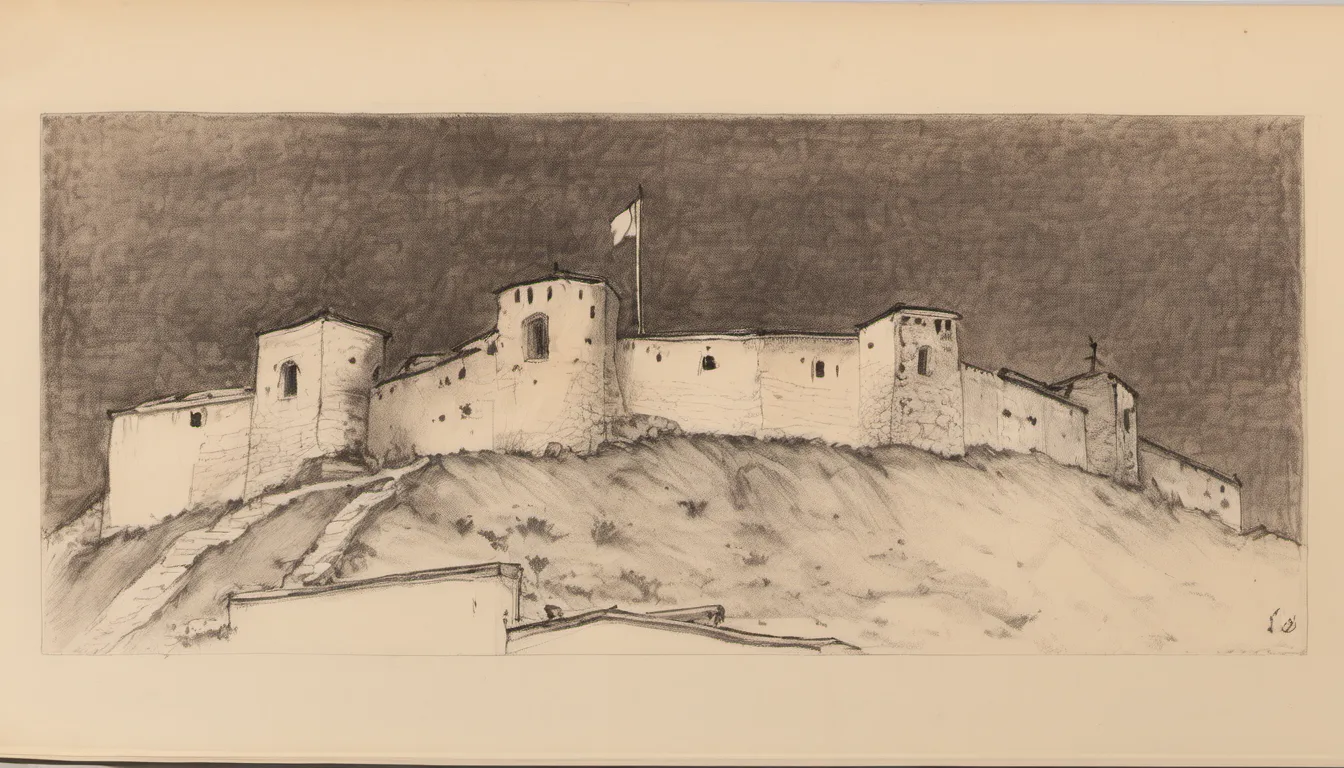
The city’s identity is anchored by its citadel, a Seljuk-era fortress perched on a central hill that has watched over the Sajur River valley for centuries. This is not a passive monument. It is the physical manifestation of Gaziantep’s role as a crossroads. Located 185 kilometers east of Adana and just 97 kilometers north of Aleppo, the city has always been a hinge between the Mediterranean and the vast interior of Anatolia. For centuries, it was hotly contested by the Mamluk Sultanate, the Dulkadirids, and the Ilkhanate. It was besieged by Timur in 1400 and by the Aq Qoyunlu in 1420. Yet, through these cycles of destruction and reconstruction, the city acquired a reputation as a cultured urban center, once dubbed 'little Bukhara' by a local historian for the density of its scholars.
What makes Gaziantep matter today is its dual nature as a guardian of tradition and a hub of modern industry. It is the center of Turkey’s pistachio cultivation, producing 60,000 tons annually, and the birthplace of the word for pistachio in Turkish: Antep fıstığı. The city’s culinary output, particularly its baklava, is so significant that it holds a protected geographical indication status. But beyond the food, there is a tangible sense of craftsmanship. The copper workshops, the olive oil soap factories, and the carpet industries create a rhythm of production that feels ancient yet vital. Walking through the covered markets, known as Bedesten, you encounter a commerce that has persisted since the Ottoman period, where trade routes still dictate the flow of goods and people.
The city rewards the walker with a landscape of resilience. Even after the devastating earthquake of February 2023, which collapsed parts of the castle and damaged historic sites, Gaziantep remained a regional hub for relief and reconstruction. This recent history adds a layer of gravity to the visit. The city is diverse, inhabited by ethnic Turks, a significant minority of Kurds, and Syrian refugees, creating a social fabric that is complex and currently being rewoven. To walk its streets is to witness a community that has learned to hold its ground, quite literally, against the forces of nature and time. It is a place that demands respect, offering not just sights, but a profound sense of continuity.
To understand Gaziantep is to understand the concept of survival as a cultural imperative. Located in the westernmost part of Turkey’s Southeastern Anatolia Region, with partial ties to the Mediterranean, the city has never been a peripheral outpost. It is a major node, historically known as Aintab and still informally called Antep. The name itself is a palimpsest of languages and empires: Hantab or Hamtab to the Crusaders, Aīntāb in Ottoman Turkish, and Gaziantep in official modern usage, a title granted by the Turkish parliament in February 1921 to honor the city’s fierce resistance against the French Siege of Aintab. The name 'Gazi' means victorious warrior, and the city wears this honor with a quiet, stoic pride. It is a place where the past is not a distant memory but a active participant in the present.
The city’s geographical position on the Sajur River, approximately 185 kilometers east of Adana and 97 kilometers north of Aleppo, Syria, has always dictated its fate. It is thought to be located on the site of the ancient Hellenistic city of Antiochia ad Taurum, near the ruins of ancient Zeugma. For centuries, this location made it a strategic prize. In the early history, Aintab was largely a fortress overshadowed by the larger city of Dülük, located 12 kilometers to the north. Dülük was the starting point for the cult of Jupiter Dolichenus, spreading to Europe via Roman soldiers. But after an earthquake in the 14th century devastated Dülük, Aintab rose to prominence. The fortress became a settlement, and the city began to assert its own identity, hotly contested by the Mamluk Sultanate, the Dulkadirids, and the Ilkhanate.
The medieval history of Gaziantep is a chronicle of shifting allegiances. After the Muslim conquest of the Levant in 634–638 AD, the region passed to the Umayyads and then the Abbasids. It was ravaged during the Arab–Byzantine wars and recaptured by the Byzantines in 962 under Nikephoros II Phokas. The turn of the 11th century brought the Seljuk Empire. In 1067, Afshin Bey captured the fortress, and Aintab fell to Seljuk rule. Yet, the region was administered by Armenian warlords, including Kogh Vasil. In 1098, it became part of the County of Edessa, a Crusader state, though Armenian administration continued. It reverted to the Seljuk Sultanate of Rûm in 1150, was controlled by the Armenian Kingdom of Cilicia between 1155–1157 and 1204–1206, and was captured by the Zengids in 1172 and the Ayyubids in 1181. This constant changing of hands was not merely political; it was a struggle for the soul of the city.
By the 14th century, Aintab had acquired a reputation as a cultured urban center, earning the nickname 'little Bukhara' from Badr al-Din al-Ayni, a native who became a successful diplomat, judge, and historian under the Mamluks. He noted that many scholars came to study there. However, this cultural flourishing was repeatedly interrupted by siege. The city was besieged by Timur in 1400 and by the Aq Qoyunlu leader Qara Yusuf in 1420. These attacks caused destruction and suffering, but they also forged a resilient identity. The city repeatedly changed hands between the Ilkhanate and the Mamluk Sultanate. The Mamluks controlled the city for long periods, from 1261 to 1516, except for brief intervals. It was unsuccessfully besieged by the Dulkadir leader Sevli Beg in 1390, an event documented by al-Ayni as a time of great suffering.
A significant turning point came in the late 1460s when the Dulkadir prince Şehsuvar rebelled against the Mamluks. Mamluk forces captured Aintab in May 1468, but Şehsuvar recaptured it a month later. After his final defeat and public execution by the Mamluks in 1473, Gaziantep enjoyed a period of relative peace under his brother and successor, Alaüddevle. Alaüddevle considered the city an important possession and commissioned several constructions, including a reservoir and a large mosque. The city’s fortress was renovated, completed in 1481, with repairs likely ordered by the Mamluk sultan Qaitbay during his tour of northern Syria in 1477. His name is inscribed above the entrance portal, a symbolic mark of territory that has weathered centuries.
The end of the Dulkadir principality came around 1515. Alaüddevle refused to fight alongside the Ottomans at the Battle of Chaldiran in 1514. The Ottomans used this as a pretext to overthrow him, executing him in June 1515. The Mamluk sultan Qansuh al-Ghawri mobilized an army, leading to high anxieties in Gaziantep about the city's fate. Court records from the early 1540s provide documentary evidence of 'dislocation and loss of population' as people fled. The Ottoman Empire captured Gaziantep just before the Battle of Marj Dabiq in 1516, under Sultan Selim I. From this point, Aintab became a sanjak, first in the Dulkadir Eyalet and later in the Aleppo vilayet. The city established itself as a center for commerce, straddling trade routes and benefiting from its strategic location.
Throughout the Ottoman period, Gaziantep hosted a large and significant Armenian community. Armenians played a crucial role in the city's history, culture, welfare, and prosperity. However, this community was decimated by the Hamidian massacres in 1895 and the subsequent Armenian Genocide. The legacy of this loss is visible in the architecture, such as the Kurtuluş Mosque, which was originally the Armenian Apostolic Church of the Mother of God, built in 1892. It was converted to a prison after the genocide and then to a mosque after 1980. The Great Synagogue of Gaziantep was restored in 2012, but the native Jewish population had left by the late 1970s. These architectural remnants serve as silent witnesses to the city's diverse past and the tragic erasure of its minority populations.
In the 20th century, Gaziantep’s role as a fortress of resistance was cemented during the Turkish War of Independence. British units occupied the region in 1918, followed by the French. The city’s resistance to the French Siege of Aintab was so fierce that the Turkish parliament honored it with the title 'Gazi' on February 8, 1921, the day of its surrender. This act of defiance is central to the city’s modern identity. The city became part of the Republic of Turkey through the Treaty of Lausanne in 1923. The name was officially changed to Gaziantep in 1928. The city’s population grew, becoming diverse with ethnic Turks, Kurds, and later, Syrian refugees. It is now the fifth-most populous city in Turkey, with over 2.2 million inhabitants in the province.
Economically, Gaziantep is a powerhouse. It has the largest organized industrial area in Turkey and leads in exports and imports. The city is famous for its copper objects, Yemenite sandals, and the Nizip olive oil soap. It is the center of Turkey’s pistachio cultivation, producing 60,000 tons annually. The word for pistachio in Turkish, Antep fıstığı, literally means 'pistachio of Antep.' The city’s baklava, made with these pistachios, is recognized with a protected geographical indication. The traditional commerce continues in the covered markets, the Bedesten, including the Zincirli Bedesten, the Hüseyin Pasha Bedesten, and the Kemikli Bedesten. These spaces are not just shops; they are living archives of trade practices that have persisted for centuries.
Culturally, the city is home to significant museums. The Museum of Mosaics of Zeugma, inaugurated in 2011, houses the largest collection of Roman mosaics from the lost city of Zeugma on the Middle Euphrates. It is likely the largest mosaic museum in the world. The Gaziantep Archaeological Museum also holds notable collections from Zincirli, Yesemek, and Arsameia. The city’s citadel, a Seljuk-era fortress on a central hill, offers a permanent exhibition documenting the official Turkish interpretation of the Armenian Genocide of 1915, presenting the narrative that Armenians attacked the Turkish population and were defeated. This official narrative contrasts with the broader historical consensus, adding a layer of political complexity to the visit.
The city’s recent history is marked by tragedy and resilience. On February 6, 2023, violent earthquakes struck the region, collapsing the castle and damaging the historic center. The overall destruction was less intense than in neighboring provinces, but the damage to historic sites was significant. Gaziantep served as a regional hub for international organizations and NGOs for earthquake relief and reconstruction. On August 20, 2016, a suicide bombing at a Kurdish wedding celebration killed 50 people and injured about 100. These events have shaped the city’s current social fabric. Today, Gaziantep is a place where tourists are still a novelty, and locals welcome them warmly. Many English-speaking students serve as guides, bridging the gap between the city’s deep history and the modern visitor. To walk Gaziantep is to walk through a city that has learned to endure, creating beauty and commerce from the stones of its own survival.