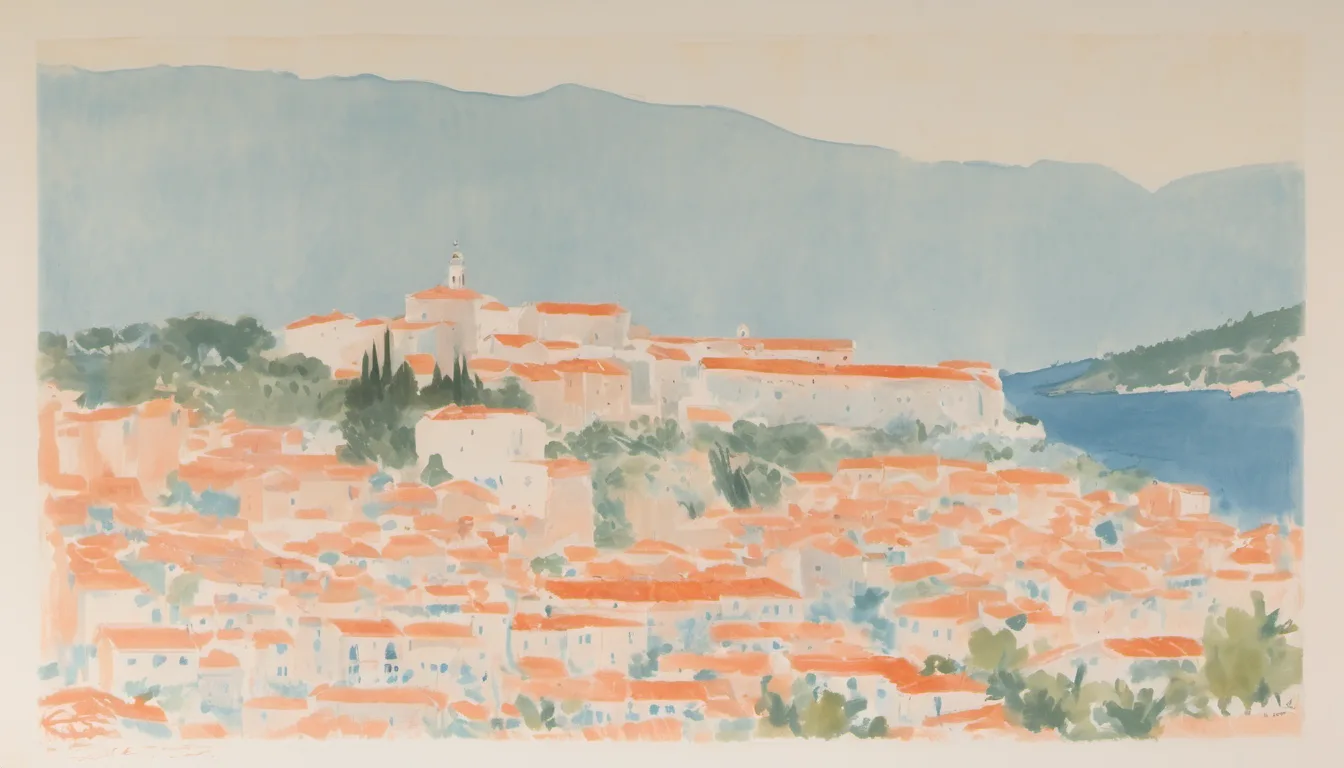
Hvar, Croatia
Hvar town does not announce itself with fanfare. It reveals itself slowly, a compact cluster of limestone and lavender clinging to the southern slope of the island’s highest peak. To walk here is to move through layers of time, where the air itself feels thick with the history of the Adriatic. This is not a place for rushing. It is a place for noticing the way light hits the stone, the scent of pine mixing with salt, and the quiet hum of life that has persisted here for centuries.
The core of Hvar’s appeal lies in its duality. On one hand, there is the fortified town, a masterpiece of Venetian urban planning, with its narrow, winding streets designed to catch the breeze. On the other, the hinterland rises sharply, wild and untamed, dotted with ancient stone houses and fields of lavender that perfume the air. The walk connects these two worlds, offering a perspective that few other Mediterranean destinations can provide. You are not just visiting a town; you are traversing a landscape that has shaped the region’s identity.
What makes Hvar matter is its resilience. Through Roman, Venetian, and Ottoman rule, the town has maintained its character, adapting without losing its soul. The walk rewards those who take their time, revealing hidden courtyards, quiet chapels, and viewpoints that frame the sea in shades of blue and green. It is a sensory experience, where the visual beauty is matched by the olfactory richness of the island’s flora. The town is not just a backdrop; it is an active participant in your journey.
To walk Hvar is to understand the rhythm of island life. It is slow, deliberate, and deeply connected to the land and sea. The streets are not merely paths; they are narratives written in stone and vegetation. Each turn offers a new detail, a new reason to pause. The town’s history is not confined to museums; it is embedded in the walls, the squares, and the very air. This is a place that demands attention, offering a depth of experience that lingers long after you leave.
Hvar town, perched on the southern face of the island’s highest peak, is a study in verticality and light. The name itself, derived from the Greek Phare, meaning 'light' or 'lighthouse', hints at its role as a beacon in the Adriatic. But this is no mere navigational aid; it is a cultural lighthouse, illuminating centuries of Mediterranean history. The town’s layout is a testament to Venetian pragmatism, designed to maximize airflow and minimize heat. The narrow streets, known as 'kafeanas', are not accidental; they are engineered to catch the prevailing breeze, offering relief from the intense summer sun. Walking through them is an exercise in thermal comfort, a lesson in ancient urban planning that remains relevant today.
The fortress, dominating the skyline, is not just a defensive structure but a symbol of the town’s strategic importance. Built by the Venetians in the 16th century, it replaced earlier fortifications, reflecting the shifting tides of power in the Adriatic. The walk up to the fortress is steep, rewarding the effort with panoramic views of the islands and the mainland. It is a physical reminder of the town’s vulnerability and resilience. The stones of the fortress are weathered by wind and salt, yet they stand firm, much like the community they were built to protect. This is a place where history is not abstract; it is tangible, felt in the soles of your feet and the strain of your muscles.
Inside the walls, the town unfolds in a series of squares and courtyards, each with its own character. The main square, Trg Sv. Stjepana, is the heart of civic life, dominated by the Cathedral of St. Stephen. The cathedral, with its Renaissance facade and Baroque interior, is a testament to the town’s artistic patronage. The walk through the town reveals a series of hidden gems: small chapels, family palaces, and artisan workshops. These are not tourist traps but living spaces, where the rhythms of daily life continue amidst the historical backdrop. The town is not a museum; it is a home, and walking through it is an act of respectful intrusion.
The hinterland of Hvar is as significant as the town itself. Rising sharply from the coast, the interior is a landscape of karst fields, cypress groves, and lavender fields. The walk into the hinterland is a journey into a different world, one defined by agriculture and isolation. The stone houses, scattered across the hills, are remnants of a pastoral past, now often converted into holiday homes. Yet, they retain their utility, serving as storage for harvests and shelter for livestock. The lavender, planted in neat rows, is not just a crop; it is a cultural icon, symbolizing the island’s identity. The scent of lavender is pervasive, mixing with the dry heat of the stone and the salt of the sea.
The history of Hvar is layered, with Roman, Venetian, and Ottoman influences visible in the architecture and urban fabric. The Roman period left its mark in the form of roads and settlements, though little remains above ground. The Venetian era, however, was transformative, shaping the town into the fortified entity we see today. The Ottomans, who occupied the island intermittently, left their mark in the form of religious diversity and trade networks. The walk through the town reveals these layers, with each building telling a story of conquest, adaptation, and survival. It is a history of resilience, where the town has consistently reinvented itself while maintaining its core identity.
One of the most intriguing aspects of Hvar is its role in the arts. In the 17th century, the town was a center of Dalmatian Renaissance literature, with poets and playwrights finding inspiration in its beauty. The Hvar Summer Festival, held in the town’s theater, continues this tradition, showcasing music, drama, and dance. The theater itself, a 17th-century structure, is one of the oldest in Europe, a testament to the town’s cultural sophistication. Walking through the town, you can feel the echo of these artistic currents, the sense that this place has always been a crucible of creativity. It is not just a place to visit; it is a place to experience, to engage with, to be moved by.
The local legends add another dimension to the walk. One tale speaks of a hidden treasure buried beneath the fortress, guarded by a spectral figure who appears only to those pure of heart. Another legend tells of a spring that provides healing waters, sought by pilgrims from across the Adriatic. These stories are not mere folklore; they are expressions of the town’s spiritual and cultural identity, woven into the fabric of daily life. Walking through the town, you are walking through these narratives, each stone and square a chapter in an ongoing story. The legends are not separate from the reality; they are part of it, enriching the experience of place.
The political history of Hvar is equally complex. The town has been a site of resistance and rebellion, from the Illyrian revolts to the Venetian-Ottoman wars. The 19th century brought new challenges, with the rise of nationalism and the eventual integration into Yugoslavia. The post-war period saw significant changes, with tourism becoming the primary economic driver. The walk through the town reveals these shifts, with modern developments coexisting with historical structures. The town is not static; it is evolving, adapting to the demands of the modern world while preserving its heritage. This balance is delicate, requiring careful stewardship and community involvement.
The environmental context of Hvar is crucial to understanding its appeal. The island’s unique microclimate, influenced by the surrounding sea and mountains, supports a diverse range of flora and fauna. The lavender fields, in particular, are a testament to the island’s agricultural heritage, providing not just income but also aesthetic pleasure. The walk through the hinterland offers a chance to appreciate this biodiversity, to see the interplay between human activity and natural systems. It is a reminder that the town’s beauty is not just visual but ecological, rooted in the land and sea that sustain it. The walk is thus an act of environmental awareness, a recognition of the fragility and value of this unique ecosystem.
In conclusion, Hvar town is a place of depth and complexity, where history, culture, and nature intersect. The walk through its streets and hinterland is not just a physical journey but an intellectual and emotional one. It is a journey that rewards patience, curiosity, and respect. The town is not just a destination; it is a conversation, a dialogue between past and present, land and sea, stone and spirit. To walk Hvar is to engage with this conversation, to add your own voice to the ongoing narrative. It is an experience that lingers, a memory etched in the mind and heart, a testament to the enduring power of place.