Lalibela, Ethiopia
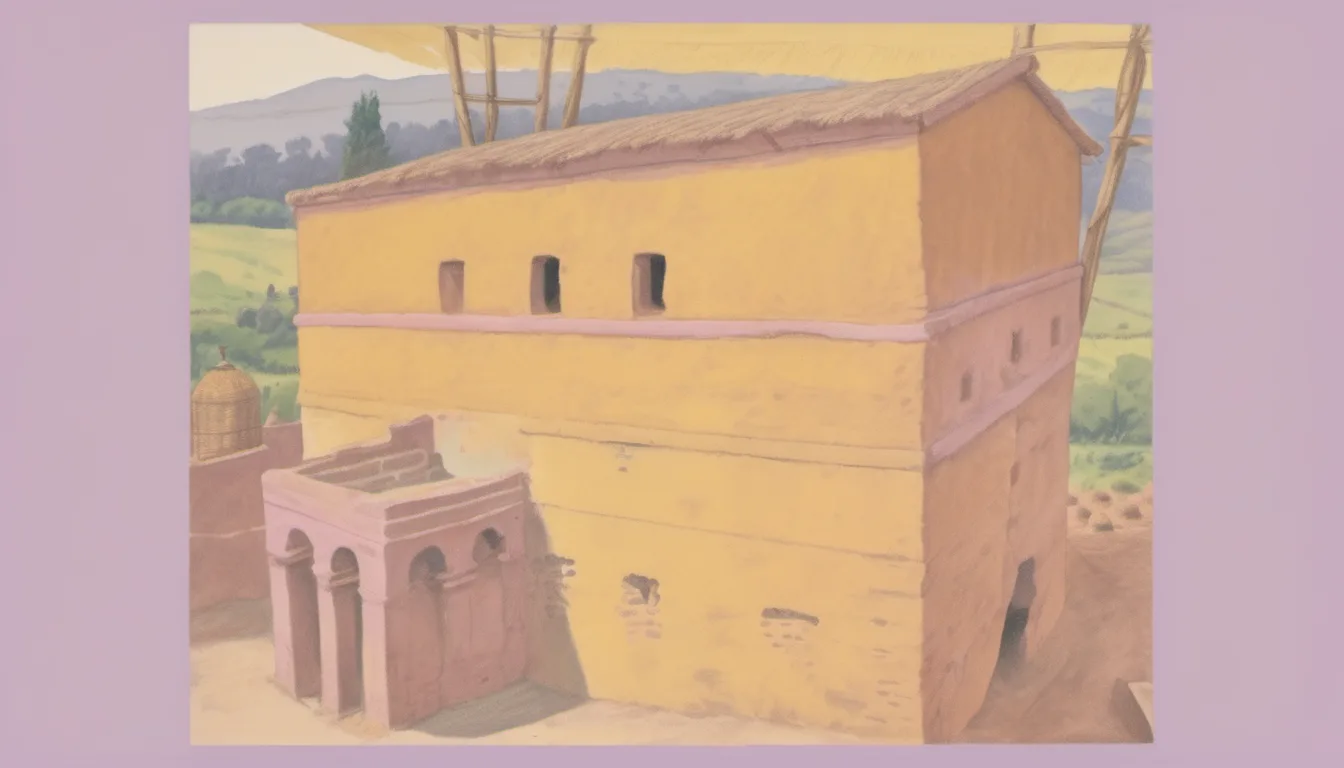
Lalibela does not announce itself with spires or domes. It rises from the red volcanic rock of the Amhara Region, a town where the architecture is subtracted rather than built. At 2,500 metres above sea level, in the Lasta district, the landscape is defined by deep trenches and narrow passageways that connect eleven monolithic churches. These are not structures placed upon the earth; they are the earth itself, carved downward from living rock. To walk here is to move through a geological scripture, where every pillar, altar, and window is part of a single, continuous stone mass.
The city is widely accepted by local clergy to be a symbolic representation of Jerusalem. This theological mapping is not merely poetic; it is structural. The layout mirrors the holy city, creating a sacred geography that has drawn pilgrims for centuries. For many Christians, this is one of Ethiopia’s holiest sites, a place where the ancient faith of the Aksumite period meets the medieval ingenuity of the Zagwe dynasty. The air here feels thicker, charged with the scent of incense and the quiet hum of devotion.
What makes Lalibela singular is its defiance of conventional construction. The churches date from the 7th to 13th centuries, traditionally associated with King Gebre Meskrel Lalibela, who ruled from roughly 1181 to 1221. Yet modern archaeology suggests a more complex timeline, with some structures possibly dating back to the Kingdom of Aksum between 600 and 800 AD. Regardless of the exact date, the result is a feat of engineering that appears superhuman. Each church, from Biete Medhane Alem to Biete Golgotha, was excavated from a single rock, complete with pillars, altars, and vaults, using no mixture of outside stone.
Walking through Lalibela rewards you with a sense of timelessness. The dry season, from October to March, offers the best conditions for exploring the temple complex. During major religious festivals like Genna on January 7 and Timkat on January 19, the city swells with multi-day processions, traditional music, and rituals. But even in quiet moments, the site remains a profound experience. It is a World Heritage Site not just for its antiquity, but for its continuous use as a center of pilgrimage. You are not just observing history; you are walking through a living, breathing faith that has endured invasions, wars, and centuries of change.
The town itself, formerly part of the Bugna district, serves as the gateway to this spiritual epicenter. It is a place where legend and history intertwine. Local tradition holds that King Lalibela was guided by Jesus on a tour of Jerusalem and instructed to build a second Jerusalem in Ethiopia. Whether viewed as literal history or sacred myth, this narrative shapes the visitor’s experience. You leave Lalibela not with photographs of buildings, but with the weight of stone and spirit, understanding why this city remains one of the most important sites for medieval and post-medieval Ethiopian civilization.
Lalibela is a town that defies the conventional logic of architecture. Located in the Lasta district of the Amhara Region, at an elevation of roughly 2,500 metres, it is a place where the ground is not a foundation but a canvas. The famous rock-cut monolithic churches are not built upon the earth; they are carved from it. This subtraction, rather than addition, defines the city’s identity. To walk through Lalibela is to navigate a landscape of deep trenches and narrow passageways that connect eleven distinct religious structures. These are not separate buildings but extensions of the living rock, a geological scripture written in stone. The site is a testament to the antiquity, medieval, and post-medieval civilization of Ethiopia, standing as one of the country’s holiest cities and a enduring center of pilgrimage.
The historical roots of Christianity in Ethiopia are among the earliest in the world, dating to the first half of the 4th century and the time of the Apostles. However, the churches of Lalibela themselves date from the 7th to 13th centuries. They are traditionally attributed to the reign of the Zagwe (Agaw) king Gebre Meskrel Lalibela, who ruled from approximately 1181 to 1221. The Zagwe dynasty, founded in 1137 by the monk Tekle Haymanot, restored Christianity as the state religion, reviving the traditions of the ancient Kingdom of Aksum. The capital of this dynasty was Adafa, near modern Lalibela, in the Lasta mountains. This period is shrouded in mystery, with varying accounts of the number of kings and the duration of their rule, but the architectural legacy remains undeniable.
The layout and names of the major buildings in Lalibela are widely accepted, particularly by local clergy, to be a symbolic representation of Jerusalem. This theological mapping is not merely symbolic; it is structural. The city’s design mirrors the holy city, creating a sacred geography that has drawn pilgrims for centuries. Some experts date the current church construction to the years following the capture of Jerusalem in 1187 by the Muslim leader Saladin. This timing suggests a deliberate effort to create a new holy city in Ethiopia, a second Jerusalem for Christians who could no longer visit the original. The result is a city that functions as a spiritual replica, allowing believers to perform pilgrimages without leaving Africa.
The chronology of the churches has been a subject of scholarly debate. David Roden Buxton established a generally accepted timeline, noting that two of the churches follow the tradition represented by Debra Damo, modified at Yemrahana Kristos. Buxton argued that the work extended into the 14th century, beyond Lalibela’s reign, given the time required to carve such structures. However, David Phillipson, professor of African archaeology at the University of Cambridge, has proposed that churches such as Merkorios, Gabriel-Rufael, and Danagel were initially carved out of the rock half a millennium earlier, between 600 and 800 AD, as fortifications or palace structures during the Kingdom of Aksum. King Lalibela’s name may have become associated with them after his death, layering history upon history.
Local tradition offers a different narrative. According to legend, Gebre Meskrel Lalibela was guided by Jesus on a tour of Jerusalem and instructed to build a second Jerusalem in Ethiopia. The town, traditionally known as Roha, was founded during the Zagwe dynasty. Local historian Getachew Mekonnen credits Queen Meskrel Kibra, Lalibela’s wife, with having one of the rock-hewn churches, Biete Abba Libanos, built as a memorial for her husband after his death. These stories, whether historical or legendary, underscore the site’s significance as a place of royal and divine intervention. The churches are not just religious sites; they are monuments to a king’s vision and a queen’s devotion.
Recent archaeological excavations have yielded abundant pottery and faunal remains dating to 900–1100, indicating that the site was largely a secular settlement before being transformed into a religious center by King Lalibela. Pre-Christian carved animal friezes were found on the lower walls of the nearby Washa Mikael cave, with Christian paintings subsequently added to the upper walls. This suggests that the region was still undergoing Christianization at this time, blending old and new beliefs. The transformation of Lalibela from a secular town to a holy city was not instantaneous but evolved over several phases of construction and alteration of preexisting structures, reflecting the dynamic nature of Ethiopian religious history.
The site’s first mention in European publication was in the Fra Mauro map made in Venice between 1457 and 1459, written as Lalabeda. In the 1520s, the Portuguese priest Francisco Álvares accompanied an ambassador to Dawit II and described the unique church structures. He wrote with such conviction that he swore by God that his accounts were true, fearing disbelief. Although Ramuso included plans of several churches in his 1550 printing of Álvares’ book, it is unknown who provided the drawings. This early documentation highlights the site’s growing recognition in Europe, even as it remained isolated from much of the continent’s political upheavals.
The 16th century brought conflict. According to the Futuh al-Habasha, Shihab al-Din Ahmad ibn Ibrahim al-Ghazi, known as Ahmad Gragn, burned one of the churches of Lalibela during his invasion of Ethiopia. He provided a detailed description of a rock-hewn church, noting its pillars cut from the mountain. Ahmad gathered the monks and lit a fire, challenging them to enter. A nun threw herself onto the fire before being pulled out by his soldiers. However, Richard Pankhurst expressed skepticism, noting that Royal Chronicles record Ahmad’s ravaging of the district between July and September 1531 but are silent on the churches. He concludes that if a church was burned, it was likely Biete Medhane Alem or Gannata Maryam, ten miles east of Lalibela.
The next reported visitor was Miguel de Castanhoso, a soldier under Cristóvão da Gama, who left Ethiopia in 1544. Castanhoso stated that the churches were attributed to angels, their work appearing superhuman. He noted that when Moors overran the country, they tried to destroy the churches with crowbars and gunpowder but did no damage. This account underscores the durability and perceived sanctity of the structures. The inability of invaders to destroy the churches reinforced their status as divine works, protected by forces beyond human understanding. This narrative of resilience has become part of the site’s identity, enhancing its spiritual significance.
In 1882, French explorer Achille Raffray was given an Ethiopian manuscript at Lalibela, which claimed that King Lalibela and his wife brought five hundred workers from Alexandria and Jerusalem, headed by Sidi Meskrel. However, Monti della Corte, utilizing the expertise of Arnold Van Lantschoot at the Vatican Library, clarified that Raffray’s translation was almost completely incorrect. The texts, written in Coptic, Arabic, and Ge’ez, made no mention of Sidi Maskal or foreign builders. The first text, attributed to Abuna Bartolomeo, dated during the reign of Dawit I (1380–1409), was a brief statement. The second, in Arabic, was a land charter. The third, in Ge’ez, appeared to be written during the reign of Dawit II (1508–1540). This correction highlights the importance of accurate scholarship in understanding the site’s history.
The 20th century saw Lalibela endure significant turmoil. During the Second Italo-Ethiopian War, Haile Selassie made a pilgrimage to the churches at considerable risk of capture before returning to his capital in April 1936. Italian forces captured the town shortly after. In 1968, Mohammad Reza Pahlavi, accompanied by Emperor Haile Selassie, visited the churches, followed by Queen Juliana and Prince Bernhard in 1969. However, during the Ethiopian Civil War, the town was targeted by the Ethiopian People’s Democratic Movement (EPDM). In 1984, they briefly held ten foreigners captive, and on March 3, 1985, they captured the crew of a French transport aircraft before releasing them. These attacks significantly reduced foreign tourism, and by 1990, most tourists were Ethiopians. In 2021, during the Tigray War, Tigrayan Defense Force fighters captured the town, only for the Ethiopian army to recapture it in December. These conflicts underscore Lalibela’s vulnerability and resilience, a site that has survived centuries of change and conflict, remaining a beacon of faith and history.