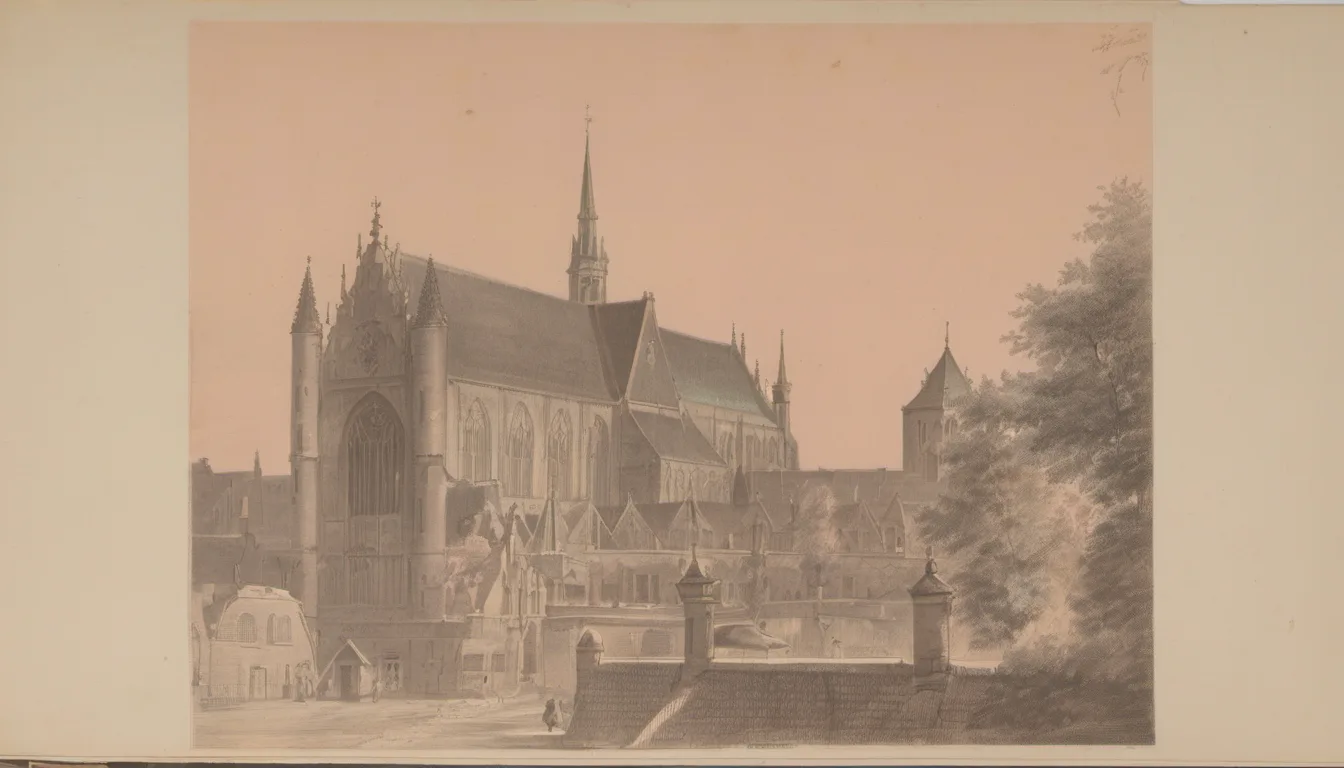
Leiden, Netherlands
Leiden does not shout; it accumulates. Situated on the Oude Rijn, roughly 20 kilometers south of The Hague, the city feels less like a modern municipality and more like a preserved argument about the value of knowledge. With a population of just over 127,000, it is compact enough to traverse on foot, yet dense with the weight of four centuries of intellectual rigor. This is not a city that relies on spectacle. It relies on the quiet, persistent hum of a university that has stood since 1575, rewarding those who walk its streets with the sense that they are moving through a living archive of human curiosity.
The city’s identity is forged in the crucible of the Dutch Revolt. When Spanish forces besieged Leiden from May to October 1574, the inhabitants held out until the dikes were cut, flooding the surrounding land and allowing ships to bring provisions to the starving citizens. William I of Orange founded the University of Leiden in 1575 as a reward for this heroic defense, a choice made by citizens who were offered the option of tax exemption but chose education instead. That decision, made in the shadow of cannon fire, still defines the city’s rhythm today. The siege is commemorated annually on October 3, but the real celebration is found in the daily life of a city that chose books over gold.
Walking Leiden is an exercise in looking up. The skyline is punctuated by the towers of churches and the distinctive architecture of the university colleges, scattered throughout the city like academic outposts. You will pass the sites where Rembrandt was born and educated, where Lucas van Leyden painted, and where Jan Steen captured the bustling life of the 17th century. The city is a canvas of the Dutch Golden Age, but it is also a laboratory of modern science. From Boerhaave’s medical innovations to Kamerlingh Onnes’ liquefaction of helium, Leiden has been a primary site for discoveries that changed the world. The streets are not just paved; they are paved with the footsteps of Nobel laureates and restless minds.
There is a specific quality to the light here, particularly in the autumn, that seems to highlight the brickwork of the 17th-century buildings. The city expanded beyond its moats only around 1896, meaning the historic core remains largely intact, a rare preservation in a country known for urban renewal. You can walk from the printing houses of the Elzevir dynasty to the quiet parks that replaced the ruins of the 1807 gunpowder explosion. Leiden rewards the walker who pays attention to the details: the stone carvings, the canal bridges, and the quiet dignity of a city that has survived sieges, plagues, and industrial decline to remain, stubbornly and beautifully, a center of learning.
To understand Leiden, one must first understand the water. The city was formed on an artificial hill, now known as the Burcht van Leiden, at the confluence of the Oude Rijn (Old Rhine) and the Nieuwe Rijn (New Rhine). The name itself derives from the Germanic word *leitha*, meaning canal, a fitting etymology for a city defined by its relationship with the river. For centuries, the Rhine was not just a geographical feature but the city’s economic artery, facilitating trade and transport. Today, it remains the city’s spine, guiding the flow of pedestrians and cyclists through a landscape that has changed little in its fundamental layout. The recreational area of the Kaag Lakes lies just to the northeast, offering a counterpoint to the urban density, but it is the river that gives Leiden its character: fluid, reflective, and historically deep.
The city’s history is often erroneously associated with the Roman outpost Lugdunum Batavorum, a misconception that once placed the Roman castellum at the Burcht. In reality, the Roman settlement near Leiden was called Matilo, located closer to Katwijk. This correction is important because it allows Leiden to claim its own distinct narrative, one that begins not with Roman conquest but with medieval struggle. The city’s early growth was tied to its weaving industry, particularly broadcloth, which flourished in the 15th and 16th centuries. This economic base supported a burgeoning printing and publishing industry, attracting figures like Lucas van Leyden, Otto van Veen, and Christoffel Plantijn. It was here that Lodewijk Elzevir established the largest bookshop and printing works in Leiden, a business that would continue through his descendants until 1712, laying the groundwork for the city’s reputation as a center of knowledge.
The turning point in Leiden’s history came with the Eighty Years' War. In 1572, the city sided with the Dutch Revolt against Spanish rule, a decision that would cost them dearly. From May to October 1574, Leiden was besieged by Spanish forces. The siege was brutal, lasting months and reducing the population of 15,000 to a fraction of that number through starvation and disease. The city’s salvation came not from military victory but from hydrological engineering. The defenders cut the dikes, flooding the surrounding land and allowing ships to carry provisions to the inhabitants. This act of desperation, known as the Watergeus, saved the city. William I of Orange founded the University of Leiden in 1575 as a reward for this heroic defense. The choice of a university over tax exemption was a profound statement: Leiden valued the future over immediate relief. This decision established the city as a beacon of learning, a status it has maintained for over four centuries.
The university’s influence permeates the city’s physical and intellectual landscape. Leiden University, the oldest in the Netherlands, is one of Europe’s top institutions, with thirteen Nobel Prize winners among its alumni and faculty. It is a member of the League of European Research Universities and is twinned with Oxford, the location of the United Kingdom’s oldest university. The university buildings are scattered throughout the city, integrating seamlessly with the historic architecture. Students from around the world contribute to a bustling, vivid, and international atmosphere. The city houses not only Leiden University but also Leiden University Medical Center, a hub of modern scientific research. The legacy of Herman Boerhaave, who started modern scientific medical research in the early 18th century, is still felt in the city’s commitment to medical innovation. Leiden’s motto, 'City of Discoveries,' is not mere marketing; it is a historical fact.
The city’s artistic heritage is equally significant. Rembrandt was born and educated in Leiden, and his early works reflect the influence of the local artistic community. Other notable painters include Lucas van Leyden, Jan van Goyen, and Jan Steen. The city’s printing industry also played a crucial role in the dissemination of art and ideas. The Elzevir dynasty, founded by Lodewijk Elzevir, produced high-quality books that were distributed across Europe. The city’s reputation as the 'City of Books' persisted through the 19th century, with publishing dynasties like Evert Jan Brill and Albertus Willem Sijthoff continuing the tradition. Sijthoff’s opposition to the Berne Convention for the Protection of Literary and Artistic Works in 1899 highlights the city’s commitment to the free flow of information, even at the cost of international copyright restrictions.
The 19th century brought both challenges and transformations. On 12 January 1807, a catastrophe struck the city when a boat loaded with 17,400 kg of gunpowder exploded in the middle of Leiden. The explosion killed 151 people, injured over 2,000, and destroyed some 220 homes. The area destroyed remained empty for many years, a scar on the city’s center. In 1886, the space was turned into a public park, the Van der Werff park, a testament to the city’s resilience. The inauguration of the railroad from Leiden to Haarlem in 1842, and to The Hague in 1843, brought social and economic improvement. Perhaps the most significant contribution to Dutch history from this period was the Constitution of the Netherlands, written by Johan Rudolf Thorbecke in 1848 in his house at Garenmarkt 9 in Leiden. This document laid the foundation for modern Dutch democracy.
The 20th century saw Leiden expand beyond its 17th-century moats, with the population surpassing 50,000 in 1900. New industries, such as canning and metal, were established after 1920. However, World War II brought destruction, with Allied bombardments heavily damaging the areas surrounding the railway station and Marewijk. Despite these challenges, Leiden’s scientific reputation grew. The university was the site of many discoveries, including Snell’s law by Willebrord Snellius and the Leyden jar, a capacitor invented by Pieter van Musschenbroek in 1746. Heike Kamerlingh Onnes, who won the Nobel Prize in Physics in 1913, liquefied helium for the first time in 1908 and later reached temperatures less than one degree above absolute zero. Albert Einstein also spent time at Leiden University during his early to middle career, further cementing the city’s place in the history of science.
Walking through Leiden today, one can trace the layers of this history. The Burcht van Leiden, the artificial hill where the city began, offers a view of the modern city and the river. The narrow streets of the historic center are lined with 17th-century buildings, their facades a mix of brick and stone. The university colleges, with their distinctive architecture, stand as reminders of the city’s academic heritage. The parks, such as the Van der Werff park, provide green spaces in the urban fabric. The city’s population of 127,046 (as of 31 January 2023) forms a densely connected agglomeration with its suburbs Oegstgeest, Leiderdorp, Voorschoten, and Zoeterwoude, with a total population of 215,602. The inclusion of Katwijk in the agglomeration brings the total to 282,207, and the larger Leiden urban area, including Teylingen, Noordwijk, and Noordwijkerhout, has 365,913 inhabitants. This urban sprawl is a testament to the city’s enduring appeal.
The city’s cultural institutions are as important as its historical sites. The National Museum of Antiquities (Rijksmuseum van Oudheden) houses a significant collection of artifacts from the Roman period, including items from Matilo. The Hortus Botanicus, founded in 1590, is one of the oldest botanical gardens in the world. The city’s museums and galleries showcase the works of local artists and the broader Dutch Golden Age. The annual Leiden International Film Festival and the Leiden Jazz Festival add to the city’s cultural calendar. The city’s commitment to education and research is evident in its many libraries and archives, which preserve the records of its long history. Leiden is a city that values the past but is always looking forward, a place where the past and the present coexist in a delicate balance.
In conclusion, Leiden is a city that rewards the walker who takes the time to look closely. It is a place where the weight of history is palpable, where the streets tell stories of sieges, discoveries, and artistic achievements. It is a city that has chosen knowledge over gold, a decision that has paid dividends for over four centuries. Leiden is not a city that seeks to impress with grandeur; it seeks to inspire with depth. It is a city that invites you to walk its streets, to read its buildings, and to listen to its rivers. It is a city that, like the Rhine, flows with the current of history, carrying with it the memories of those who have walked before. Leiden is a city of discoveries, not just in science, but in the human spirit.