Paris, France
Paris is not merely a destination but a continuous conversation between the past and the present. Located on the Seine in the heart of the Île-de-France, it holds two million residents within its administrative boundaries, yet its influence radiates across the globe. To walk here is to traverse layers of time, from the marshy origins of the Parisii tribe to the polished stone of Haussmann’s 19th-century renovation. The city’s identity is fragmented into twenty arrondissements, each carrying its own cultural weight, yet unified by a shared commitment to culture, finance, and diplomacy.
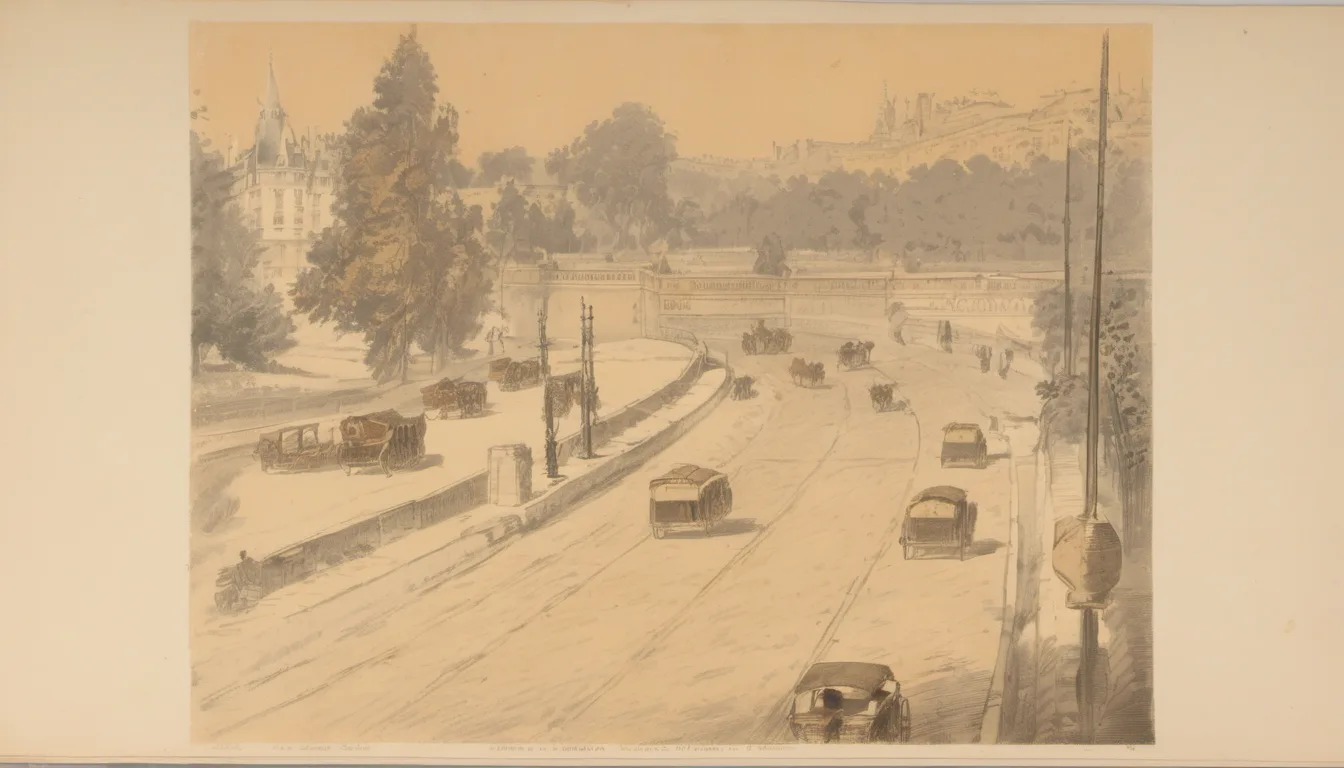
The city’s singular quality lies in its physical form. The wide boulevards, parks, and public works created during the modernization of the 19th century were not just aesthetic choices but political statements, designed to open the city to light and air. This transformation birthed the modern Paris, a capital that balances the intimacy of medieval streets with the grandeur of monumental axes. Walking allows you to see how the city was engineered for movement, contrasting the narrow, winding paths of the Left Bank with the sweeping vistas of the Right Bank.
What makes Paris matter to the walker is the density of its narrative. Every bridge, from the medieval Pont Neuf to the modern structures, tells a story of engineering and art. The city’s museums, from the Musée d'Orsay to the Centre Pompidou, are not isolated institutions but part of a broader cultural ecosystem that has defined European art for centuries. The Seine, a UNESCO World Heritage site, serves as the city’s spine, guiding your steps through a landscape where every corner holds a historical or artistic revelation.
Walking Paris rewards those who look beyond the tourist trails. It is a city of contrasts, where the political gravity of the Élysée Palace sits quietly near the artistic bohemianism of Montmartre. The sustainable transport system, recognized globally for its efficiency, complements the pedestrian experience, allowing for seamless transitions between neighborhoods. The Art Nouveau Métro stations, with their distinctive ironwork, serve as gateways to this urban tapestry, inviting exploration of the city’s hidden courtyards and quiet squares. This is a city that demands to be seen, not just visited, offering a profound sense of place that remains unchanged despite the constant flux of modern life.
Paris, the capital of France, stands as a testament to the endurance of urban planning and cultural ambition. With an estimated population of 2.04 million within its 105.4 square kilometers, and a metropolitan area reaching 13.2 million, it is the largest city in the European Union by population. Located on the Seine, it has evolved from a Gallic oppidum to the political and cultural heart of the nation. The name Paris derives from the Parisii, a Gallic tribe that inhabited the area from the 3rd century BC. Julius Caesar conquered the region in 52 BC, establishing Lutetia Parisiorum on the Left Bank. This Roman settlement included forums, baths, and theaters, laying the groundwork for the city’s future prominence.
The transition from Lutetia to Paris was gradual, with the name Parisius appearing by the end of the Western Roman Empire. Christianity was introduced in the 3rd century by Saint Denis, the first Bishop of Paris. According to legend, Denis was beheaded on the hill that became Montmartre, the Hill of Martyrs. He walked headless to the north, where he was buried, establishing the Basilica of Saint-Denis, a site where many French kings are interred. This legend underscores the city’s deep religious roots, which have shaped its architecture and identity for centuries. The name Paris itself may derive from the Celtic root pario-, meaning cauldron, or from a Proto-Celtic form suggesting 'spear people', reflecting the tribe’s martial heritage.
By the 12th century, Paris had become the political, economic, and cultural capital of France. Maurice de Sully, the bishop of Paris, initiated the construction of Notre Dame Cathedral in 1163, a project that spanned 182 years. This Gothic masterpiece symbolized the city’s spiritual and artistic ascent. Meanwhile, the cultural center shifted to the Right Bank as marshlands were filled in. The marketplace of Les Halles replaced earlier trading posts, becoming the commercial heart of the city. Philip Augustus, in the late 12th century, extended the Louvre fortress and built the first city walls between 1190 and 1215. He also paved the main thoroughfares, recognizing the need for order and defense against river invasions.
In 1190, Philip Augustus transformed the cathedral school into the University of Paris, which attracted students from across Europe. By 1328, Paris had 200,000 inhabitants, making it the most populous city in Europe, far exceeding London’s 80,000. The city’s growth was accompanied by significant social challenges, including sanitation issues that led to street names referencing human waste. During the Hundred Years’ War, Paris was occupied by Burgundian and English forces, with Joan of Arc’s failed liberation attempt in 1429 marking a turbulent period. The city remained under English occupation until 1436, a dark chapter that tested its resilience.
The 16th century brought the French Wars of Religion, with Paris as a stronghold of the Catholic League. The St. Bartholomew’s Day massacre of 1572, where thousands of Protestants were killed, highlighted the city’s religious tensions. Henry IV, after converting to Catholicism, entered Paris in 1594, claiming the crown. His reign brought significant improvements, including the completion of the Pont Neuf, the first covered bridge with sidewalks. He also built a Louvre extension connecting to the Tuileries Palace and created the Place Royale, now Place des Vosges, the city’s first residential square. These projects reflected a vision of order and beauty that would define Paris for centuries.
The 17th century saw Cardinal Richelieu, chief minister to Louis XIII, further shaping the city’s infrastructure. His efforts to improve circulation and public spaces laid the groundwork for future developments. The city’s narrow streets, however, contributed to Henry IV’s assassination near Les Halles in 1610, a reminder of the dangers of urban density. The 18th century brought the Enlightenment, with Paris becoming a center of philosophy and science. The city’s salons hosted thinkers like Voltaire and Rousseau, influencing political thought across Europe. This intellectual ferment set the stage for the French Revolution, which would radically transform the city’s political landscape.
The 19th century brought Haussmann’s renovation, a massive urban renewal project directed by Napoleon III. Baron Haussmann created new boulevards, parks, and public works, giving birth to the modern Paris. This transformation was not merely aesthetic but political, designed to prevent uprisings by opening up narrow streets and improving visibility. The new boulevards facilitated movement and trade, while the parks provided green spaces for the growing population. The Art Nouveau-decorated Métro, opened in 1900, became a symbol of the city’s modernity, with its distinctive ironwork and signage designed by Hector Guimard. This infrastructure supported the city’s growth as a major railway, motorway, and air-transport hub.
Paris’s cultural significance is evident in its museums and architectural landmarks. The Musée d'Orsay, Musée Marmottan Monet, and Musée de l'Orangerie house collections of French Impressionist art, while the Musée National d'Art Moderne and Musée Rodin showcase modern and contemporary works. Parts of the city along the Seine were designated a UNESCO World Heritage Site in 1991, recognizing its architectural and historical value. The city’s political importance is underscored by the presence of the French Parliament and the Élysée Palace. It also hosts numerous international organizations, including UNESCO, the OECD, and the International Energy Agency, reinforcing its role as a global diplomatic center.
The city’s sporting heritage is equally significant, hosting the French Open and home to clubs like Paris Saint-Germain and Stade Français. Paris has hosted the Summer Olympics three times, in 1900, 1924, and 2024, showcasing its ability to adapt to global events. The Stade de France in Saint-Denis, the country’s largest sports venue, has hosted major football and rugby finals. The city’s sustainable transportation system, recognized with the Sustainable Transport Award twice, reflects its commitment to modern urban challenges. This balance of tradition and innovation makes Paris a unique urban laboratory, where history and modernity coexist.
Walking Paris is an exercise in layering. The city’s twenty arrondissements each have their own character, from the artistic bohemianism of Montmartre to the financial district of La Défense. The Seine, with its bridges and quays, serves as a constant guide, connecting the city’s disparate parts. The Art Nouveau Métro stations, with their organic forms and ironwork, offer a glimpse into the city’s artistic past. The city’s museums, from the Louvre to the Centre Pompidou, are not just repositories of art but active participants in the cultural dialogue. This density of experience makes Paris a city that rewards repeated visits, each revealing new details and stories.
The city’s political and diplomatic role continues to shape its identity. As the seat of the French government and numerous international organizations, Paris is a hub of global decision-making. The presence of the European Space Agency and the European Banking Authority highlights its economic importance. The city’s sporting events, from the French Open to the Olympics, bring global attention to its infrastructure and culture. This combination of political, cultural, and economic significance makes Paris a city that is constantly evolving, yet deeply rooted in its history. To walk Paris is to engage with this dynamic interplay, a journey that is as rewarding as it is profound.
Do not miss around Paris
1 placeEvery place below is a ten-to-fifteen minute walk from the last.