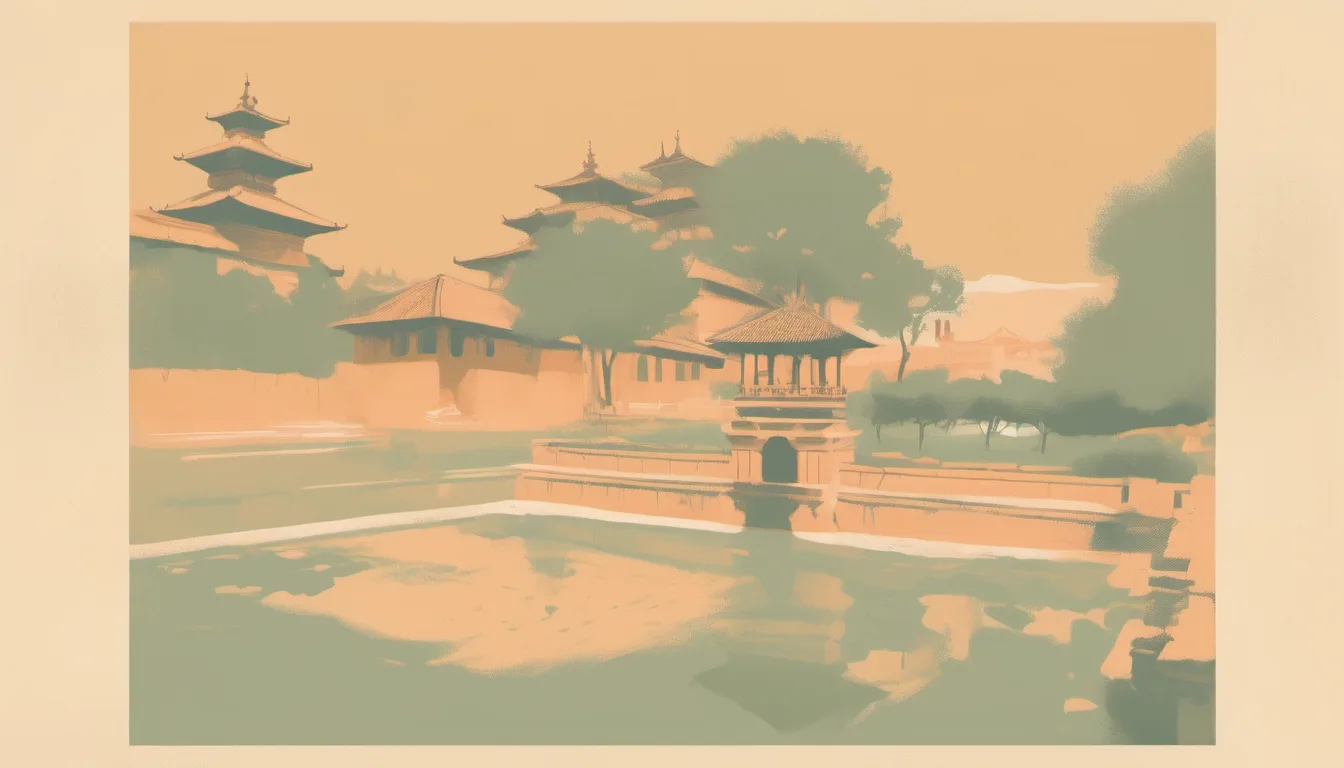
Patan, India
Patan does not shout. It sits quietly on the banks of the now-extinct Saraswati River, a city that has worn many crowns and shed many skins. Once the capital of the Chavda and Chaulukya dynasties, and briefly the seat of the Gujarat Sultanate, it has long since returned to the rhythm of its people. Here, history is not a museum exhibit behind glass; it is the air you breathe, the stone beneath your feet, and the silk you can feel. To walk Patan is to move through layers of time, where medieval stone meets living craft.
The city’s singular gravity lies in its duality: the monumental silence of Rani ki Vav and the vibrant, intricate noise of the Patola weavers. Rani ki Vav, a seven-storey stepwell, is not merely a water reservoir but a vertical temple, carved with over 800 sculptures depicting Vishnu’s avatars and Jain idols. It stands as a testament to the Solanki era’s architectural zenith. Yet, just steps away, the Salvi family continues a 35-generation-old tradition of weaving double-ikat Patola saris. These are not mass-produced textiles; they are mathematical puzzles of color, taking months to complete, costing tens of thousands of rupees, and reserved for those who understand their weight.
Walking Patan rewards the observer with these contrasts. You will see the Sahasralinga Tank, an artificial reservoir surrounded by Shiva’s shrines, reflecting the sky in its still waters. You will pass the Panchasara Parshvanath Temple, rebuilt after centuries of conflict, standing as a beacon for the large Śvetāmbara Jain community that has called this place home for centuries. The old market, believed to have operated continuously since the Vaghela rule, hums with the same trade energy it held a millennium ago. This is not a city of ruins, but of resilience.
The city’s modern identity is woven into this past. It is an education hub, home to Hemchandracharya North Gujarat University and a growing tech scene, yet it refuses to forget its roots. The Rathyatra here, the third oldest and largest in the world after Puri and Ahmedabad, draws thousands, reminding you that Patan is a living, breathing center of devotion. To visit is to witness how a city can hold its history lightly, allowing it to be lived rather than just observed. You walk not to see the past, but to touch the present that grew from it.
Patan is a city that has forgotten how to be loud. Situated in the northern reaches of Gujarat, it rests on the dry bed of the ancient Saraswati River, a geographical feature that has long since vanished but whose spiritual and historical significance remains etched into the landscape. For centuries, this was the heartbeat of northern Gujarat. It was the capital of the Chavda dynasty, established by Vanaraja in the ninth century as Anahilapataka, and later the seat of the mighty Chaulukya (or Solanki) dynasty from the 10th to the 13th centuries. Even during the Gujarat Sultanate, it served as the capital from 1407 to 1411, before Sultan Ahmed Shah moved the seat to Ahmedabad. Yet, Patan never faded into obscurity. It simply turned inward, preserving its soul in stone and silk while the world moved on.
The city’s architectural crown is Rani ki Vav, a stepwell that defies the conventional understanding of such structures. Located on the banks of the now-dried Saraswati, it is the oldest and deepest of Gujarat’s 120 stepwells. Constructed in the 11th century by Queen Udaymati in memory of her husband, King Bhimdeva, it is a seven-storey inverted temple. The architecture is not merely functional; it is devotional. The walls are adorned with over 800 intricate sculptures, primarily depicting Vishnu’s avatars, Hindu goddesses, and Jain idols. The base features 37 niches with representations of Ganesh. It was inscribed as a UNESCO World Heritage Site in 2014, but its true value lies in its narrative: a queen’s grief transformed into a monument of eternal return, symbolizing the gods’ return to the world.
Walking through Patan, you will encounter the Sahasralinga Tank, an artificial water tank built during the Chaulukya rule. Designated a Monument of National Importance, it is surrounded by numerous small shrines dedicated to Shiva. The name, meaning ‘thousand lingas,’ hints at the scale of devotion invested in its creation. It stands as a quiet counterpoint to the vertical grandeur of Rani ki Vav, offering a horizontal expanse of water and stone that reflects the sky. These structures are not isolated; they are part of a dense network of religious and civic architecture that defines the city’s spatial logic. The old market, believed to have been in continuous operation since the Vaghela dynasty, connects these monuments, serving as a trading hub that has thrived through Hindu and Muslim dynasties alike.
The spiritual fabric of Patan is deeply woven with Jainism. The city has been home to a large Śvetāmbara Murtipujaka Jain community for centuries, a fact documented by ethnographers like John E. Cort. The Panchasara Parshwanath Temple, established by Vanaraja Chavda around 746 CE, stands as a key pilgrimage site. The main idol of Parshvanatha was brought from Panchasar village, and the temple was rebuilt in the 16th–17th centuries after destruction by Muslim invaders. This history of destruction and rebirth is a recurring theme. A 1375 CE letter by a Jain monk attests to the community’s enduring presence, highlighting Patan’s role as a major pilgrimage center during the Solanki era. Today, more than 100 temples in the region speak to this enduring legacy.
But Patan is not only stone. It is also silk. The Patola sari, one of the finest hand-woven textiles in the world, is the city’s other great heritage. Produced exclusively by the Salvi family, who have preserved this art for over thirty-five generations, Patola weaving is a double-ikat process of immense complexity. The saris are colored with vegetable dyes and take four to six months to weave, depending on the design’s intricacy. Costs range from Rs. 20,000 to Rs. 20,00,000, with gold threads adding to the price. Local Gujaratis call it “Patan Na patola,” noting it as the most costly item a woman can afford. The art is guarded fiercely; only sons of the weavers are eligible to learn, ensuring the knowledge remains within the family. Shri Vinayak Kantilal Salvi, a veteran weaver, received the Ship Guru Award in 2002 for his dedication. The Patan Patola Heritage Museum, managed by the Salvi family, showcases this timeless craftsmanship.
The city’s modern identity is a blend of tradition and innovation. It is an education hub in North Gujarat, home to Hemchandracharya North Gujarat University, named after the polymath Acharya Hemchandra. The Government Engineering College, GMERS Medical College, and various schools contribute to its intellectual landscape. Yet, it also embraces the future with startups like fotonVR, which won an e-governance silver award for innovative ICT use. This juxtaposition of ancient craft and modern technology is uniquely Patan. The Regional Science Centre offers interactive exhibits, from dinosaur parks to hydroponics, bridging the gap between heritage and contemporary learning. It is a city that respects its past while actively engaging with the present.
The cultural rhythm of Patan is marked by its festivals. While Garba is celebrated with enthusiasm, the main festival is the Rathyatra. After Puri and Ahmedabad, Patan hosts the third biggest and oldest Rathyatra in the world. This event draws thousands, transforming the city into a sea of devotion and color. It is a reminder that Patan is not a static relic but a living community. The demographics reflect this vitality: a population of over 112,000, with a literacy rate of 72%, higher than the national average. The city’s notable people, from singers like Kinjal Dave to former Chief Minister Anandiben Patel, contribute to its dynamic social fabric. The large Jain community, documented in John E. Cort’s 2001 ethnography, remains a central pillar of the city’s identity.
Accessing Patan is straightforward, though it requires a sense of journey. The railway station connects it to Ahmedabad (108km), Mehsana, and Bhildi. National Highway 68 links it to Rajasthan and other Gujarat cities, while state highways connect it to nearby towns. The closest airports are Mehsana (51km) and Deesa (53km). This connectivity has always been part of Patan’s story, facilitating trade and cultural exchange. The city bus service, run by the municipality, connects nearby villages, and autorickshaws are readily available. A new bus port is under construction, signaling continued growth. Yet, the best way to experience Patan is on foot, moving slowly through its streets, observing the interplay of light and shadow on ancient stone, and listening to the rhythmic clack of Patola looms.
To walk Patan is to understand the concept of resilience. It has been a capital, a trading hub, a religious center, and a modern educational institute. It has survived invasions, political shifts, and environmental changes. The stepwells, temples, and markets are not just tourist attractions; they are testaments to a city that has consistently reinvented itself while holding onto its core values. The Patola weavers, the Jain monks, the students at North Gujarat University, and the devotees at the Rathyatra all contribute to this narrative. Patan does not demand your attention; it earns it through its quiet dignity. It is a place where history is not just remembered but lived, woven into the fabric of daily life. In a world that often prioritizes speed, Patan offers the rare gift of slowness, inviting you to pause, observe, and reflect.