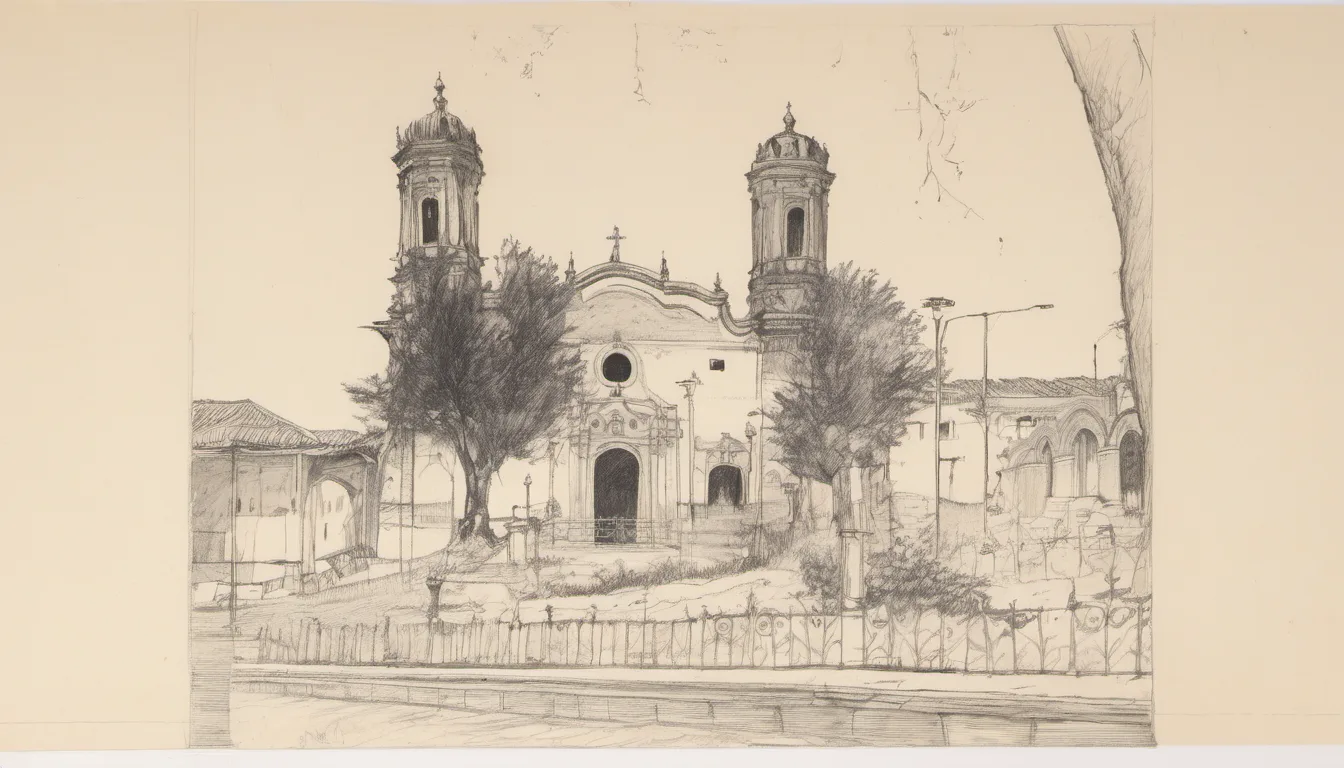
Potosí, Bolivia
Potosí does not whisper; it looms. Perched at 4,067 meters, it is one of the highest cities on Earth, a place where the air is thin and the history is heavy. The city sits at the foot of Cerro Rico, the 'Rich Mountain,' a peak that dominates the horizon with its sharp, silver-streaked geometry. For centuries, this mountain was the engine of the Spanish Empire, pumping wealth into Europe and Asia with a force that reshaped the global economy. Today, the city remains a mining center, but its true value lies in its preservation of a colonial past that feels both grand and haunting.
Walking through Potosí is an exercise in scale. The urban core was laid out in a standard Spanish grid, yet the rancherias on the northern flank of the mountain rise in haphazard, organic layers. This contrast defines the city’s character: order imposed by empire, chaos endured by the people. The architecture is well-preserved, with churches and mansions standing as testaments to a time when Potosí was the second-largest city in the world, second only to London. The streets are quiet now, but the stones remember the noise of millions of tons of silver being extracted.
The city’s significance cannot be overstated. At its peak, Potosí produced an estimated 60% of the world's silver. This wealth funded wars, built cathedrals, and created the expression 'valer un Potosí'—to be worth a Potosí. The mint here produced the pieces of eight that became the basis of global trade, possibly inspiring the dollar sign. To walk the city is to walk through the financial origins of the modern world. The silver flowed to Panama, then to Spain, and across the Pacific to Asia, connecting Potosí to Manila and Acapulco in a vast network of exchange.
Yet, this wealth came at a terrible cost. The indigenous laborers, known as mitayos, were conscripted under the mita system to work in the mines under brutal conditions. Their stories are etched into the mountain itself. Today, Potosí is famous for its unusual geographic setting and its cold highland climate, marked by long dry periods and strong wet seasons. It is a place where beauty and suffering are inseparable. The city’s survival is a testament to resilience, a community that has endured exploitation and altitude to preserve its heritage. Walking here rewards you with a profound sense of history, not just as a tourist, but as a witness to the weight of the world’s silver.
Potosí, known in the colonial period as Villa Imperial de Potosí, is the capital of the Potosí Department in Bolivia. It is a city defined by its altitude and its silver. Standing at a nominal 4,067 meters, it is one of the highest cities in the world. The city lies at the foot of the Cerro de Potosí, popularly known as Cerro Rico, or 'Rich Mountain.' This mountain, with its peak at 4,824 meters, dominates the landscape and the history of the region. It is not merely a backdrop; it is the reason for the city’s existence, a geological anomaly that became the financial heart of the Spanish Empire.
The discovery of the mountain is shrouded in legend. Diego Huallpa, an indigenous prospector, is traditionally credited with finding the silver deposits in 1545. Before this, the Inca Empire had known of the mountain. According to legend, in about 1462, Huayna Capac, the eleventh Sapa Inca, visited the area. He saw the beauty of Potosí and declared that it must have much silver in its heart. He ordered his vassals to work the mines, but as they began to dig, a thunderous noise shook the hill. A voice commanded them to stop, saying the silver was destined for other masters. The workers, hearing this 'potocsí' (a noise in their language), returned to the king. The name Potosí likely derives from this event, though its etymology remains debated, possibly rooted in Aymara or Quechua onomatopoeia.
Founded in 1545, Potosí grew with terrifying speed. It soon produced fabulous wealth, and its population exceeded 200,000 people. By the early 17th century, it was the second-largest city in the world, after London. The urban complex was designated a Villa Imperial, reflecting its importance. The city was laid out in a standard Spanish grid, governed by a corregidor, two Alcaldes, and a town council. Yet, the rancherias on the northern flank of the mountain were more haphazard, reflecting the organic growth of indigenous settlements. The population was diverse: 6,000 Spaniards, 5,000 Africans, and at least 120,000 native Andeans. It was a melting pot of empire, labor, and ambition.
The silver from Cerro Rico fueled the global economy. It was taken by llama and mule train to the Pacific coast, shipped to Panama City, and carried across the isthmus to Spain. Some silver went to Buenos Aires or Acapulco, where it was sent via the Manila Galleons to buy Asian products. This trade created a spectacular boom. The Spanish crown extracted immense benefits through taxes like the quinto, a 20% severance tax. The mint in Potosí produced pieces of eight, coins that became the standard of global trade. Some theorists even suggest the mint mark 'PTSI' is the origin of the dollar sign. The city was so rich it was mentioned in Don Quixote as a land of 'extraordinary richness.'
Mining technology evolved to meet the mountain’s challenges. Initially, miners used oxidized ores and clay 'flower pot' furnaces called guayras. By 1565, these ores were exhausted, and production plummeted. The patio process, invented by Bartolomé de Medina in 1554, revived silver production by using mercury amalgamation to extract silver from lower-grade ores. In 1609, the pan amalgamation process was invented in Potosí, better adapted to local conditions. These innovations allowed the Spanish Empire to maintain its dominance, but they also intensified the exploitation of labor.
Labor was the dark underbelly of this wealth. Indigenous laborers were required to work in the mines through the mita system, a forced labor system based on pre-Hispanic traditions. Thirteen thousand men were conscripted each year, drawn from an area of 200,000 square miles. These mitayos faced harsh conditions, carrying ore in baskets or sacks weighing up to 100 kilograms. They performed the least desirable jobs, while skilled laborers extracted the ore. The human cost was immense, with many dying in the mines. This system sustained the silver output for centuries, embedding suffering into the mountain’s veins.
The city’s architecture reflects its colonial wealth. Large churches, lavishly decorated inside, were built by various religious orders: Dominicans, Franciscans, Augustinians, Mercedarians, and Jesuits. No convent for women existed until 1650. The city had an ecclesiastical court and a commissioner for the Inquisition. Scribes and notaries documented commercial transactions and wills. The bureaucracy was significant, reflecting the crown’s control. The historic center, along with Cerro Rico, is a UNESCO World Heritage Site. The preservation of this architecture offers a rare glimpse into the height of Spanish colonial power in the Americas.
Today, Potosí continues to be an important mining center. It is the largest urban center in the department. The city is growing, famous for its well-preserved colonial architecture and unusual geographic setting. It features a rare cold highland climate, marked by long dry periods and short, strong wet seasons. The mountain still contains one of the largest silver deposit systems in the world. However, the nature of mining has changed. Modern techniques and global markets have altered the economic landscape. Yet, the physical presence of the mountain remains, a constant reminder of the city’s past.
Walking through Potosí reveals layers of history. The streets are quiet, but the stones speak of noise and wealth. The contrast between the grid and the rancherias is striking. The city’s altitude affects every step, demanding a slow pace. The air is thin, the sun is strong, and the shadows are long. The city’s survival is a testament to the resilience of its people. They have endured exploitation, altitude, and economic shifts to preserve their heritage. The city’s story is one of global connection, from the Pacific to the Atlantic, from Europe to Asia. It is a place where the local and the global intersect.
The legend of the Ponte del Diavolo, or Devil’s Bridge, adds another layer to the city’s mythos. While such bridges are found worldwide, the one in Potosí is associated with local legends. The name often implies a structure so complex it must have been built with the devil’s help. In Potosí, this legend connects to the mountain’s supernatural origins. The voice that warned the Incas, the thunderous noise, the silver destined for other masters—these elements create a narrative of resistance and fate. The bridge, like the mountain, stands as a testament to the power of nature and the limits of human ambition. It is a place where history, legend, and geography converge, making Potosí singular in its story.