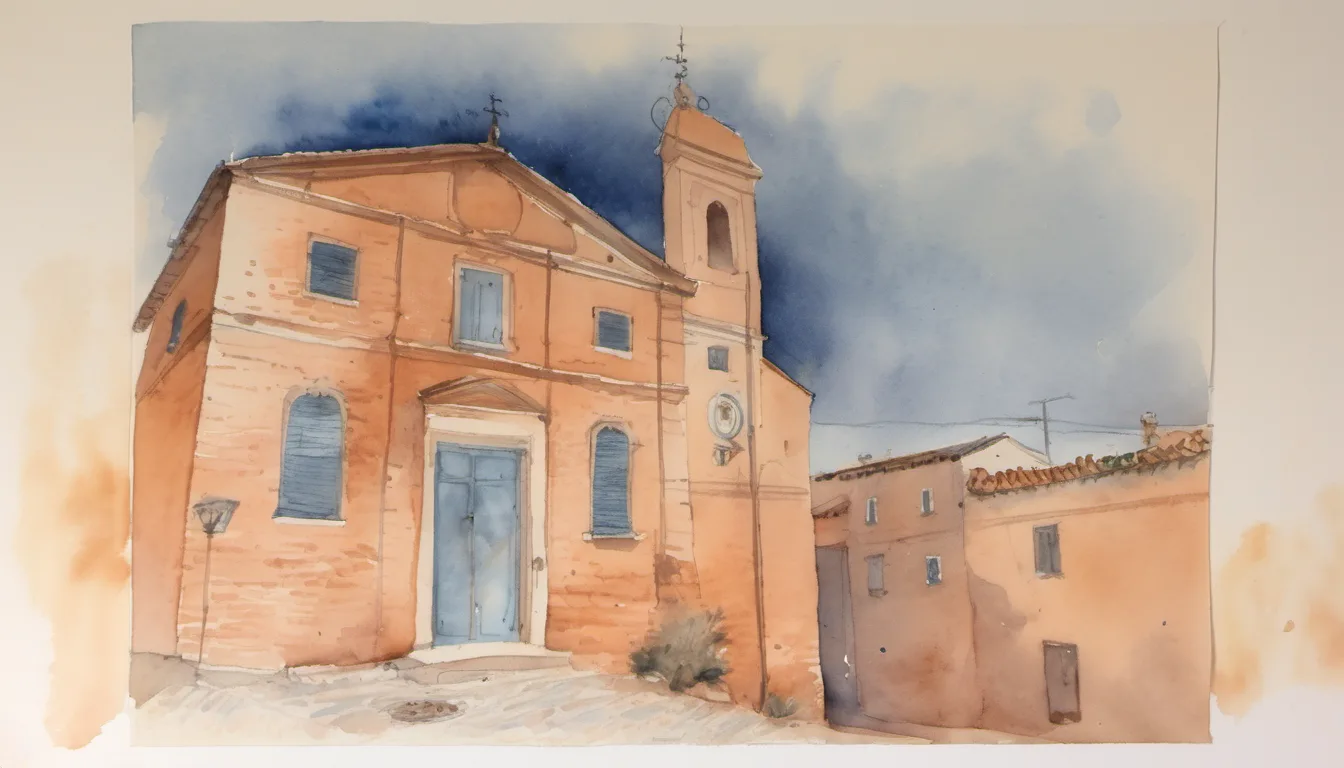
Recanati, Italy
Recanati is not a beach town, though it owns one. Perched at 293 meters on a flat-topped ridge between the Potenza and Musone rivers, it is a classic Marche 'balcony city,' looking out over the Adriatic and the distant Dalmatian coast. The separation of its coastal hamlet, Porto Recanati, in 1893 created a dual identity: a historic hilltop center and a modern seaside resort.
The city’s singular claim to fame is its turbulent medieval history. In 1322, after a brutal Ghibelline-Guelf conflict, the city was burned and its fortifications destroyed by Amelio di Lautrec. Yet it survived to become the 'Justissima Civitas,' a title granted by Florence for its exemplary legal statutes. This resilience is visible in the ruins and the surviving Hohenstaufen Castle, now housing a municipal art gallery.
Walking Recanati rewards you with a sense of scale and survival. The streets are not narrow medieval labyrinths but broad, open spaces that reflect its status as a free commune. You can see the Sibilline Mountains to the north and the sea to the east from almost any point. It is a city that has been burned, besieged, and rebuilt, and it carries that history in its open, uncluttered geometry.
Recanati sits on a ridge that feels less like a hill and more like a plateau, a flat-topped spine rising 293 meters above the valley floor. This geography defines its character. It is a 'balcony city,' a term used for Marche towns that overlook the sea. From here, the Adriatic is ten kilometers away, and on clear days, the mountains of Dalmaria are visible across the water. To the north, Mount Conero plunges into the sea; to the south, the peaks of the Sibilline Mountains, including Monte Vettore, frame the horizon. The city is not enclosed by walls or high ridges; it is open, exposed, and expansive.
Its origins are murky. Prehistoric Piceni inhabited the area, and Roman records mention Helvia Recina, an inland city on the navigable Potenza River. When Radagaiso’s Goths invaded in 406 AD, the population fled to the hills, likely forming the nucleus of Recanati from the ruins of Ricina. The name itself, Recinetum, points to this derivation. The modern town emerged from the merger of several castles: Monte Morello, San Vito, Monte Volpino, and Castelnuovo.
The medieval period was violent. In the 12th century, Recanati became a Free Commune, rejecting imperial-backed counts. In 1229, Emperor Frederick II granted it the coastal strip from the Potenza to the Aspio river, allowing it to build a port. But the city’s loyalty was fickle. It switched sides between the Papacy and the Empire, leading to decades of conflict. The 14th century was particularly bloody. Ghibelline and Guelf factions fought constantly. In 1312, Ghibellines sacked the bishop’s property. In 1316, a conspiracy led to the massacre of Guelf leaders and their families, including women and children. The bishop was expelled, and the city fell under Ghibelline control.
The climax came in 1322. Pope John XXII declared a crusade against the rebels. A Guelf army, led by Fulcieri de Calboli, besieged Recanati. The Ghibellines, expecting aid from Federico da Montefeltro, fled when he died. The city surrendered to Amelio di Lautrec. In a fit of vengeance for his nephew’s death, Amelio ordered the city burned. The fortifications, the houses of the Ghibelline leaders, and the Palazzo dei Priori were destroyed. Despite this devastation, Recanati recovered. By 1324, the war ended, and the city began to rebuild. In 1393, Pope Boniface IX granted it the right to mint its own coinage in copper, silver, and gold, a sign of its restored importance.
Culturally, Recanati was a center of legal innovation. In 1405, the city council approved a codified set of statutes, the 'Diritti municipali.' These were so well-regarded that the Republic of Florence requested them as a model for its own legal body. Florence’s priors bestowed the title 'Justissima Civitas' (Most Just City) on Recanati. This legal prestige is a quiet but significant part of its identity, distinct from the more famous literary associations of its neighbor, Macerata.
Religiously, the city is tied to the story of the Holy House of Loreto. In 1296, it was revealed that the chapel in Loreto, then part of Recanati’s territory, was the House of Nazareth brought by angels. This event elevated the region’s spiritual status. In 1415, Pope Gregory XII, having abdicated to end the Western Schism, lived in Recanati as a legate. He died there in 1417 and was buried in the Cathedral of San Flaviano. He is the last pope not to be buried in Rome.
Today, the city is a quiet administrative and residential center. The coastal hamlet, Porto Recanati, is a separate municipality with a population of 12,500, known for its gravel beaches, deep waters, and the annual airshow. The hilltop city itself is smaller, with a population of about 20,500. It offers a different experience: a slower pace, a focus on history and panorama, and a cuisine centered on the 'brodetto di Porto Recanati,' a traditional fisherman’s stew. The Hohenstaufen Castle, built between the 13th and 15th centuries to defend against Turkish pirates, houses a municipal art gallery with paintings from 1850 to the early 20th century. The city is a place of contrasts: burned and rebuilt, hilltop and seaside, legal rigor and medieval chaos.