Samarkand, Uzbekistan
Samarkand does not merely exist; it endures. Located in southeastern Uzbekistan, this city is one of the oldest continuously inhabited places in Central Asia, a fact that is immediately palpable when you stand on the Registan. Here, the air feels heavier with history, layered over millennia of conquest, trade, and artistic ambition. It is not a city that hides its age behind modern facades but rather wears its scars and splendors openly, inviting you to trace the lines of an empire that once stretched from India to Turkey.
The singular reason to walk Samarkand is the Registan square itself, bounded by three monumental madrasas that serve as the city’s ancient heart. This is not just a collection of buildings but a testament to the Timurid Renaissance, a period when Samarkand became the intellectual and artistic capital of the world. Walking between the Madrasa of Ulugh Beg, the Sherdar, and the Tilla-Kari, you are moving through a timeline of scientific inquiry and aesthetic perfection. The geometry of the domes, the precision of the tile work, and the sheer scale of the structures demand a slow, observant pace.
Why walking rewards you here is simple: the details are too fine for a car ride. The azure tiles of the Tilla-Kari, depicting two tigers, require close inspection to appreciate the violation of Islamic tradition that created them. The astronomical motifs on Ulugh Beg’s facade speak to a ruler who was also a scientist. By walking, you engage with the city’s plurilingual history, where Persian culture and Turkic political control have intertwined for centuries. It is a sensory immersion into the Silk Road’s legacy, where every corner holds a story of resilience.
Modern Samarkand is divided, yet the old city remains the soul. It includes historical monuments, shops, and old private houses that contrast with the Soviet-era administrative buildings of the new city. Yet, it is in the old city, near the Bibi-Khanym Mosque and the Siyob Bazaar, that the city’s multicultural identity thrives. Walking here allows you to hear the blend of Uzbek, Tajik, and Russian, and to see the continuation of ancient crafts like silk weaving and copper engraving. It is a place where the past is not archived but actively lived.
To understand Samarkand is to understand the concept of convergence. Situated in southeastern Uzbekistan, it is not merely a city but a node in the vast network of human exchange. With a population of over 550,000, it is the third-largest city in Uzbekistan, yet its significance transcends demographics. It is one of the oldest continuously inhabited cities in Central Asia, with evidence of human activity dating back to the late Paleolithic, some 40,000 years ago. But its true genesis lies in the 8th to 7th centuries BC, when it emerged as a principal urban center of Iranian, specifically Sogdian, civilization. The name itself, derived from the Sogdian 'samar' (stone) and 'kand' (fort), echoes the name of Tashkent, signaling a shared linguistic and geographical heritage of stone fortresses in this arid landscape.
The city’s trajectory was irrevocably altered in 329 BC when Alexander the Great conquered it, renaming it Maracanda. Though the initial conquest brought damage, the subsequent Hellenistic influence introduced new construction techniques, such as square bricks and superior masonry, blending Greek aesthetics with local traditions. This fusion persisted through the Seleucid Empire, the Greco-Bactrian Kingdom, and the Kushan Empire. However, after the Kushans lost control of Sogdia in the 3rd century AD, Samarkand entered a period of decline, only to revive significantly in the 5th century. It was during the Sasanian era, around 260 AD, that the city became a crucial site for Manichaeism, facilitating the religion’s spread across Central Asia, adding another layer to its complex religious tapestry.
The 6th century brought nomadic upheaval. The Hephthalites, or White Huns, conquered the city, followed by the Turkic Khaganate, which established a border with the Sassanids. It was under the Western Turkic Khaganate, specifically during the rule of Tong Yabghu Qaghan (618–630), that political marriages solidified ties with Samarkand’s rulers. By the 4th century, parts of the city had become Christian, establishing a Nestorian chair that evolved into a metropolitanate by the 8th century. This period was marked by intense theological polemics between Sogdian followers of Christianity, Manichaeism, and Zoroastrianism, reflecting a society that was already a crucible of ideas.
The Islamic conquest in the early 8th century, led by Qutayba ibn Muslim, marked a definitive shift. The city was captured from the Tang dynasty, and while most of Central Asia was left to its own devices, Samarkand was treated as an exception. An Arab garrison was established, fire temples were razed, and the city became a diverse religious community home to Zoroastrianism, Buddhism, Hinduism, Manichaeism, Judaism, and Nestorian Christianity. This diversity was not merely tolerated but was the fabric of daily life, making Samarkand a unique beacon of pluralism in the medieval world.
The city’s golden age arrived with Timur, or Tamerlane, in the 14th century. In 1370, he made Samarkand the capital of his empire, launching a 35-year project of reconstruction that drew artisans and architects from across the Timurid Empire, from India to Turkey. This was the birth of the Timurid Renaissance. Timur’s mausoleum, the Gur-e Amir, became the model for later Mughal architecture, including the Taj Mahal. His grandson, Ulugh Beg, ruled for 40 years, transforming the city into a center of scientific study. He built an observatory and madrasas that taught astronomy and mathematics, producing star charts that rivaled those of Europe. The Registan square, with its three madrasas, stands as the physical manifestation of this intellectual fervor.
The Registan is not just a square; it is the city’s ancient center and a masterpiece of Islamic architecture. The Madrasa of Ulugh Beg, completed in 1420, features mosaics with astronomical themes, honoring the ruler’s passion for science. The Sherdar Madrasa, finished in 1636, breaks tradition with its depiction of roaring lions, a bold artistic statement by the Shaybanid Emir Yalangtush. The Tilla-Kari Madrasa, completed in 1660, adds a layer of gold decoration, including two tigers, creating a courtyard of exceptional beauty. Walking here, one can almost hear the debates of scholars and the chiseling of artisans who shaped these stones into eternal statements of power and piety.
Beyond the Registan, the Bibi-Khanym Mosque stands as a testament to Timur’s ambition. With an entrance over 35 meters high, it was once one of the largest and most grandiose structures in Samarkand. Though it largely collapsed after the 1897 earthquake, it has been heavily restored by the Uzbek government, erasing much of the original floor but preserving the monumental scale. Nearby, the Siyob Bazaar remains unchanged for centuries, a vibrant hub of trade where the colors of spices, textiles, and ceramics tell the story of the Silk Road. The Chorsu Bazaar adds to this commercial tapestry, offering a sensory overload that is quintessentially Samarkand.
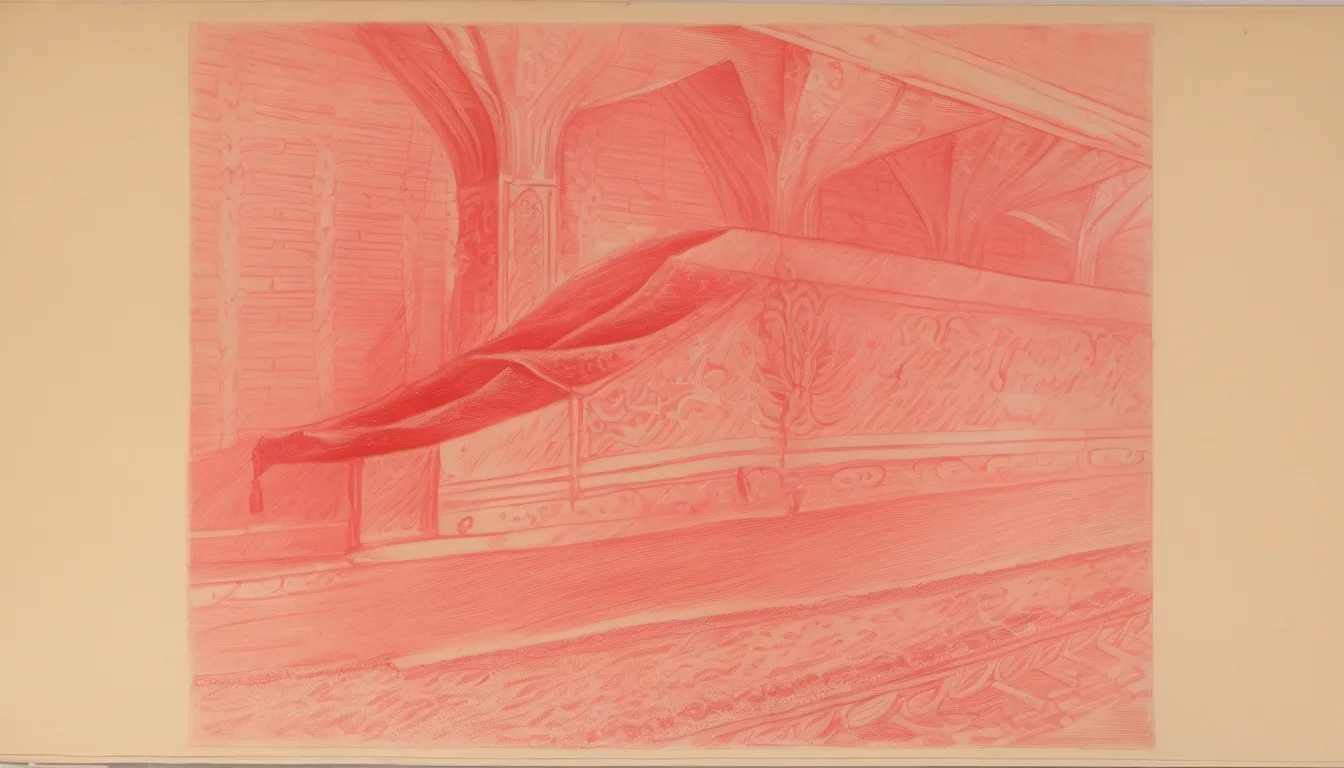
The archaeological site of Afrasiab, to the northeast of the bazaar, offers a glimpse into the ancient city of Maracanda. Spanning 2.2 square kilometers, it is largely exposed to the elements, but the Afrasiab Museum houses 7th-century Sogdian frescoes that depict diplomatic missions and daily life. A notable site here is the purported tomb of the prophet Daniel, known in Islam as Danyāl. The structure is a long, low building with five domes, housing an 18-meter sarcophagus. According to legend, Daniel’s body grows half an inch per year, explaining the tomb’s length. Whether legend or history, it underscores the city’s role as a sanctuary for prophets and saints.
The Shah-i Zinda complex, or 'Tomb of the Living King,' offers one of Samarkand’s most beautiful views. Built on the sepulcher of Kusam ibn Abbas, a relative of the Prophet Muhammad, it is one of the city’s oldest structures. Legend holds that Kusam is not dead but sleeping, drawing thousands of pilgrims. The necropolis is adorned with the tombs of Timur’s family and friends, covered in exquisite majolica tiles. The Gur-e Amir, Timur’s mausoleum, is a cornerstone of Islamic architectural history, influencing the design of the Tomb of Humayun in Delhi and the Taj Mahal in Agra. These structures are not just tombs; they are declarations of eternal legacy.
Modern Samarkand is divided into old and new parts. The old city retains historical monuments, shops, and private houses, while the new city, developed during the Russian Empire and Soviet Union, houses administrative buildings and educational institutions. The city’s multicultural and plurilingual history is evident in its language policy, where Uzbek is official, Russian is widely used, and Tajik speakers form a minority. This demographic complexity, shaped by national delimitation in Central Asia, adds a layer of political nuance to the city’s identity. Samarkand remains a symbol of cultural resilience, a place where the past is constantly renegotiated in the present.
Today, Samarkand is a UNESCO World Heritage site, recognized as 'Samarkand – Crossroads of Cultures.' It hosted the 2022 SCO summit, reinforcing its geopolitical importance. The city’s economy is heavily influenced by tourism, but it also preserves ancient crafts like embroidery, goldwork, silk weaving, and copper engraving. Walking through Samarkand is an exercise in time travel. It is a city that has survived conquest, decay, and rebirth, emerging as a beacon of art and science. To walk its streets is to walk through the heart of Central Asia’s history, where every stone whispers the names of emperors, astronomers, and artists who made this place singular.