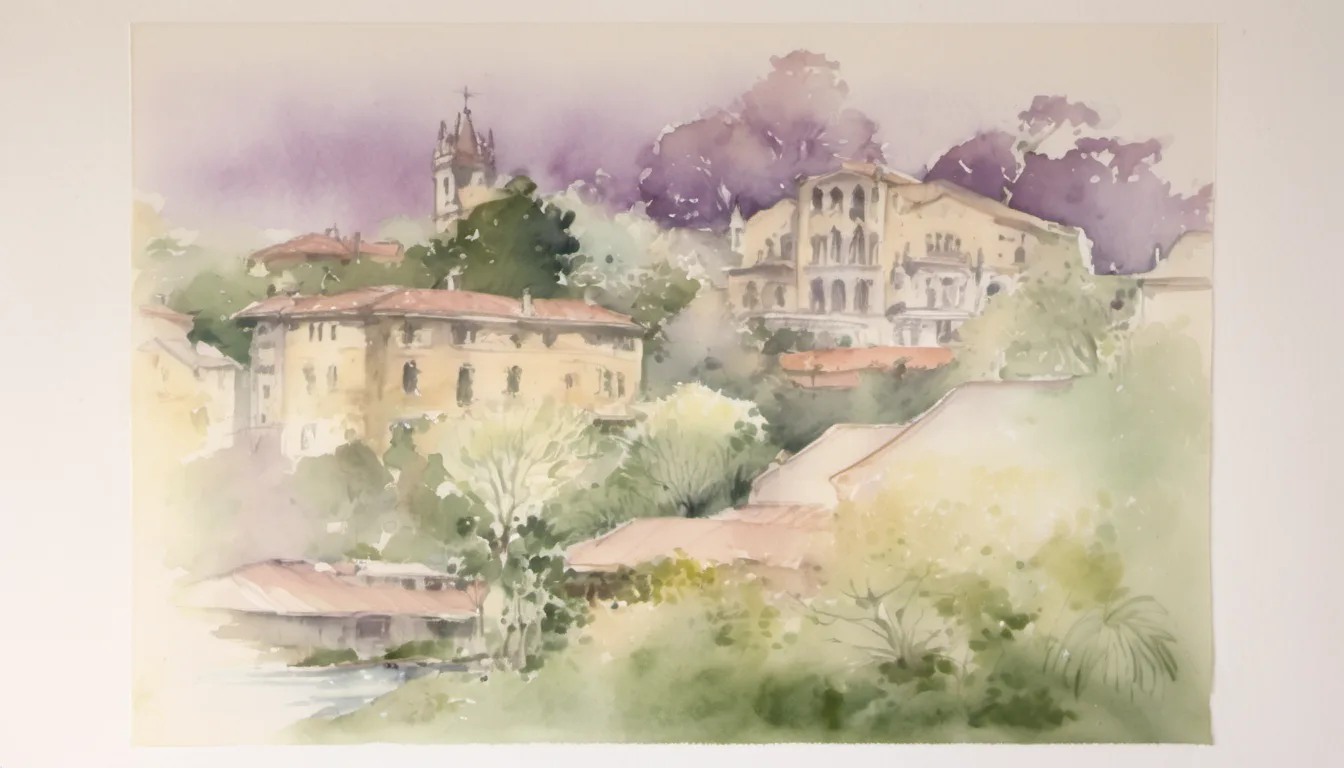
Sydney, Australia
Sydney does not announce itself with the rigid geometry of a capital city designed on paper. It emerges from the water, a sprawling collection of suburbs clinging to the edges of a massive, irregular harbour. To walk here is to accept that the city is defined by what it lacks: a central grid. Instead, there is a series of villages, each with its own character, connected by bridges and ferries that serve as the true arteries of daily life. The air smells of salt and eucalyptus, and the light changes constantly, shifting from the deep blue of the harbour to the ochre of the sandstone buildings that rise from the cliffs.
The city’s history is written in stone, but it is also written in the landscape itself. The Gadigal people, traditional custodians of the land, named their territory Gadi, a name that persists in the city’s consciousness. Before the First Fleet arrived in 1788, bringing convicts and the promise of a penal colony, this was a place of fishing, hunting, and gathering. The coastal clans relied on the sea, while those inland lived among the forests. Today, the scars of that early struggle are visible in the uneven streets and the way the city seems to grow organically from the rock, rather than being imposed upon it.
What makes Sydney singular is its relationship with the water. The harbour is not merely a backdrop; it is the centre of gravity. The Sydney Harbour Bridge and the Opera House are icons, yes, but the real story lies in the foreshores. Here, you find the remnants of the convict era—cobblestone streets, old warehouses, and the quiet dignity of public buildings constructed by hands that had no choice but to build. The city is a paradox: one of the most expensive places on earth, yet it remains one of the most liveable. It balances the pressures of a global financial hub with the leisure of a beach culture.
To walk Sydney is to traverse layers of time. You move from the colonial strictures of the early 19th century to the vibrant multicultural present, where over forty percent of residents were born overseas. The city’s energy comes from this diversity, from the cafes of Newtown to the markets of Chinatown, from the beaches of Bondi to the cliffs of the Royal National Park. It is a city that rewards the walker who looks beyond the postcard views, seeking the quiet corners where the past and present coexist in a fragile, beautiful harmony. It is a place of light, of water, and of enduring resilience.
Sydney is not a city that was planned; it was a settlement that survived. When Captain Arthur Phillip led the First Fleet to Botany Bay in January 1788, he found a landscape that was unsuitable for the agricultural colony Britain intended to create. The soil was poor, the water scarce, and the terrain unforgiving. Within days, the fleet moved to Port Jackson, a harbour Phillip described as 'the finest in the world.' Here, at Sydney Cove, the first European settlement was established on 26 January 1788. The date is now celebrated as Australia Day, but for the Gadigal people, whose territory it was, it marked the beginning of a profound and often violent displacement. The land was called Warrane by its Aboriginal inhabitants, a name that has largely faded from common usage, replaced by the name Phillip gave it after Thomas Townshend, 1st Viscount Sydney, the British Home Secretary.
The early years of the colony were defined by scarcity and strict control. Phillip’s plan for Sydney Cove, submitted in July 1788, included a wide central avenue, government house, law courts, and a hospital. It was a rational, orderly vision. But Phillip ignored his own plan, and unplanned development became the defining feature of Sydney’s topography. Convicts, bound by law from engaging in trade or shipbuilding, lived in a state of semi-permanent subsistence. The soil failed, crops withered, and the colony faced starvation. It was not until the arrival of the Second Fleet in 1790 and the Third in 1791 that the food crisis was alleviated. During this period, the distinction between governor and convict was often blurred by the sheer difficulty of survival. Former convicts, once granted small parcels of land, began to engage in trade, opening small businesses and building houses on Crown land, often without official permission. This informal economy laid the groundwork for the city’s later commercial vitality.
The arrival of Governor Lachlan Macquarie in 1810 marked a turning point. A military officer rather than a civilian administrator, Macquarie commissioned the construction of roads, wharves, churches, and public buildings. He organized exploratory expeditions into the interior, seeking to expand the colony’s boundaries. Under his direction, Sydney began to take on the appearance of a proper city. The cobblestone streets, the sandstone facades of the Government House and the Supreme Court, and the layout of the streets were all part of Macquarie’s vision. He sought to transform a penal settlement into a civilised outpost of the British Empire. His legacy is visible in the city’s architecture, which combines the ruggedness of the landscape with the order of classical design. The buildings are not merely structures; they are statements of permanence and authority, built by convicts who had no choice but to contribute to their own subjugation.
The 19th century saw Sydney expand rapidly, driven by the gold rushes of the 1850s and the subsequent influx of immigrants. The city’s population grew, and with it came the pressures of urbanization. The original boundaries of the colony, which once encompassed much of eastern Australia, were gradually whittled away as new colonies were established in Tasmania, South Australia, Victoria, and Queensland. By 1901, these colonies had federated to form the Commonwealth of Australia, and Sydney became the largest city in the new nation. The city’s growth was accompanied by social stratification. The wealthy built grand homes in the eastern suburbs, while the working class crowded into tenements in the inner city. The gap between the rich and the poor was stark, and the city’s social fabric was strained by inequality and political unrest.
The 20th century brought further transformation. The construction of the Sydney Harbour Bridge in 1932 and the Sydney Opera House in 1973 were monumental achievements that put the city on the global map. The Bridge, a steel arch spanning the harbour, was a feat of engineering and a symbol of civic pride. The Opera House, designed by Jørn Utzon, was a radical departure from traditional architecture, its white sails contrasting with the blue of the water. These structures were not merely tourist attractions; they were expressions of a city confident in its identity and its place in the world. The post-war period also saw a massive influx of immigrants from Europe, Asia, and the Middle East, transforming Sydney into a multicultural metropolis. Today, over forty percent of the population was born overseas, with significant communities from China, India, the United Kingdom, Vietnam, and the Philippines. This diversity is not just a statistic; it is the lifeblood of the city, evident in its food, its arts, and its daily interactions.
Walking through Sydney today is an exercise in contrasts. You move from the colonial stone of The Rocks, the oldest part of the city, to the modern glass towers of the CBD. The Rocks, with its narrow laneways and historic pubs, offers a glimpse into the city’s convict past. Here, you can walk along the original cobblestone streets, past warehouses that once stored goods for the colony, and imagine the lives of those who lived and worked here. The area has been preserved and repurposed as a cultural precinct, with galleries, markets, and restaurants. It is a place where history is not just remembered but experienced. The contrast between the old and the new is striking, but it is also harmonious. The city does not erase its past; it incorporates it into its present.
The harbour itself is the city’s greatest asset. It is not merely a body of water; it is a space for recreation, transport, and commerce. Ferries ply the harbour, connecting the suburbs and providing a unique perspective on the city’s skyline. The water is clean, the views are spectacular, and the atmosphere is relaxed. On a summer evening, you can sit on the foreshore, watch the sunset, and listen to the sound of the water lapping against the rocks. It is a moment of peace in a busy city. The harbour also serves as a reminder of the city’s maritime history. It was the gateway for the First Fleet, and it remains the gateway for millions of tourists and immigrants each year. The harbour is the city’s heart, pumping life and energy into every corner of Sydney.
The city’s relationship with the land is complex. Sydney is surrounded by nature reserves and parks, including the Royal National Park, one of the oldest national parks in the world. The Blue Mountains, to the west, offer a stark contrast to the urban environment, with their eucalyptus forests and rugged cliffs. The city’s expansion has been constrained by these natural features, forcing it to grow along the coast and into the harbour. This has resulted in a city that is dense, vertical, and often congested. But it has also resulted in a city that is close to nature. You can walk from the CBD to the beach in under an hour, or hike into the mountains for a weekend. This accessibility to nature is a key feature of Sydney’s liveability, and it is something that residents cherish.
The political and social currents of Sydney have shaped its development. The city has been a centre of political activism, from the anti-war protests of the 1960s to the environmental movements of the 1970s and 1980s. The city’s government has struggled to balance economic growth with social equity and environmental sustainability. The result is a city that is dynamic, innovative, and often contentious. Sydney is home to major universities, including the University of Sydney and the University of New South Wales, which attract students from around the world. It is also a centre for finance, manufacturing, and tourism. The city’s economy is advanced and diverse, with strengths in education, finance, and technology. This economic vitality has made Sydney one of the most expensive cities in the world, but it has also made it one of the most liveable.
To walk Sydney is to understand its contradictions. It is a city of wealth and poverty, of colonial history and multicultural present, of urban density and natural beauty. It is a city that has survived famine, epidemic, and political upheaval, and has emerged as a global city. The city’s singular quality lies in its ability to hold these opposites in tension. It is not a city that seeks to resolve its contradictions, but to live with them. The sandstone buildings stand alongside the glass towers. The convict past coexists with the immigrant present. The harbour reflects the sky, and the land rises from the water. To walk Sydney is to walk through time, to see the layers of history, and to feel the pulse of the present. It is a city that rewards the walker who looks beyond the surface, seeking the stories that lie beneath the stone and the water.