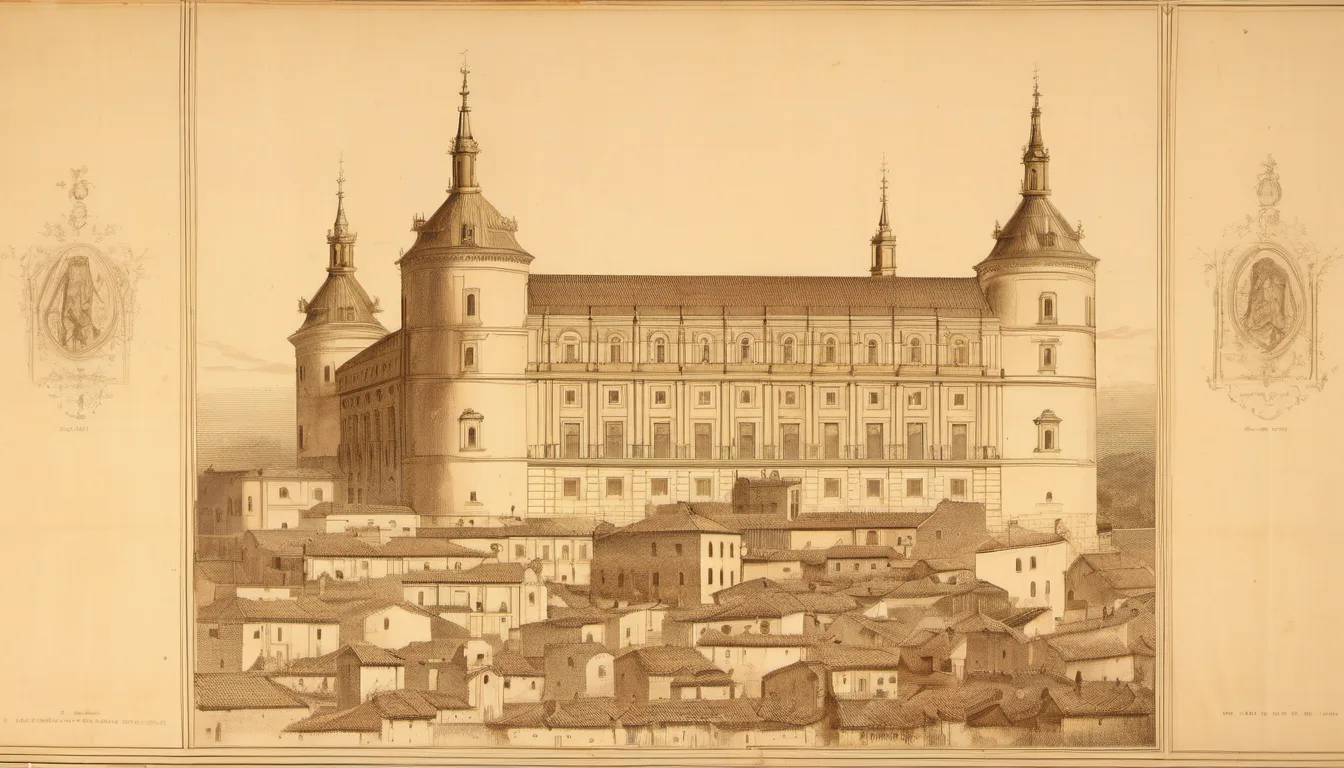
Toledo, Spain
Toledo does not announce itself with the fanfare of Madrid or the coastal allure of Valencia. It sits atop a horseshoe bend of the Tagus River, a defensive fortress turned open book, where the landscape itself seems to hold its breath. To walk here is to move through a palimpsest of civilizations, where every cobblestone bears the weight of centuries. The city is not merely a destination; it is an exercise in reading history without the crutch of a guidebook, relying instead on the silence of its narrow alleys and the sudden, breathtaking views from its high vantage points.
The singular quality of Toledo lies in its architectural symbiosis. For a brief but intense period in the 12th and 13th centuries, Christians, Jews, and Muslims lived side by side, their artisans sharing techniques, motifs, and tools. This is not a romanticized legend but a structural reality visible in the Mudéjar style that defines much of the city’s aesthetic. You will find Islamic geometric patterns carved into Christian church facades, and Jewish inscriptions embedded in the stonework of mosques. The city matters because it proves that cultural exchange was not always a conflict, but often a quiet, collaborative craft.
Walking Toledo rewards the patient observer. The city is steep, demanding, and unforgiving to the hurried. You must climb to reach the Alcázar, navigate the labyrinthine streets of the Judería, and pause at the Puente de San Martín to see the river cut through the rock. The reward is not just the view, but the realization that this place was once the intellectual heart of Europe. Here, scholars translated Greek texts into Latin, shaping the Renaissance before it had a name. The walk is a physical manifestation of this intellectual ascent, requiring effort to reach the heights of understanding.
There is a specific quality to the light here, especially in the late afternoon, that turns the stone to gold and ochre. It is a light that has inspired painters for millennia, from El Greco to Velázquez. To walk through Toledo is to walk through their canvases. The city is not a museum; it is a living organism that continues to breathe, pray, and work within these ancient walls. It asks nothing of you but your attention. In return, it offers a rare glimpse into a time when identity was fluid, and faith was expressed through shared beauty rather than division. This is the essence of Toledo: a city that teaches you to see the world in layers.
Toledo, the capital of Castilla-La Mancha, occupies a strategic promontory that has commanded the Tagus River for millennia. Its geography is its first defense and its first art. The river wraps around the city in a tight horseshoe, creating a natural moat that has protected its inhabitants from invasion since Roman times. This is not a city that spreads out; it climbs. The urban fabric is compressed, vertical, and dense, a testament to the need for security and the scarcity of flat land. To walk Toledo is to accept a physical challenge, a series of steep ascents and descents that force you to slow down and engage with the topography. The city does not yield its secrets to the hurried. It reveals itself in fragments, in the sudden opening of a plaza, in the shadow of a minaret converted into a bell tower, in the quiet courtyard of a synagogue hidden behind a nondescript door.
The history of Toledo is the history of coexistence, however fragile. In the 12th century, under the rule of Alfonso VI and later Alfonso X, the city became a crucible of translation and cultural synthesis. This was the era of the Toledo School of Translators, where Christian, Jewish, and Muslim scholars worked together to translate Greek philosophical and scientific texts into Latin. This intellectual enterprise laid the groundwork for the European Renaissance. The city was not just a political capital; it was an intellectual hub, a place where ideas flowed as freely as the river below. This legacy is embedded in the architecture, where the styles of three religions merge into a distinct Mudéjar aesthetic. You can see this in the Synagogue of Santa María la Blanca, with its horseshoe arches and intricate stucco work, which bears the hallmarks of Islamic craftsmanship but was built for a Jewish community. It is a physical manifestation of a society that, for a time, allowed for pluralism.
The Jewish quarter, or Judería, is a labyrinth of narrow streets that feels distinct from the rest of the city. Here, the architecture is more intimate, the buildings closer together, creating a sense of enclosure and protection. The Synagogue of El Tránsito, with its ornate interior and the Museum of Sephardic Culture, stands as a monument to a community that was expelled in 1492. The expulsion was a catastrophic event, severing centuries of continuous presence. Yet, the stones remain. Walking through the Judería, you can feel the weight of that loss, the silence that followed the departure of thousands. The quarter is not just a historical site; it is a memorial to a world that once was, preserved in the geometry of its streets and the texture of its walls.
The Islamic period left its mark in the form of mosques, many of which were converted into churches after the Christian conquest in 1085. The Mosque-Cathedral of Santa María, now the Church of Santo Tomé, is a prime example. Its minaret, the Alcminar, was repurposed as a bell tower, a common practice that symbolizes the triumph of Christianity but also the reuse of Islamic materials. The interior of the church houses El Greco’s masterpiece, The Burial of the Count of Orgaz. This painting is not just a religious work; it is a theological statement, depicting the miracle of the Count’s burial, with saints lowering his body to the grave while heaven looks on. The painting is a bridge between the earthly and the divine, a reflection of the city’s role as a meeting point of cultures.
Christian Toledo is dominated by the Gothic Cathedral, a monumental structure that took nearly two centuries to complete. It is a masterpiece of Spanish Gothic architecture, with a soaring interior and a treasury that houses some of the most valuable religious artifacts in Europe. The cathedral is a symbol of the Reconquista, a statement of Christian power and piety. Yet, even here, the influence of other cultures is visible. The Capilla Mayor, or High Chapel, is a masterpiece of Plateresque style, with intricate silver-like stonework that reflects the wealth and ambition of the city. The cathedral is not just a place of worship; it is a museum of art, history, and politics, reflecting the complex identity of Toledo.
The Alcázar, the royal fortress, stands at the highest point of the city, overlooking the river. Originally a Roman palace, it was expanded by the Visigoths and later by the Muslims. It served as a royal residence for centuries, housing kings and emperors. In the 20th century, it was the site of a fierce battle during the Spanish Civil War, which left it heavily damaged. It has since been restored and now houses a military library and a museum. The Alcázar is a symbol of Toledo’s strategic importance, a fortress that has withstood sieges and changes in power. Its presence is a reminder of the city’s military history, a history that is often overshadowed by its cultural achievements.
El Greco, Domenikos Theotokopoulos, is inextricably linked to Toledo. He moved to the city in 1577 and spent the rest of his life there, creating his most important works. His style, characterized by elongated figures and intense, unnatural colors, was ahead of its time and misunderstood by his contemporaries. Today, he is celebrated as one of the greatest painters in history, and Toledo is his muse. The Church of Santo Tomé, the Church of San Ildefonso, and the Hospital de Tavera house his masterpieces. To walk Toledo is to walk through El Greco’s vision, to see the city as he saw it: spiritual, intense, and otherworldly. His influence is pervasive, shaping the city’s artistic identity and attracting visitors from around the world.
The city’s culinary scene is a reflection of its history. Mudejar cuisine, with its blend of Islamic and Christian influences, is characterized by the use of spices, almonds, and honey. Dishes like migas, a fried bread dish, and pasteles de alcachofa, artichoke pastries, are staples of the local diet. The wines of La Mancha, produced in the surrounding plains, are also a significant part of the city’s culture. The combination of food, wine, and history creates a sensory experience that is unique to Toledo. It is a place where you can taste the history, where every meal is a connection to the past.
The modern city of Toledo is a UNESCO World Heritage site, recognized for its outstanding universal value. It is a city that has managed to preserve its historical integrity while adapting to the needs of the present. The population is small, but the city attracts millions of visitors each year. This tourism is a double-edged sword, bringing economic benefits but also posing challenges to preservation. The local community is actively involved in protecting the city’s heritage, ensuring that it remains a living city, not just a tourist attraction. The residents of Toledo take pride in their history, their art, and their culture, and they welcome visitors with a sense of hospitality that is rare in such a historic place.
Toledo is a city of layers, of stories within stories. It is a place where you can stand in a synagogue and hear the echo of a mosque, or walk through a Christian street and see the shadow of a Jewish home. It is a city that challenges you to look deeper, to question assumptions, and to appreciate the complexity of human history. It is not an easy city to love, but it is a rewarding one. It demands your attention, your respect, and your curiosity. In return, it offers a perspective on history that is both humbling and inspiring. Toledo is not just a city; it is a lesson in coexistence, a testament to the power of art, and a reminder of the fragility of peace.