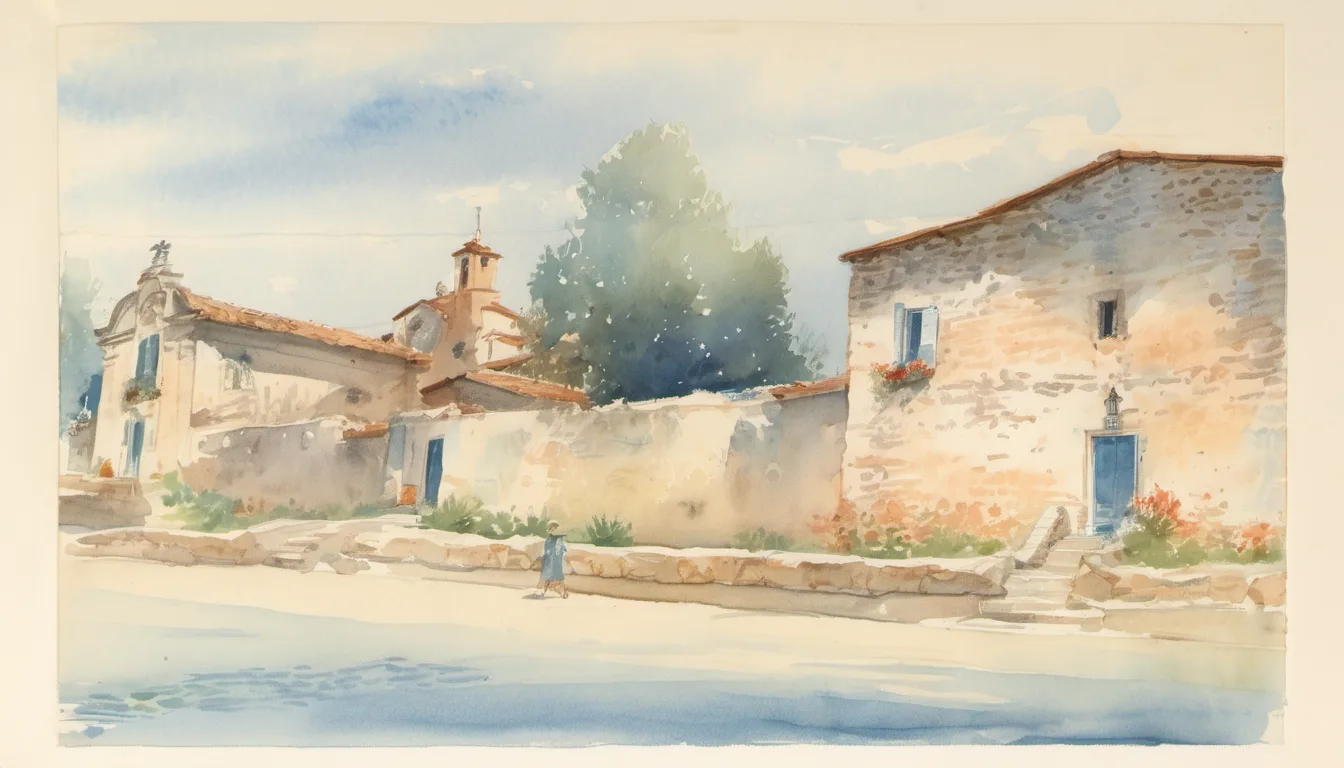
Alta Gracia, Argentina
Alta Gracia does not shout; it settles. Built upon the Sierras Chicas, this city occupies a landscape the Comechingón Indians once called Paravachasca, a name that hints at a deeper, older rhythm beneath the colonial stone. With roughly 43,000 inhabitants, it is small enough to feel intimate, yet historically dense enough to demand your attention. Here, the air is thinner, the pace slower, and the history is not confined to a museum but woven into the very fabric of the streets and the surrounding estates.
The city’s soul is defined by its dual identity: a place of high grace and a cradle of revolution. You walk through the remnants of the 17th-century Jesuit estancia, where the Society of Jesus once supported the Collegium Maximum, now the Universidad Nacional de Córdoba. This is not merely academic history; it is the physical manifestation of an intellectual lineage that has shaped Argentina. The UNESCO World Heritage status of the Manzana Jesuítica is a testament to this enduring influence, but in Alta Gracia, the legacy is lived, not just observed.
What makes this city matter is the convergence of disparate giants. It is the place where Ernesto 'Che' Guevara spent twelve formative years, from 1932 to 1944, before moving to Buenos Aires to study medicine. His house, now a museum, stands in quiet dialogue with the residence of Spanish composer Manuel de Falla, who lived here from 1942 until his death. These two figures, one a revolutionary, the other an artist, found in Alta Gracia a refuge from the noise of the capital. Their presence transforms the city from a simple provincial town into a sanctuary of intense creative and political energy.
Walking Alta Gracia rewards you with a layered experience of time. You pass El Tajamar, a man-made lake that reflects the sky, and El Obraje, where Jesuits once taught indigenous crafts. You see the Sierras Hotel, visited by John F. Kennedy, and the Lourdes Virgin’s Sanctuary, a replica of the Pyrenees shrine. The Public Clock Tower marks the 350th anniversary of the city, standing as an information office that watches over a town that has survived the transition from encomienda to village. To walk here is to move through a living archive of Argentine identity, where every corner holds a story of faith, rebellion, or art.
To understand Alta Gracia, one must first look to the land it occupies. The city is built upon the Sierras Chicas, a mountain range that has long served as a retreat for those seeking solace from the plains. The region was originally known to the Comechingón Indians as Paravachasca, a name that anchors the city in a pre-colonial past. Today, with a population of approximately 43,000 as recorded in the 2001 census by INDEC, the city retains a sense of enclosure, protected by the mountains and defined by its history. It is a place where the past is not buried but remains active, shaping the present through its architecture, its institutions, and its legends.
The story of Alta Gracia begins in 1588 with Don Juan Nieto, who initiated the colonization of the area. Under the terms of his encomienda, Nieto promoted the construction of houses, ranches, and stone pens, laying the groundwork for what would become a significant economic and religious center. The land was later renamed 'Nuestra Señora de Alta Gracia' by Alonso Nieto de Herrera, who donated it to the Society of Jesus. The Jesuits recognized the strategic and spiritual value of the estate, using it, along with other ranches such as Colonia Caroya, Jesús María, Santa Catalina, La Candelaria, and San Ignacio de los Ejercicios, to support the Collegium Maximum, or 'Colegio Máximo'. This institution was one of Argentina’s first universities, known as the Universitas Cortuba Tucumanæ, which later evolved into the Universidad Nacional de Córdoba. The Jesuit Block and Estancias of Córdoba were designated as a UNESCO World Heritage Site in 2000, acknowledging the enduring impact of this educational network.
The ownership of the Estancia Alta Gracia shifted over the centuries, each owner leaving a mark. After the Jesuits, the estate passed to Santiago de Liniers in 1810. Liniers, a figure of historical significance, lived there for about five months, adding a layer of political intrigue to the estate’s history. The final private owner was José Manuel Solares, who acquired the land in 1868. In his will, Solares converted the estancia into a village, initially called La Merced. He divided the land into plots for his employees, with the condition that they preserve the Tajamar and continue the veneration of the Virgin, known as Nuestra Señora de la Merced. This act of philanthropy and faith established the foundation of the modern city, with September 24 becoming the feast day in honor of the Virgin, a celebration that continues to draw locals and visitors alike.
Among the city’s main sights, the museum of Santiago de Liniers stands as a tribute to this complex historical figure. Nearby, El Tajamar, a man-made lake, offers a serene landscape that contrasts with the urban bustle. El Obraje, a workshop where the Jesuits taught indigenous people various crafts, serves as a reminder of the cultural exchange that took place during the colonial era. These sites are not merely tourist attractions; they are living testaments to the city’s role as a center of education, art, and religious devotion. The Sierras Hotel, which has hosted notable figures including John F. Kennedy, adds a layer of international prestige to the city’s profile, suggesting that Alta Gracia has long been a destination for the elite and the influential.
Perhaps the most compelling aspect of Alta Gracia is its connection to Ernesto 'Che' Guevara. The revolutionary spent twelve years in Alta Gracia, from 1932 to 1944, a period that shaped his early life before he moved to Buenos Aires to study medicine. His house, now a museum, is a place of pilgrimage for those interested in the history of revolution and social change. The museum offers a glimpse into the life of a young man who would go on to become one of the most iconic figures of the 20th century. The presence of Che’s legacy in Alta Gracia adds a layer of political significance to the city, transforming it into a place where history is not just remembered but actively engaged with.
Equally significant is the city’s connection to music. Manuel de Falla, the renowned Spanish musician and composer, lived in Alta Gracia from 1942 until his death. His museum, dedicated to his life and work, is a sanctuary for those who appreciate the arts. Falla’s time in Alta Gracia was marked by a deep engagement with the local culture and landscape, which influenced his compositions. The Gabriel Dubois Art Museum further enriches the city’s cultural landscape, showcasing works that reflect the artistic currents of the region. These institutions, along with the Railroad outdoor museum, contribute to a vibrant cultural scene that attracts visitors from across Argentina and beyond.
The Lourdes Virgin’s Sanctuary, a replica of the original in the Pyrenees, stands as a spiritual center for the city. This sanctuary, dedicated to Nuestra Señora de la Merced, is a place of pilgrimage and reflection, drawing visitors who seek a connection to the divine. The Public Clock Tower, a monument marking the 350th anniversary of Alta Gracia, serves as an information office and a symbol of the city’s longevity. These landmarks, along with the many other historical sites, create a tapestry of experiences that define Alta Gracia as a city of depth and meaning.
Walking through Alta Gracia is an exercise in historical awareness. You move through spaces that have witnessed the rise and fall of empires, the rise of revolutions, and the flourishing of arts. The city’s architecture, from the colonial stone pens to the modern museums, tells a story of resilience and adaptation. The Sierras Chicas provide a backdrop that is both protective and inspiring, offering views that have captivated visitors for centuries. The air is crisp, the pace is leisurely, and the sense of history is palpable. It is a place that invites you to slow down, to listen, and to reflect.
The legends of Alta Gracia are as rich as its history. Locals speak of the whispers of the past in the streets, of the spirits of the Comechingón Indians that linger in the mountains, and of the ghosts of revolutionaries who walk the same paths today. These stories are not mere folklore; they are part of the city’s identity, adding depth and mystery to the urban landscape. The feast day of September 24 is a time of celebration and renewal, a reminder of the city’s religious roots and its enduring faith. It is a time when the community comes together to honor the Virgin and to celebrate the unique character of Alta Gracia.
In conclusion, Alta Gracia is a city that defies simple categorization. It is a place of history, art, and revolution, where the past and present coexist in harmony. It is a city that invites you to explore, to learn, and to experience. Whether you are drawn by the legacy of Che Guevara, the music of Manuel de Falla, or the spiritual beauty of the Lourdes Sanctuary, Alta Gracia offers a journey that is both enriching and transformative. It is a city that matters, not just for what it was, but for what it continues to be: a sanctuary of grace in the heart of Argentina.