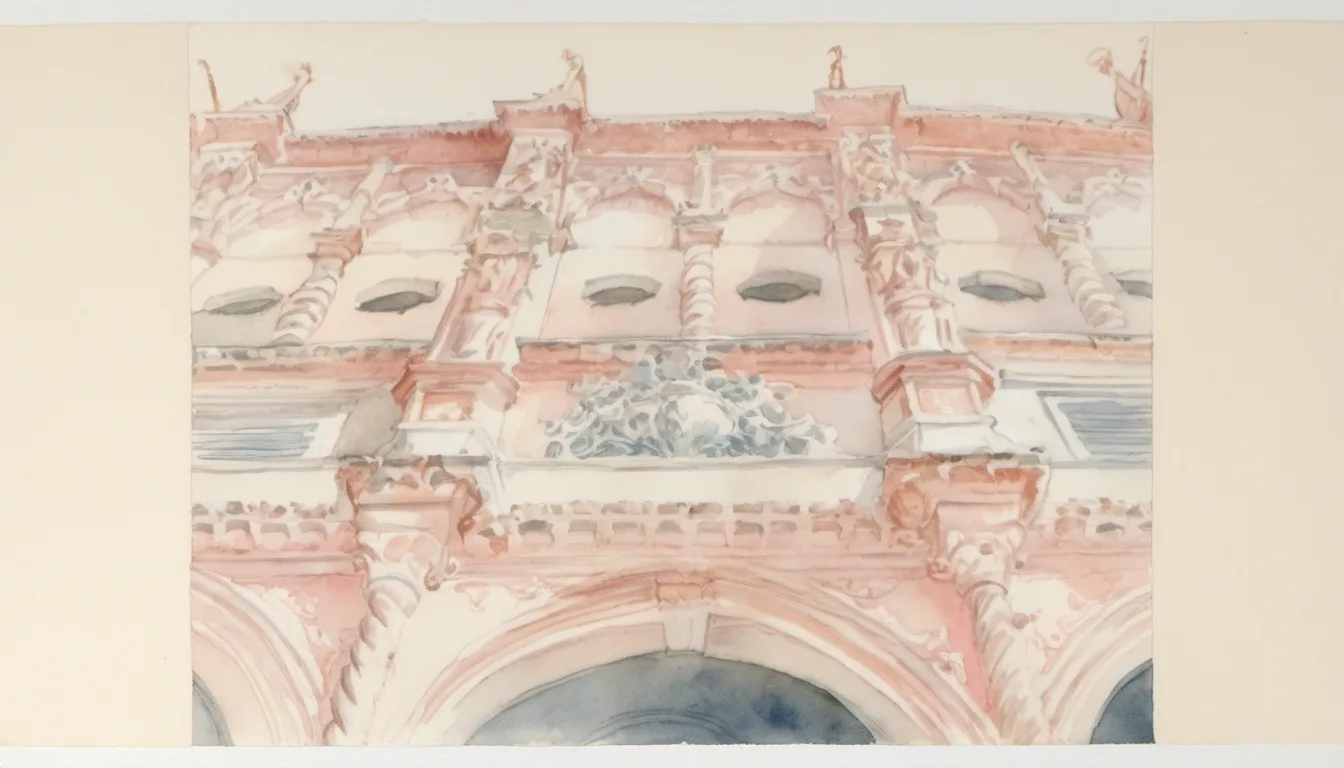
Ancona, Italy
Ancona is not just a stop on the Adriatic coast; it is the administrative and historical heart of the Marche. While the region is known for its hilly interior and narrow coastal strip, Ancona anchors the eastern edge of the central Adriatic slope. It sits where the Apennine range descends sharply toward the sea, creating a distinct topography that has shaped its identity for millennia.
The city’s significance stems from its continuous role as a border zone, or 'march,' of the Holy Roman Empire. From the Picentes of the Iron Age to the Roman colonies connected by the Via Flaminia, Ancona has always been a point of contact and conflict. In the Middle Ages, it operated as a free commune and a maritime republic, resisting both imperial authority and the Republic of Venice.
Walking Ancona rewards you with layers of history compressed into a small area. You move from the ancient Greek and Roman foundations to the medieval stone, including the distinctive Byzantine-style reliefs in the Cathedral of San Ciriaco. The city offers a tangible sense of its past as a center of trade, law, and culture, far removed from the typical tourist circuit of the Italian peninsula.
Ancona’s identity is forged by its geography. Located on the central Adriatic slope, the city sits at the foot of Monte Conero, where the hilly landscape meets the relatively flat, straight coastline. This position made it a strategic hub. In ancient times, the region was known as Picenum, inhabited by the Picentes. Archaeological artifacts from this Iron Age period are preserved in the National Archaeological Museum of the Marche Region in Ancona, providing a baseline for the city’s long history.
Roman influence reshaped the area after the Battle of Sentinum in 295 BC. The Romans founded numerous colonies, linking them to the capital via the Via Flaminia and the Via Salaria. Ancona became a key node in this network. Following the fall of the Western Roman Empire, the region saw invasions by Goths and later became part of the Byzantine Exarchate of Ravenna. Ancona was one of the five cities forming the 'Pentapolis,' a designation that underscores its early importance in the Adriatic basin.
The modern name of the region, Marche, derives from the medieval word 'marca,' meaning a border zone or march. In the ninth to eleventh centuries, the marches of Camerino, Fermo, and Ancona were created. Ancona emerged as a powerful free commune. In the twelfth century, it successfully resisted the imperial authority of Frederick Barbarossa and the Republic of Venice, asserting itself as an independent maritime republic. This era of autonomy was a defining period for the city’s political and economic strength.
Culturally, Ancona was a significant center from the Middle Ages through the Renaissance. The city was home to the Universitas studii generalis, authorized by Pope Pius IV in 1562, which traced its roots to a medieval law school active from 1300 onwards. The university’s emblem features two peacocks, taken from an 1189 stone slab by Maestro Leonardo in the Cathedral of San Ciriaco. The peacock symbolizes humility, a quality essential to the pursuit of knowledge.
The city’s history is marked by resilience against external powers. It was part of the Papal States but often under local lords. The Napoleonic period brought a short-lived Republic of Ancona in 1797–98, followed by integration into the Kingdom of Italy. Ancona suffered during World War I, when it was bombed during the Adriatic campaign, and again during World War II in the Battle of Ancona. These events scarred the city but did not erase its cultural continuity.
Today, Ancona serves as the capital of the Marche region, which has a population of nearly 1.5 million. The city is the seat of the Università Politecnica delle Marche, founded in 1969. The university’s main campus is in Ancona, with the rectorate located in Piazza Roma. The building was constructed in 1866 by Giovanni Battista Gabuzzi as the provincial seat. Damaged in the 1930 earthquake, it was restored by architect Guido Cirilli, who added a new great hall with symbolic decorations and a skylit ceiling with Art Nouveau-style windows.
The city’s academic and cultural life is further enriched by its architectural heritage. The Polo di Montedago, housing the faculties of engineering, agriculture, and sciences, features a building designed by Pietro Belluschi. Each floor is named by its elevation above sea level, ranging from quota 140 to quota 195. This unique feature reflects the city’s connection to its physical landscape. Ancona remains a place where history, academia, and the Adriatic sea converge, offering a deep and complex narrative for anyone willing to walk its streets.