Cesena, Italy
Cesena sits quietly at the crossroads of Emilia-Romagna, positioned precisely between the Adriatic sea and the Apennine hills. It is not a city that shouts for attention, but one that reveals itself slowly to those willing to walk its layered history. The landscape here is defined by the Savio valley, a geographical anchor that has shaped the city’s development for millennia. To walk Cesena is to traverse a timeline that moves from ancient Umbrian settlements to Roman centuriation, and finally to the sophisticated urban planning of the Renaissance.
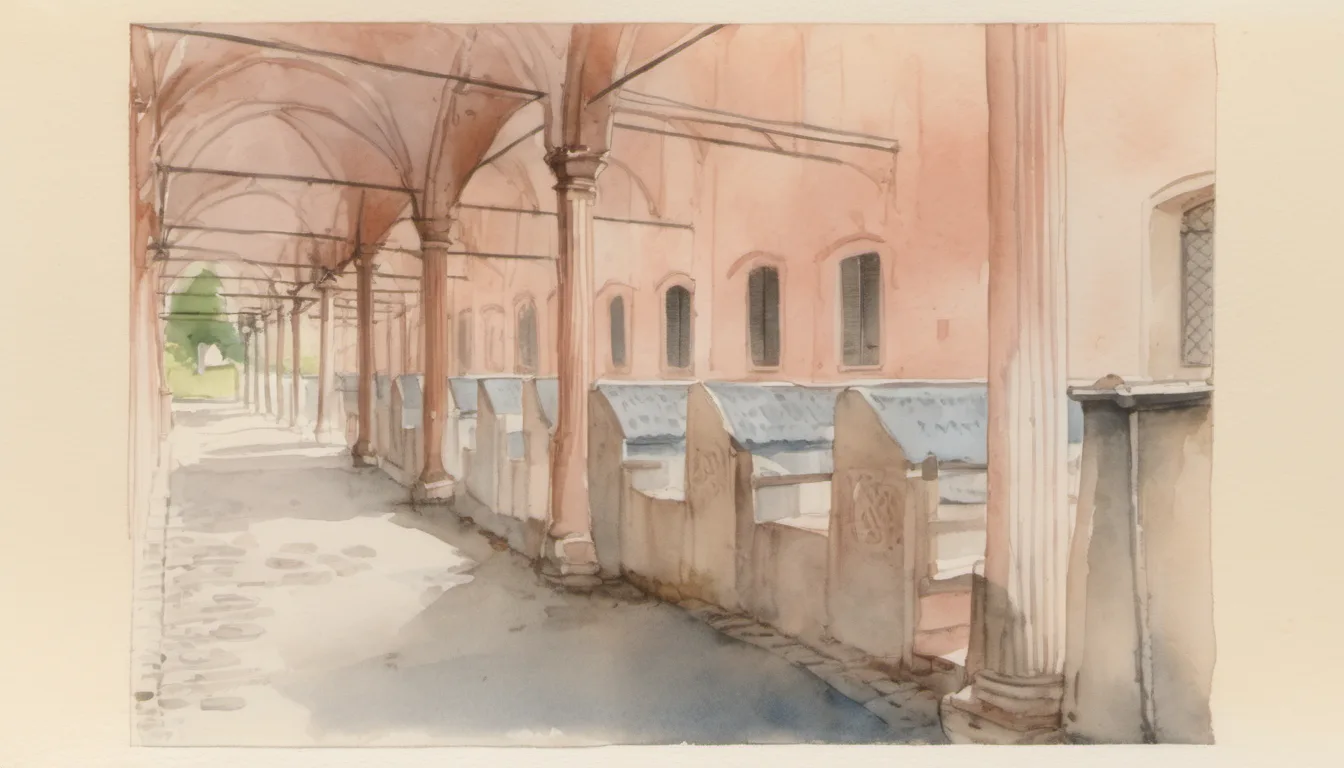
The city’s singular claim to fame is the Biblioteca Malatestiana, the first civic library in Europe. It is not merely a repository of books but a perfectly preserved monument to humanist thought. The architecture, the furniture, and the collection remain in their original state, offering a rare glimpse into the intellectual ambitions of the 15th century. Walking past its walls, you are moving through a space where knowledge was treated as sacred, protected by the Malatesta family’s patronage and the enduring spirit of the town.
Beyond the library, the city offers a study in resilience and political turbulence. The Rocca Malatestiana dominates the skyline, a fortress that speaks of the power struggles between the Papacy and local lords. The streets around it retain the weight of history, from the brutal massacres of the 14th century to the complex allegiances of the Borgia era. Walking these streets requires an awareness of the blood that has stained them, yet the city has rebuilt itself with a distinct Romanagnolo character—pragmatic, artistic, and deeply rooted in the land.
Today, Cesena functions as a modern hub for agro-food research and biotechnology, yet it refuses to erase its past. The city is co-capital of the province of Forlì-Cesena, sharing this status with Forlì, a recognition of its historical importance. The walk rewards you with views of the Monte Spaziano basilica, a millennial religious complex that overlooks the town. It is a place where the sacred and the civic intersect, where the silence of the library contrasts with the enduring stone of the fortress. Cesena is for the walker who seeks depth over spectacle, a city that demands to be read rather than merely seen.
Cesena occupies a specific geographical niche in Emilia-Romagna, positioned almost exactly in the center of the Romagna region. It lies midway between the Adriatic coast, just 15 kilometers away, and the rolling hills of the Apennines. This location, at the intersection of the ancient Via Emilia and Via Romea, has made it a natural crossroads for trade and military movement for centuries. The territory spans 249.5 square kilometers, ranging from the flat plains of the Po Valley in the northeast to the first foothills of the Tuscan-Romagnole Apennines in the southwest. The Savio river and its valley form the main hydrographic axis, shaping the urban layout and agricultural identity of the area. The altitude varies from just five meters near the Valle ditch to 480 meters on Monte Cavallo, with the city center resting at 44 meters above sea level.
The origins of Cesena are ancient, with evidence of Neolithic habitation found near the Basilica del Monte and Borello. The first permanent settlement likely emerged around the sixth or fifth century BC, established by the Umbri. It later became a key center for the Senones Gauls, one of the principal Celtic peoples of Cisalpine Gaul. With the arrival of the Romans, the settlement took the form of a village, and it retained its importance as a center on the Via Emilia. The surrounding plain still retains almost intact the vast Roman centuriation, a grid system that organizes the landscape to this day. This ancient layering of history is visible in the fields and the urban plan, providing a foundational context for the city’s later developments.
The medieval period was marked by oscillation between communal freedom and submission to local lords or the Church. In 1333, Cesena fell under the control of the Ordelaffi family from Forlì. However, their rule was interrupted in 1357 by the intervention of the papal legate, Cardinal Albornoz. Despite the fierce defense led by Cia degli Ubaldini, the city was subdued and incorporated into the Papal States. This period set the stage for the city’s turbulent relationship with central authority, a theme that would recur throughout its history. The struggle for autonomy against the Papacy defined much of the city’s political identity.
A dark chapter occurred in February 1377, during the war promoted by the Florentine Republic against the Papal States. Cardinal Roberto di Ginevra, the future antipope Clemente VII, ordered a violent massacre to prevent Cesena from joining the Florentines. The massacre was carried out by Breton mercenary troops led by the English condottiero Giovanni Acuto. The city was razed, and more than 5,000 inhabitants were killed. This event, known as the Strage di Cesena, left a deep scar on the collective memory of the city. It stands as a stark reminder of the brutality of medieval warfare and the precariousness of urban existence in the face of political conflict.
Despite this devastation, Cesena experienced a renaissance under the Malatesta family. The city flourished culturally and architecturally, producing monuments that remain significant today. Galeotto Malatesta commissioned the Rocca Malatestiana, a fortress that dominates the city’s skyline and symbolizes the family’s power. More importantly, the humanist patron Domenico Malatesta Novello commissioned the Biblioteca Malatestiana. Completed in the 15th century, it is the first civic library in Europe and the only perfectly preserved example of a monastic humanist library, including its building, furnishings, and book collection. UNESCO has recognized it as part of the Memory of the World register, highlighting its global significance.
The city’s political fortunes continued to shift. Around 1500, under the rule of Cesare Borgia, Cesena briefly became the capital of the Duchy of Romagna. In 1502, Leonardo da Vinci arrived in the city, tasked by Borgia with surveying and updating the fortifications of the conquered Romagna cities. This association with Leonardo adds a layer of artistic and engineering prestige to the city’s history. However, Borgia’s rule was short-lived, and Cesena returned to the control of the Papal States, a status that persisted until the Unification of Italy. The library and fortress remained as testaments to the city’s earlier golden age.
The 18th and 19th centuries saw Cesena produce two popes, both from local families. In 1775, Giovan Angelo Braschi became Pope Pius VI, and in 1800, Barnaba Niccolò Maria Luigi Chiaramonti became Pope Pius VII. The Napoleonic experience (1797-1814) was particularly damaging, as both popes unsuccessfully opposed Napoleon Bonaparte. This period resulted in the suppression of numerous monasteries, convents, and churches, as well as the loss of the University. The city’s religious and educational infrastructure was significantly diminished, altering its cultural landscape permanently.
In January 1832, Cesena was sacked, and 17 of its citizens were killed during the Stragi di Cesena e Forlì. These events occurred during the final repression of the Romagnol uprisings by Papal troops. The violence underscored the ongoing tension between the local population and the central government. Following Unification in 1861, the city experienced a period of expansion. Liberal governments ruled the municipality until the early 20th century, followed by republicans until the rise of fascism and the revolt of the Comandini. This period was marked by both rich cultural development and significant bloodshed.
During World War II, Cesena contributed significantly to the Resistance, earning the Silver Medal of Military Valor for the sacrifices of its population and its activity in the partisan struggle. In the post-war period, the city underwent notable urban development and economic growth. It has emerged as an international hub in the agro-food sector, particularly in research and biotechnology. The city’s modern identity is thus a blend of its historical depth and its contemporary economic focus. In 1992, with the detachment of the Rimini area to form a new province, the province of Forlì was renamed Forlì-Cesena. As of January 29, 2024, Cesena became a co-capital of the province, sharing this status with Forlì.
The visual landscape of Cesena is defined by its key architectural monuments. The Basilica of Santa Maria del Monte stands on the Spaziano hill, a site where Bishop Mauro was accustomed to pray. Proclaimed a saint in the 11th century, his legacy led to the construction of a church around the year 1000, followed by a monastery between 1001 and 1026. The complex has been enriched with notable works of art over the centuries. The city’s coat of arms, featuring a black and white shield with a gold crenellated border and the head of Angiò, reflects the pacification of the Guelph and Ghibelline factions and the Malatesta signoria. The gonfalone, or flag, mirrors these colors, displaying the city’s emblem. These symbols, along with the physical monuments, create a cohesive narrative of a city that has survived and thrived through centuries of change.
Do not miss around Cesena
2 placesEvery place below is a ten-to-fifteen minute walk from the last.