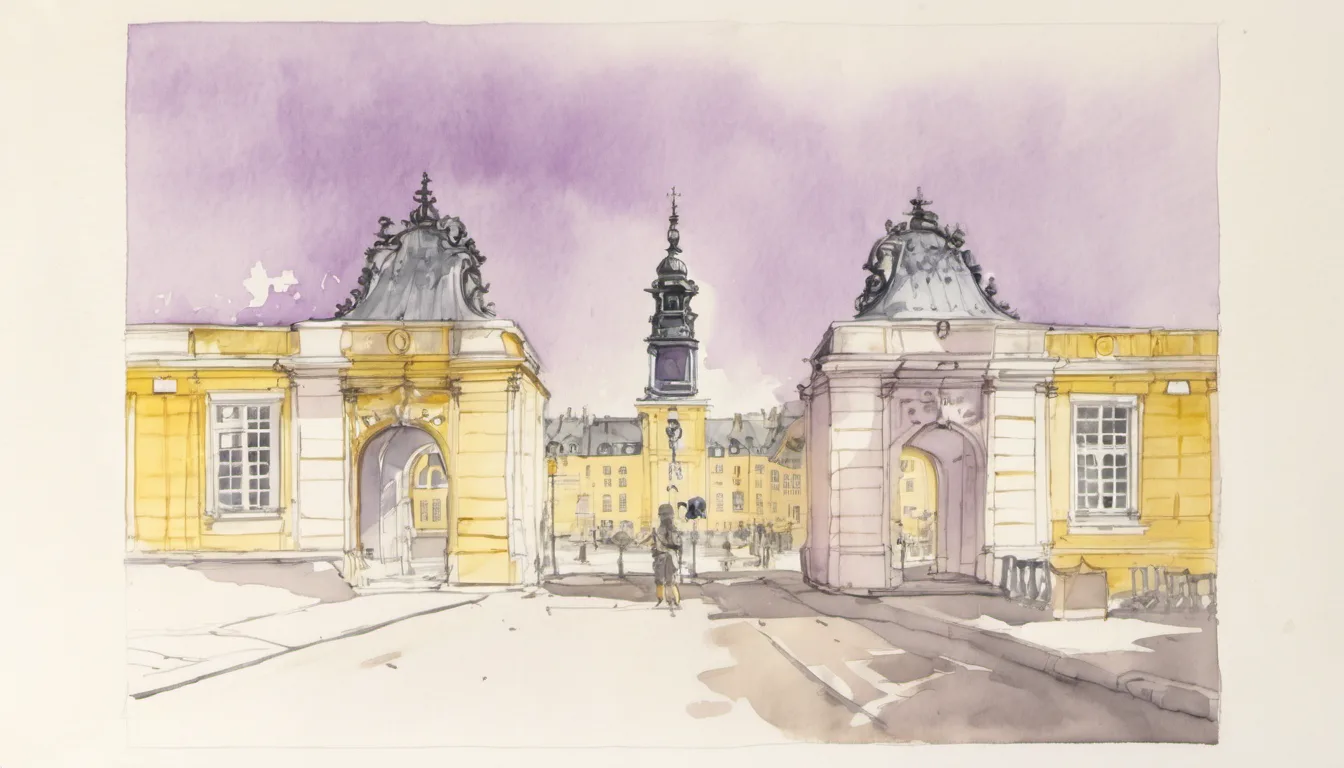
Copenhagen, Denmark
Copenhagen does not announce itself with fanfare. It reveals itself slowly, through the geometry of canals, the weight of stone, and the rhythm of a city that has spent eight centuries negotiating with the sea. Founded as a Viking fishing village near what is now Gammel Strand, it has grown into a capital that balances its role as a political center with its identity as a place of refuge and trade. To walk here is to trace the arc of Northern European history, from the muddy banks of the 11th century to the sleek, green ambitions of the 21st.
The city’s character is defined by its relationship with water. Situated on the islands of Zealand and Amager, Copenhagen was born from a natural harbor rich in herring, which attracted merchants and fishermen alike. The name itself, derived from the old Danish Køpmannæhafn, translates simply to ‘Merchant’s Port.’ This utilitarian origin persists in the city’s DNA: it is a place built for exchange, for movement, and for the quiet efficiency of daily life. The canals, once arteries of commerce, are now borders of beauty, separating neighborhoods while connecting them through a web of bridges and promenades.
What makes Copenhagen matter today is not just its history, but its relentless reinvention. After surviving plague, fire, and the bombardment by Horatio Nelson in the early 19th century, the city emerged in the Danish Golden Age with a neoclassical elegance that still defines its streets. Today, it stands as one of Europe’s greenest cities, a title earned through decades of investment in infrastructure, cycling culture, and sustainable urban planning. The 2014 European Green Capital award was not a gift, but a reflection of a long-standing commitment to living lightly on the land.
Walking through Copenhagen rewards those who look beyond the postcard images of the Little Mermaid or Tivoli Gardens. It invites you to explore the contrast between the medieval roots of Slotsholmen and the modernist expansions of the Finger Plan, which guided growth along five railway axes. The city is a palimpsest, where Viking trade posts lie beneath neoclassical palaces, and where the bustling energy of Strøget meets the quiet dignity of Amalienborg. It is a city that values its past without being trapped by it, offering a walk that is as much about understanding the present as it is about remembering the past.
To understand Copenhagen is to understand the slow, deliberate accumulation of time. The city’s origins are murky, lost in the mists of the Viking Age, but archaeological evidence points to a settlement existing as early as the 11th century. Excavations near Kongens Nytorv have uncovered a large merchant building dating to around 1020, suggesting that trade was the city’s first language. The natural harbor, abundant with herring, drew seasonal fishermen and merchants, who gradually settled into a more permanent community. The name København, or Copenhagen, is a corruption of Køpmannæhafn, meaning ‘Merchant’s Port,’ a name that has stuck through centuries of political upheaval and cultural transformation.
The city’s formal beginning is traditionally dated to 1167, when Bishop Absalon built a modest fortress on the small island of Slotsholmen. This was not an act of grand ambition, but of necessity. The coast was plagued by Venedi pirates, and the fortress was a shield for the growing settlement. Absalon, who served as Bishop of Roskilde and later Archbishop of Lund, understood the strategic value of the location. The fortress, with its defensive bastions and moats, became the nucleus of the city. By 1177, the church of St. Clement was built, and the excellent harbor allowed Copenhagen to grow into a significant trading center. The name ‘Merchant’s Port’ was no longer just a description; it was a reality.
The Middle Ages were a period of consolidation and conflict. In 1186, Pope Urban III declared that the castle and surrounding lands belonged to Absalon, and upon his death, they passed to the Diocese of Roskilde. Around 1200, the Cathedral of Our Lady was constructed on a hill to the northeast, and an urban settlement began to form around it. The city’s importance grew, but so did its vulnerabilities. It faced repeated attacks from the Hanseatic League, culminating in its invasion in 1368 during the Second Danish-Hanseatic War. Despite these challenges, the fishing industry, particularly the trade in herring, prospered, and Copenhagen expanded north of Slotsholmen. In 1254, the city received its own charter from Bishop Jakob Erlandsen, supported by local merchants and fishermen, marking a step toward self-governance.
The 15th century marked a turning point. In 1443, Copenhagen became the capital of Denmark, a status it has held ever since. The city consolidated its position as a regional center of power through its administrative institutions and the presence of the armed forces. During the Renaissance, Copenhagen served as the center of the Kalmar Union, a personal union of Denmark, Norway, and Sweden under a single monarch. The city flourished as a cultural and economic hub, reflecting the wealth and power of the Danish monarchy. The royal palaces, including Christiansborg and Rosenborg, were built or expanded during this period, asserting the city’s status on the European stage.
The 18th century brought disaster, but also renewal. A plague epidemic and a devastating fire in 1728 destroyed much of the city. The subsequent reconstruction included the creation of Frederiksstaden, a prestigious new district that showcased the city’s resilience and ambition. Institutions such as the Royal Danish Theatre and the Royal Academy of Fine Arts were founded, establishing Copenhagen as a center of culture. The city’s architecture began to reflect the neoclassical style, with clean lines and grand proportions. This period of rebuilding laid the foundation for the Copenhagen of the 19th century, a city that was both historic and modern.
The early 19th century brought another crisis. In 1807, the British Admiral Horatio Nelson attacked the Dano-Norwegian fleet and bombarded the city. The destruction was severe, but the response was swift. The subsequent ‘Danish Golden Age’ saw a flourishing of art, literature, and architecture. The city’s appearance was transformed, with neoclassical buildings replacing the damaged structures. This period of recovery and cultural explosion cemented Copenhagen’s reputation as a city of intellect and beauty. The Golden Age was not just a historical footnote; it was a defining moment that shaped the city’s identity for centuries to come.
The 20th century brought new challenges and new opportunities. After World War II, the city adopted the ‘Finger Plan,’ a urban development strategy that guided growth along five railway axes extending from the city center. This plan allowed for the preservation of green spaces between the fingers, creating a unique urban landscape that balances density with nature. The Finger Plan facilitated the development of housing and commercial activities, making the city more accessible and livable. The plan remains a model of sustainable urban planning, demonstrating how a city can grow without sacrificing its natural environment.
Today, Copenhagen is a city of contrasts. It is a financial hub, home to the Copenhagen Stock Exchange, and a center for IT, pharmaceuticals, and green technology. It is also a city that values its history, with landmarks like Tivoli Gardens, the Little Mermaid statue, and the Amalienborg Palace drawing visitors from around the world. The city’s commitment to sustainability is evident in its cycling culture, its extensive public transport system, and its green spaces. In 2014, Copenhagen was named the European Green Capital, a title that reflects its long-standing commitment to environmental stewardship.
Walking through Copenhagen is an exercise in observation. The city’s landscape is characterized by parks, promenades, and waterfronts that connect its various neighborhoods. The Øresund Bridge, which connects Copenhagen to Malmö in Sweden, has integrated the city with the Swedish province of Scania, creating a transnational urban region. The city’s monuments, from the Marmorkirken to the Børsen, tell stories of power, faith, and commerce. The annual Copenhagen Marathon, established in 1980, is a testament to the city’s active lifestyle and community spirit.
The city’s educational institutions, including the University of Copenhagen, founded in 1479, contribute to its intellectual vibrancy. The city is also home to professional football teams like FC Copenhagen and Brøndby IF, and the Copenhagen Metro, inaugurated in 2002, provides efficient transport for residents and visitors. The city’s airport, one of the busiest in the Nordic countries, serves as a gateway to the region. Copenhagen is a city that has mastered the art of balancing its past with its future, offering a walking experience that is as rich in history as it is in contemporary relevance.