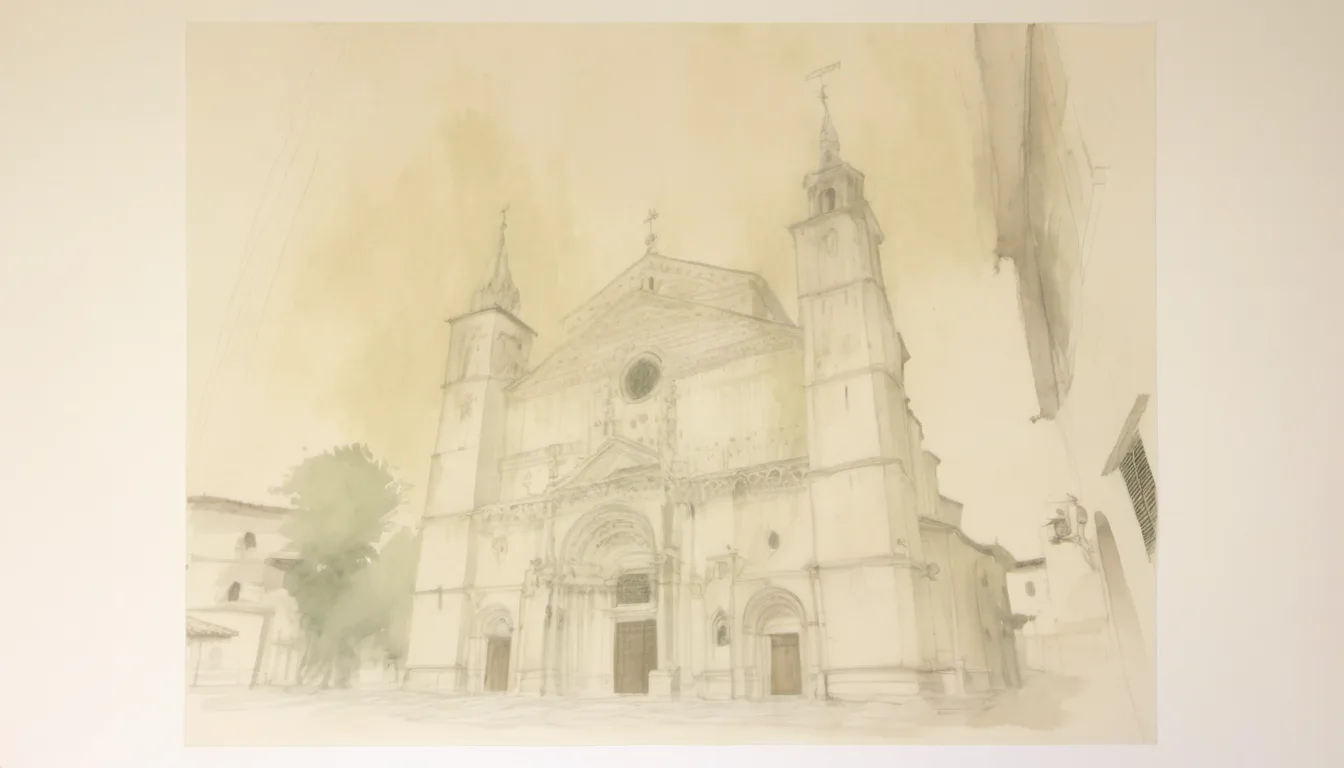
Duomo di Fidenza
Cross the piazza and the first thing you notice is a statue giving directions. At the base of the central portal, a carved Simon Peter leans out, one hand raised, said to point toward Rome. It is a fitting gesture. Fidenza sat on a leg of the Via Francigena, the road that carried medieval pilgrims from northern Europe to the Eternal City, and its cathedral was built to speak to travelers who could not read it in any other language than stone.
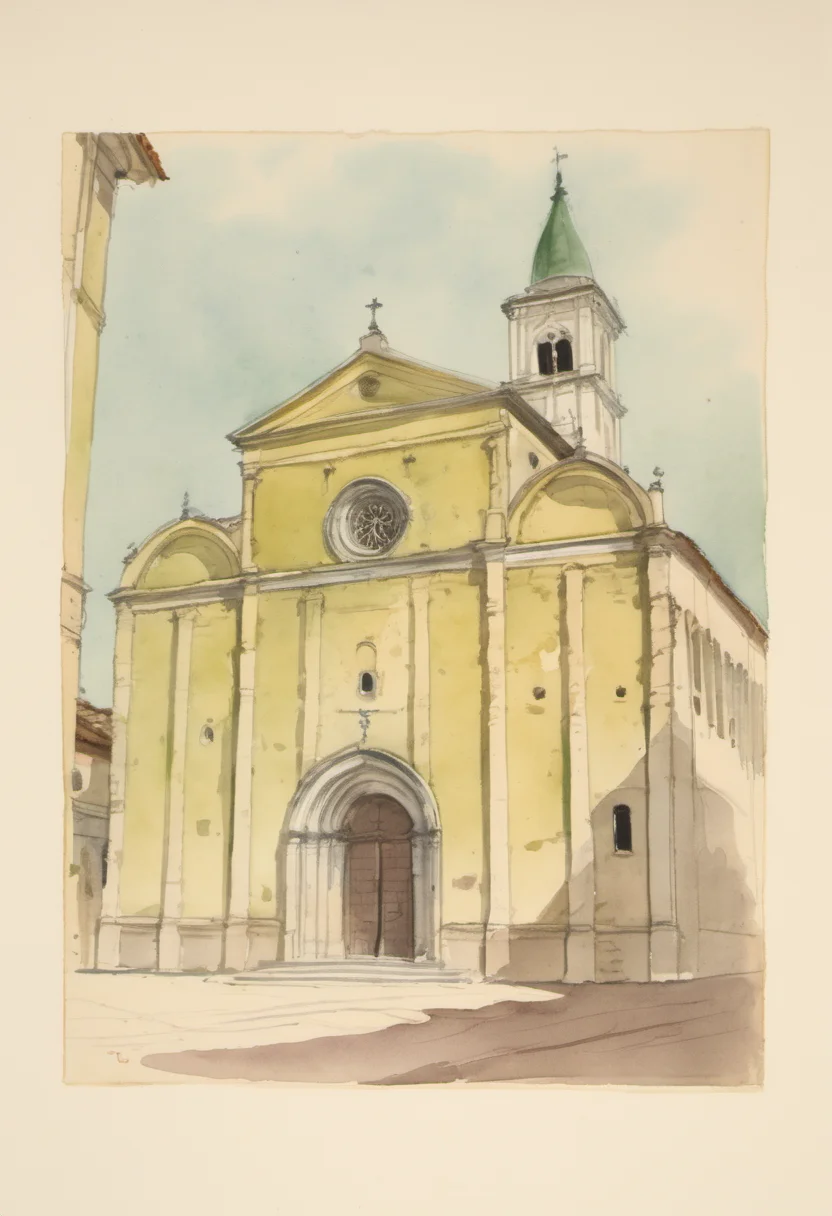
Construction began in the twelfth century, the church dedicated to Domninus, a chamberlain to the Roman emperor Maximian whose conversion to Christianity cost him his life. His relics reached Fidenza in 1207 and, by tradition, still rest in an urn in the crypt below. For centuries the town itself took his name, calling itself Borgo San Donnino, and did not revert to its older Roman title, Fidenza, until 1927. The cathedral survived worse than most: when Parma's forces sacked and destroyed the town in 1268, the church stood. The facade did not fare so well. Work on its upper half simply stopped and was never resumed, which is why the building still looks, eight centuries on, like a sentence that trails off.
What was finished is remarkable. The lower facade, brick and stone, carries three portals and some of the finest Romanesque carving in northern Italy, much of it by Benedetto Antelami and his workshop. At the central door, a jutting portico rests on thin columns planted on carved lions; the prophets David and Ezekiel flank the entrance, and reliefs run through Domninus's life and the miracles credited to him after death. The side portals carry Charlemagne and Pope Adrian II, and, elsewhere, Hercules grappling the Nemean lion. None of it was decoration for its own sake. Read in sequence, the carvings formed a picture-book of the faith for pilgrims who could not read Latin, or anything else.
The whole programme reached further than one saint's biography. Worked into the same stone are the Old and New Testaments, the Glory of Christ, and, alongside the historical record, the kind of legends and half-fantastic images medieval cathedrals allowed themselves. More reliefs from Antelami's school, taken off the building over the centuries, now sit in Fidenza's diocesan museum instead.
Inside, the church keeps its nerve simple: well-proportioned, largely untouched by heavy-handed restoration. Andrea Mainardi, called il Chiaveghino, painted an altarpiece of the Purification of Mary around 1600, and side chapels kept being added until that same century. Smooth marble steps climb to the raised choir; unusually, the bishop's seat sits to the west of the altar rather than the more customary south. At the altar's edge, twin staircases drop to the crypt, where the saint's relics are still shown to those who make the descent.
Cross the piazza and the first thing you notice is a statue giving directions. At the base of the central portal, a carved Simon Peter leans out, one hand raised, said to point toward Rome. It is a fitting gesture. Fidenza sat on a leg of the Via Francigena, the road that carried medieval pilgrims from northern Europe to the Eternal City, and its cathedral was built to speak to travelers who could not read it in any other language than stone.
The town beneath it has worn several names, each one a small history lesson. The Romans knew it as Fidentia, a camp raised where Gallic settlers had already built Vicumvia along the Via Emilia; by 41 BC, Octavian had granted it citizenship as Fidentia Julia and municipal status. When the Western Empire fell, the name curdled into Fidentiola, and the town spent the fifth century being invaded and eventually destroyed. What rose from that was simply called Borgo, a settlement that by 923 had taken the name Borgo San Donnino, after a saint said to have been decapitated there. It kept that name for more than a thousand years, reverting to the older Roman form, Fidenza, only in 1927.
Devotion to Domninus ran deep and reached high. Charlemagne is said to have favored the saint's church above most others, giving it his royal villa at Fornio and, more strikingly, the golden apple from his own staff, melted down to form the knob of the chalice. It was during his reign, tradition holds, that the saint's body was rediscovered. Domninus himself, according to the record kept in the cathedral's carvings, had been chamberlain to the Roman emperor Maximian before his conversion to Christianity cost him his life around 304. His relics did not reach the church until 1207, and are still said to rest in an urn in the crypt.
The town's fortunes swung as hard as its names. Between 1092 and 1102, of all things, Borgo San Donnino served as the capital of a breakaway Italy: Corrado di Lorena, son of the emperor Henry IV, rebelled against his father and, backed by Pope Gregory VII and Matilda of Canossa, ruled from here. Communal status followed in 1102, confirmed by Frederick Barbarossa in 1162, who handed control to the Pallavicino family. Parma seized the town in 1199; Frederick II freed it in 1221. Then, in 1268, Parma's forces returned and destroyed Borgo San Donnino outright.
The cathedral itself survived that sack. Its facade did not get off so lightly: construction of the upper half, already underway, simply stopped and was never picked up again, which is why the building still reads, eight centuries later, like an unfinished sentence. The apse and the lower facade were completed not long after, and what they left behind is some of the finest Romanesque sculpture in northern Italy.
Much of the credit belongs to Benedetto Antelami and his workshop. At the central of the three portals, a portico juts out on thin columns rooted in carved lions; the prophets David and Ezekiel flank the door, and bas-reliefs trace Domninus's life and the miracles attributed to him after death, alongside scenes from the life of the Virgin. The side portals carry Charlemagne and Pope Adrian II; elsewhere, Hercules wrestles the Nemean lion. None of it was ornament for its own sake. Composed as a whole, the carvings amounted to a picture-book of the faith, aimed at pilgrims who could not read Latin, or read at all — a version of scripture built to survive any language you arrived speaking. Elsewhere in the programme, the Old and New Testaments intersect with the Glory of Christ and, quite openly, with the kind of legend and fantastical imagery medieval cathedrals were happy to include alongside doctrine. More reliefs from Antelami's school, removed from the building over time, are now kept in Fidenza's diocesan museum.
Inside, the church resists the urge to overdecorate. It is simple and well-proportioned, and has largely escaped the heavy hand of later restoration. Andrea Mainardi, known as il Chiaveghino, painted an altarpiece of the Purification of Mary for the church around 1600, by which point side chapels had been accumulating along the nave for a century. Smooth marble steps lead up to the raised choir, and, in a detail that departs from the layout more usual in later churches, the bishop's seat sits to the west of the altar rather than the south. At the altar's edge, two staircases descend to the crypt, where the saint's relics are still shown to visitors who make the climb down.
Rebuilding, once begun, kept going. The town itself was not reconstructed until 1300, when the Torre Salvaterra went up as a defense against further raids from Parma. A century of intermittent Visconti rule followed, leaving behind the oldest part of the town hall, an oratory, and a gate. The Sforza took over after 1447, then the Pallavicino made the town their capital again, before Farnese annexation in 1556 folded it into the Duchy of Parma and Piacenza. Diocesan status arrived in 1601. Decades later, in 1630, plague swept through, spreading fast in part because of the pilgrims still arriving daily along the Via Francigena. The bishop's palace beside the cathedral, built in 1690, would stand for over two centuries before Allied bombing destroyed it in 1944 — a reminder that even the buildings that survive one disaster rarely survive all of them.