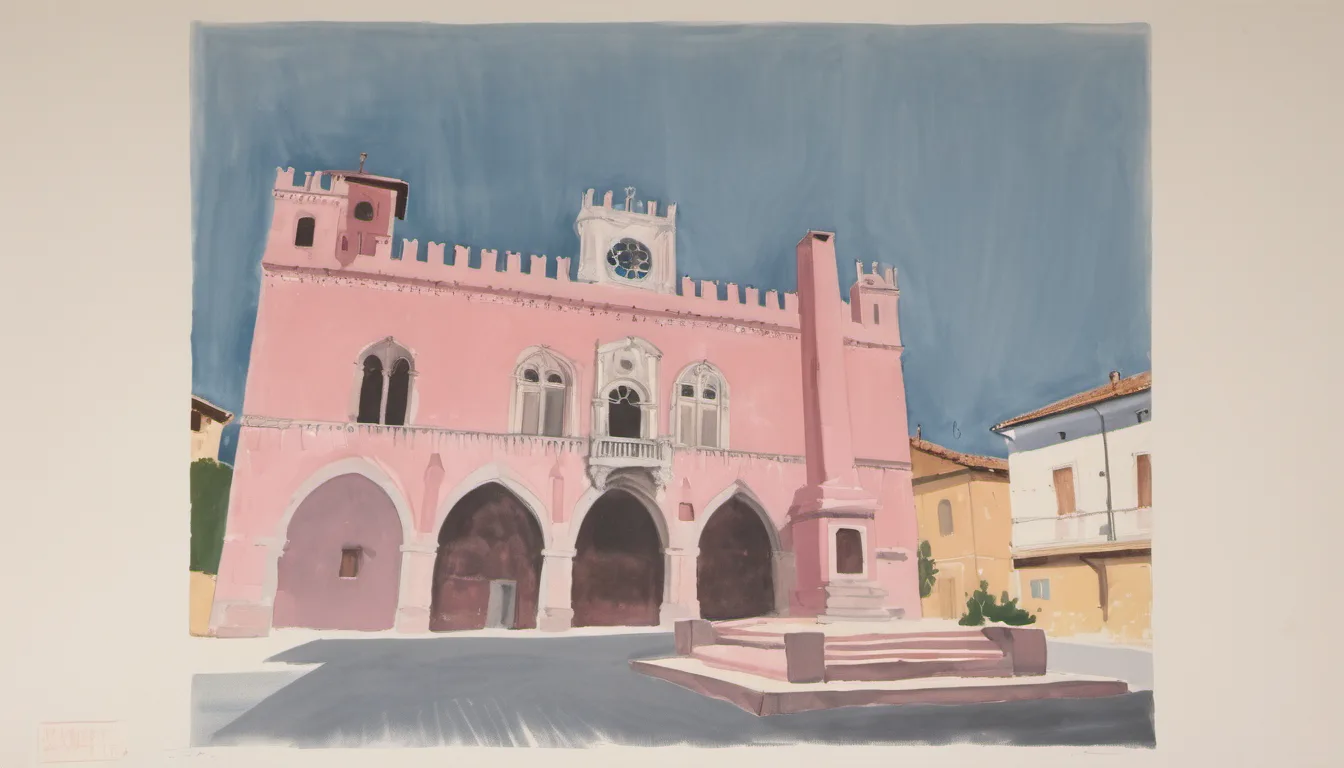
Fidenza, Italy
Fidenza does not announce itself with fanfare. It arrives quietly, a town of roughly 27,000 souls nestled in the province of Parma, Emilia-Romagna. For centuries, it was known simply as Borgo San Donnino, a name that clung to its identity until 1927, when a bureaucratic decision revived its ancient Roman appellation: Fidentia. This shift was not merely cosmetic; it was an act of historical reclamation, linking the modern comune to the Roman camp founded where the Ananes Gauls once settled. To walk here is to move through layers of time, where the soil remembers the footsteps of soldiers, kings, and merchants.
The city’s soul, however, resides in its stone. The Fidenza Cathedral dominates the skyline, a 12th-century masterpiece dedicated to Domninus of Fidenza, who was martyred under Maximian in 304 AD. This is not a place of overwhelming opulence but of profound proportion. The lower facade exemplifies Lombard-Romanesque architecture, a style that balances strength with grace. Here, three stone portals are adorned with statuary, including works by the renowned Benedetto Antelami. The air feels older here, suspended in the quiet dignity of a building that has witnessed the rise and fall of empires.
But the true magic of Fidenza lies in a single, whimsical detail on the cathedral’s exterior. A statue of the apostle Simon Peter stands guard, his left hand holding an inscription: 'I show you the way to Rome.' It is said to be one of the world’s first road signs, a medieval GPS pointing travelers toward the eternal city. This small stone gesture encapsulates the spirit of the town: practical, pious, and deeply connected to the broader currents of European history. It is a reminder that even in a small Italian comune, the path to significance is often marked by simple, enduring gestures.
Walking Fidenza rewards those who look beyond the obvious. Beyond the cathedral, remnants of the medieval period cluster near Porta San Donnino, the only surviving medieval gate, built in 1364 by the Visconti rulers. The Palazzo Comunale, documented since 1191, stands as a testament to resilience, having been destroyed and rebuilt multiple times. This is a city that has been conquered, destroyed, and reborn, yet it retains a quiet confidence. It is not a tourist trap but a living community, where the rhythm of life is dictated by the seasons and the enduring presence of its past. To walk Fidenza is to understand that history is not just in books, but in the stones beneath your feet.
Fidenza, known locally as Bùragh in the Parmigiano dialect, is a town that has spent two millennia negotiating its place between the great powers of northern Italy. Situated in the province of Parma, Emilia-Romagna, it sits on the ancient Via Emilia, the Roman road built by Consul Marcus Aemilius Lepido. This artery, stretching from Piacenza to Rimini, has always been the region’s spine, and Fidenza has long been a vital node upon it. The town’s origins trace back to a Roman camp, Fidentia, established on the site of the Ananes Gauls’ settlement, Vicumvia. In 41 BC, it was granted Roman citizenship, becoming a municipium, a status that elevated its importance in the imperial administrative grid. This early foundation laid the groundwork for a city that would repeatedly assert its autonomy against the encroaching forces of larger neighbors.
The medieval period was a time of turbulence and transformation for Fidenza. In the 5th century, the town was destroyed by Constantine I, a violent erasure that required rebuilding. By the late 11th century, however, Borgo San Donnino had risen from the ashes to become the seat of King Conrad II of Italy, between 1092 and 1100. In 1162, Emperor Frederick Barbarossa confirmed its status as a commune, entrusting its governance to the Pallavicino family of Piacenza. This political maneuvering set the stage for centuries of conflict. In 1199, Parma conquered the town, but it was liberated in 1221 by Frederick II of Hohenstaufen. Yet, peace was fleeting. In 1268, Parma’s troops destroyed the city again, leading to its rebuilding around 1300. From 1346 to 1447, Fidenza fell under the discontinuous lordship of the Visconti of Milan, followed by the Sforza family from 1449 to 1499. Each dynasty left its mark, not just in architecture, but in the town’s resilient spirit.
The 16th century brought a shift in allegiance. After a period of autonomy, Fidenza was subjugated by Parma until 1556, when it became part of the Duchy of Parma and Piacenza. This era of ducal rule provided a degree of stability, allowing the town to develop its cultural and religious institutions. The Napoleonic Wars brought another period of foreign control, but the unification of Italy in 1859 saw Fidenza annexed to the Kingdom of Sardinia-Piedmont. The 20th century, however, brought the most dramatic changes. During the Fascist era, the city underwent a large program of expansion, changing its name from Borgo San Donnino to Fidenza in 1927 to evoke its Roman heritage. This renaming was a political act, aligning the town with the nationalist narratives of the time. Yet, the scars of the 20th century were deeper. In May 1944, Allied planes bombed the city, nearly destroying it. In the spring of 1945, German occupation troops perpetrated massacres, including those at Carzole and Via Baracca. The city was finally liberated by the Allies on April 26, 1945, marking the end of a dark chapter and the beginning of reconstruction.
Today, Fidenza’s architectural heritage is a testament to its layered history. The Fidenza Cathedral, dedicated to Domninus of Fidenza, is the town’s most prominent landmark. Domninus was martyred by order of Maximian in 304 AD, and the town’s former name, Borgo San Donnino, reflected its patron saint. The cathedral, built in the 12th century, exemplifies Lombard-Romanesque architecture. Its lower facade is adorned with three stone portals, garlanded with statuary, including two saints by Benedetto Antelami, a master sculptor of the period. Bas-reliefs depicting the Histories of St. Domninus run along the portals, telling the story of the town’s patron. The interior remains simple and well-proportioned, untouched by the excessive restoration that has marred other Italian churches. Enrichetta d'Este, Duchess of Parma, is buried here, linking the cathedral to the ducal history of the region.
A unique feature of the cathedral is the statue of the apostle Simon Peter at the front. He holds an inscription in his left hand: 'I show you the way to Rome.' This is said to be one of the world’s first road signs, a medieval guide for pilgrims and travelers. It is a whimsical yet profound detail, reflecting the town’s role as a stop on the path to the eternal city. This small stone gesture encapsulates the spirit of Fidenza: practical, pious, and deeply connected to the broader currents of European history. It is a reminder that even in a small Italian comune, the path to significance is often marked by simple, enduring gestures. The statue points not just to a place, but to a legacy of faith and travel that has defined the region for centuries.
Beyond the cathedral, the medieval heart of Fidenza clusters around Porta San Donnino, the only surviving medieval gate, built in 1364 by the Visconti rulers. This gate stands as a sentinel to the town’s past, a reminder of the fortifications that once protected its inhabitants. Nearby, the Palazzo Comunale, documented since 1191, stands as a testament to civic resilience. The current structure dates from the 14th century, but its facade was added in the 19th century. After being destroyed by Spanish and French troops during the Italian Wars, it was rebuilt and enlarged, reflecting the town’s ability to recover and adapt. The Palazzo serves as a symbol of Fidenza’s endurance, a place where history is not just remembered but actively inhabited.
The town’s religious landscape is enriched by several other churches, each contributing to its architectural tapestry. Sant'Antonio Abate, a 12th-century Romanesque-style church, stands as a quiet witness to the town’s medieval past. Santa Margherita, also 12th-century, offers a similar Romanesque simplicity, while Santa Maria Annunziata, a 13th-century Baroque-style church, adds a layer of later artistic expression. These buildings, scattered throughout the town, create a narrative of faith and artistry that spans centuries. They are not merely monuments but living spaces, integral to the daily life of Fidenza’s residents. Walking through the town, one encounters these structures not as isolated exhibits but as part of a continuous dialogue between past and present.
Fidenza’s history is also marked by its political struggles. From the 13th to the 15th century, the town was a pawn in the games of larger powers, changing hands between Parma, Milan, and the Papal States. Each ruler left their mark, whether through fortifications, churches, or administrative reforms. The Visconti and Sforza families, who ruled Milan, exercised a discontinuous lordship over Fidenza, influencing its political and cultural development. The town’s ability to maintain its identity amidst these shifts is a testament to the resilience of its people. They have preserved their traditions, their language, and their connection to the land, even as the political landscape around them has changed.
The 20th century brought both destruction and renewal. The bombing of 1944 and the subsequent massacres by German troops left deep scars on the town. Yet, Fidenza rose from the ashes, rebuilding its infrastructure and its community spirit. The post-war period saw a focus on reconstruction and modernization, but also a renewed appreciation for the town’s historical heritage. The renaming to Fidenza in 1927, though politically motivated, helped to reconnect the town with its Roman roots, fostering a sense of historical continuity. Today, Fidenza is a town that honors its past while looking to the future, a balance that is reflected in its architecture, its culture, and its community life.
Sport also plays a role in Fidenza’s identity. AC Fidenza 1922, the local football club, plays in Serie D, providing a focal point for community pride and engagement. Football is more than a game in Italy; it is a social ritual, a way for communities to come together and celebrate their shared identity. The club’s name, referencing the year 1922, links it to the town’s early 20th-century history, adding another layer to Fidenza’s narrative. It is a reminder that even in small towns, the passions of the people are vivid and enduring.
Fidenza is twinned with Canterbury, United Kingdom; Herrenberg, Germany; Kremnica, Slovakia; and Sisteron, France. These twin towns reflect the town’s desire to connect with other communities across Europe, fostering cultural and historical exchanges. This network of partnerships underscores Fidenza’s place in a broader European context, linking it to other towns with rich histories and shared values. It is a testament to the town’s openness and its recognition that history is not confined by borders. To walk Fidenza is to walk through a town that is both deeply local and broadly European, a place where the past is alive and the future is being written.
Do not miss around Fidenza
1 placeEvery place below is a ten-to-fifteen minute walk from the last.