Camminamento di Ronda della Rocca
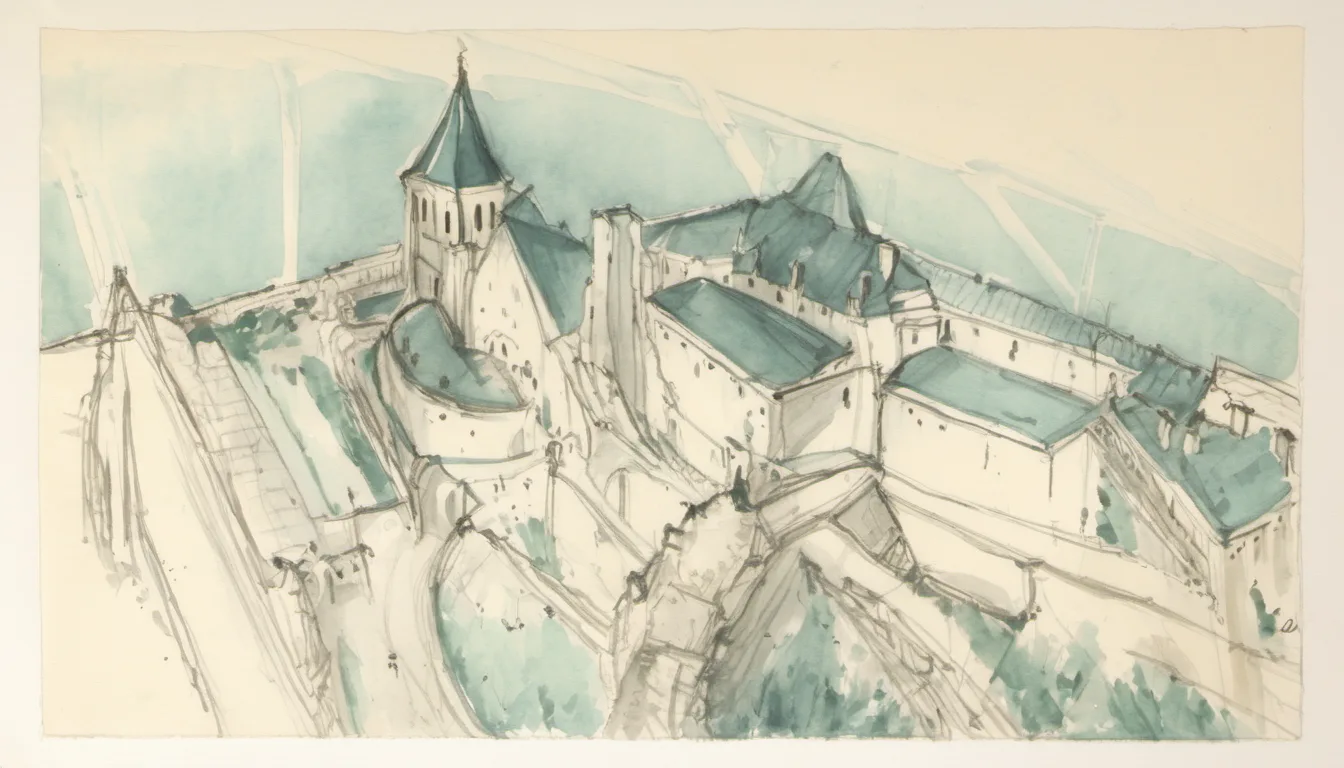
Begin on the rampart walk. It wraps around the Rocca di Offagna, a quadrangular fortification with a keep and towers, and it is the quickest way to read the building. The Anconetani raised the Rocca between 1454 and 1456 on a tufa outcrop to fend off nearby Osimo. It was one of the Castelli di Ancona and is counted among the Marche's major fortifications. That military logic is still visible in the stone.
Now make the full circuit. The museum has made the whole fortress accessible, so you move from the well hall to the dungeons, from the rampart walk to the mastio. This is not a sequence of empty rooms. It is a defensive route, and the walk is the spine of it.
Officially named the Museo della Rocca e delle armi antiche, the museum holds collections that mirror that strange history. There are archaeological pieces from the Piceni and the Romans, medieval arms, and a small collection of Far West American weapons that began as temporary and later became permanent. A recently installed hall is given over to artillery. The museum is part of Offagna's Polo Museale, alongside a natural sciences museum and a museum of the liberation of Ancona.
End on the tower terrace. From there the view is a 360-degree argument for the fortress: Marche hills, old hill centres, the Apennines, the Conero Riviera. The rampart walk is a short passage, but it is the one to take slowly. Take time on the walk; the stones are the archive.
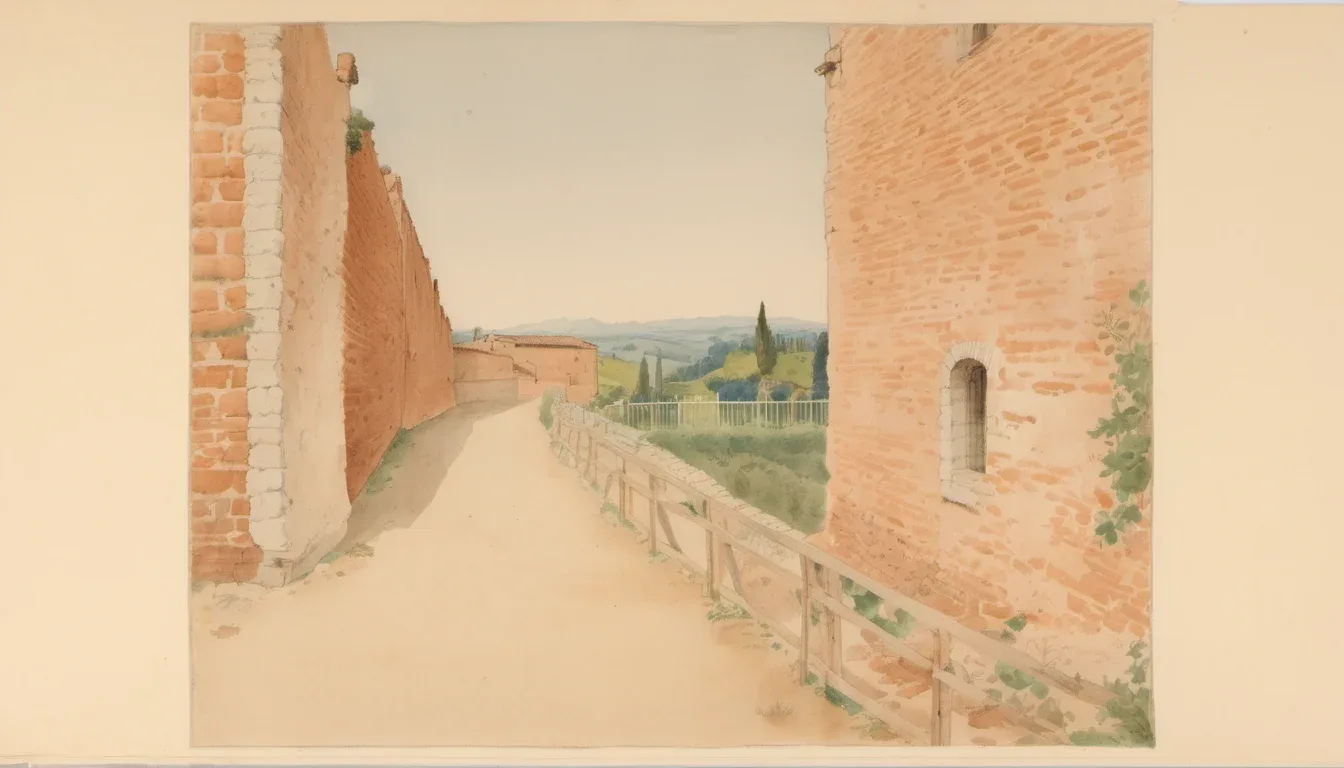
There is a moment, on the rampart walk of the Rocca di Offagna, when the Marche stops being a landscape and becomes a military map. The walk is not long. It is stone, exposed to the sky, and it follows the outer edge of a quattrocento fortress built on a tufa outcrop. You can put your hand on the wall and imagine a sentry doing the same in the years before the Renaissance settled in.
The Rocca was built between 1454 and 1456 by the Anconetani. Its reason for being was defence, most immediately against nearby Osimo. It belonged to the Castelli di Ancona, the ring of fortifications that held territory for the city. There is no palace pretension here. The architecture is a tool, and the camminamento di ronda is the handle. It is the connecting line between the fortress and the country around it.
The museum now opens the whole fortress. That is rare. You can pass through the well hall, the dungeons, the mastio and, of course, the rampart walk. Each room makes a kind of sense: a defensive fortress needs water, containment, height and movement. The route gives you all four in order.
The collection inside is formally the Museo della Rocca e delle armi antiche, part of Offagna's Polo Museale. It was assembled with the Accademia di Oplologia e Militaria di Ancona and the State Museums of San Marino. The objects pass through centuries: Picene and Roman archaeological material, then medieval weapons. The story is not a straight line. It is a stack of invasions, alliances and frontiers.
The most unexpected room is the Far West collection. It began as a temporary exhibition and stayed, a small gathering of American frontier arms inside a medieval Italian fortification. No explanation is offered for the pairing. Perhaps that is part of the appeal: the same human instinct—self-defence, expansion, status—dressed in different materials.
A recent hall is dedicated to artillery. It is the logical conclusion of the rampart walk: by the time artillery mattered, the castle's edges had to be reconsidered. The hall is small, but it completes the museum's argument about how power was held in this part of the Marche. That is the lesson. Take it in.
Climb the tower for the true reward. From the terrace, the view is a 360-degree survey of the Marche: the surrounding hills, the old historic centres, the Apennines behind, the Conero Riviera ahead. The old hill centres sit between the Apennines and the sea, each one a small knot of history. The fortress was placed here to watch all of it. Standing on the rampart walk first makes the terrace understandable; you have to trace the edge of the fortress before you can read the horizon.
Offagna is not a stop-and-photo place. You need time to let the sequence settle. Visit the well room, the dungeons, the mastio, the artillery. Take the rampart walk slowly. End high, on the terrace, where the Rocca's original purpose becomes clear. The Marche is not just a beautiful backdrop. It is a territory that was fought for, and the camminamento di ronda is where you hear that.