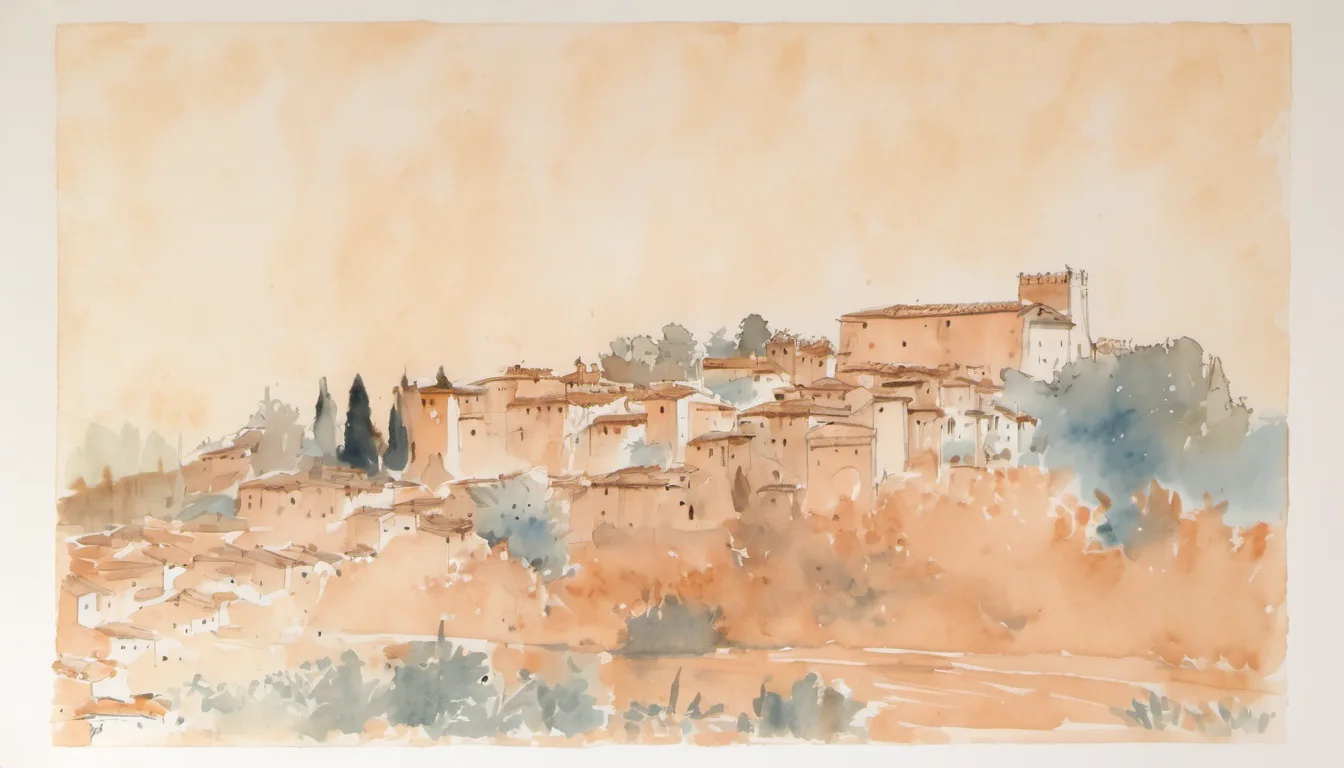
Gradara, Italy
Gradara does not shout. It sits on a hill, six kilometers from the Adriatic coast, guarding its stone secrets with the quiet dignity of a place that has survived centuries of shifting borders. To walk here is to move through layers of history, where the air feels older, heavier with the weight of medieval walls and the lingering echoes of a tragedy that has drawn visitors for seven hundred years. The town is not merely a destination; it is a preserved moment in time, suspended between the rolling hills of the Marche and the bustling Riviera Romagnola.
The heart of Gradara is its castle, or Rocca, a massive structure that dominates the landscape and serves as the town’s primary anchor. Built initially by the Grifo family in the twelfth century and later expanded by the Malatesta, the fortress is one of the best-preserved in Italy. Its double line of medieval walls encircles the ancient town, creating a sense of enclosure and safety that feels almost tangible. Walking through these gates is like stepping into a different era, where the chaos of the modern world is left behind at the foot of the hill.
What makes Gradara matter is not just its architecture, but the story that clings to it like ivy to stone. It is the site of Paolo and Francesca, the lovers whose ill-fated romance was immortalized by Dante Alighieri in the fifth canto of the Inferno. This literary association transforms the castle from a mere military stronghold into a shrine of tragic beauty. You do not just see the room where they died; you feel the weight of their fate, the passion, and the betrayal that has kept this place relevant long after the Malatesta and Sforza families faded from power.
Walking Gradara rewards the patient observer. The streets are narrow, winding, and paved with stones that have worn smooth under countless feet. There is a quiet charm to the lower town, where traditional crafts like ceramics and majolica still hold importance, and where the pace of life is dictated by the sun rather than the clock. It is a place that asks you to slow down, to look up at the terracotta roofs against the sky, and to listen to the silence that surrounds the fortress. It is a walk that lingers in the memory, not because of grand spectacles, but because of its profound, understated beauty.
Gradara is a study in resilience, a town that has endured the rise and fall of empires, the shifting allegiances of powerful families, and the relentless march of time. Located in the Province of Pesaro e Urbino, in the Marche region of central Italy, it sits at the extreme tip of the Apennine foothills, overlooking the Adriatic. Its position has always been strategic, a sentinel watching over the passage between the north and the south of the Italian peninsula. Today, it is recognized as one of I Borghi più belli d'Italia, yet its significance runs deeper than any title. It is a place where history is not exhibited but lived, embedded in the very stones of its walls and the shadows of its towers.
The origins of Gradara’s fortification date back to the twelfth century, when Pietro and Ridolfo del Grifo began construction of a tower. This early structure would eventually become the mastio, or main keep, of the castle that stands today. The Malatesta family, one of the most powerful dynasties in medieval Italy, captured the Grifo tower and expanded the fortress, completing the massive structure in the fifteenth century. The Malatesta were patrons of the arts and warriors of great renown, and their influence is evident in the castle’s robust design and strategic layout. The double line of medieval walls that encircle the town is a testament to their military genius, designed to protect the inhabitants from siege and invasion.
The political history of Gradara is a tapestry of conquest and dynastic struggle. After the Malatesta seignory, the town was conquered by the Sforza family in September 1289, marking a new chapter in its history. The Sforza rule was brief but significant, leading to a period that would forever change the town’s cultural identity. In 1494, Lucrezia Borgia, wife of Giovanni Sforza, arrived in Gradara. Her presence here, and the subsequent short domination of her brother, Cesare Borgia, added a layer of intrigue and danger to the town’s narrative. After the Della Rovere dynasty ended, the city was administered directly by the Popes, integrating it into the broader political framework of the Papal States.
It is, however, the literary association with Dante Alighieri that has cemented Gradara’s place in the global consciousness. In the fifth canto of the Inferno, Dante describes the tragic love story of Paolo and Francesca, who were killed by Francesca’s husband, Gianciotto Malatesta, Paolo’s brother-in-law. The lovers were caught reading about Lancelot and Guinevere, a book that became the instrument of their death. Dante places them in the second circle of Hell, among the lustful, where they are blown about by a relentless wind. This episode, one of the most poignant in the Divine Comedy, has drawn pilgrims and tourists to Gradara for centuries, turning the castle into a site of literary pilgrimage.
The castle itself, known as the Rocca di Gradara, is a masterpiece of medieval military architecture. It is one of the best-preserved castles in Italy, offering a rare glimpse into the defensive strategies of the Middle Ages. The fortress features a massive keep, thick walls, and a series of towers that provided vantage points for defenders. Inside, the rooms are sparse but evocative, with the famous room of Paolo and Francesca serving as the emotional core of the visit. The walls are adorned with frescoes that depict scenes from the tragedy, guiding visitors through the narrative of love, betrayal, and death. The castle is not just a museum; it is a stage for a story that continues to resonate.
Beyond the castle, the town of Gradara unfolds with a quiet charm that belies its dramatic history. The streets are narrow and winding, paved with stones that have worn smooth under the feet of generations. The architecture is a mix of medieval and later styles, with buildings constructed from local stone that blends seamlessly with the surrounding landscape. The town is home to several notable landmarks, including the Torre dell'orologio, the Teatro dell'Aria, and the Museo storico e Grotte medievali. These sites offer a deeper understanding of the town’s evolution, from a fortified stronghold to a vibrant community.
The cultural life of Gradara is vibrant, with a strong emphasis on tradition and craftsmanship. The town is part of the national association Città dell'Olio, reflecting its agricultural heritage and the importance of olive oil production. Artisanal activities, particularly the working of ceramics and majolica, are deeply rooted in the local economy. These crafts are not merely souvenirs but expressions of a long-standing tradition, passed down through generations. The town also hosts Gradara Ludens, a festival dedicated to games, which was revived in 2023 under the direction of Beniamino Sidoti, adding a modern twist to the town’s cultural calendar.
The demographic makeup of Gradara reflects broader trends in Italy, with a significant foreign population. As of January 1, 2021, 318 foreigners resided in the town, representing 6.5% of the total population. The largest communities are from Romania, Ukraine, Poland, and Moldova, contributing to the town’s diversity. This influx of new residents has brought a dynamic energy to Gradara, blending with the traditional lifestyle to create a unique cultural mix. The town’s administration, led by Mayor Filippo Gasperi, has been active in fostering community engagement and cultural exchange.
In November 2019, Gradara made international headlines when Dmitry Medoyev, the foreign minister of South Ossetia, paid a courtesy visit to the town. He met with Mayor Gasperi and Frederico Marmarella, the President of the Administration, to discuss humanitarian and cultural cooperation. The visit resulted in an agreement to hold an exhibition of paintings by Ossetian artists in Gradara, part of the Days of Ossetian Culture in Europe in July 2022. This event highlights Gradara’s role as a bridge between cultures, fostering dialogue and understanding through art and shared heritage.
Walking through Gradara is an exercise in patience and observation. The town does not rush to impress; it reveals itself slowly, layer by layer. The ascent to the castle is a physical and metaphorical journey, moving from the everyday world into the realm of history and myth. The views from the top are breathtaking, offering a panorama of the surrounding countryside and the distant Adriatic. It is a place that invites contemplation, where the past and present coexist in a delicate balance. Gradara is not just a place to visit; it is a place to experience, to feel the weight of history, and to find a moment of peace in a world that often moves too fast.
Do not miss around Gradara
2 placesEvery place below is a ten-to-fifteen minute walk from the last.