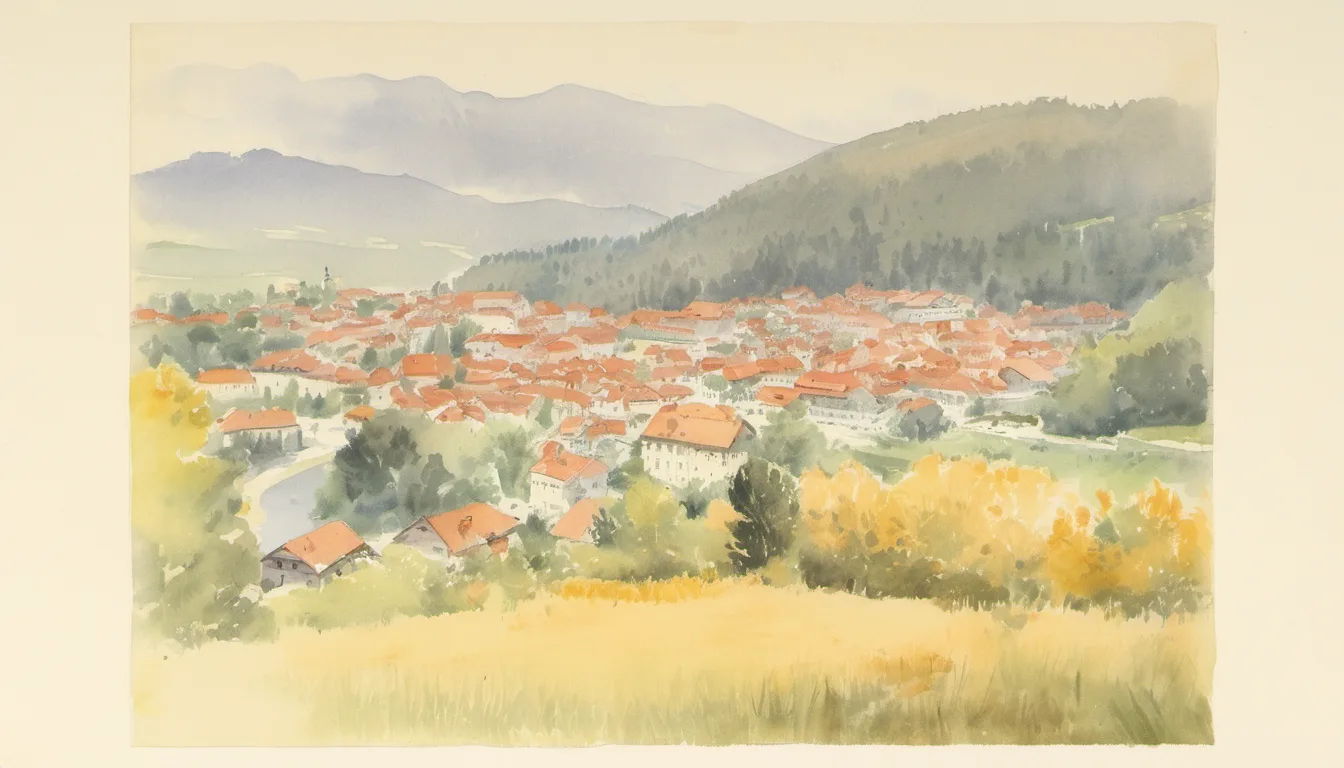
Idrija, Slovenia
Idrija does not shout. It sits in the Goriška Statistical Region of western Slovenia, a place defined by the Julian Alps and the Soča River, where the air is thin and the history is deep. This is not a city built for speed. It is a place built for endurance, for the slow, steady rhythm of those who work with the earth. The region contributes just over five percent to Slovenia’s national GDP, yet it holds a disproportionate weight in the country’s industrial soul. Here, in the shadow of the mountains, the past is not a museum exhibit; it is the ground you walk on.
The city’s singular identity is forged by mercury. For centuries, Idrija has been the home of the world’s oldest active mercury mine, a fact that has shaped its economy, its politics, and its very geography. The mine is not merely a relic; it is a living entity, a subterranean cathedral that has dictated the fortunes of the Habsburg Empire and the modern state alike. To walk Idrija is to trace the veins of this metal, to understand how the desire for preservation and power carved a city into the limestone. The mine’s presence is felt in every cobblestone, in every shadowed alley that leads away from the town center.
Walking here rewards the observer with a unique blend of Baroque elegance and industrial grit. The architecture reflects the wealth generated by the quicksilver trade, with palaces and churches standing in stark contrast to the rugged, functional structures of the mining districts. The pace is slow, dictated by the terrain and the history. You move through streets that have witnessed the rise and fall of empires, where the air carries the faint, metallic scent of the earth’s secrets. It is a place that demands attention, not through noise, but through the sheer weight of its existence.
This is a city for those who understand that value is often hidden beneath the surface. Idrija offers a perspective on history that is rarely found in guidebooks. It is a place where the political and the personal intersect in the deep, dark tunnels of the mine. To walk Idrija is to engage with a narrative of resilience, of a community that has thrived despite the dangers of its primary industry. It is a quiet, smart city, understated and profound, waiting for the visitor who is willing to look beyond the surface.
Idrija is a study in contrasts, a city where the ethereal meets the elemental. Located in the Gorizia Statistical Region, a area split between the traditional Slovene Littoral and Carniola, Idrija occupies a unique position in the national consciousness. It is not the largest city in the region—Nova Gorica holds that title—but it is perhaps the most significant in terms of cultural and industrial heritage. The region, with its 118,041 inhabitants and 2,325 square kilometers of area, is a pocket of economic vitality, ranking fourth in GDP per capita and boasting the highest disposable income in Slovenia. Yet, Idrija’s true wealth is not found in these statistics, but in the deep, dark earth beneath its feet.
The story of Idrija is the story of mercury. Discovered in the early 16th century, the mercury deposits here were so rich that they became a cornerstone of the Habsburg Empire’s economy. The mine, known as the Idrija Mercury Mine, is the world’s oldest active mercury mine, a title it holds with a mixture of pride and solemnity. For over five centuries, miners have descended into the limestone caves, extracting the silvery liquid metal that was essential for gilding, mirrors, and later, scientific instruments. The mine’s history is woven into the fabric of the city, influencing its architecture, its social structure, and its relationship with the surrounding landscape.
Walking through Idrija’s historic center, one is struck by the Baroque architecture that adorns the town. The wealth generated by the mercury trade allowed for the construction of grand churches, palaces, and public buildings. The Church of St. Catherine, with its imposing bell tower, dominates the skyline, a testament to the piety and prosperity of the mining community. The streets are paved with cobblestones that have been worn smooth by centuries of footsteps, each stone a witness to the comings and goings of miners, merchants, and rulers. The architecture is not merely decorative; it is a physical manifestation of the city’s industrial success.
However, the beauty of Idrija is inextricably linked to the dangers of its primary industry. Mercury is a toxic substance, and its extraction posed significant health risks to the miners. The mine’s ventilation systems, developed over centuries, were marvels of engineering, designed to remove toxic fumes from the deep tunnels. These systems are still in use today, a testament to the ingenuity and resilience of the mining community. The mine’s galleries stretch for hundreds of kilometers, creating a subterranean labyrinth that is both awe-inspiring and intimidating. To walk the mine’s surface trails is to feel the weight of the earth above, a constant reminder of the risks taken by those who work below.
The political history of Idrija is equally complex. The region has changed hands multiple times, from the Habsburgs to the Italians, and finally to Yugoslavia and independent Slovenia. Each transition brought new challenges and opportunities, shaping the city’s identity. The border with Italy, just a short distance away, has been both a barrier and a bridge, facilitating trade and cultural exchange. The Gorizia Statistical Region, with its high share of dwellings with three or more rooms, reflects a certain level of affluence, but also a deep connection to the land and its resources. The cars, often older models, speak to a practical, no-nonsense approach to life.
Tourism in Idrija is a relatively recent phenomenon, yet it has grown steadily, attracting visitors from Italy and across Slovenia. The mine, now a UNESCO World Heritage site, draws thousands of tourists each year, eager to explore its depths and learn about its history. The tourism sector, comprising 9.8% of Slovenia’s total tourist numbers, is a vital part of the local economy. However, the essence of Idrija remains rooted in its industrial past. The mine is not just a tourist attraction; it is a living museum, a place where history is felt in the cool, damp air of the tunnels.
The artistic currents of Idrija are subtle but profound. The city has produced artists, writers, and thinkers who have drawn inspiration from its unique landscape and history. The interplay of light and shadow, the contrast between the Baroque elegance of the town center and the rugged beauty of the surrounding mountains, has inspired a generation of creators. The local culture is one of quiet pride, a sense of belonging to a place that is both ordinary and extraordinary. The festivals, the markets, and the daily life of the city reflect this balance, a harmony between the past and the present.
Legends abound in Idrija, stories passed down through generations of miners and residents. Some speak of ghosts that haunt the deep tunnels, spirits of those who lost their lives in the mines. Others tell of magical creatures that guard the mercury deposits, protecting the city’s wealth from those who would exploit it without respect. These legends are not mere folklore; they are expressions of the deep respect and fear that the miners held for the earth. They serve as a reminder of the human cost of industrial progress, a cost that Idrija has paid in full.
The environmental impact of mercury mining has been significant, with concerns about soil and water contamination. However, remediation efforts have been underway for decades, restoring the land and waterways to a healthier state. The city’s commitment to sustainability is evident in its modern infrastructure, which balances industrial needs with environmental stewardship. The Gorizia Statistical Region’s high disposable income and economic stability are a testament to this balance, a model of how industrial heritage can be preserved and revitalized.
In conclusion, Idrija is a city that rewards the curious walker. It is a place where history is not just read, but felt. The mercury mine, with its centuries-old galleries and Baroque architecture, offers a unique perspective on the human relationship with the earth. Idrija is a quiet, smart city, understated and profound, waiting for those who are willing to listen to its stories. It is a place where the past and present converge, creating a narrative that is as rich and complex as the limestone caves that lie beneath its streets.
Do not miss around Idrija
1 placeEvery place below is a ten-to-fifteen minute walk from the last.