Ipiales, Colombia
Ipiales does not announce itself with fanfare. It sits at 2,950 meters, a high-altitude plateau city in Nariño, southern Colombia, where the air is thin and the light has a peculiar, heavy clarity. It is known locally as 'la ciudad de las nubes verdes'—the city of the green clouds—a phenomenon that occurs especially in the afternoons when a greenish hue settles over the landscape. This is not a city of postcards, but of border realities, trade, and the quiet persistence of daily life at the edge of the Andes.
The city’s identity is inextricably linked to the Rumichaca Bridge, three kilometers away, which Spanish chroniclers identified as the northernmost outpost of the Inca Empire, wrested from the Pasto people in the early 16th century. Crossing this stone bridge over the Carchi River is less a journey than a transition between nations. Ipiales serves as a land and air border port, the second most important in Colombia, facilitating intense trade with Ecuador. The economy here is built on the flow of people and goods, a constant movement that defines the rhythm of the streets.
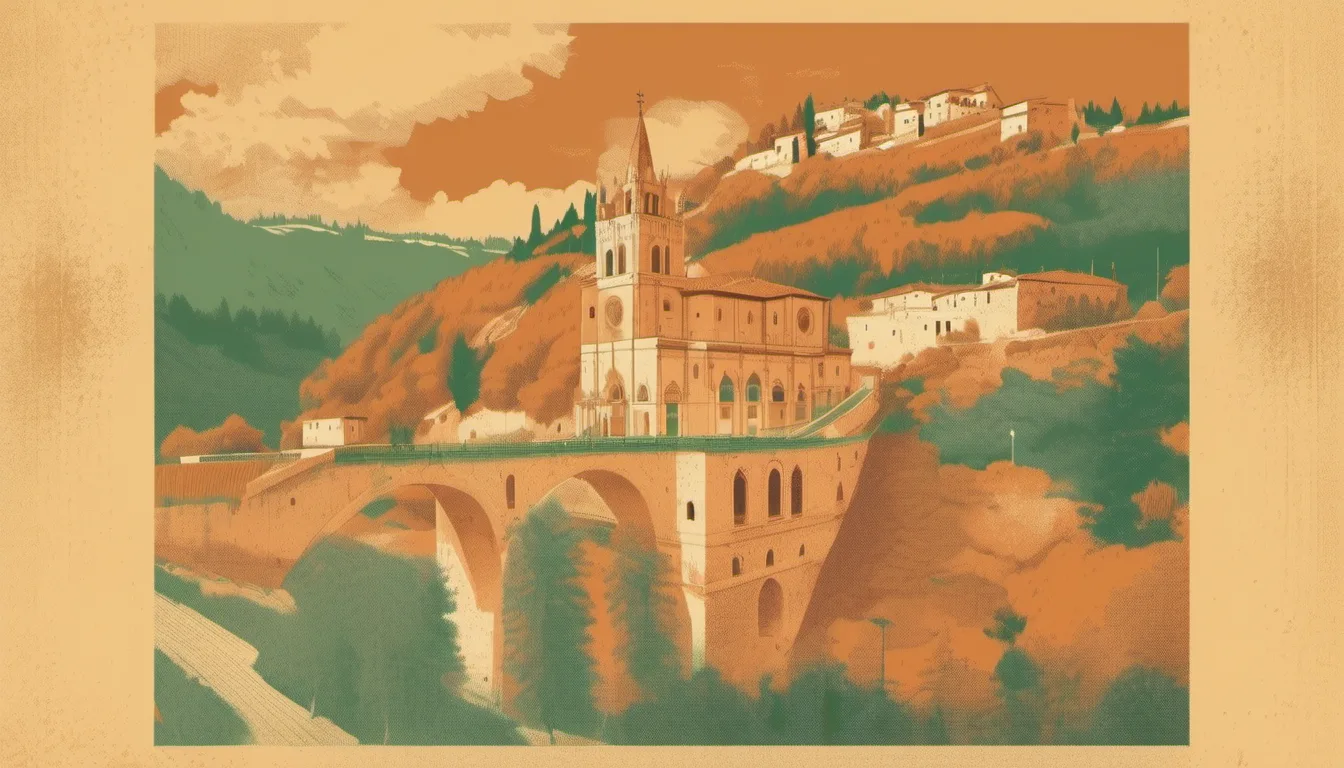
Yet, the true gravity of Ipiales lies in the Guaitara Canyon. Here, suspended over the rushing waters, stands the Las Lajas Cathedral. It is not merely a building; it is an architectural impossibility made real. Constructed in the early 20th century in a Gothic style, the church spans the canyon with two arches, its base resting on the rock face and its tower rising 100 meters into the sky. To walk toward it is to witness a miracle of engineering and faith, a structure that seems to defy the very geography that surrounds it.
Walking Ipiales rewards those who look beyond the border checkpoints. It is a city of contrasts, where the cold, perpetual spring-like weather meets the warmth of community. The inhabitants engage in trade, small businesses, and tourism, while rural areas sustain themselves through agriculture and livestock. The city’s highest elevation makes it one of the highest major cities in the world, offering a perspective that is both physically elevated and spiritually grounded. It is a place where history, geology, and faith converge in a single, breathless view.
To visit Ipiales is to understand the weight of altitude and the lightness of belief. The city does not demand your admiration; it simply exists, solid and enduring, against the backdrop of the Western Cordillera. It is a destination for those who seek the singular beauty of a cathedral hanging in mid-air, and for those who wish to walk the high plateaus where the green clouds gather and the past remains visible in every stone.
Ipiales occupies a singular position in the geography of Colombia, perched on the high plateau known as 'Tuquerres e Ipiales' at an elevation of approximately 2,950 meters. Located in the Nariño Department, it lies 82 kilometers from Pasto, the departmental capital, and merely three kilometers from the international border with Ecuador. This proximity to the border defines much of its character, serving as a critical node in the Pan American Highway network. The city’s climate is an unusually cool subtropical highland type, with an average temperature of 15 °C. It escapes an alpine classification by less than 1.5 °C, offering a perpetual spring-like weather that rarely breaks 20 °C or falls below freezing. This climatic stability, combined with its high altitude, makes Ipiales one of the highest major cities on Earth, a fact that shapes the physical experience of walking its streets.
The city’s name and its visual identity are tied to a meteorological curiosity: 'la ciudad de las nubes verdes.' On certain afternoons, particularly when the humidity and light interact in specific ways, greenish clouds appear over the city. This phenomenon, whether atmospheric or optical, has become part of the local lore, a visual signature that distinguishes Ipiales from other Andean towns. The geography here is dramatic, part of the Guaitara Canyon and the Western Cordillera, with a territory that is slightly wavy and features various climatic zones from cold to warm. The orographic features include moors like Mueses and The Palace, and hills such as Troy, La Quinta, and Culachí, creating a landscape that is both rugged and serene.
At the heart of Ipiales’ cultural and spiritual life is the Las Lajas Cathedral, the episcopal see of the Roman Catholic Diocese of Ipiales. This is not merely a church; it is a sanctuary built into the very fabric of the Guaitara Canyon. The story of its origin dates back to 1754, when an indigenous woman named María Mueces and her daughter Rosa, who was born deaf and mute, sought shelter from a storm near the canyon’s edge. Rosa, pointing to a stone slab with a painting that emitted luminous rays, spoke her first words: 'The mestiza calls me.' The image depicted the Madonna handing a rosary to Saint Dominic, while the Child held a cord for Saint Francis. This event transformed the site into a major pilgrimage destination, drawing believers from across the region, including northern Ecuador.
The history of the sanctuary’s construction mirrors the evolving faith of the region. The first structure, built in the mid-18th century, was made of wood and straw. It was replaced by a stone sanctuary in 1802, which was later amplified and connected to the opposite side of the canyon with a bridge. The current structure, the fourth iteration, was constructed in the early 20th century in a Gothic style, using gray and white stone to imitate 14th-century architecture. The building is a marvel of engineering: a church with three naves supported by a two-arch bridge spanning the river. The temple rises 100 meters from its base to the tower, while the bridge itself is 20 meters long, 17 meters wide, and 50 meters high, suspended over the canyon floor.
The architectural details of Las Lajas are as striking as its location. The main structure measures 27.50 meters in length with an apse width of 15 meters. Inside, the three naves are covered with vaults, and the lighting is filtered through stained-glass windows created by the German artist Walter Wolf. The back wall of the central nave is formed by the natural stone of the canyon itself, where the original image of the Madonna and Child is displayed. At the base of the temple, beneath the two arches, lies a Romanesque crypt with three naves, covered with barrel vaults in stone structure, dedicated to the Sacred Heart of Jesus. This layering of architectural styles and spiritual symbols creates a space that is both monumental and intimate.
Beyond the cathedral, Ipiales is a city of trade and movement. It serves as a land and air border port, with San Luis Airport providing air connectivity. The city’s economy is driven by border trade with Ecuador, particularly with the former province of Obando, and it acts as a crossroad for travelers from Andean Pact countries. The flow of people and vehicles is regulated by a complex framework of international treaties, including the Neighborhood and Integration Commission Colombo-Ecuador of 1989, the Border Integration of 1993, and the Border Act of 1995. Despite these legislative efforts to create Special Economic Zones and improve infrastructure, the city has struggled to attract manufacturing or assembly industries, remaining primarily a hub for commerce and transit.
The cultural life of Ipiales is vibrant, particularly during the 'Blacks and Whites Carnival,' one of the region’s biggest festivals. This event celebrates racial diversity through a unique tradition where participants paint each other with makeup and a white soap called 'careoca.' The festival draws tourists from across Colombia, transforming the city into a canvas of color and community. It is a time when the rigid structures of daily life and border control give way to celebration, unity, and the shared joy of cultural expression. The carnival is a testament to the city’s ability to embrace its diverse heritage and turn it into a source of pride and attraction.
The history of the region extends deep into the pre-Columbian era. The Rumichaca Bridge, located three kilometers from Ipiales, is recognized by Spanish chroniclers as the northernmost outpost of the Inca Empire. Wrested from the Pasto people in the early 16th century, the bridge crosses the Carchi River, which the Quechua name translates as 'stone bridge.' This historical marker underscores Ipiales’ role as a gateway between civilizations. The Guaitara River, which carves the canyon, is described by Bishop Mejía as a river that 'dug more in our soul' than in the land, highlighting the deep spiritual connection between the people and the geography. The river’s dramatic chasms and spectacular landscapes have shaped the identity of the region for centuries.
The natural resources of Ipiales are abundant, contributing to its economic diversity. In addition to trade and tourism, the rural areas engage in agriculture, livestock, and the raising of minor species. The city’s mineral resources include oil in the Churuyaco jungle, rock quarries, and clay in the Tejar. Crafts are produced in Las Lajas, and topdressing occurs in the Old Bridge area. These resources, combined with the city’s strategic location, make it a vital economic center in southern Colombia. The inhabitants’ engagement in these activities reflects a resilience and adaptability that have allowed the city to thrive despite the challenges of its high-altitude environment.
Walking through Ipiales is an exercise in perspective. The city’s high elevation offers views that are both expansive and intimate. The streets are lined with small businesses, and the air is filled with the scent of the Guaitara River and the distant smoke of rural fires. The city’s architecture, from the Gothic spires of Las Lajas to the modest homes of the urban center, tells a story of faith, struggle, and endurance. The green clouds that gather in the afternoons serve as a reminder of the city’s unique place in the world, a place where the earth meets the sky, and where history is written in stone and water. Ipiales is not just a destination; it is a state of being, a high-altitude sanctuary that challenges and rewards those who seek it.