Basilica della Santa Casa
Legend has it that a house flew here. Not moved, not shipped, not dragged by oxen over centuries — carried, according to the old story, by angels, first from Nazareth to a hilltop above Rijeka in 1291, then across the Adriatic to the woods near Ancona in 1294, then twice more before it settled, in 1295, on a low rise a mile from Loreto. The town then built one of the largest basilicas in the Marche around that arrival. The house never noticed. It still stands inside, three stone walls, exactly as it was.
The house itself is almost defiantly plain: a door in the north wall, a window in the west, no ornament at all. It measures barely ten metres by four — modest even for a peasant dwelling, let alone a shrine visited by millions. Around it, Bramante drew a very different building: a tall marble screen, carved under three popes and finished by Raffaello da Montelupo and Tribolo, its four faces telling the story in relief — the Annunciation, the Nativity, the house's own arrival at Loreto, and the birth of the Virgin herself. Stone commentary wrapped around a plain stone room.
Inside the niche above the altar stands a small, dark Madonna and Child, thirty-three inches of jewelled wood with a history of its own. The first statue, popularly credited to Saint Luke though its style points to the fifteenth century, was seized by Napoleon's troops in 1797 and hauled to Paris; it came back after the Treaty of Tolentino by way of Rome, arriving in Loreto on 9 December 1801 after an eight-day pilgrimage. That original burned in a fire inside the Holy House on 23 February 1921. Pope Pius XI had a replacement carved from cedar of Lebanon, crowned in St Peter's the following year, and sent to Loreto, where it remains.
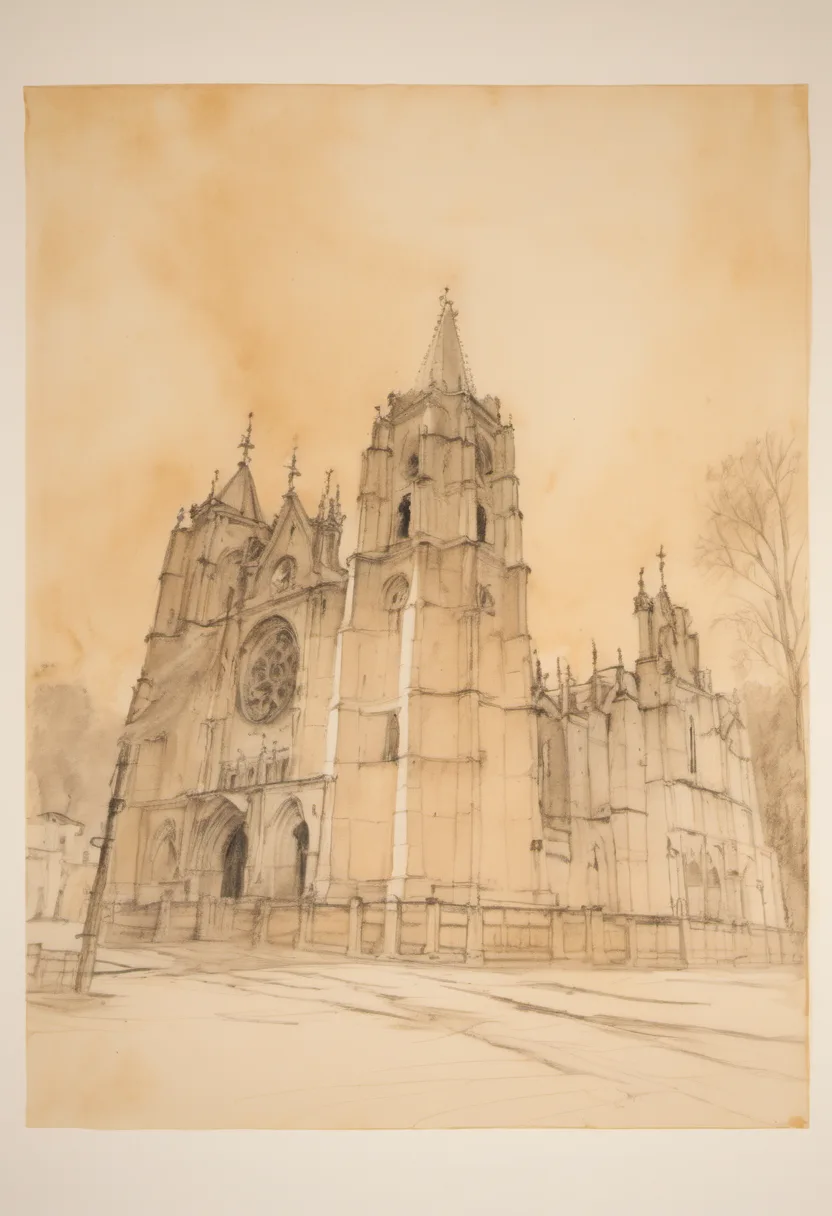
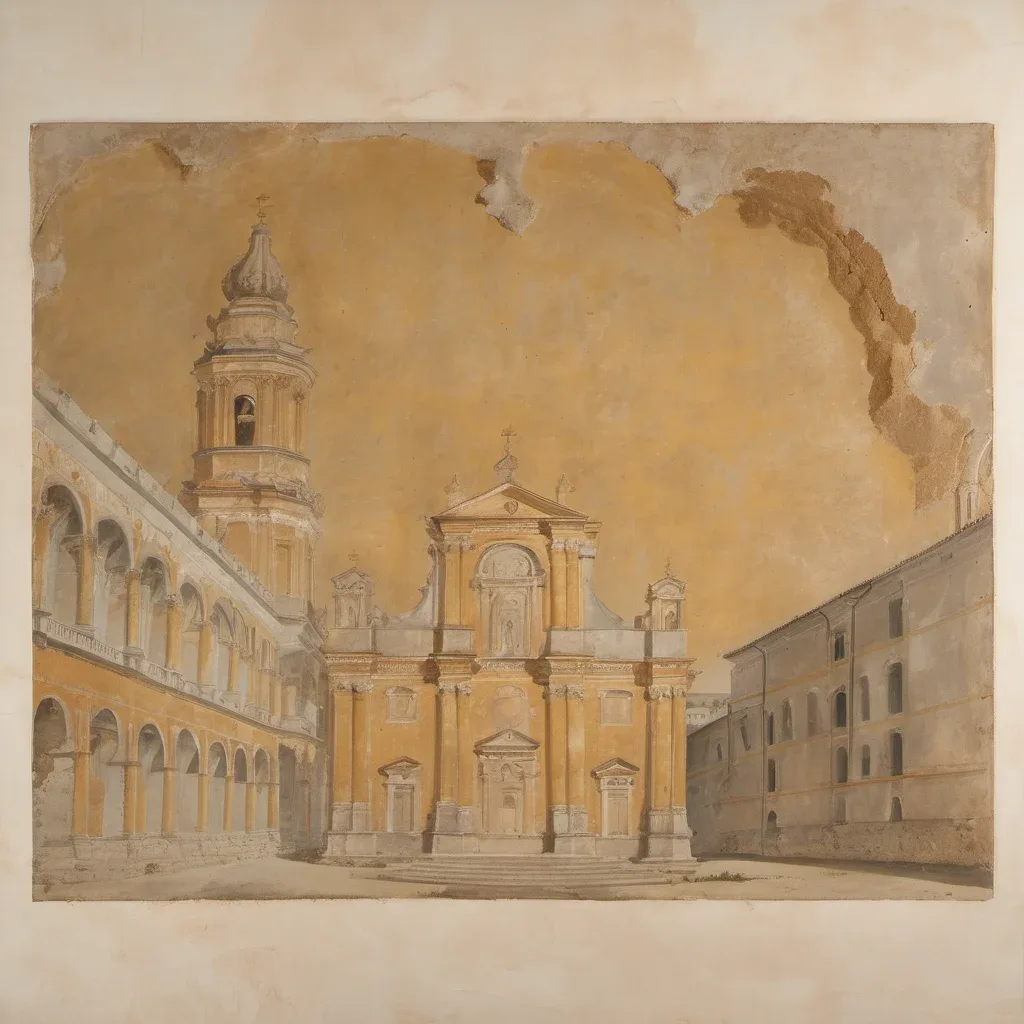
The basilica wrapped around all this took shape from 1468, under a relay of architects — Giuliano da Maiano, Giuliano da Sangallo, Bramante again — and wasn't finished until Pope Sixtus V fortified the town and raised its façade a century later. A bronze Virgin and Child by Girolamo Lombardo watches over the main doorway; his three bronze doors, cast under Paul V, are worked with the same hand's patience. Luigi Vanvitelli's campanile, added in the 1750s, carries a bell Pope Leo X gave the town in 1516 — eleven tons of it, still ringing.
None of this architecture would exist without the smaller claim underneath it: that this is the room where the Annunciation happened, carried here across the centuries and the Adriatic by hands nobody saw. Benedict XV made its Madonna patroness of air travellers in 1920 — a fittingly airborne honour for a house that, by its own legend, never needed a road.
According to the story Loreto tells about itself, this shrine did not accumulate the way buildings usually do — it flew in. Angels, the legend says, lifted a small stone house from Nazareth in 1291 and set it down on a hill above what is now Rijeka, in Croatia, at a place called Tersatto. Cures were reported there, and a vision of the Virgin. Three years later, with the Holy Land nearly lost to the Crusaders, the same house crossed the Adriatic to a laurel wood near Ancona — a lauretum, in Latin, which is where Loreto gets its name.
The house settled fully only after several more moves. In 1295 it went to a hill near Recanati, then, eight months on, to another rise a mile off called Monte Prodo — the sea view at Recanati apparently left it too exposed to Turkish raiders. Two local counts, the story goes, tried to claim the land once they realised what pilgrims it would bring. In 1296 the house was carried a fifth and final time, and it has not moved since. That, at least, is the account; how much of it is piety and how much is embellishment is for the visitor to decide.
Whatever brought it here, what arrived is almost aggressively modest. Three stone walls, a door cut into the north side, a single window facing west, and interior dimensions of barely nine and a half by four metres. No apse, no altar carved into the fabric, nothing to suggest the room had ever hosted an Annunciation. It is this plainness, more than any relic inside it, that seems to unsettle first-time visitors: the holiest address in the story of Christian Europe turns out to be the size of a garden shed.
The house's claimed biography starts long before any of its recorded travels. Tradition holds this as the Nazareth home where Mary was born and raised, where she received the Annunciation, conceived Jesus, and lived through his childhood. After the Ascension, the story continues, the Apostles converted the house into a church and set up an altar there — the same altar, it is said, at which Peter celebrated the first Eucharist following the Resurrection. Everything that follows, the flights across the Adriatic included, is presented as the sequel to that first, quieter chapter.
Bramante wrapped the house in something considerably grander: a marble screen commissioned under three successive popes — Leo X, Clement VII, and Paul III — and carved mostly by Raffaello da Montelupo and Tribolo, with Andrea Sansovino responsible for a smaller portion. Its four faces run through the house's own mythology in relief: the Annunciation, the Nativity, the Santa Casa's arrival at Loreto, and the birth of the Virgin. It is, in effect, a stone caption wrapped around the artifact it explains — one of the few places in Italy where sculpture was commissioned specifically to illustrate a legend rather than a scripture.
Above the altar inside sits a jewel-draped Madonna and Child, eighty-four centimetres of dark wood with its own tangled history. Local tradition credited the original to Saint Luke, though its style points to the fifteenth century instead. Napoleon's troops carried it off to Paris in 1797; it came home by way of Rome after the Treaty of Tolentino, completing an eight-day pilgrimage of its own before reaching Loreto on 9 December 1801. A poplar-wood copy stood in for it during the years it was away — the only copy ever formally venerated in the Holy House — and is now kept at the Chiesa della Buona Morte in Cannara.
On 23 February 1921 a fire broke out inside the Holy House and destroyed the statue outright. Pope Pius XI commissioned an immediate replacement, carved by Enrico Quattrini and painted by Leopoldo Celani from a cedar of Lebanon felled in the Vatican Gardens; it was crowned inside St Peter's Basilica in 1922 and brought to Loreto, where it remains today. The town of Treia keeps a rival version of events: that the true original was hidden before Napoleon's men arrived, that the exchange was never reversed, and that it survives still, enshrined at the Church of Santa Chiara, credited with its own miracles.
The basilica built to house all of this took more than a century to reach its current form. Construction began in 1468 under Giuliano da Maiano and Giuliano da Sangallo, with Bramante contributing here as well; the façade went up later still, under Pope Sixtus V, who also fortified the town in 1586 and elevated it to a city — his statue stands on the parvis outside. Girolamo Lombardo cast the bronze Virgin and Child above the main doorway and, with his sons and pupils, the three bronze doors added under Pope Paul V. Luigi Vanvitelli's campanile followed in the 1750s, and still rings an eleven-ton bell given by Pope Leo X in 1516.
Inside, the decoration keeps pace with the ambition of the site: mosaics by Domenichino and Guido Reni, statues by Raffaello da Montelupo, and, in the sacristies flanking the right transept, frescoes by Melozzo da Forlì on one side and Luca Signorelli on the other, both rooms finished with fine intarsia work. It amounts to a building assembled, gradually and without much apparent hurry, by several generations of the best artists Rome and Florence had to send.
The Hall of the Treasury, added in the early 1600s, holds the more practical residue of centuries of pilgrimage — votive offerings, liturgical objects, vestments left by visitors grateful or hopeful. Its vaulted ceiling is frescoed with scenes painted between 1605 and 1610 by Cristoforo Roncalli, known as Pomarancio, and counts among the finer surviving examples of late Roman Mannerism outside Rome itself.
Pope Benedict XV made the Madonna of Loreto patroness of air passengers in 1920, a title that reads, given the house's own legend of angelic transport, less like an afterthought than a joke the Church was in on. The basilica holds its status as one by nothing more than long custom — immemorial privilege, no formal decree required. A pilgrimage destination since at least the fourteenth century, it has never really stopped being one.