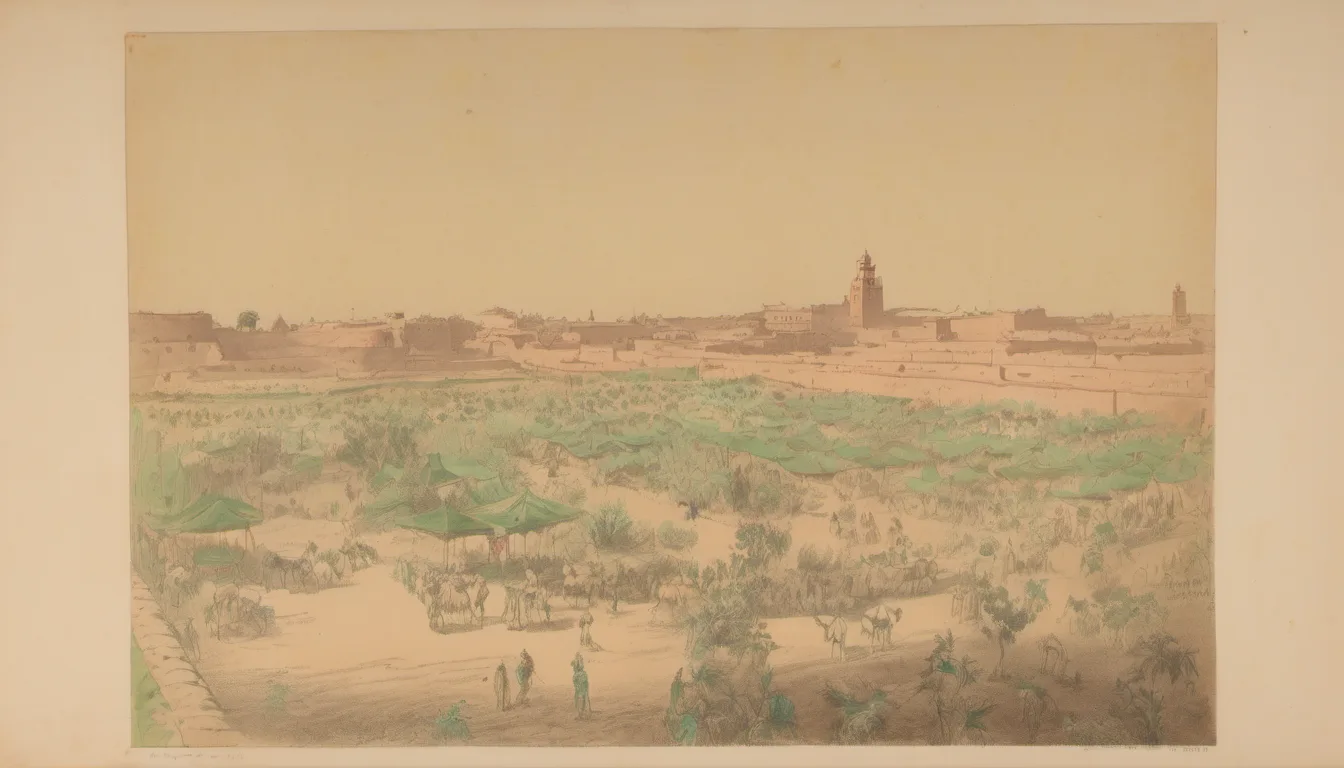
Marrakech, Morocco
Marrakesh is not merely a destination; it is a sensory assertion. The city exists in the interplay between the red earth of its walls and the grey, imposing spine of the Atlas Mountains. To walk here is to move through layers of history that feel less like preserved artifacts and more like living, breathing entities. The air carries the scent of spices, leather, and dust, creating an atmosphere that is both chaotic and deeply structured. This is a place where the ancient and the modern collide daily, not in conflict, but in a complex, enduring negotiation.
The heart of the city beats in the Medina, a UNESCO World Heritage site established in the eleventh century. Here, the narrow streets are arteries of commerce and culture, pulsing with the energy of thousands of vendors, artisans, and travelers. The architecture is a testament to resilience, with buildings that have withstood centuries of change. The red hue of the walls, known as ochre, is not just a color but a symbol of the city’s identity, reflecting the local soil and the historical use of lime and clay in construction. Walking through these streets, you are walking through time, surrounded by the echoes of past civilizations.
However, the narrative of Marrakesh is also defined by its vulnerability. On September 8, 2023, a magnitude 6.9 earthquake struck the region, centered near Ighil in the Al Haouz province. The shockwave, felt across the country and even in distant cities like Rabat and Casablanca, caused significant damage to the city’s historic structures. The Medina, with its narrow alleys and old buildings, suffered severely. Minarets collapsed, walls crumbled, and the Mellah, the ancient Jewish quarter, sustained heavy structural damage. This event was not just a geological occurrence but a profound cultural loss, reminding us of the fragility of heritage in the face of natural forces.
Yet, the spirit of Marrakesh remains unbroken. The city is a place of resilience, where the community comes together to rebuild and preserve what matters. The earthquake has brought attention to the need for sustainable restoration and the importance of preserving the city’s unique character. Walking through Marrakesh today, you see not just the scars of the past but the determination of its people to move forward. The city is a testament to the human capacity to endure and adapt, to find beauty in the broken and strength in the shared experience. It is a place that demands respect, not just for its history, but for its ongoing story.
Marrakesh is a city that defies simple categorization. It is a place where the ancient and the modern, the sacred and the secular, and the natural and the constructed exist in a state of perpetual tension. The city’s identity is deeply rooted in its geography, nestled at the foot of the Atlas Mountains, which provide a dramatic backdrop to the urban sprawl. The red hue of the city’s walls, derived from the local soil, is not merely aesthetic but symbolic, representing the city’s connection to the earth and its history. This color, known as ochre, is a defining feature of Marrakesh, visible in every corner of the Medina and beyond.
The history of Marrakesh is a complex tapestry of conquest, trade, and cultural exchange. Founded in the eleventh century by the Almoravids, the city quickly became a center of power and commerce. Over the centuries, it has been ruled by various dynasties, each leaving its mark on the city’s architecture and culture. The Medina, with its narrow streets and ancient buildings, is a testament to this rich history. The city’s layout, with its souks and mosques, reflects the influence of Islamic culture and the importance of trade in the region. The Medina is not just a place to shop; it is a living museum, where every corner tells a story of the past.
The 2023 earthquake was a devastating event that shook the region to its core. On September 8, 2023, a magnitude 6.9 earthquake struck, centered near Ighil in the Al Haouz province. The shockwave was felt across Morocco, causing significant damage to the city’s historic structures. The Medina, with its narrow alleys and old buildings, suffered severely. Minarets collapsed, walls crumbled, and the Mellah, the ancient Jewish quarter, sustained heavy structural damage. The earthquake was the most severe in modern Moroccan history, second only to the 1960 Agadir earthquake. The event was a profound cultural loss, highlighting the fragility of heritage in the face of natural forces.
The impact of the earthquake was felt not only in the physical damage but also in the emotional and social fabric of the city. The loss of life, with over 2,900 deaths and thousands more injured, was a tragedy that resonated throughout the country. The destruction of historic buildings, including the Kharbouch Mosque and the Kutubiyya Mosque, was a blow to the city’s cultural identity. The earthquake also caused significant economic damage, estimated at up to 8% of Morocco’s GDP. The event was a stark reminder of the vulnerability of the city and the need for sustainable restoration efforts.
Despite the devastation, the spirit of Marrakesh remains unbroken. The city is a place of resilience, where the community comes together to rebuild and preserve what matters. The earthquake has brought attention to the need for sustainable restoration and the importance of preserving the city’s unique character. Walking through Marrakesh today, you see not just the scars of the past but the determination of its people to move forward. The city is a testament to the human capacity to endure and adapt, to find beauty in the broken and strength in the shared experience. It is a place that demands respect, not just for its history, but for its ongoing story.
The geography of Marrakesh plays a crucial role in its identity. The city is located in the Marrakesh-Safi region, which was formed in 2015 by merging the old region of Marrakesh-Tensift-El Haouz with the provinces of Asfi and Youssoufia. The region is characterized by its diverse landscapes, from the arid plains of the Sahara to the rugged peaks of the Atlas Mountains. The Atlas Mountains, with their high peaks and deep valleys, provide a natural barrier and a source of water for the city. The region’s geology is complex, with a history of seismic activity due to the movement of tectonic plates. The 2023 earthquake was a result of these geological forces, highlighting the region’s vulnerability to natural disasters.
The cultural significance of Marrakesh extends beyond its physical boundaries. The city is a center of art, music, and literature, attracting creators and thinkers from around the world. The annual Marrakesh Biennale, for example, showcases contemporary art and fosters cultural dialogue. The city’s souks are not just markets but spaces of cultural exchange, where artisans and traders from different backgrounds interact. The city’s culinary scene is also a reflection of its cultural diversity, with dishes that blend Moroccan traditions with influences from other regions. Marrakesh is a place where culture is not just preserved but lived and evolved.
The political history of Marrakesh is marked by its role as a capital and a center of power. The city has been the seat of various dynasties, including the Almoravids, Almohads, and Saadians. Each dynasty left its mark on the city, contributing to its architectural and cultural richness. The city’s political significance was reaffirmed in 2025 when Khatib El Hebil was appointed Wali of the Marrakesh-Safi region and Governor of the Marrakesh prefecture by King Mohammed VI. This appointment underscores the city’s ongoing importance in Morocco’s political landscape. The city’s governance is a balance between preserving its heritage and adapting to modern challenges.
The social fabric of Marrakesh is woven from the threads of its diverse population. The city is home to people from all walks of life, from local artisans and traders to international tourists and expatriates. The Medina, with its narrow streets and ancient buildings, is a microcosm of this diversity. The city’s social dynamics are shaped by its history of trade and cultural exchange, as well as by the challenges of modernization and globalization. The 2023 earthquake highlighted the importance of community resilience and the need for social cohesion in the face of adversity. The city’s social fabric is a testament to the strength of its people and their ability to overcome challenges.
The artistic currents of Marrakesh are as vibrant as its markets. The city has long been a center for traditional crafts, including pottery, textiles, and metalwork. These crafts are not just commodities but expressions of cultural identity and artistic heritage. The city’s contemporary art scene is also thriving, with galleries and studios showcasing the work of local and international artists. The Marrakesh Biennale, for example, brings together artists from around the world to create and exhibit new works. The city’s artistic landscape is a reflection of its openness to new ideas and its commitment to cultural innovation. Marrakesh is a place where art is not just displayed but lived and experienced.
In conclusion, Marrakesh is a city that embodies the complexity of human history and the resilience of the human spirit. It is a place where the past and the present, the natural and the constructed, and the local and the global intersect. The 2023 earthquake was a tragic event that highlighted the city’s vulnerability, but it also demonstrated the strength of its community. Walking through Marrakesh, you are walking through a story of endurance, adaptation, and hope. The city is a testament to the power of culture and the importance of preserving our shared heritage. It is a place that invites you to explore, to learn, and to appreciate the beauty of the human experience.