Biblioteca Estense Universitaria
No one can say exactly when the Estense Library was born. Its keepers only know it was already in active use by the fourteenth century, a private shelf of books that would outlast the dynasty that built it and end up one of the most important libraries in Italy, a family archive that grew into a national institution.
It began as the collection of the House of Este, marquises and later dukes of Ferrara. When Niccolò III ascended to the Ferrarese duchy in 1393, he inherited a humanist library already rich in literary, historical, and artistic works. Renaissance patronage, refined and unhurried, swelled it further with manuscripts and printed editions now judged to be of fundamental value. Then, in 1598, the Estes lost Ferrara to the Papal States. They kept the library. It travelled with them to their new capital, Modena, and has stayed there since.
Modena only deepened it. Suppressed religious houses, Jesuit, Benedictine, Theatine, handed over their holdings, and two of the library's own directors, Ludovico Antonio Muratori and Girolamo Tiraboschi, shaped what arrived with scholarly taste rather than dynastic vanity. The historian Mackay Quynn records that the Napoleonic era stripped the library of much of its original holdings, a loss the nineteenth century spent recovering from. After Italian Unification, the Estense Library absorbed the University Library's philosophy, law, and science texts, becoming the Estense University Library. In 1995 the two institutions were formally fused under Italy's Ministry of Culture, and the library took on legal-deposit duties for everything published in the province of Modena.
Today the shelves hold more than 500,000 printed works, some 11,000 codices, over 100,000 manuscript leaves, and 1,662 incunabula. Its centerpiece has spent most of the last century in hiding: the Bible of Borso d'Este, 1,200 pages, its margins dense with miniature painting, made between 1455 and 1461 for the duke it's named after. Scattered and recovered after the First World War, it was bought at auction and given to Italy by Senator Giovanni Treccani. For conservation reasons it is no longer shown; a 1963 facsimile stands in its place.
Everything else in the vaults argues for a visit anyway. The library holds the Cantino Planisphere, the oldest surviving Portuguese world map, a fifteenth-century Catalan mappamundi, a tenth-century Byzantine Gospel book, a celebrated collection of musical manuscripts, and medieval biblical codices scholars still cite by shorthand, the Codex Mutinensis, half a dozen minuscule manuscripts, a lectionary. It shares its home, the restored complex on Piazza Sant'Agostino, with the Galleria Estense, whose paintings hang directly above the library's own collection.
No one can say exactly when the Estense Library was born. Its keepers only know it was already in active use by the fourteenth century, a private shelf of books that would outlast the dynasty that built it and end up one of the most important libraries in Italy.
It began as the personal collection of the House of Este, marquises and later dukes of Ferrara, kept the way ruling families of the time kept everything valuable: close, and for themselves. When Niccolò III ascended to the Ferrarese duchy in 1393, he inherited a humanist library already rich in literary, historical, and artistic works, the accumulated taste of generations rather than a single founder's whim.
The Renaissance was the making of it. Under the Este dukes' patronage, refined and famously attentive, the collection filled out with manuscripts and printed editions that scholars today still treat as being of fundamental value. Ferrara, in those decades, was a court that collected books the way other courts collected art, and the library grew accordingly, one acquisition at a time, across generations of the same family.
Then the family lost its capital. In 1598, the Papal States reclaimed Ferrara, and the Estes were pushed south to Modena. What they carried with them mattered more than what they left behind: the library went too, along with the family's other treasures, and Modena became its permanent home. The move should have been a diminishment. Instead, the centuries that followed only added to what had arrived.
Suppressed religious institutions, their libraries dissolved by decree, fed new material into the collection. Jesuit, Benedictine, Theatine, and Minor Observant holdings were absorbed wholesale. Directors came and went across these centuries, Giacomo Cantelli, Benedetto Bacchini, Giovan Battista Boccabadati, Carlo Gemelli among them, but two names carry particular weight: Ludovico Antonio Muratori and, later, Girolamo Tiraboschi, both librarians here, both historians of real standing. It was Tiraboschi especially who is credited with the accurate, discerning choice of texts absorbed from the various religious congregations. After him came Francesco Vandelli, Francesco Antonio Zaccaria, and, into the twentieth century, Giuliano Bonazzi and Emma Coen Pirani. It is scholarly judgment, as much as any duke's taste, that gives the library its particular shape.
Not every century was kind to it. The historian Mackay Quynn records that the Napoleonic period gravely depleted the library's original holdings, part of the wider stripping of Italian institutions under French occupation. The Este dukes who followed, styled as the Austria-Este line, spent the decades after rebuilding what had been lost. Then came Unification. The Estense Library absorbed the University Library's collection of philosophical, juridical, and scientific texts, becoming, in the process, the Estense University Library, a modern institute of recognized national interest. In 1995 the two institutions were formally fused administratively, under Italy's Ministry for Cultural Heritage, and the library took on a further duty: legal deposit for everything published in the province of Modena, a role that keeps its shelves growing by statute rather than acquisition alone.
The numbers alone are difficult to hold in the head: more than 500,000 printed works, some 11,000 codices, upward of 100,000 individual manuscript leaves, 1,662 incunabula. But one object has always outweighed the rest. The Bible of Borso d'Este runs to 1,200 pages, its margins so densely worked with miniature painting that it reads as much as a picture book as a text, made between 1455 and 1461 for the duke whose name it carries. Scattered by the upheavals of the early twentieth century, it was recovered after the First World War, bought at auction, and given to Italy by Senator Giovanni Treccani. It came home to Modena and has been kept from public view ever since, for reasons of conservation; visitors see a facsimile made in 1963 in its place. The original itself, effectively, is a fact you have to take on trust.
The rest of the vaults reward the trip regardless. There is the Cantino Planisphere, the oldest surviving Portuguese world map, drawn at a moment when what counted as the known world was still being redrawn month to month. There is a fifteenth-century Catalan mappamundi, and a tenth-century Byzantine Gospel book, both objects that predate the library itself by centuries and arrived through routes the record no longer specifies. Medieval biblical manuscripts fill out the shelves under names only specialists use casually: the Codex Mutinensis, a set of minuscule manuscripts catalogued as 358, 359, 585, 586, and 618, and a lectionary numbered 111 in the scholarly literature. Separately, and just as prized internationally, is the Raccolta musicale estense, the library's collection of musical manuscripts and printed scores.
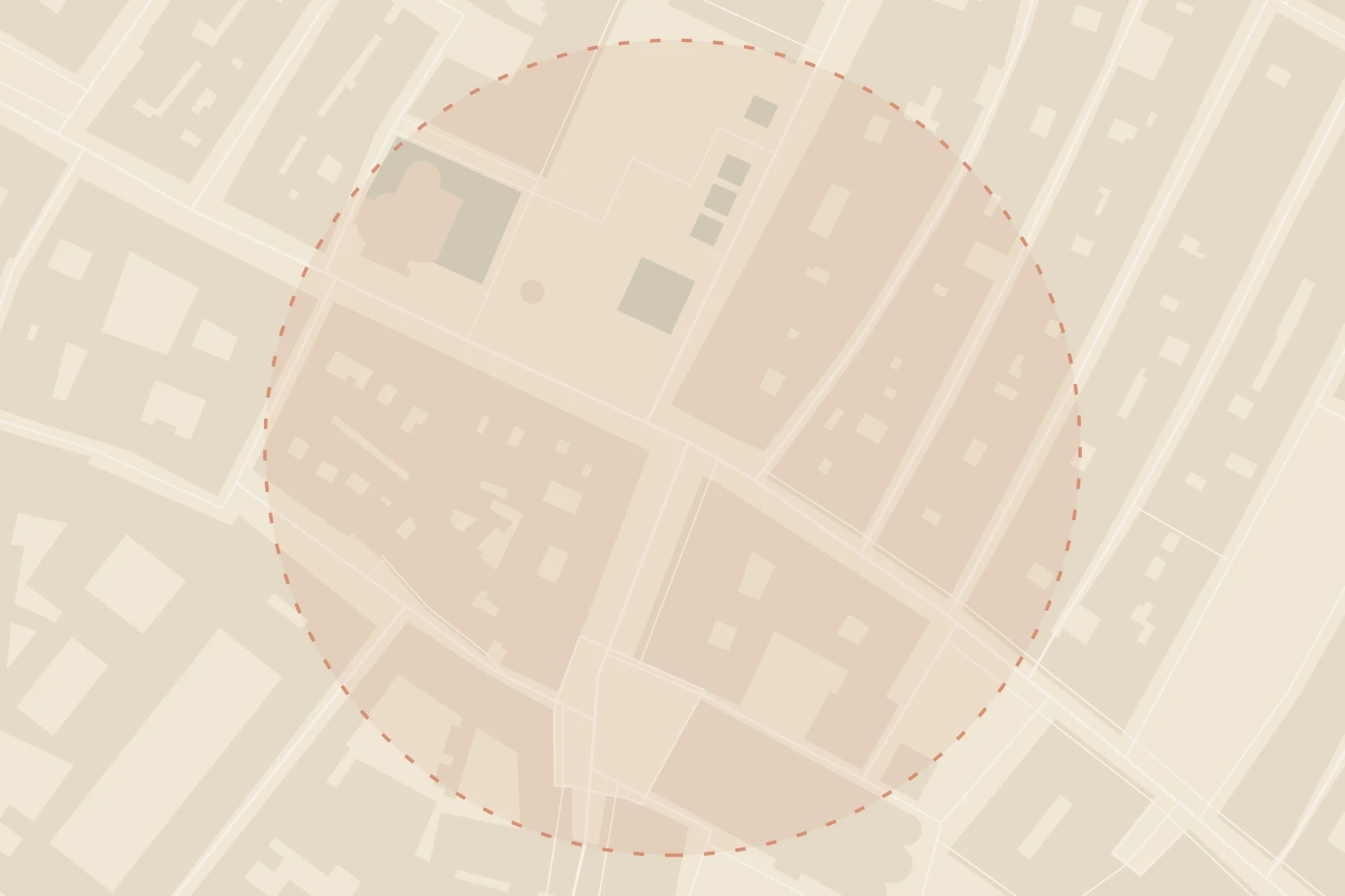
None of this sits in isolation. The library occupies the Palazzo dei Musei, on Piazza Sant'Agostino, a complex tied to the former Ospedale Sant'Agostino and restored for its present purpose by the Fondazione Cassa di Risparmio di Modena. Upstairs, quite literally, is the Galleria Estense, whose paintings hang directly above the library's own holdings, a museum and a library stacked on top of each other, both assembled by the same family's habit of keeping what it valued rather than letting it go.
It is a fitting arrangement for an institution that has spent six centuries doing exactly that: holding on, through the loss of a capital, a foreign occupation, and a national unification, to what was worth keeping. The date of its birth may be lost to speculation, but everything it has kept since is catalogued, numbered, and, in the case of one bible, deliberately kept out of sight.