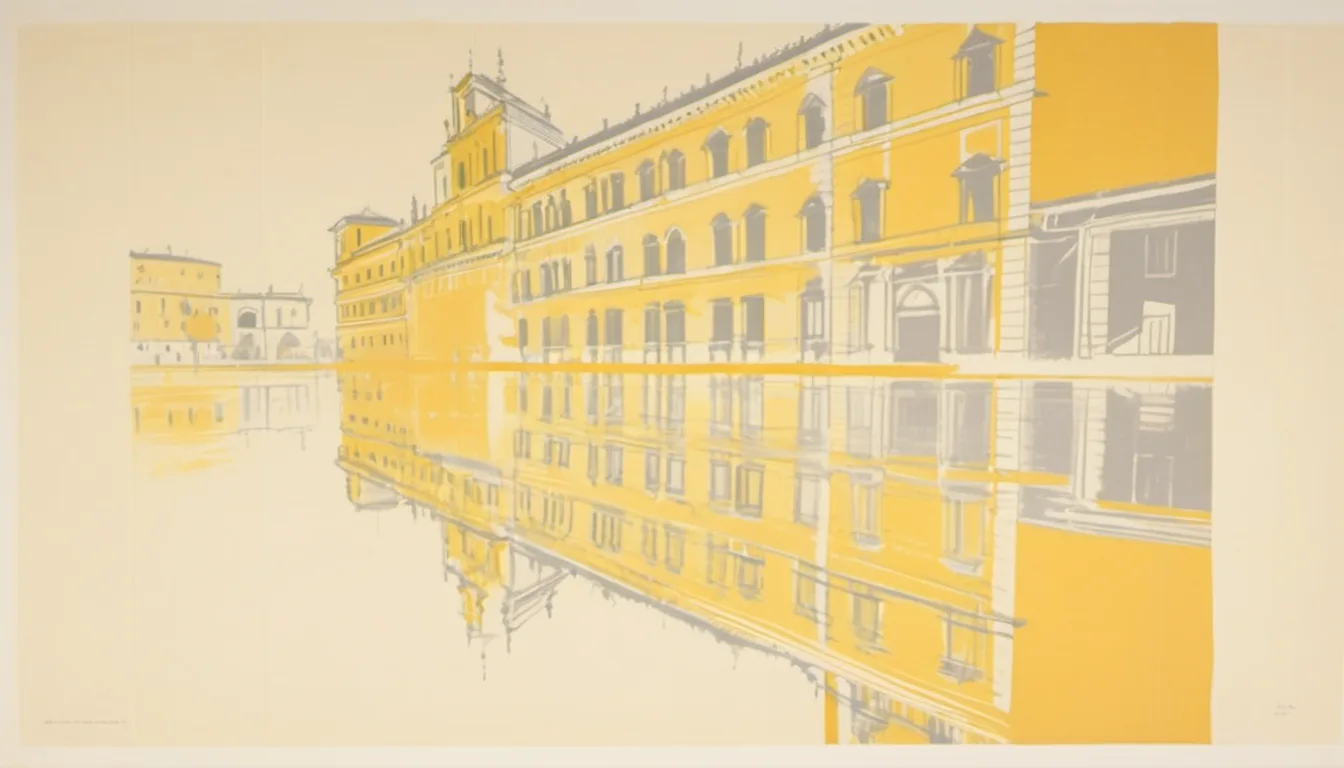
Modena, Italy
Modena does not welcome you with a flourish; it absorbs you. The city rises out of the Po Valley plain at the precise point where two rivers were once coaxed into a defensive marshland, and its centre is a single unbroken gesture: the Piazza Grande, given its weight by the Romanesque Duomo that dominates its western flank. The cathedral is the reason Modena exists as anything more than a way station. It is also the reason it was avoided for centuries — the citizens of Modena paid their tithe to a working cathedral, not a museum, and the building still feels used.
What strikes you first, walking past the Duomo, is the depth of the stone. Wiligelmo, the Lombard sculptor who took the commission in 1099, did not carve faces; he carved weights. Adam pulls himself out of clay on the Porta dei Principi with the muscle memory of someone pushing a plough, not a metaphor. The Porta della Pescheria, on the north flank, pulls that same physicality through the lives of the months and the sins of the damned. These are not decorative reliefs. They are statements of work. The twelfth century in stone, Modena still speaks it.
Modena's contradictions all live within a few hundred metres of one another. The Palazzo Comunale, opposite the cathedral, has medieval frescoes. The Palazzo Ducale, the Este dukes' residence, was rebuilt across the seventeenth and eighteenth centuries and now hosts the military academy — a working institution, not a stage set. The Teatro Farnese, inside the Palazzo Ducale, was built for one visit that never happened: in 1628 the Duke Ranuccio I Farnese commissioned it for the Grand Duke of Tuscany, who was delayed and then suffered an outbreak. It is wooden, gilded entirely, and has been a ruin since 1671 when fire took its paint. The most beautiful monument in Modena is the one that burned — and the stage door still swings.
What to do here, beyond looking at the Duomo. Walk to the Ghirlandina tower and look at the sea of red tile roof below. Visit the Museo Enzo Ferrari for the engines, then drive to Maranello for the factory, then eat the world's best tortellini in brodo somewhere in via Albinelli — Modena is the only city where lunch is a serious activity. Finish with a balsamic visit: any producer worth their cask will show you the attic where the barrels age, and explain why balsamic cannot be hurried. Modena is the patience of stone, the patience of vinegar, the patience of a city that has had to defend its Romanesque cathedral against earthquakes, Napoleons, and earthquakes again. You feel that patience as soon as you arrive.
Modena sits on the southern flank of the Po Valley, halfway between Bologna and Reggio Emilia. The city occupies a flat triangle of land that was considered unpromising for centuries — until the eleventh century, when an empty, dedicated pilgrimage route past the tomb of Saint Geminianus turned it into a destination. The Romanesque cathedral that grew up around that tomb is now the reason anyone visits Modena, and it is one of the most studied Romanesque buildings in Europe. It is still the active cathedral, which shapes how you experience it: there are seats filled, candles lit, mass said, and the floor has been polished by a thousand years of footsteps rather than sealed for preservation.
Wiligelmo da Modena, the Lombard sculptor who began work on the Duomo in 1099, set the tone for a regional school of Romanesque sculpture that lasted until the great cathedrals of the north took over. The two surviving portals — the Porta dei Principi on the south and the Porta della Pescheria on the north — carry his reliefs and the work of his successors, including the deep-cutting Last Judgment of the master of the Months. Wiligelmo's signature touch is unmistakable: every figure has weight. Adam pulling himself out of clay on the Porta dei Principi is the most-copied single image in medieval Italian art, not because it is decorative but because it is precise. The man's body is in motion. The clay is being pushed, not symbolised.
The Piazza Grande that opens out at the cathedral's western flank has been Modena's civic centre since the eleventh century. Today it holds the weekly market, the Palazzo Comunale (with its medieval frescoes preserved behind a sixteenth-century façade), and the tourist office where you can book balsamic visits. Across the square is the Palazzo Ducale, which was originally the Este family residence and has been rebuilt several times. It now houses the Italian Army's officer-training academy, which means parts of it remain off-limits to civilians and parts of it have been open to the public for decades. The most memorable part of the palace is the Teatro Farnese, at the rear — a seventeenth-century wooden theatre that was rebuilt after a 1671 fire but never used at full capacity again. The wooden vault above the stage is the only surviving example of its kind in Europe.
The Ghirlandina tower, the Duomo's separate bell tower, stands eighty-six metres tall and leans visibly to one side. It was a watchtower as much as a belltower — Modena's defences on the north flank of the duchy depended on it. Climb it on a weekday morning if you have time: the views across the roof tiles of Modena are some of the best of any Italian city of this size, and the staircase is wide enough that you don't feel like you are climbing a cliff.
Modena is a city that has had to defend itself against two Napoleons, the Holy Roman Empire, the Papal States, the Bourbon kings, the Italian unification wars, two world wars, and the 2012 Emilia earthquakes. The earthquakes of May 2012 damaged the historic centre severely — several churches in the surrounding province collapsed, the Este Ducal Palace lost most of its façade — and the city has since spent more than a decade restoring what it can. Restoration in Modena does not mean reconstruction. Where stones have been lost, they are catalogued and stored; where a fresco has been badly damaged, it is documented then left as a record, not repainted. Modena believes in keeping scars.
Outside the historic centre, Modena's other identity takes over. The city is the world capital of traditional balsamic vinegar — Aceto Balsamico Tradizionale di Modena, DOP since 2000 — and the home of Ferrari. The Museo Enzo Ferrari in the old city is the most polished of the city's modern museums, but the heart of the operation is Maranello, the small town an hour south where the Ferrari factory stands and where you can spend a reasonable afternoon on the Fiorano test track. Within Modena itself, the slow-food kitchens in via Albinelli make the city's tortellini in brodo legitimate competition to Bologna's, and the Wednesday market in the Piazza Grande is the right place to buy everything from Parmigiano Reggiano to fresh pasta.
The Roman past is in Modena too, just below the surface. Roman Mutina was an important colony on the Via Aemilia, and you can see fragments of it in the Lapidario Romano beside the Duomo, and in the occasional stretch of Roman road that reappears during municipal works. Modena is not a city of single monuments. It is a city where, walking in any direction for an hour, you assemble the Roman, Lombard, Este, Farnese, Napoleonic, and Italian-unification versions of the same place — and they all, more or less, still answer to the Duomo.
Do not miss around Modena
4 placesEvery place below is a ten-to-fifteen minute walk from the last.