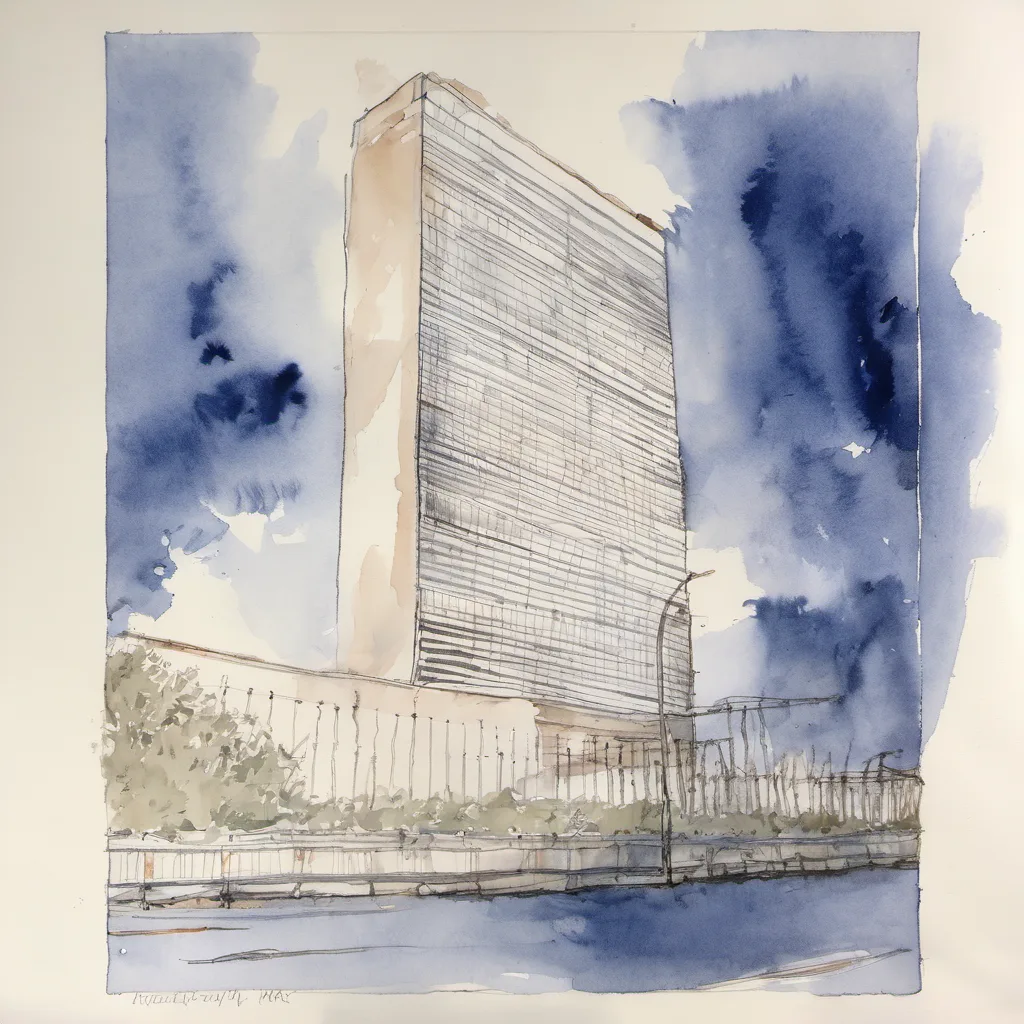
New York, United States
New York does not reveal itself; it asserts itself. To walk here is to navigate a vertical republic built on the stubborn geology of Manhattan Island, where the Hudson and East Rivers frame a stage for eight million lives. The city’s topography is its first text: a peninsula squeezed between two tides, connected to the continent by the Bronx, and spread across Long Island’s western tip. This is not a city that sprawls gently; it rises. The density here is not merely demographic but architectural, a vertical stacking of human endeavor that reaches over four hundred meters into the sky at the Empire State Building.
What makes this place singular is its refusal to be static. It is a global capital of diplomacy, fashion, and finance, yet it remains fundamentally a port city. The geography dictates the rhythm. Ellis Island stands as a silent witness to the millions who arrived, quarantined and hopeful, while Liberty Island offers a stoic greeting to those who still arrive. The five boroughs—Manhattan, Brooklyn, Queens, the Bronx, and Staten Island—are not just administrative divisions but distinct ecosystems, each with its own gravity. Walking across the Brooklyn Bridge is not just crossing water; it is crossing from the industrial past to the artistic present, from stone to steel.
The city rewards the walker who looks up and down, not just ahead. The climate is a character in itself: continental extremes meeting maritime humidity. Winters bring blizzards from the Labrador Current, sharp and unforgiving, while summers trap heat in the canyons of Midtown. Yet, it is in the transition seasons that the city breathes. Spring brings a violent explosion of color after the gray, and autumn offers a clarity that makes the terracotta and steel glow. To walk New York is to accept that you are never alone, yet you are always yourself, surrounded by the noise of a million other stories.
This is a city of legends and ledgers. It is where the Statue of Liberty’s torch illuminates the history of immigration, and where the UN building signifies its role as the world’s diplomatic center. It is where the New York Yankees play under the lights of Yankee Stadium, and where the Mets’ 1986 World Series home runs still echo in Shea Stadium. But beyond the sports and the skyscrapers, it is the daily act of living here that defines it. The walk is the ritual. From the high art of the Met to the street corner jazz, from the quiet of Governors Island to the chaos of Times Square, New York is a place that demands you pay attention. It does not ask for your love, only your presence. And if you can make it there, you will find that you are part of something much larger than yourself.
To understand New York is to understand its geography as fate. Situated on the Atlantic coast at the mouth of the Hudson River, the city occupies a strategic choke point between the interior of North America and the global ocean. This is not a metaphor; it is the engine of its history. The five boroughs—Manhattan, Brooklyn, Queens, the Bronx, and Staten Island—are scattered across islands and peninsulas, a topographical puzzle that has defined its growth. Manhattan, an island squeezed between the Hudson and the East River, is the city’s spine. The Bronx extends northward onto the mainland, while Brooklyn and Queens anchor the western end of Long Island. Staten Island sits alone in the bay, and the harbor itself is dotted with islands like Ellis, Liberty, and Roosevelt, each holding a piece of the city’s soul.
The density here is a physical weight. With over eight million residents in just 785 square kilometers of land, the average density exceeds 10,000 people per square kilometer, peaking at over 25,000 in parts of Manhattan. This is not urban planning; it is urban survival. The city is characterized by verticality, a response to the scarcity of land. The skyline is not a silhouette but a statement. The Empire State Building, an Art Deco masterpiece standing 443 meters tall, was once the world’s tallest. Today, it is one of many, but its presence anchors Midtown Manhattan, a district that serves as the city’s commercial heart. The architecture is a timeline: from the brownstones of Brooklyn to the glass towers of Hudson Yards, every building is a chapter in a continuous, often contentious, narrative of growth.
The climate of New York is deceptive. Classified as oceanic by some, it possesses a continental harshness that surprises the uninitiated. Winters are long and cold, with average temperatures hovering around zero degrees Celsius, punctuated by blizzards driven by the Labrador Current. The absence of natural barriers allows the wind to sweep down from Canada with brutal efficiency. Summers, conversely, are hot and humid, with July averages of 25 degrees Celsius and heatwaves pushing temperatures above 35. The city traps this heat in its concrete canyons, creating a microclimate that is both oppressive and vibrant. Rainfall is distributed evenly, but the city’s infrastructure often struggles to keep pace, leading to flash floods in lower-lying areas. It is a climate that demands resilience, one that shapes the rhythm of daily life.
History here is not buried; it is layered. The story begins with the Dutch, who established New Amsterdam, and continues with the British, who renamed it after the Duke of York. The city’s role as a global port was cemented by its location, but its modern identity was forged by the millions of immigrants who arrived through Ellis Island. Between 1892 and 1954, over 12 million immigrants passed through its halls, many held in quarantine before entering the country. This is the city’s foundational myth: a place of arrival, of hope, of struggle. The Statue of Liberty, gifted by France in 1886, stands on Liberty Island as a symbol of this welcome. Her torch, illuminated against the night sky, has guided generations of newcomers to the shores of New York.
Culturally, New York is a mosaic of competing visions. It is a center for diplomacy, hosting the United Nations, and for finance, with Wall Street setting the global economic pulse. But it is also a capital of art and fashion. The Museum of Modern Art, the Guggenheim, and the Met house the world’s treasures, while Fifth Avenue and SoHo define global style. The city’s cultural output is relentless. Jazz was born in Harlem, hip-hop emerged in the Bronx, and Broadway continues to rewrite the rules of theater. This is not just entertainment; it is a form of social commentary, a way for the city to process its own complexity. The walk through these neighborhoods is a walk through the history of American culture itself.
Sports are the city’s secular religion. The New York Yankees, playing at the original and current Yankee Stadium, have won 27 World Series titles. The song 'New York, New York' is played after every home game, a ritual that began in 1980. Initially, Sinatra’s version was played after wins, and Liza Minnelli’s after losses, but the distinction was eventually retired in favor of Sinatra’s version, until 2025 when the Yankees rotated songs. The Mets, the Knicks, and the Rangers each have their own arenas, their own rivalries, their own histories. The 1986 World Series, with Ray Knight and Darryl Strawberry’s home runs, is still recounted with religious fervor. The 1994 Stanley Cup Final, won by the Rangers at Madison Square Garden, is another moment of collective catharsis. These are not just games; they are shared traumas and triumphs that bind the city together.
The song 'New York, New York' itself is a case study in the city’s self-mythology. Composed by John Kander and Fred Ebb for Martin Scorsese’s 1977 film, it was initially rejected by Robert De Niro as 'too weak.' The replacement, performed by Liza Minnelli, was a vamping, ragtime-infused anthem. But it was Frank Sinatra’s 1980 recording that became the city’s unofficial anthem. Sinatra, who knew Minnelli as 'Uncle Frank,' added a massive rallentando to the climax, turning a show tune into a ballad of longing. The lyrics, 'If I can make it there, I’m gonna make it anywhere,' capture the city’s promise and its peril. It is a song about survival, about the cost of ambition, and about the city that never sleeps.
The city’s political landscape is as complex as its geography. It is a Democratic stronghold in a Republican state, a city that often clashes with Albany over funding and autonomy. The mayors have ranged from the reformist Fiorello La Guardia to the populist Rudy Giuliani, and from the progressive Bill de Blasio to the current administration. Each era leaves its mark on the streets, on the policies, on the mood. The September 11 attacks were a rupture in the city’s timeline, a moment when the skyline was scarred and the song 'New York, New York' was played at Shea Stadium during the '9/11 game,' a moment of healing amidst grief. The city rebuilt, not just the Twin Towers, but its spirit. The One World Trade Center now stands as a testament to that resilience, a glass spire that pierces the sky where the towers once fell.
Walking New York is an exercise in observation. It is noticing the terracotta facades of Brooklyn’s brownstones, the sage green of the park benches, the dusty blue of the subway cars. It is seeing the way the light hits the steel of the Brooklyn Bridge, turning it gold in the late afternoon. It is hearing the cacophony of the street vendors, the subway announcements, the jazz spilling out of a basement club. It is feeling the wind off the Hudson, the heat of the summer sidewalk, the chill of the winter wind. It is understanding that this city is not a place you visit, but a place you inhabit, even if only for a short time. It is a city that demands your attention, your respect, and your participation. It is a city that, if you can make it there, will make you anyone you want to be.