Oratorio di San Giuseppe
Urbino's dukes rarely did anything modestly, but the Oratory of St Joseph opens with a plain doorway on Via Barocci that gives little away. Guidobaldo I da Montefeltro and his wife Elisabetta Gonzaga financed its construction between 1503 and 1515, for a confraternity founded a few years earlier by the Franciscan friar Gerolamo Recalchi of Verona. The brothers had first met next door, in the Oratory of St John the Baptist, before deciding they needed a house of their own. Their statutes were drawn up in 1503 and rewritten in 1553, each version needing a bishop's approval before it could stand.
Inside, the sequence builds toward theatre. A grand portal and ticket office lead to a staircase, then a corridor climbing past display cases of Roman Baroque silverware and the antique robes of Urbino's other confraternities, before opening onto a small courtyard added during the 1680s rebuild — built to hold the structure back from the damp hillside it leans against. Beyond it lies the church: one rectangular hall, frescoed floor to apse by the Urbino painter Carlo Roncalli, who also painted four large canvases of St Joseph's life on the side walls. Over the altar stands a marble aedicule Pope Clement XI donated in 1732, its columns cut from red porphyry salvaged from the Pantheon, framing a white marble St Joseph carved by Giuseppe Lironi and brought from the Basilica of St John Lateran.
The oratory keeps its best surprise for last. Off a side corridor, past a fifteenth-century Madonna and Child in relief attributed to Domenico Rosselli, sits the one room to survive the seventeenth-century rebuild intact: the presepe chapel. Between 1545 and 1550 the Urbino sculptor Federico Brandani lined its walls entirely in tufa and pumice to recreate the grotto where Christ was born, then filled it with life-size stucco figures — the Holy Family, an ox, a donkey, four shepherds kneeling in adoration — modelled with startling realism. Stucco angels tumble across the ceiling above them. It is counted among the masterpieces of Italian Mannerist sculpture.
None of this came cheap, and none of it came from strangers. Timoteo Viti, Federico Commandino, Giuseppe Valadier, the painter Alessio De Marchis and James III Stuart all belonged to the confraternity, alongside Duke Francesco Maria I Della Rovere. The Albani family, devoted to St Joseph, enrolled every member of the household and gave lavishly — Pope Clement XI and Cardinal Annibale Albani among them — helping make this one of Urbino's richest oratories. Wealth aside, the brothers' central duty was grimmer: comforting prisoners condemned to death, a mission that linked them to Rome's Confraternita di San Giovanni Decollato. Today the confraternity still runs the building, now a museum open every day of the year, lending the hall to concerts, meetings and presentations alongside its religious calendar.
Before it had a building, the Confraternity of St Joseph had only a room borrowed from its neighbours. Founded in the early sixteenth century by the Franciscan friar Gerolamo Recalchi of Verona, the brothers first met inside the nearby Oratory of St John the Baptist, gathering under a patronage that reached the top of Urbino society: Duke Guidobaldo I da Montefeltro and his wife, Elisabetta Gonzaga. Around 1503, with a license from Bishop Giampietro Arrivabene and money from the ducal couple, the confraternity began building a home of its own on Via Barocci. Construction ran until 1515. Its statutes were drawn up that same founding year, then rewritten in 1553 under the eye of Bishop Felice Tiranni — paperwork as carefully sponsored as the stonework.
The building did not last. By the early 1680s, damp from the hillside it backs onto had taken its toll, and the entire structure — bar one room — was pulled down and rebuilt between 1682 and 1689 at the expense of Orazio Albani. The rebuilders went further than patching walls: they reversed the church's orientation entirely, putting the high altar where the entrance had stood and moving the entrance to where the altar once was. Only the presepe chapel, already over a century old by then, was spared and folded into the new design.
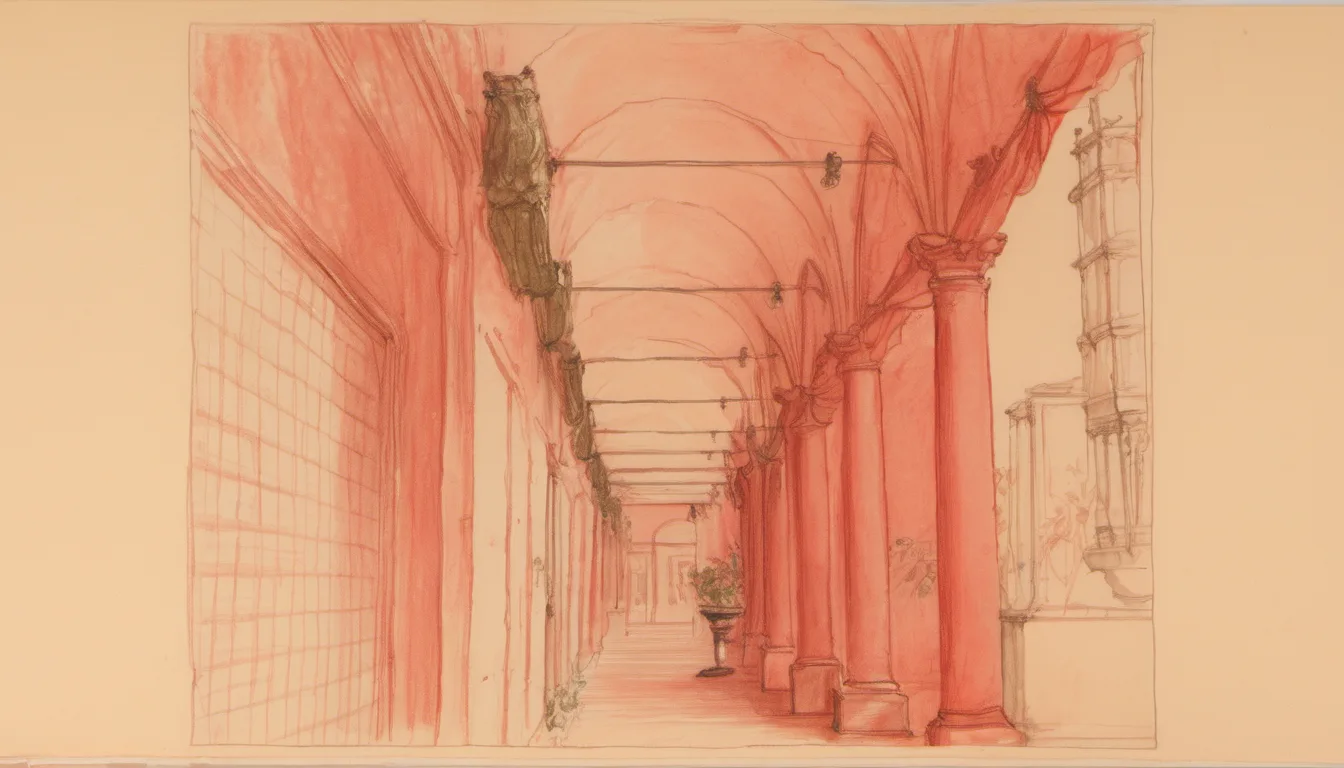
Walk it today and the sequence still works as theatre. A grand portal, ticket office beside it, opens onto a staircase and then a corridor that climbs gently — giving, from outside, a striking view down its length. At the end of the first stretch, a niche holds a statue of St Joseph himself. The corridor turns left past glass cases of Roman Baroque silverware and the antique ceremonial robes of Urbino's other confraternities, before opening onto a small exedra-shaped courtyard, built with the new structure specifically to hold it back from the hillside, and finally into the church.
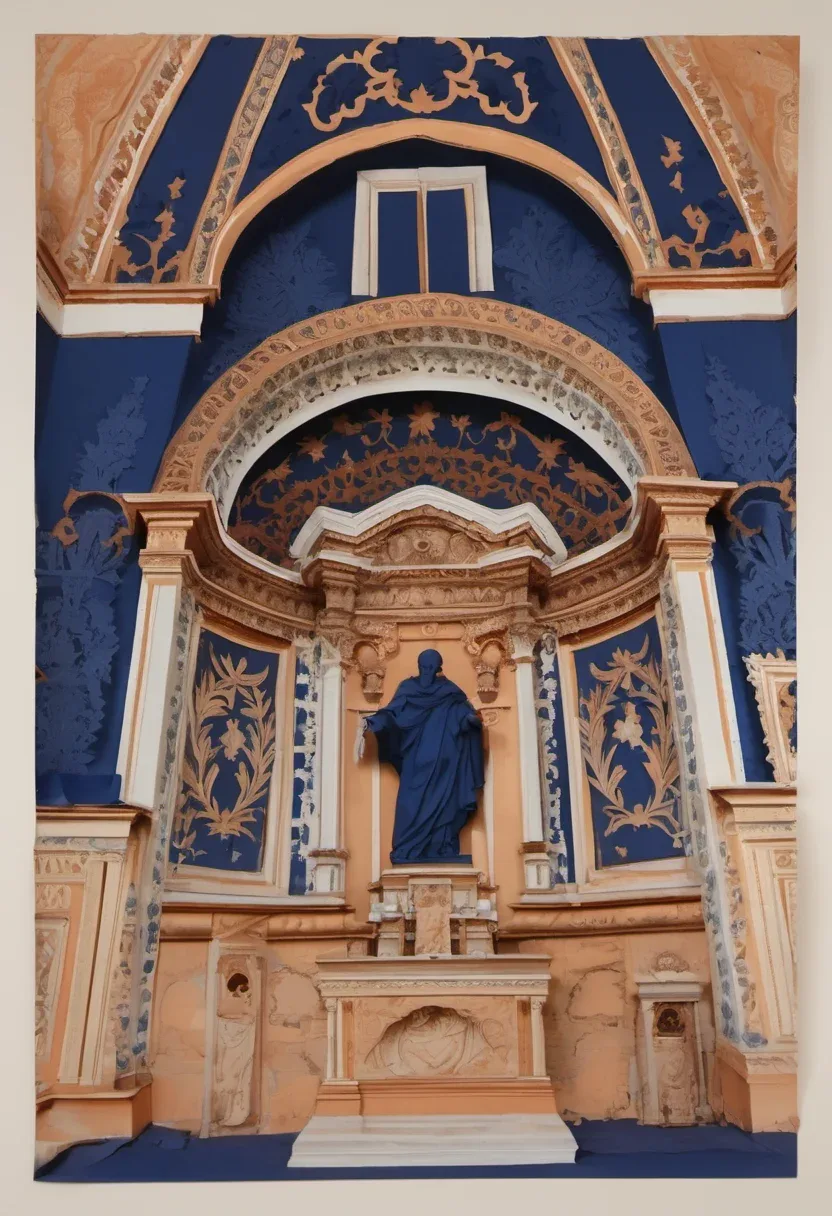
The church itself is a single rectangular hall, but Carlo Roncalli, an Urbino painter, gave it the density of something much larger: frescoes cover the walls, the vault and the apse conch, and four large canvases on the side walls narrate St Joseph's life — his betrothal to the Virgin, the birth of Christ, the flight into Egypt, and his death. Over the high altar rises a marble aedicule that Pope Clement XI donated in 1732, its two columns cut from red porphyry lifted from the Pantheon in Rome, framing a white marble statue of St Joseph carved by the Como sculptor Giuseppe Lironi and brought from the Basilica of St John Lateran. A twentieth-century pulpit displays an antique gold-thread processional umbrella; a Sebastiano Vici organ from 1782 fills the choir loft above the entrance; a Murano glass chandelier hangs from the ceiling.
To the right of the high altar, a door opens into the Sposalizio chapel, dedicated to the betrothal of the Virgin and St Joseph and finished in a neoclassical style of deliberately muted tones. The architecture is attributed to Giuseppe Valadier, the stuccoes to Francesco Antonio Rondelli — the same pair then at work rebuilding Urbino's cathedral. Its altar of polychrome marble is the finest in the building; above it, set inside a false canopy, hangs a 1606 painting of the Betrothal of the Virgin, a fine period copy of Raphael's famous canvas of the same subject.
From the church, a corridor lined with paintings leads back toward the entrance stair. Set into its wall is a delicate fifteenth-century Madonna and Child in bas-relief, attributed to Domenico Rosselli. Before the corridor rejoins the staircase, two doors open off it: one to the sacristy, the other to the presepe chapel — the single room to have survived the seventeenth-century rebuild untouched.
Between 1545 and 1550, the Urbino sculptor and decorator Federico Brandani turned that surviving room into something without real rival: a re-creation of the grotto where Christ was born, its walls entirely clad in tufa and pumice stone. Stuccoed angels tumble across the ceiling in restless motion; below them, under a modelled hut, stands the nativity proper — the Holy Family with an ox, a donkey and four shepherds kneeling in adoration, every figure worked in life-size stucco with startlingly naturalistic poses and expressions. It is counted among the masterpieces of Italian Mannerist sculpture, and it shows.
The sacristy, reached from the same corridor, keeps its own quieter museum: eighteenth-century portraits of illustrious confraternity brothers, tables listing generations of members, and a wooden cabinet painted in faux marble by Alessio De Marchis, its seven landscape views a fine example of eighteenth-century Marche sacristy furniture. A tall wooden backdrop, painted and inset with mirrors, once framed the Eucharistic adoration; peculiar objects belonging to the confraternity are kept alongside it.
None of this was paid for by ordinary means. The confraternity's rolls read like a cross-section of Urbino's elite: Timoteo Viti, Federico Commandino, the landscape painter Alessio De Marchis, the architect Giuseppe Valadier, Duke Francesco Maria I Della Rovere, and James III Stuart all signed on as brothers. The Albani family outdid them all, enrolling every member of the household out of devotion to St Joseph and giving so generously, especially through Pope Clement XI and Cardinal Annibale Albani, that the oratory became one of the richest in Urbino, in art as much as in money.
Wealth was never the whole story. The brothers' central charitable duty was grim: comforting men and women condemned to death, a mission that linked the Urbino confraternity to Rome's Confraternita di San Giovanni Decollato — the "beheaded" brotherhood built around exactly that ministry. That history sits oddly alongside the gilt and porphyry, but it explains the seriousness under the decoration. Today the confraternity still owns and runs the building, open every day of the year as a museum, and still hosts religious celebrations alongside concerts, meetings and presentations — a working institution, not a relic.