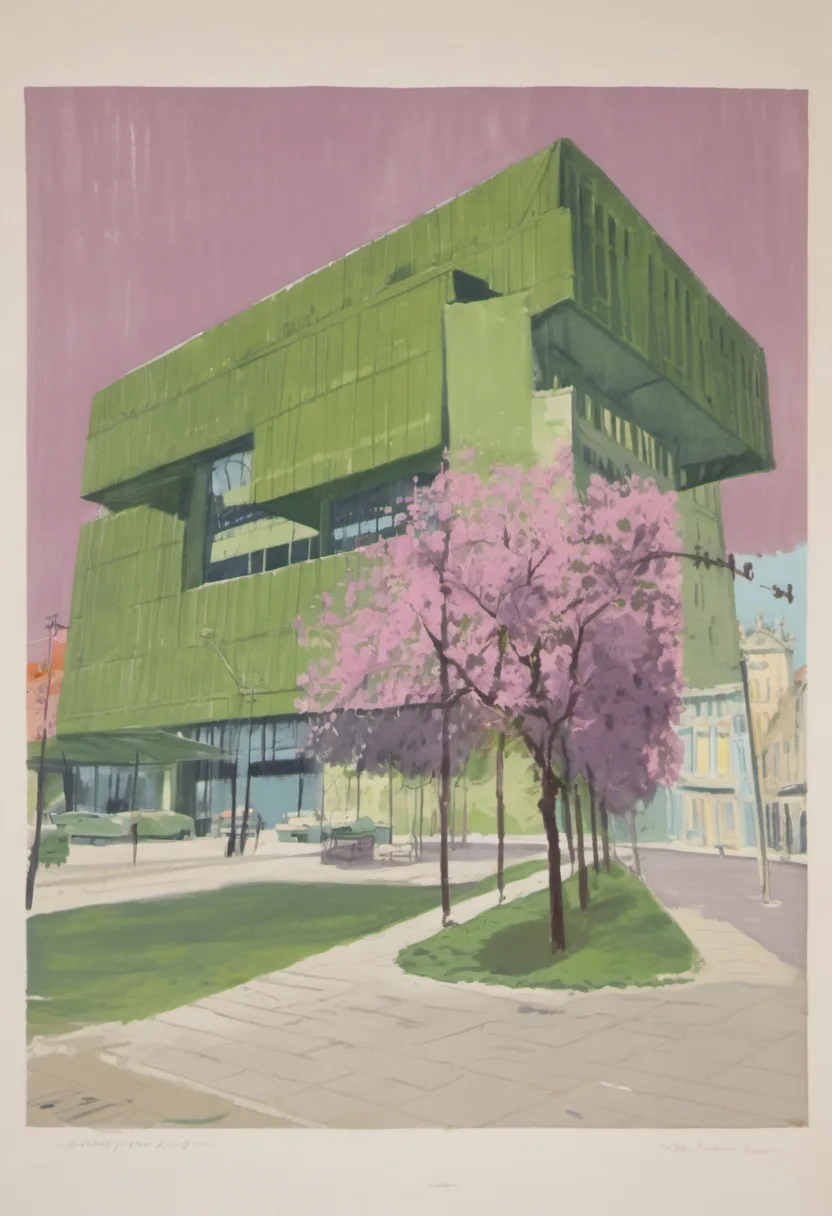
Zagreb, Croatia
Zagreb does not shout. It accumulates. Situated at 120 meters above sea level, where the southern slopes of Mount Medvednica meet the northern bank of the Sava River, the city functions as a quiet hinge between Central Europe and the Adriatic. It is a place of converging currents, where the air feels thicker with history than with traffic. To walk here is to trace the arc of a nation that has repeatedly reinvented itself, shedding empires like old coats while keeping the stones of its foundations.
The city’s singular character lies in its verticality. You begin in the Lower Town, a grid of 19th-century boulevards laid out after the great earthquake of 1880, and ascend toward the Upper Town, where two medieval settlements—Kaptol and Gradec—once warred with each other. They are now one, bound by the weight of shared memory. The climb is not merely physical; it is a transition from the commercial pulse of the south to the political and religious heart of the north. Here, the streets narrow, the cobblestones wear smooth, and the view opens up to reveal the city’s distinctive roofscape.
What makes Zagreb matter is its resilience, etched into its architecture. The Catholic Cathedral, with its twin spires piercing the sky, stands as a testament to destruction and reconstruction. Damaged by Tartars in 1242, Ottoman raids, and the 1880 earthquake, it was rebuilt by Hermann Bollé, only to lose a spire again in the 2020 earthquake. Yet it remains, a symbol of endurance. The colorful tiled roof of St. Mark’s Church, with its white, red, and blue tiles, watches over the square, a silent witness to centuries of shifting borders and identities.
Walking Zagreb rewards those who look for the quiet intersections of art and politics. The narrow streets of Gornji Grad hide galleries, small cafes, and the echoes of poetic debates from the 19th century. It is a city that has produced poets, presidents, and footballers, yet it retains a human scale. The walk is not about grand monuments alone, but about the texture of daily life continuing amidst historical gravity. It is a city that asks you to listen to its stones, to notice the sage green of shutters against the faded rose of plaster, and to understand that its strength lies in its ability to endure without losing its soul.
This is a city for the thoughtful walker. It does not offer the immediate gratification of a resort, but the slow satisfaction of discovery. Every corner holds a story of migration, war, peace, and rebirth. To walk Zagreb is to walk through the layers of Croatian identity, from the medieval bishops to the modern republic. It is calm, smart, and deeply understated—a place where the past is not buried, but built upon, layer by layer, stone by stone.
Zagreb is a city of two hearts, beating in different centuries. To understand it, one must walk its vertical geography, a topographical metaphor for its complex history. At 120 meters above sea level, nestled between the southern slopes of Mount Medvednica and the northern bank of the Sava River, the city occupies a strategic pivot point. It is the gateway between the Pannonian Plain and the Adriatic, a position that has made it a crossroads for commerce, culture, and conflict for over a millennium. The climate here is a blend of oceanic and continental, with hot, humid summers and cold winters where snow can linger from December to March. This weather has shaped the city’s architecture, with thick walls and tiled roofs designed to withstand the elements and the passage of time.
The modern narrative of Zagreb begins in the 11th century. In 1094, King Ladislaus of Hungary established a bishopric on the hill of Kaptol. Simultaneously, on the adjacent hill of Gradec, a separate community developed, independent of the bishop’s authority. These two settlements, Kaptol and Gradec, were locked in a centuries-long rivalry. They competed for influence, with Kaptol wielding the power of excommunication and Gradec responding with arson. They collaborated only for commerce, hosting three major fairs each year, lasting two weeks, which drew merchants from across the region. It was not until the early 17th century that these two centers merged to form Zagreb, creating the cultural core of the modern capital.
The 17th and 18th centuries were marked by devastation. The city suffered from fires and plagues, but also from political turmoil. In 1621, Zagreb was chosen as the seat of the Croatian viceroys. In 1669, the Neoacademia Zagrabiensis was founded by the Jesuits, the city’s first university. By 1776, the government moved from Varaždin to Zagreb, solidifying its status as the administrative center. The 19th century brought modernization. In 1862, the first railway connected Zagreb to Zidani Most and Sisak, linking it to Slovenia. In 1874, the University of Franz Joseph was re-established with four faculties. The city grew, installing an aqueduct in 1878 and trams in 1891. The railway facilitated the unification of the two parts of the city, bridging the gap between the medieval hills and the expanding plains.
The great earthquake of 1880 changed Zagreb forever. The city was struck with such force that many buildings, including the Cathedral, were severely damaged. The reconstruction, led by architect Hermann Bollé, was not merely a repair but a renewal. Bollé’s neogothic design for the Cathedral, dedicated to the Assumption of the Blessed Virgin Mary and Saints Stephen and Ladislaus, became a symbol of the city. The Cathedral, now the tallest building in Croatia, was completed 26 years after the quake. The urban renewal included the construction of grand public buildings, transforming the Lower Town into a grid of boulevards. This era also saw the rise of industry, with factories for steel, textiles, and chemicals establishing Zagreb as an economic powerhouse.
The early 20th century saw explosive growth. Suburbs like Stara Peščenica and Črnomerec were built before World War I. After the war, working-class neighborhoods rose between the railway and the Sava, while residential areas spread up the southern slopes of Medvednica. The population grew by 70% in the 1920s, the largest demographic surge in the city’s history. In 1926, radio broadcasting began, extending the city’s reach beyond its borders. This was a time of cultural flourishing, with Zagreb emerging as a center for art, literature, and science. The city’s identity was shaped by its role as a hub for the South Slavic world, attracting intellectuals and artists from across the region.
World War II brought a dark chapter. From 1941 to 1945, Zagreb was the capital of the Independent State of Croatia, a puppet state under Ante Pavelić and the Ustasha regime. The Ustasha, ultra-nationalist croats, carried out ethnic cleansing against Serbs, Jews, and Roma. The city’s Jewish population was decimated, and its cultural institutions were targeted. After the war, Zagreb became the capital of the Socialist Republic of Croatia within the Federal People’s Republic of Yugoslavia. The city expanded southward, creating Novi Zagreb, and incorporated suburbs like Dubrava and Podsused. The industrial zone to the southeast grew, and the airport was built in 1962. Zagreb remained within Yugoslavia until 1991, when Franjo Tuđman declared independence.
The war of the 1990s was relatively brief for Zagreb, though not without pain. In 1995, Serbian artillery shells killed seven civilians, a stark reminder of the conflict’s reach. The peace agreements of 1995 led to Croatia’s full independence, and Zagreb became its capital. The city’s role as a political center was reaffirmed, with the Parliament, President, Government, and Supreme Court all based here. The post-war period saw a resurgence of cultural life, with Zagreb re-emerging as a regional hub for arts and media. The city’s museums, galleries, and theaters flourished, reflecting a society eager to reconnect with Europe and assert its distinct identity.
Zagreb’s architectural heritage is a palimpsest of styles. The Catholic Cathedral, with its neogothic spires, dominates the skyline. Its history is one of repeated destruction and rebirth: destroyed by Tartars in 1242, damaged by Ottomans, ruined by the 1880 earthquake, and damaged again by the 2020 earthquake, which collapsed one spire. Yet it stands, a symbol of resilience. St. Mark’s Church, with its colorful tiled roof of white, red, and blue, sits in St. Mark’s Square, near the Parliament and the Government Palace. The roof, installed in 1880, features the coats of arms of Zagreb and the Kingdom of Croatia, Slavonia, and Dalmatia. It is a visual manifesto of the city’s dual heritage.
The city’s cultural life is vibrant, centered around institutions like the Croatian National Theatre and the Museum of Broken Relationships. The latter, founded in 2010, reflects the city’s capacity for introspection and emotional honesty. Zagreb is also a city of literature, with a strong tradition of poetry and publishing. The street named after poet Silvije Strahimir Kranjčević, where the former NK Zagreb stadium stood, is known as the 'street of the poet.' This literary legacy is woven into the city’s fabric, from the cafes where writers once gathered to the bookshops that line the boulevards. The city’s intellectual life is as much a part of its identity as its architecture.
Sport is another layer of Zagreb’s identity. NK Zagreb, founded in 1908 as HŠK Zagreb, has a storied history. The club, known as 'The Whites' or 'The Poets,' won the Croatian championship in 2001-02, a rare feat outside of Dinamo Zagreb and Hajduk Split. Their stadium, located on Kranjčevićeva street, was a landmark until its eviction in 2018. The club’s history reflects the city’s broader narrative: periods of glory, decline, and resilience. The nickname 'The Smolders,' derived from a fire that destroyed the stadium in 1978, speaks to the club’s enduring spirit. Football in Zagreb is not just a game; it is a reflection of the city’s passion and complexity.
To walk Zagreb is to engage with a city that is constantly negotiating its past and future. It is a place where medieval hills meet modern boulevards, where political gravity balances with artistic lightness. The city’s strength lies in its ability to absorb shocks—earthquakes, wars, political shifts—and emerge with its core intact. The walk rewards those who look beyond the surface, who notice the sage green shutters, the terracotta tiles, and the dusty blue skies. It is a city that does not demand attention but earns respect through its endurance. Zagreb is not a city of grand gestures, but of quiet persistence. It is a place where history is not just remembered, but lived, in every stone, every street, and every shadow cast by the twin spires of the Cathedral.