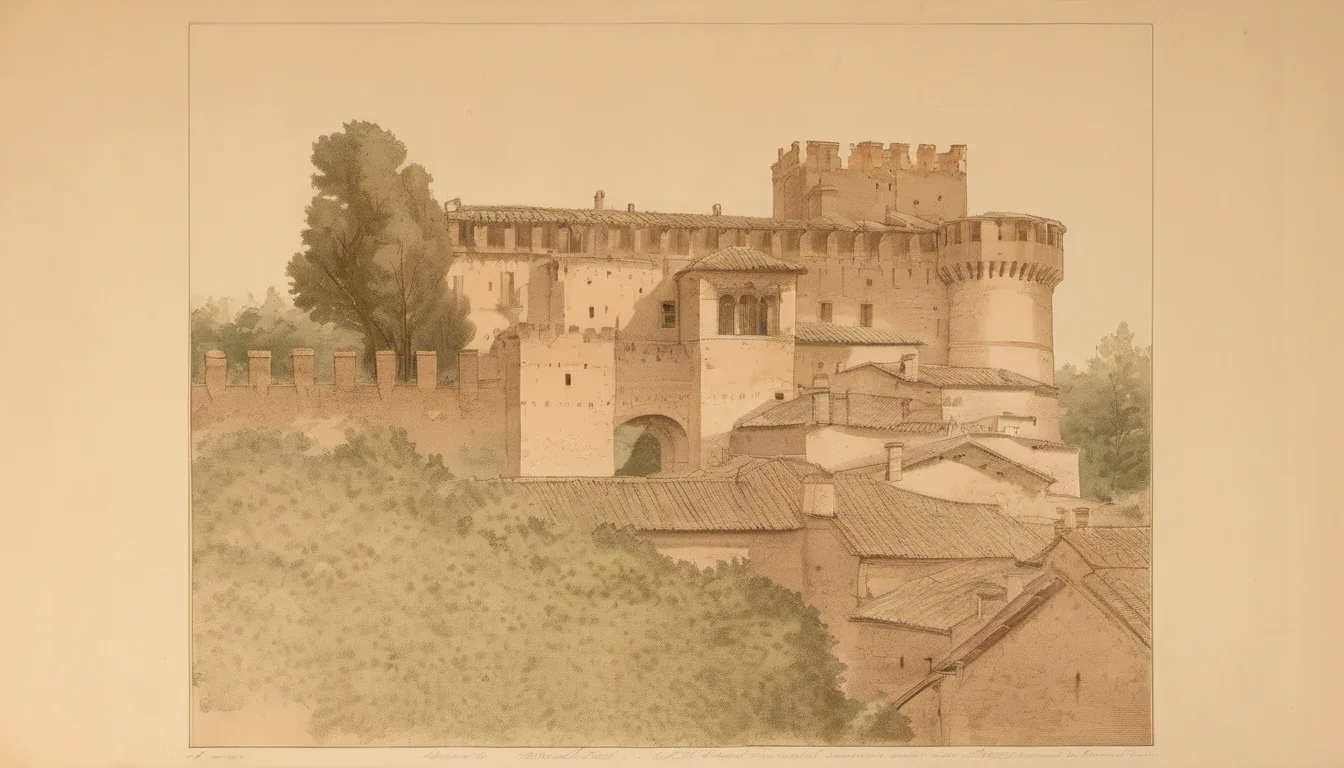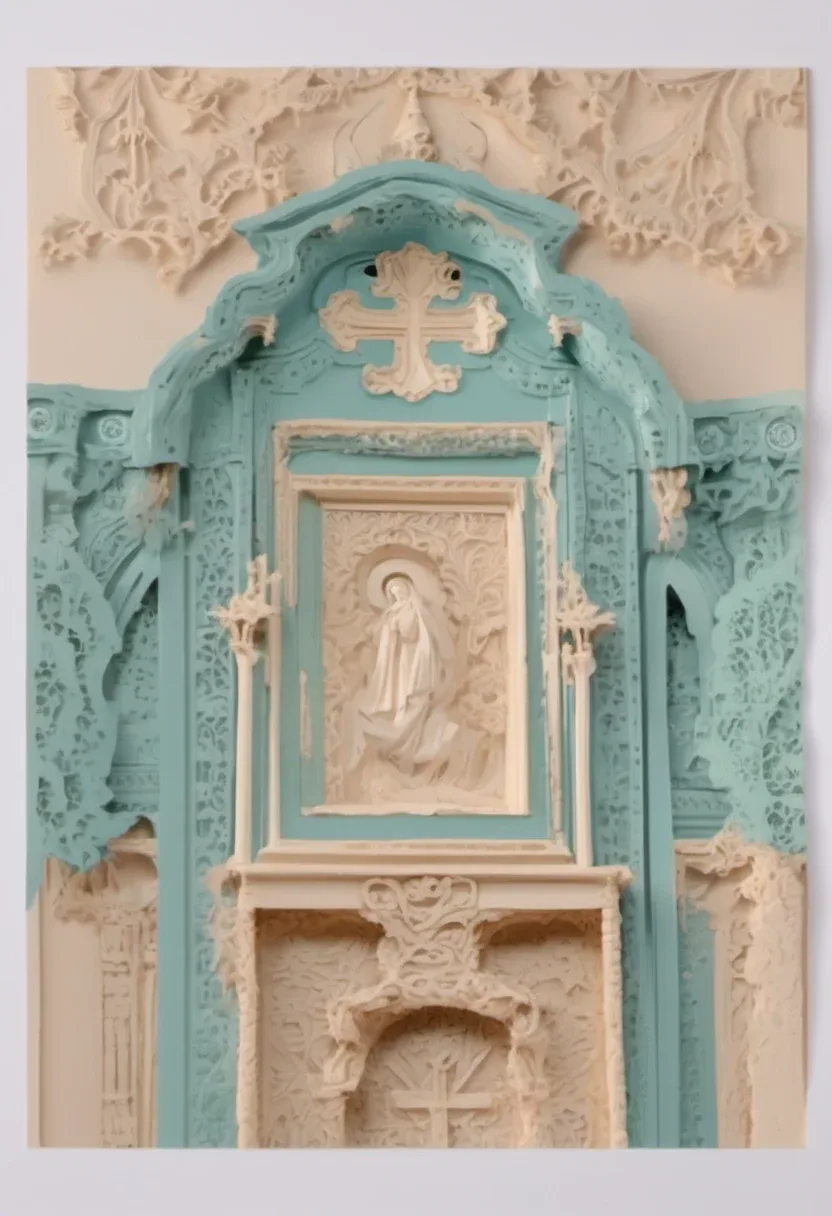
Santa Maria della Steccata
Before it had a name, this church had a fence. By the late fifteenth century a small oratory stood on the site, built by the Knights of Malta to house an icon of Saint John the Baptist said to work miracles. Next door, in a private house, another image drew its own crowd: a fresco of the Madonna and Child on the facade, credited with cures of its own. Rumors of miracles brought masses flocking to see it, and to keep them from mobbing the image, someone built a wooden stockade around it, a steccato. The name outlasted the fence.
Pope Alexander VI mentioned the image by that name in a papal bull dated 1 March 1493, which tells you how fast the cult had taken hold. The crowds kept growing. The frescoed icon was cut from its wall and carried into the oratory; when even that proved too small, the commune of Parma paid for a proper church, raised between 1521 and 1539 under Bernardino Zaccagni and his son Giovanni Francisco, with Gian Francesco d'Agrate finishing the work and the dome, reportedly with help from the Roman architect Antonio da Sangallo the Younger.
What they built is a Greek cross: four equal arms around a central dome, each arm capped with its own half-dome, four chapels fitted into the corners between them. The entrance arm runs longer than the rest, extending into an antechamber called the Coro dei Cavalieri, the Knights' Choir. The whole building is organized around one object: the icon, eventually set into a gilded altarpiece flanked by twisted Solomonic columns, with statues of Saint Joseph and King David standing at its base.
The decoration took centuries, and the guest list shows it. Michelangelo Anselmi frescoed the Coronation of the Virgin above the altar and the Adoration of the Magi on the ceiling beside it. A young Parmigianino worked the sacristy, painting and planning many of its figures, and left two oil paintings, Saint Cecilia and King David, made around 1523 as doors for the organ. Dutch, local and itinerant hands followed for two more centuries: Bernardino Gatti, Jan Soens, Girolamo Mazzola Bedoli, Marcantonio Franceschini among them.
Below it all, the crypt holds twenty-six members of the Farnese family, including Alexander Farnese, Duke of Parma, and his wife, Infanta Maria of Portugal. A crystal urn there keeps the heart of Charles III, Duke of Parma. The Bourbon-Parma family kept using the space long after the dukedom became titular only: Carlos Hugo, Duke of Parma, was buried here in 2010, his granddaughter baptised at the church two years later, and two more Bourbon-Parma princesses interred in 2021 and 2022. A fence built to hold back pilgrims is, five centuries on, still holding a family together.
Before it had a name, this church had a fence. By 1492 a small oratory stood on the site, built by the Knights of Malta to shelter an icon of Saint John the Baptist said to work miracles. Next door, in a house belonging to a religious confraternity, another image drew its own following: a fresco of the Madonna and Child painted on the facade. Word of cures spread and crowds came. To keep the faithful from mobbing the image, someone built a wooden stockade, a steccato, around it. The fence gave the site its name before it had a proper church.
The cult moved fast. A papal bull issued by Pope Alexander VI on 1 March 1493 already refers to the image by the name of its fence, meaning the legend had reached Rome within a year or two of the stockade going up. The frescoed image was eventually cut free from the wall it had been painted on and carried into the oratory for safekeeping. Even that space filled beyond capacity. The commune of Parma, rather than the church hierarchy, funded something larger: a purpose-built sanctuary, constructed between 1521 and 1539, because the crowds had become a civic matter as much as a religious one.
The building was designed by Bernardino Zaccagni and his son Giovanni Francisco, with Gian Francesco d'Agrate brought in to modify the plan and carve the roofline statuary. The dome, raised in 1526 and 1527, is credited to Agrate as well, with help, the record notes, from Antonio da Sangallo the Younger, one of Rome's leading architects. The church was consecrated in 1539. Its sacristy kept being rebuilt for centuries afterward, a sign that a Renaissance plan does not stay finished once a place becomes this popular.
The plan itself is a Greek cross: four arms of equal length around a central crossing, each capped with its own half-dome, with a chapel fitted into each of the four corners between them. Only the entrance arm breaks the symmetry, stretched through an arch into an antechamber known as the Coro dei Cavalieri, the Knights' Choir. The dome over the crossing is the building's one grand gesture; everything else is calibrated restraint around it.
The tribune's Baroque altar was begun by Mauro Oddi and finished between 1758 and 1765 by Andrea and Domenico della Meschina, more than two centuries after the church was consecrated. The icon sits inside a gilded frame crowded with cherubs and putti, topped by a gilded crown, flanked by twisting Solomonic columns and, beyond them, a further pair of pillars. At the base stand statues of Saint Joseph and King David, carved by Francesco and Giovanni Baratta. Behind the altar, a semicircle of wooden choir stalls curves around the space.
Above the altar, Michelangelo Anselmi painted a Coronation of the Virgin with Saints in 1541, and followed it with an Adoration of the Magi on the adjacent ceiling. It is one of the church's few decorative programs completed by a single hand in a single campaign, in a building where most artists worked in relay across generations. Anselmi's frescoes give the space its immediate visual anchor, the thing your eye finds first, before it works out that the small gilded icon below is the actual reason any of this exists.
In the sacristy and sanctuary, a young Parmigianino painted and planned many of the fresco figures, early work by an artist who would go on to define Mannerism in Parma. The church also holds two oil paintings by him from around 1523, Saint Cecilia and King David, originally made as doors for the organ rather than as freestanding devotional pictures. They are easy to miss precisely because they were never meant to be looked at as art on a wall; they were meant to open and close.
Later contributors filled out the church over two more centuries. Bernardino Gatti frescoed parts of the ceiling; the Dutch painter Jan Soens contributed a Holy Family; Giambettino Cignaroli painted a Trinity with Saints Niccolo, Basilius, and Gregory. In 1718 Marcantonio Franceschini added a deliberately old-fashioned Madonna and Child with Saints Joseph and George. Girolamo Mazzola Bedoli painted a Redeemer with Saint Anthony of Padua and the Magdalen under a 1605 commission priced down to the soldi: sixty ducats and seventy-six soldi. Aurelio Barili added frescoes of his own in 1588.
The building became a place to be buried, long before the crypt filled with dukes. Funeral monuments to Bertrando Rossi, Ottavio Farnese, and Sforzino Sforza stand inside the church, alongside one to Adam Albert von Neipperg carved by the Florentine sculptor Lorenzo Bartolini. Below it all, the crypt holds twenty-six members of the Farnese family, including Alexander Farnese, Duke of Parma, and his wife, Infanta Maria of Portugal. Nearby, a crystal urn holds only the heart of Charles III, Duke of Parma; his body is interred elsewhere.
The later, titular Dukes of Parma and Piacenza, from the House of Bourbon-Parma, chose this crypt too, long after the dukedom itself had stopped governing anything. Carlos Hugo, Duke of Parma, head of the house from 1977 until his death and former husband of Princess Irene of the Netherlands, was buried here on 28 August 2010. His granddaughter, Princess Luisa of Bourbon-Parma, was baptised at the church in September 2012. Princess Maria Teresa of Bourbon-Parma was buried here in 2021, and Princess Cecile Marie of Bourbon-Parma in 2022.
The image that started it all, a Nursing Madonna, was formally crowned on 27 May 1601 by a Capuchin friar and Marian devotee, Fray Giacomo di Forli, more than a century after Alexander VI first wrote the fence's name into a papal document. The recognition kept coming: on 9 February 2008, Pope Benedict XVI raised the sanctuary to the rank of Basilica minor. It is, by any formal measure, one of the more honored churches in Emilia-Romagna, and it began as a stockade thrown up to stop people touching a painting on a wall.