Battistero di San Giovanni
Before it baptized anyone, the octagon on Piazza Arringo may have been a temple to Hercules. Excavations in 1828, and further digs between 1870 and 1880, found the remains of a pagan temple beneath the interior, standing on Ascoli's ancient forum — a dedication guessed at, never confirmed. What rose on top is one of Italy's more austere and complete works of Romanesque religious architecture: a freestanding baptistery of squared travertine, some of it scavenged from older buildings, set just north of the cathedral of St Emygdius, the city's patron saint.
Nobody can date the start of construction with confidence. The historian Giambattista Carducci placed the temple's conversion into a baptistery as early as the 6th century, its octagonal interior kin to the Baptistery of San Giovanni in Florence, the Arian Baptistery in Ravenna, and the Lateran Baptistery in Rome, built under Constantine. A first restoration came before the 9th century, with further repairs in the 10th and 11th — visible in the triangular decoration and the framing of the main entrance — and the interior was restored again, most recently, in 2006.
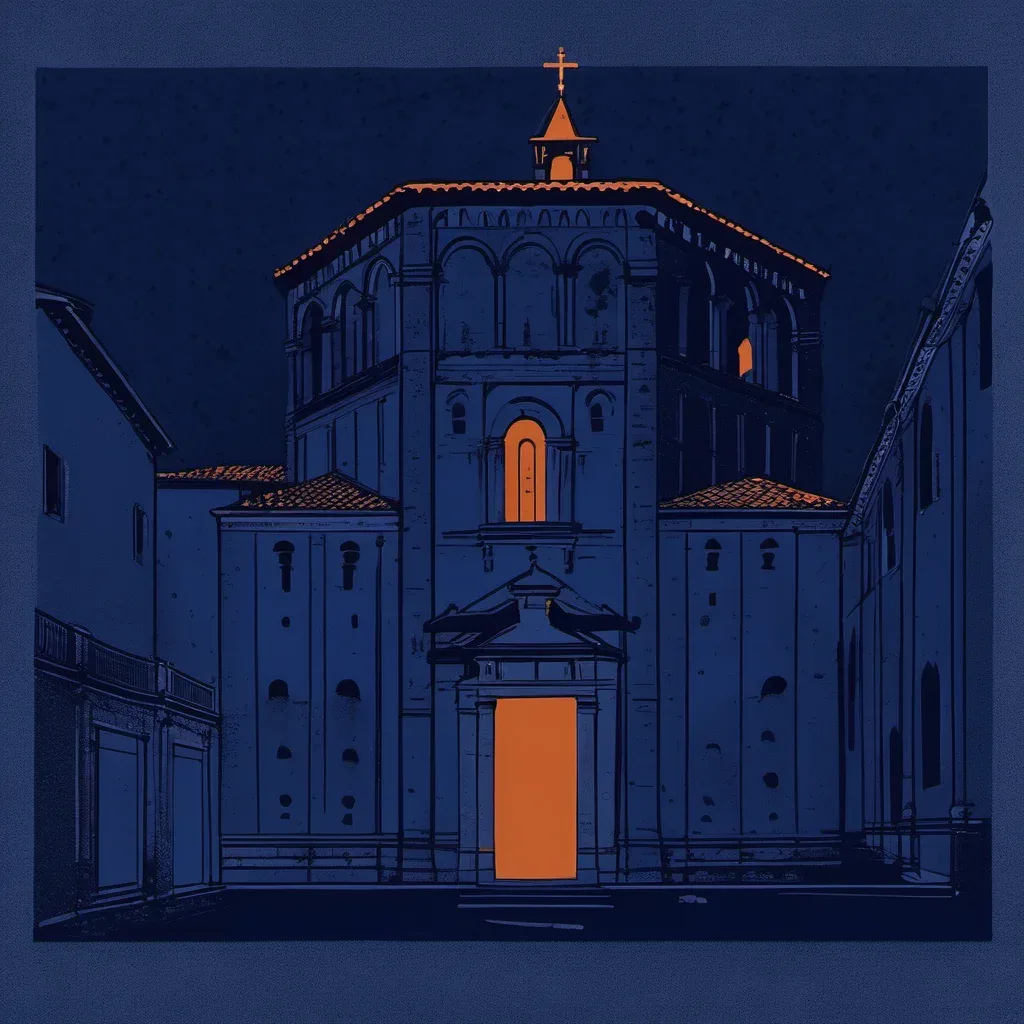
The massive square base carries an octagonal tiburio, pierced by four small windows and crowned with a square lantern that drops light into the cupola. Blind arcades ring the tiburio — three round arches a side, except on the east face, which keeps to two narrower arcades of two arches each — all added in the 12th century. The monument originally opened through three doors, symbolizing the Trinity and the Church militant, penitent, and triumphant; two remain. The Piazza Arringo entrance is flanked by recessed rectangular panels beneath an architrave cut with three triangles. The second, facing the cathedral's Porta della Musa, mixes stonework from several periods — Romanesque capitals and a bas-relief architrave carved with a knotted cord, a motif common around the year 1000.
Inside, the octagon turns irregular, a Roman habit, its niches keyed to the corners of the square shell outside. The walls run about 5.5 metres each; the room measures 9.14 by 9. At the center, under the oculus, sits a slightly raised circular pool, dated to the 5th or 6th century and only rediscovered in 1839 — where converts were baptized by immersion, men attended by deacons, women by deaconesses. A 14th- or 15th-century font stands to the right on a twisted column; above the altar hangs a 16th-century Baptism of Christ, attributed to Venceslao Corrigioli di Reggio.
The historian Mario Sabatucci read the geometry as doctrine in stone: the square base as earth and its four elements, the four winds, seasons, and ages of a life; the octagonal tiburio as the baptism St Peter described through Noah's ark, eight souls saved by water; the round cupola as eternity and paradise, unbroken as a circle.
Before it baptized anyone, the octagon on Piazza Arringo may have been a temple to Hercules. That's not established fact — only what the ground has offered up, and the record hedges every time it's mentioned. Excavations in 1828, followed by further digs between 1870 and 1880, uncovered the remains of a pagan temple beneath the interior of the building, sitting on what was once Ascoli's forum. Whether Hercules was truly the god worshipped there is guesswork; the sources are careful never to close the question, and so should you.
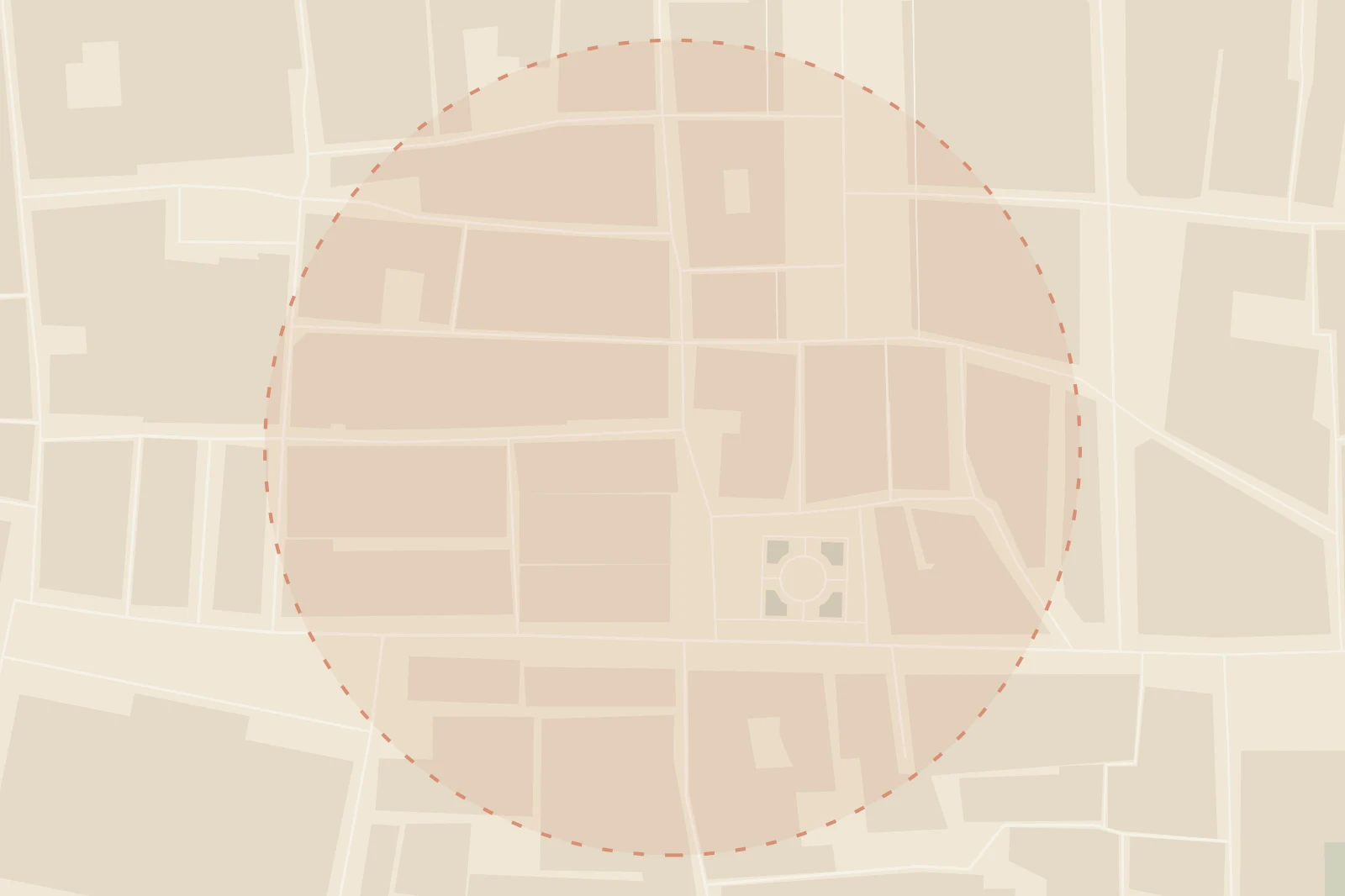
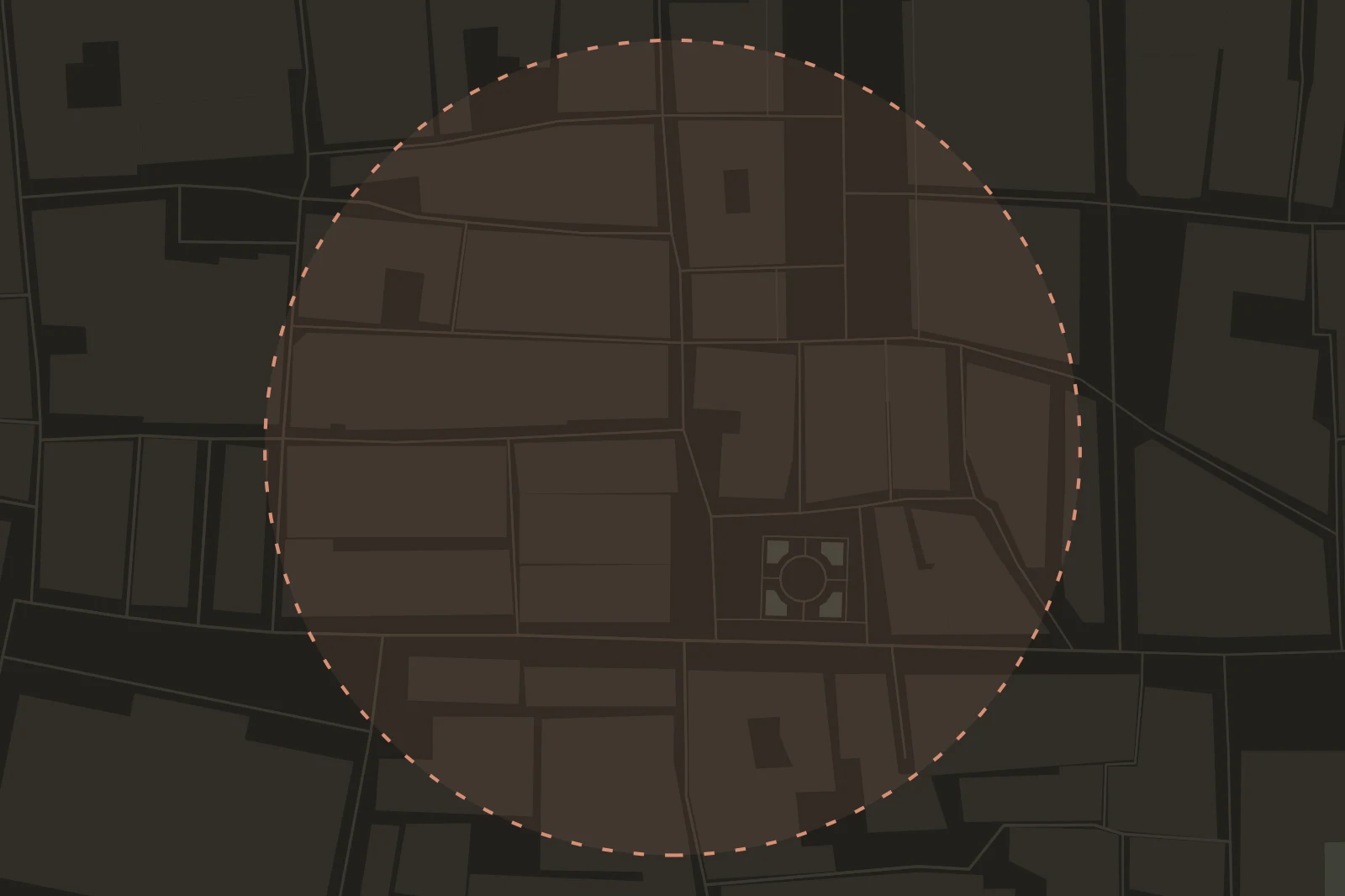
What stands on the site now is unmistakable: a freestanding, austere structure, simple in its architectural form, that perfectly represents the Romanesque style as it developed in Ascoli. It ranks among the finest examples of Italian religious architecture, and has been listed among the country's national monuments since 1890. It sits on the eastern end of Piazza Arringo, immediately north of the cathedral dedicated to St Emygdius, Ascoli's patron saint — close enough that the two buildings read as a single composition from across the square.
Dating the start of construction precisely is, by every account, difficult. The historian Giambattista Carducci placed the temple's conversion into a baptistery as early as the 6th century, and found confirmation in its shape: the octagonal interior recalls the Baptistery of San Giovanni in Florence, the Arian Baptistery in Ravenna, and the Lateran Baptistery in Rome, built under Constantine. It's a lineage that stretches from imperial Rome to early Christian Italy, and Ascoli's baptistery sits inside it without much fanfare.
The building has been repaired for as long as it has stood. A first restoration came before the 9th century. More followed in the 10th and 11th centuries — you can still read them in the triangular decoration and the reframing of the main entrance. The most recent work touched the interior in 2006, a small addition to a very long list.
Construction is entirely squared blocks of travertine, some of it recycled from earlier buildings on the site. At the base of the east side, remains of a Roman wall are still visible — a fragment of the forum the baptistery was built over. The structure is freestanding, with a massive square base that carries entrances on two sides. Above it rises the octagonal tiburio, pierced by four small windows and topped with a square lantern, itself windowed, funneling light down toward the cupola inside.
Each face of the tiburio carries a blind arcade of three round arches, except the east-facing side, which keeps to a pair of narrower arcades with two arches apiece. All of this decoration was added in the 12th century, layered onto a much older core. The monument was originally planned with three entrances, symbolizing the Holy Trinity and the Church's three states: militant, made up of the baptized faithful and the Pope; penitent, the souls in purgatory preparing for heaven; and triumphant, the saints and angels. Two entrances remain in use today.
The principal entrance, opening onto Piazza Arringo, is flanked by two recessed rectangular forms. Above it, the architrave is cut with three recessed triangles — a large one in the center, marked by a wide horizontal slit, and two smaller ones set to either side. It's plain, geometric ornament, entirely in keeping with the building's general restraint.
The second entrance faces the cathedral's own door, known as the Porta della Musa, and carries stonework assembled from several periods: Romanesque capitals, and a bas-relief architrave carved with a knotted cord — a decorative motif that was widespread around the year 1000. Standing between the two entrances is, in effect, standing between two centuries of masons each leaving their own mark.
Inside, the octagon becomes irregular — a distinctly Roman habit — with niches set at the angles of the square shell outside. The octagonal walls measure roughly 5.5 metres each; the room itself is 9.14 by 9 metres. At its center, directly beneath the oculus of the cupola, sits a slightly raised circular pool. It's dated to the 5th or 6th century, though it went unnoticed until it was rediscovered in 1839. This was where converts were baptized by immersion — men attended by deacons, women by deaconesses, in a rite that used this single spot for both.
To the right stands a baptismal font from the 14th or 15th century, raised on a twisted column. Above the altar hangs a Baptism of Christ, a 16th-century oil on canvas attributed to Venceslao Corrigioli di Reggio — a much later addition to a building that had already been rebuilt and reworked for a thousand years by the time it was painted.
The historian Mario Sabatucci read the whole geometry as doctrine translated into stone. The square base, in his interpretation, stands for the earth and its four elements — air, earth, fire, water — as well as the four points of the compass, the four seasons, and the four stages of a human life. The octagonal tiburio recalls the baptism St Peter described through the story of Noah: eight souls saved through water, the same water that saves now. The round cupola above, circular and unbroken, stands for eternity and paradise. It's one historian's reading, not settled doctrine — but it's hard to stand under that oculus, watching light drop through an octagon into a circle over a sunken pool, and not feel the shape arguing its own case.