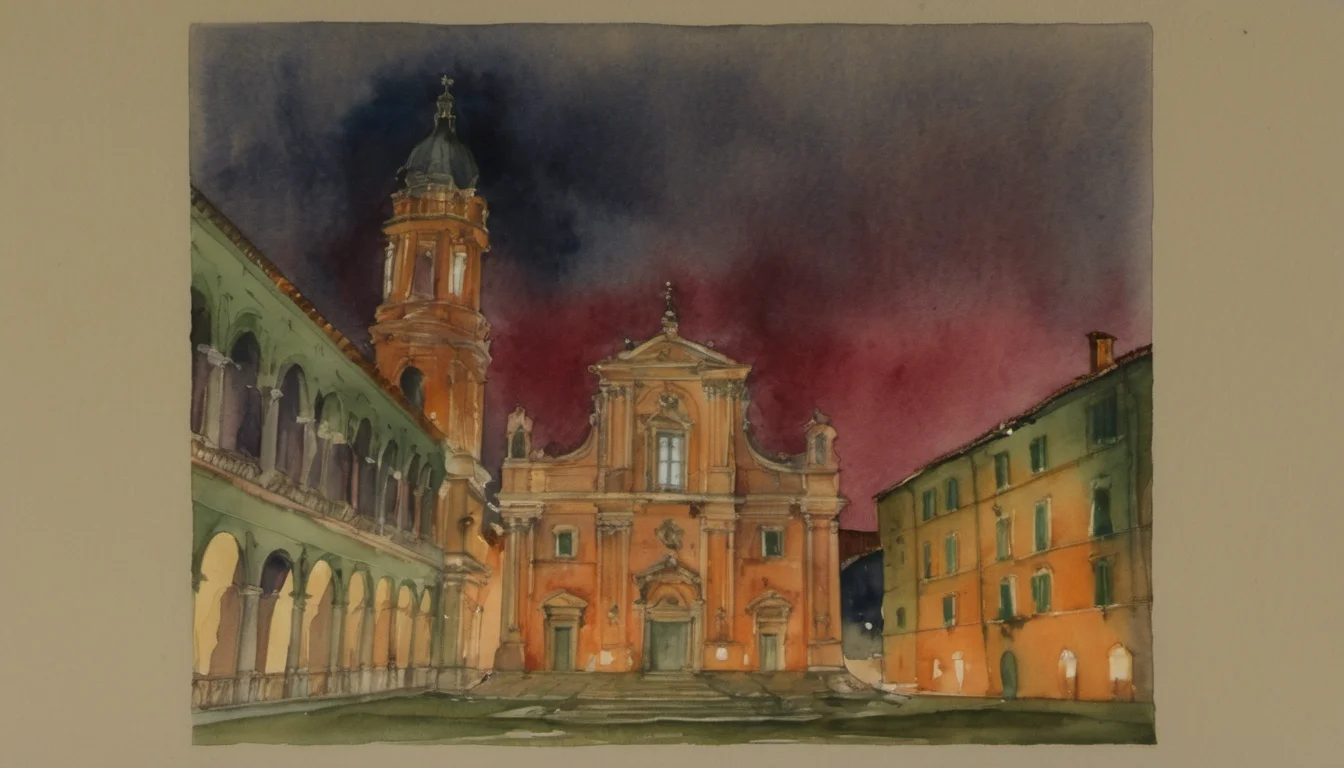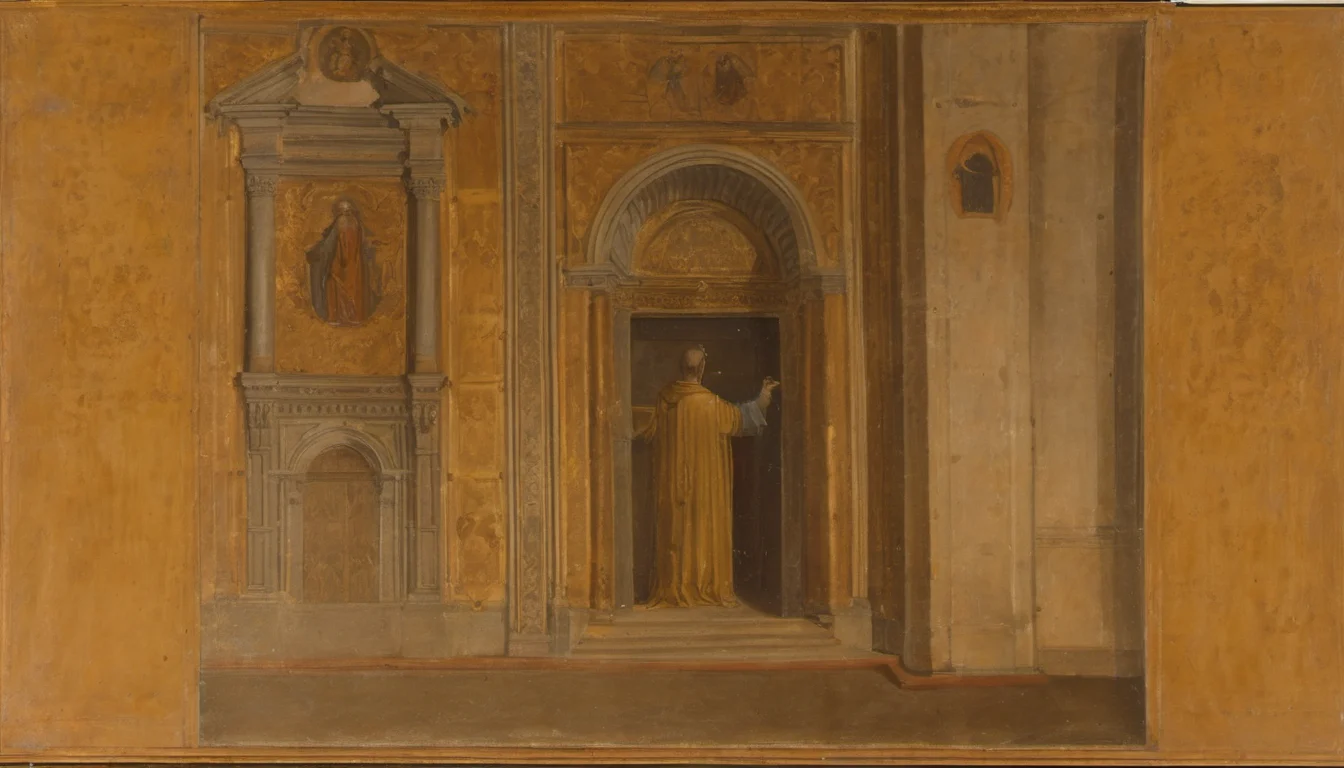
Cattedrale di Sant'Emidio (Crivelli)
Ascoli Piceno keeps its patron close. Beneath the cathedral that carries his name, an underground crypt holds the remains of Emidio, a bishop born in Trier in 273 and beheaded in this city in the early fourth century. The last canonical recognition of those relics was carried out in the second half of the 1960s. His feast falls on 5 August.
He arrived around 300, sent by Pope Marcellino to a Picene centre still almost entirely pagan, with Euplo as his deacon. The prefect, Polimio, had a record of hard repression and ordered him not to preach. Emidio ignored it. He healed the sick, and the conversions followed, among them Polisia, the prefect's own daughter, whom he baptised in the waters of the Tronto. Polimio had him arrested and condemned. The date is given as 303 under Marcellino, or 309 under Eusebio; the traditions do not agree.
What the traditions do agree on is the earthquake. One version has him touching the city walls on arrival, after which every pagan temple, and only those, came down. Another puts the tremor back in Trier, another in Ascoli in front of Polimio. Then 1703: a violent quake tore through the Marche and left Ascoli standing. The city drew its conclusion, and in 1717 raised a church whose interior is the grotto where he died, and where his tomb was found, legend says, under a covering of basil.
That is why the cult travels. Emidio is patron or co-patron of towns from Fabriano to Naples, Catania to Gubbio, and is venerated across the seismic world as the saint who holds the ground still. The cathedral is where the whole thing is anchored. Down the stairs, under the floor, in the dark.
The execution was the ordinary part. What follows is not. Tradition holds that Emidio, beheaded on the prefect's order, did not fall: he gathered up his own head and walked uphill to the oratory he had built, and died there. A second telling has the ground itself open to receive him, so that he buried himself. The cathedral that carries his name is where the story comes to rest.
He was born in Trier in 273 to a noble pagan family. The early years are thin and the sources disagree, putting him either at the liberal arts or in the Roman militia. His conversion, around 290, came through the preaching of Nazarius and Celsus. His family fought it hard, and he left for Italy with three friends: Euplo, Germano and Valentino, the last of them credited with writing the first life of the saint.
In Milan, bishop Materno ordained him priest around 296, and he spent three years at the oratory of San Nazario. Diocletian's persecution pushed him to Rome, where a man named Graziano sheltered him. Healings were attributed to him there, among them Graziano's paralysed daughter, cured on the condition that the whole household convert. Rome decided he was Aesculapius returned, and took him to the god's own temple on the Tiber Island, where tradition has him healing more than a thousand and destroying the pagan altar.
Pope Marcellino made him bishop of Ascoli, gave him Euplo as deacon and sent the two of them to a Picene centre still almost wholly pagan. Another version names Marcellino's successor, Marcello, though the dates refuse to line up; he was not elected until November 306. Emidio preached at Pitino, L'Aquila and Teramo along the way, and reached Ascoli around 300.
The prefect Polimio had already been severe with Christians and told him not to preach. He preached. He healed, and the city converted in numbers. Polimio made the same guess Rome had about Aesculapius and offered him his daughter Polisia in marriage if he would sacrifice to the gods. Emidio refused, then baptised her in the Tronto. He was arrested and condemned: 303 under Marcellino, or 309 under Eusebio, the traditions split. Polisia, hunted by her father, is said to have fled to Monte Ascensione and vanished into a crevasse, near which the village of Polesio later grew.
The earthquake miracle comes in versions, which is usually a measure of how badly a city wants a story. In Trier, dragged into a pagan temple to recant, he brought it down. In Ascoli, pressed by Polimio, the same. In a third, he touched the walls on arrival and every pagan temple, and only those, collapsed. Then 1703: a violent quake tore through the Marche and left Ascoli untouched, protected, so it was said, by its patron. In 1717 the city raised a church whose interior is the grotto where he died, and where the tomb was found, legend says, covered in basil.
One miracle stayed in daily use. Near Porta Solestà, with crowds waiting to be baptised and the Tronto too far off, he knelt at a stone and prayed; water came, and thousands were baptised from it. The spring became the fonte di Sant'Emidio, remade over the centuries and standing today as an elegant sixteenth-century public washhouse of five arches, with fragments of twelfth-century structure still in it.
The relics lie in the underground crypt beneath the cathedral. The tempietto of Sant'Emidio Rosso marks the place of execution, and the last canonical recognition of the remains was made in the second half of the 1960s. The feast is 5 August. Devotion was already dense across the Marche by the eighteenth century and rose again after each quake of the eighteenth and nineteenth. Ancona asked Ascoli for a relic more than once. When Bojano fell in 1805, survivors carried a stone from the ruined church of San Martino delle Monache to Monteverde and set it as the step of a new church to Emidio. He is venerated wherever the ground moves.