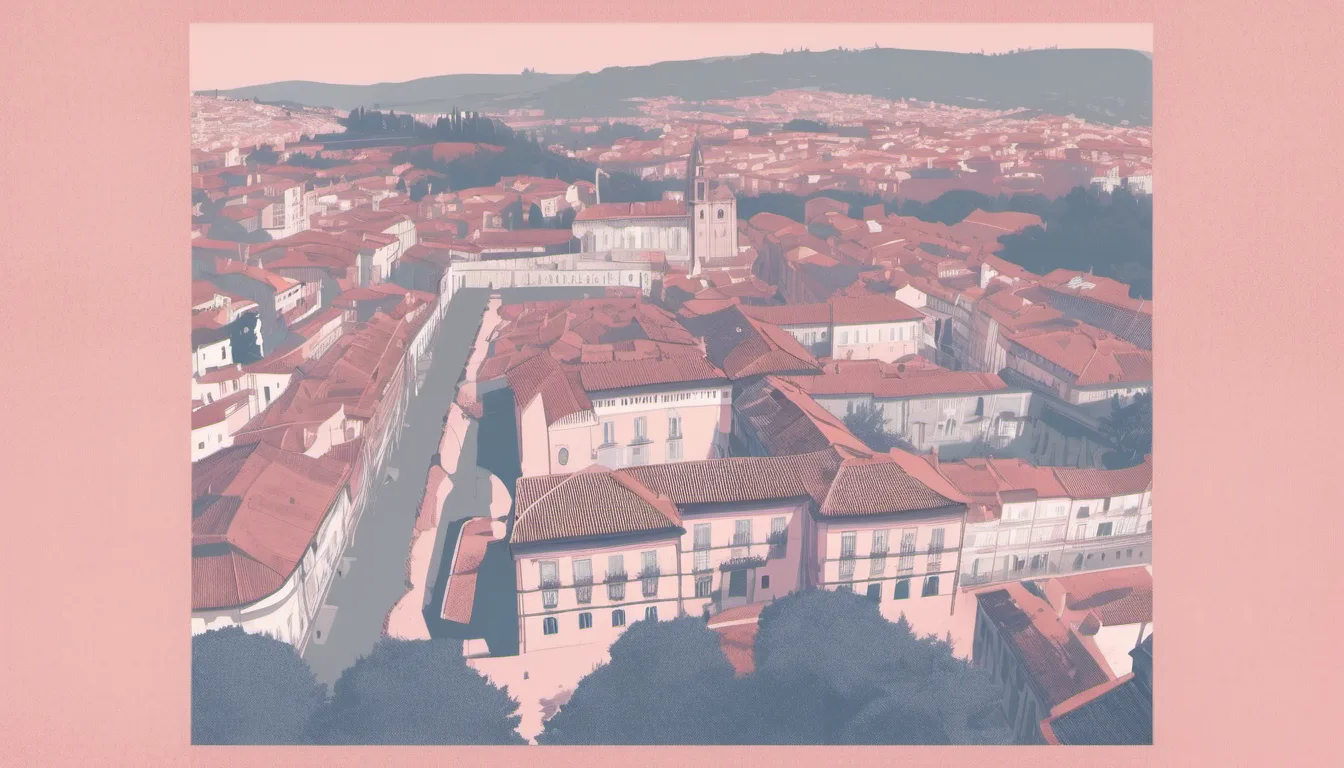
Braga, Portugal
Braga does not ask for attention; it simply endures. Located in the Minho region of northern Portugal, it is the country’s oldest city, a place where Roman stones lie beneath Baroque facades and where the air feels heavier with history than with humidity. It is not the flashiest destination on the Iberian Peninsula, nor does it strive to be. Instead, it offers a quiet, profound continuity that rewards those willing to look closely at the wear on its cobblestones.
The city’s identity is rooted in its dual role as a political and spiritual capital. For centuries, it served as the primary seat of the Portuguese archbishops, earning it the nickname 'Roma Portuguesa.' This is not merely a title of vanity but a reflection of the sheer density of religious architecture. From the Romanesque Catedral to the soaring Sanctuary of Bom Jesus do Monte, the skyline is defined by spires and domes that have watched over the region since the Middle Ages. Walking here is an exercise in reading layers of faith and power etched into the landscape.
What makes Braga singular is its topography. The city is not flat; it is a series of valleys and hills, from the urban center at 215 meters to the peaks of Monte do Sameiro at 572 meters. This verticality dictates the rhythm of the walk. You move through the dense, pedestrian-friendly historic core, past the Arco da Porta Nova and the municipal buildings, before ascending toward the hilltop sanctuaries. The climb is rewarded by views that stretch across the Minho plains, offering a perspective that connects the ancient Roman Bracara Augusta to the modern city below.
The local culture is equally layered. Braga is a university city, buzzing with student energy, yet it remains deeply traditional. The Semana Santa (Holy Week) processions are among the most elaborate in Portugal, transforming the streets into stages for centuries-old rituals. Meanwhile, the Festa de São João brings a different kind of fervor in June, with fireworks and folk traditions that feel alive and uncurated. To walk Braga is to walk through these living traditions, where the past is not exhibited but practiced.
Ultimately, Braga matters because it is honest about its age. It does not hide its Roman foundations or its medieval scars. It invites you to wander its museums, such as the Museu dos Biscainhos, or to sit in the shadow of the Torre de Menagém. It is a city that understands its own weight, offering a calm, intellectual, and spiritual depth that lingers long after the walk ends.
To understand Braga is to accept that it is not a city that changes easily. It is a place of sedimentation, where history accumulates rather than erodes. Situated in the heart of the ancient province of Minho, Braga occupies a strategic position in northern Portugal, second only to Porto in importance. Yet, unlike Porto’s bustling portside energy, Braga’s energy is introspective, directed inward toward its churches, its universities, and its hills. It is a city that has served as the primatial seat of the Portuguese church for over a millennium, a status that has shaped its architecture, its politics, and its very soul. Walking through Braga is not merely a tour of sights; it is an engagement with the concept of endurance.
The story begins in antiquity. In the first century BC, this settlement was known as Bracara Augusta, the principal center of the Roman province of Gallaecia. The Roman legacy is not buried here; it is visible. The Zona Arqueológica reveals the foundations of a city that was once a hub of imperial administration. As the Roman Empire fractured, Braga’s importance only grew. By the fifth century AD, it had become the capital of the Kingdom of Galicia and the first episcopal see in the Iberian Peninsula. This early ecclesiastical primacy established a trajectory that would define the city for the next fifteen hundred years. It was a center of learning, power, and religious authority, a role it maintained even as political borders shifted and empires rose and fell.
The Middle Ages brought conquest and reconquest. The city was occupied by the Arabs in the eighth century, a period that left subtle traces in the local culture and agriculture. It was reconquered in 1040, marking a new chapter in its Christian history. From this point forward, Braga became the seat of the Archbishops of Braga, who wielded significant political power, governing the region until the end of the eighteenth century. This dual role as both spiritual and temporal authority is encoded in the city’s architecture. The Catedral, founded by Henry of Burgundy in the eleventh century, stands as a testament to this power. Though it has undergone numerous modifications, retaining only faint traces of its original Romanesque form, it remains a dominant presence, a fortress of faith overlooking the city.
The Baroque era left an indelible mark on Braga’s landscape, earning it the moniker 'Roma Portuguesa.' This is not an exaggeration but a description of the sheer density and quality of its religious buildings. The city is dotted with churches, chapels, and sanctuaries that showcase the exuberance of the Baroque style. The Igreja do Pópulo, originally part of a conventual complex and now housing the municipal offices, was rebuilt in Baroque forms in the late seventeenth century. The Capela da Glória, dating from 1330, features frescoed walls and a coffered ceiling, along with the sculpted sarcophagus of Archbishop Gonçalo Pereira. These are not mere decorations; they are statements of power, piety, and artistic mastery, designed to inspire awe and obedience.
No discussion of Braga’s architecture is complete without mentioning the Sanctuary of Bom Jesus do Monte. Perched on a hill overlooking the city, this Baroque sanctuary is accessible via a spectacular stairway adorned with fountains and allegorical statues. The ascent is a ritual in itself, a physical manifestation of the spiritual journey. The sanctuary’s design, with its winding paths and hydraulic features, reflects the Baroque fascination with movement, light, and nature. It is a place where the sacred and the secular intersect, offering panoramic views of the Minho valley and a sense of transcendence that has drawn pilgrims for centuries. The nearby Sanctuary of the Madonna of Sameiro adds another layer to this hilltop religious complex, reinforcing Braga’s status as a major pilgrimage destination.
The city’s topography is as significant as its architecture. Braga is not a flat plain; it is a landscape of valleys, hills, and plateaus. The urban center sits at approximately 215 meters above sea level, but the surrounding terrain rises sharply. To the north, the Cavado River carves through the land, while to the east, the Serra dos Carvalhos and Serra dos Picos rise to heights of 479 and 566 meters, respectively. The Monte do Sameiro reaches 572 meters, dominating the skyline. This verticality creates a dynamic walking experience. You move through the dense, pedestrian-friendly historic core, past the Arco da Porta Nova, a triumphal arch that marks the entrance to the old city, and then ascend toward the hilltop sanctuaries. The climb is rewarded by views that connect the ancient Roman foundations to the modern city below.
Braga’s cultural life is vibrant and deeply rooted in tradition. It is a university city, home to one of Portugal’s oldest universities, which infuses the streets with youthful energy. Yet, this modernity coexists with ancient rituals. The Semana Santa (Holy Week) celebrations are among the most elaborate and emotionally charged in Portugal. The streets become stages for processions that have been practiced for centuries, featuring intricate floats, chanting choirs, and solemn silence. These events are not tourist spectacles but living expressions of faith that involve the entire community. Similarly, the Festa de São João, held from June 23 to 25, brings a different kind of fervor. Fireworks, folk music, and traditional foods fill the air, attracting visitors from neighboring regions and transforming the city into a place of joyous celebration.
The city’s museums offer further insight into its rich heritage. The Museu de Arte Sacra houses the Treasury of the Cathedral, a collection of precious objects that reflect the wealth and devotion of the church. The Museu dos Biscainhos, located in an eighteenth-century palace, is dedicated to decorative arts and features a Baroque garden that provides a tranquil retreat. The Museu Pio XII and the Museu Medina, housed in the Seminário de São Tiago, a grand eighteenth-century building, offer additional perspectives on the city’s religious and artistic history. These institutions preserve the tangible remnants of Braga’s past, allowing visitors to engage with the material culture of its elites and clergy.
Sport also plays a role in modern Braga’s identity. The Sporting Clube de Braga plays at the Estádio Municipal de Braga, a stadium that hosted matches during the UEFA Euro 2004 tournament. The stadium’s location on a hill, overlooking the city, mirrors the city’s own relationship with its landscape. It is a place where modern passions intersect with historical geography. The city’s economy, while traditionally agricultural and industrial, is diversifying, with companies like Coverflex, a tecnofinance firm, establishing a presence. This blend of old and new characterizes Braga’s current trajectory.
Braga’s climate is Mediterranean, with hot summers that are slightly more intense than those in coastal cities due to its inland location. The Atlantic influence brings moist air through the valleys, creating high morning humidity and mild temperatures. The region receives significant rainfall, particularly in the autumn and winter, nurturing the lush vegetation that surrounds the city. This climate supports the agricultural richness of the Minho region, known for its wine and produce, which in turn supports the local economy and cuisine. Walking Braga in spring or autumn offers the most pleasant conditions, with clear skies and moderate temperatures.
In conclusion, Braga is a city that demands patience and attention. It is not a place for quick snapshots or superficial tours. It is a place for deep reading, for understanding the layers of Roman, Visigothic, Arab, and Christian history that have shaped it. It is a city where the past is not dead but alive, present in the daily rhythms of its people, the grandeur of its architecture, and the serenity of its hills. To walk Braga is to walk through time, to touch the stones that have witnessed the rise and fall of empires, and to feel the enduring spirit of a city that has remained true to itself.