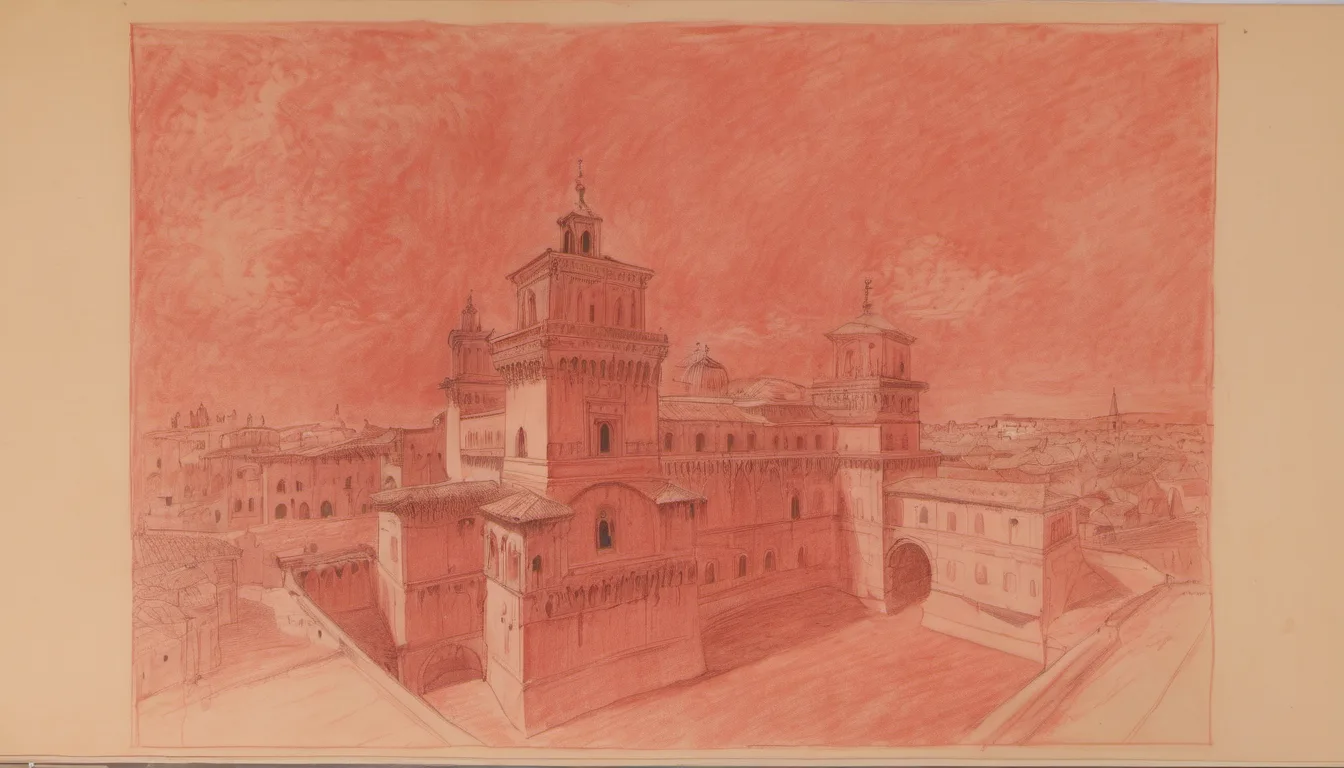
Ferrara, Italy
Ferrara does not shout. It stands quietly in the flat agricultural heart of Emilia-Romagna, a city defined not by vertical ambition but by horizontal precision. To walk here is to step into a living museum of urban planning, where the Renaissance ideal was not merely painted on canvas but built into the very streets. The city is an exercise in order, a testament to the Este family’s desire to create a perfect state within a perfect wall. There is no chaos here, only the measured cadence of history preserved in brick and stone.
The defining feature of Ferrara is its walls. Unlike other Italian cities where fortifications have long since crumbled or been repurposed, Ferrara’s Renaissance walls remain intact, enclosing the historic center in a continuous, unbroken loop. This is not a ruin to be viewed from a distance; it is a functional boundary that invites you to walk its length. The path is wide, flat, and shaded by plane trees, offering a physical connection to the city’s defensive past while providing a serene escape from modern traffic. It is a rare privilege to walk the exact perimeter of a 15th-century urban design without interruption.
Inside the walls, the city reveals its singular character. This is a place where the Gothic and Renaissance styles coexist without conflict. The Palazzo dei Diamanti, with its faceted stone exterior, stands as a bold statement of Este power and artistic patronage. Yet, it is not the only marvel. The city’s layout, with its straight avenues and geometric squares, reflects a humanist desire for harmony and control over nature. Walking through Ferrara is an exercise in appreciating this balance, where every corner offers a view of a tower, a palace, or a quiet piazza that has remained largely unchanged for centuries.
Why walk Ferrara? Because it rewards the observer who looks beyond the facade. The city is home to the Marsh Museum, a tribute to the region’s complex relationship with water and land. The surrounding valleys, once treacherous wetlands, have been tamed through centuries of reclamation efforts. This history of human intervention in the landscape is written in the city’s architecture and its surrounding countryside. To walk Ferrara is to understand the resilience of its people, who have shaped this flat, often flood-prone land into a cultural beacon. It is a city that asks you to slow down, to look at the details, and to appreciate the quiet dignity of a place that has survived wars, floods, and time itself.
Ferrara sits in the northern Italian region of Emilia-Romagna, a land of contrasts where the rolling hills of the Apennines meet the flat, fertile plains of the Po Valley. The city itself is located in a flat agricultural region, near the Valli di Comacchio lagoon wetlands. This geographical setting has shaped its history, its economy, and its architecture. Unlike the vertical cities of the north, Ferrara is defined by its horizontal expanse, a city that spreads out rather than climbing up. This flatness is not a limitation but a canvas, allowing for the kind of urban planning that was impossible in more rugged terrains. The city’s layout is a direct response to its environment, a deliberate attempt to impose order on a landscape that was once wild and unpredictable.
The history of Ferrara is deeply intertwined with the Este family, who ruled the city for centuries. Under their patronage, Ferrara became a center of Renaissance culture, rivaling Florence and Venice in artistic innovation. The Este family were not just rulers; they were artists, poets, and architects who understood the power of image and place. They commissioned buildings that were both functional and symbolic, creating a city that reflected their power and their taste. The Palazzo dei Diamanti, with its distinctive facade of 8,500 marble blocks cut into diamond shapes, is the most famous example of this patronage. But it is not an isolated monument; it is part of a larger urban scheme that includes the Castello Estense, the Cathedral, and the extensive network of streets and squares that define the city center.
The Renaissance walls of Ferrara are perhaps the city’s most significant feature. Built in the 15th and 16th centuries, these fortifications were designed to protect the city from external threats, but they also served to define the urban boundary. Unlike other Italian cities, where walls have been demolished to allow for expansion, Ferrara’s walls remain intact. They form a continuous loop around the historic center, approximately 4.5 kilometers in length. This wall is not a barrier to be crossed but a path to be walked. It offers a unique perspective on the city, allowing visitors to see the relationship between the urban core and the surrounding countryside. The wall is lined with plane trees, providing shade and a sense of continuity, making it one of the most pleasant walking routes in Italy.
Inside the walls, the city is a labyrinth of history. The streets are narrow and winding, leading to hidden courtyards and quiet squares. The architecture is a mix of Gothic and Renaissance styles, reflecting the city’s long history of cultural exchange. The Cathedral of Ferrara, with its Romanesque facade and Gothic interior, is a testament to the city’s religious significance. The San Gabriele Church, with its Renaissance frescoes, is another example of the city’s artistic heritage. But it is not just the grand monuments that make Ferrara special; it is the everyday life of the city, the cafes, the markets, and the people who inhabit these spaces. Ferrara is a city that has managed to preserve its past while adapting to the present, a balance that is rare in modern Italy.
The relationship between Ferrara and its surrounding landscape is complex. The city is located near the Valli di Comacchio, a network of lagoons and wetlands that have been a source of both wealth and danger. For centuries, the people of Ferrara have struggled to control the water, draining marshes and building canals to protect the land from flooding. This history of reclamation is documented in the Marsh Museum, which offers insights into the region’s ornithology and environmental history. The Museum of Land Reclamation (Museo della Bonifica) further details the engineering feats that have transformed the landscape. These efforts have not only made the land habitable but have also created a unique ecosystem that supports a diverse range of wildlife. The Valley of Campotto and the Valley of Argenta are part of this network, offering opportunities for nature walks and bird watching.
Ferrara’s history is also marked by conflict. The city was the site of several significant battles, including the Battle of the Argenta Gap during World War II. This battle was part of the Allied advance of Operation Roast, a critical moment in the liberation of Italy. The Gothic Line, a German defensive line, passed through the region, and Ferrara was a key strategic point. The city’s role in the war is a reminder of the fragility of peace and the resilience of its people. Today, the city honors this history through memorials and museums, ensuring that the sacrifices of the past are not forgotten. The story of Ferrara is not just one of artistic achievement but also of survival and adaptation.
The city’s cultural life is vibrant, with a strong emphasis on literature and music. Ferrara has been home to many writers and poets, including Ludovico Ariosto, whose epic poem Orlando Furioso was written here. The city’s library, one of the oldest in Italy, houses a vast collection of manuscripts and rare books. The annual Ferrara Jazz Festival attracts musicians and fans from around the world, adding a modern dimension to the city’s cultural calendar. This blend of old and new is characteristic of Ferrara, a city that respects its past while embracing the future. The presence of foreign minorities, making up 12.36% of the population as of 2023, adds to this diversity, creating a dynamic and inclusive community.
Transportation in Ferrara is straightforward, with the city well-connected to the rest of Italy. The SS16 Adriatica state highway connects Ferrara to Ravenna and other coastal cities, while the Ferrara-Rimini railroad provides rail access. The city’s compact size makes it easy to navigate on foot, with most attractions within walking distance of each other. The presence of twin towns, such as Castelnau-le-Lez in France and Plankstadt in Germany, reflects the city’s international connections and its role in the broader European community. These links foster cultural exchange and cooperation, further enriching the city’s identity.
The climate of Ferrara is temperate subcontinent, with hot, humid summers and cold, snowy winters. This climate has influenced the city’s architecture, with buildings designed to provide shelter from the elements. The wide streets and covered loggias offer protection from the sun and rain, creating comfortable public spaces. The city’s location near the Adriatic Sea gives it a slightly milder climate than the inland areas, but it is still subject to the extremes of the continental climate. The autumn is particularly beautiful, with clear skies and crisp air, making it an ideal time for walking and exploring the city’s many treasures.
In conclusion, Ferrara is a city that rewards the patient observer. It is not a place of flashy displays or loud noises, but of quiet dignity and historical depth. The intact Renaissance walls, the Este family’s palaces, and the surrounding wetlands create a unique environment that is both beautiful and meaningful. To walk Ferrara is to walk through time, to see the layers of history stacked upon each other. It is a city that has survived wars, floods, and time, and continues to thrive as a center of culture and art. For those who seek a deeper understanding of Italy, Ferrara offers a rare and valuable perspective, one that is grounded in the land and the people who have shaped it.
Do not miss around Ferrara
3 placesEvery place below is a ten-to-fifteen minute walk from the last.