Casa di Ludovico Ariosto
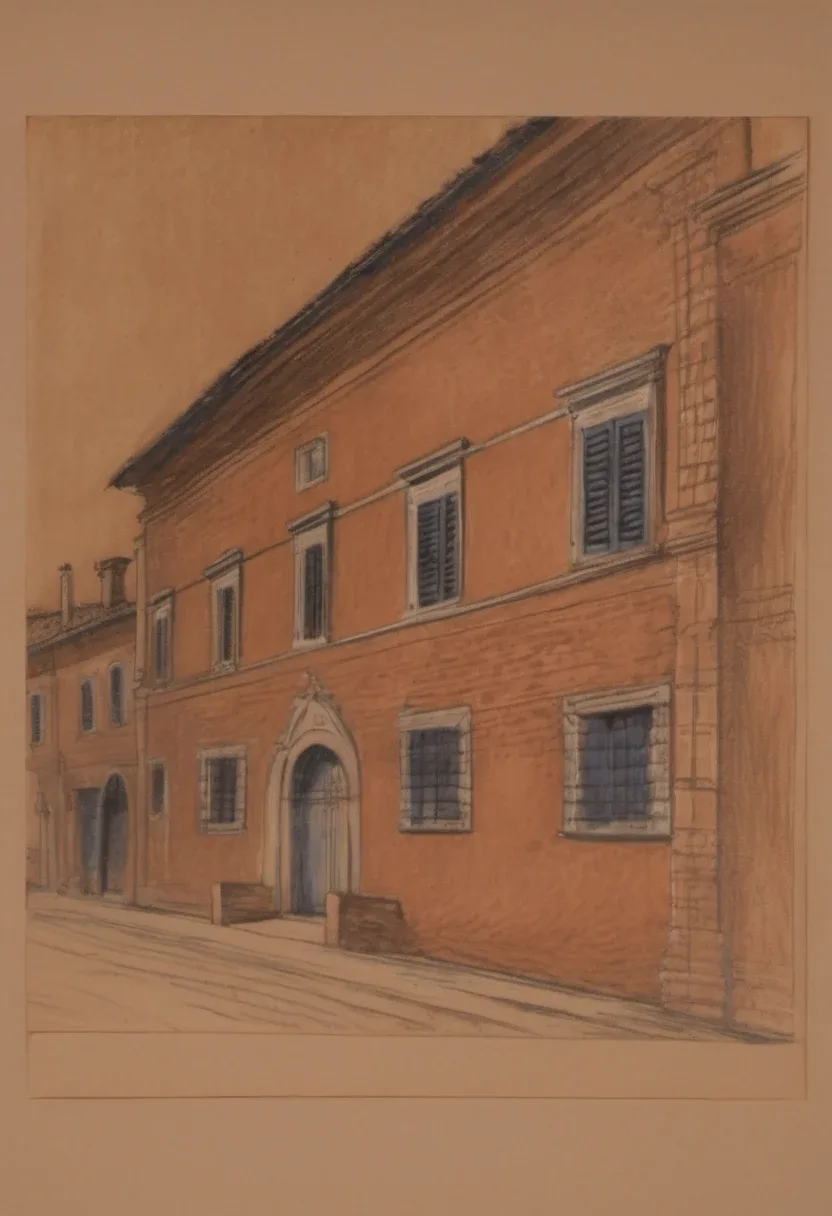
You come to Ferrara expecting a poet's rooms. The source sends you to Milan. It is the life of Ludovico Maria Sforza, the fourth son of Francesco Sforza and Bianca Maria Visconti, who would become Duke of Milan and be known as Ludovico il Moro, 'the Moor.' No Casa di Ludovico Ariosto appears in these pages; no house, no via, no plaque.
Ferrara does appear once. In 1479, after Sforza and his brother were declared rebels, he marched on Milan with an army. He took the citadel of Tortona and moved through Sale, Castelnuovo Scrivia, Bassignana and Valenza. The duchess Bona and her councillor Cicco Simonetta sent Ercole d'Este, Duke of Ferrara, to stop the rebels. That is the whole Ferrara connection in the source: a duke sent against a Milanese insurgent.
The rest is a Renaissance lesson in succession. Ludovico was not meant to rule, but his mother encouraged a broad education: Greek, Latin, theology, painting, sculpture, government, and physical exercise. Cicco Simonetta called him the most well-versed and rapid learner among Francesco's children. He survived exile, opposed Bona's regency, and took over from his nephew Gian Galeazzo, whom some say he poisoned. He was a patron of artists and writers, and his Milan court became one of the most important in Europe. When his wife Beatrice died, he went into depression, and the court fell from jubilance to despair.
Then the French came. Louis XII imprisoned Ludovico, and he died in France in 1508. If you visit a house in Ferrara named for Ariosto, know that the source does not corroborate it. The documented Ludovico here is Sforza, and his Ferrara link is a single line of opposition.
The name on the house says Ariosto. The supplied text says otherwise. This is the biography of Ludovico Sforza, the Duke of Milan known as Ludovico il Moro, and it never mentions a Casa di Ludovico Ariosto in Ferrara. What it does mention is a Ferrara duke, and that mention is worth a pause.
Ludovico was born in Milan in 1452, the fourth son of Francesco Sforza and Bianca Maria Visconti. No one expected him to rule. Yet his mother wanted him educated, and he received lessons in Greek, Latin, theology, painting, sculpture, and statecraft. He also learned fencing, hunting, wrestling, horseback riding, jumping, dancing, and ropeball. At seven he welcomed Pope Pius II to Mantua; at eleven he gave a Latin oration to his father. Childhood was spent between the Broletto Vecchio in Milan and the Visconti Castle in Pavia.
The family wheel turned in 1466. Francesco died, and the title went to Galeazzo Maria, the eldest. Ludovico became Count of Mortara and a useful diplomat. He travelled to Genoa, Venice, Florence, Rome, and Turin. In 1471 Galeazzo Maria's will named Ludovico as heir should the duke die without grandchildren. But in 1476 Ludovico and his brother Tristan were sent to France in a sort of disguised exile. Bona, the duke's wife, accused them of plotting assassination, then denied it. The official version was that the brothers asked permission to go and see the world.
Then Galeazzo Maria was assassinated in December 1476. His son Gian Galeazzo was seven. Ludovico returned from France and tried to oppose the regency of Bona and the councillor Cicco Simonetta. The attempt failed. Ludovico went into exile in Pisa; his brother Ottaviano drowned trying to cross the Adda.
By 1479 Ludovico was back with an army. He and his brother Sforza Maria were declared rebels and enemies of the duchy. They looted Pisa, then moved toward Milan. Ludovico convinced the castellan of Tortona to join him and took the citadel. He marched through Sale, Castelnuovo Scrivia, Bassignana and Valenza. Bona and Simonetta sent Ercole d'Este, Duke of Ferrara, to stop the rebels. This is the only Ferrara in the source: not a poet's study, but an opposing duke's battlefield.
The end of that campaign turned on a lover. Bona allowed herself to be persuaded by her lover, Antonio Tassino, probably in league with Ludovico, to forgive her brother-in-law. On 7 September Ludovico entered the castle of Milan. Simonetta resisted and reportedly told Bona, 'I will lose my head and you, in time, will lose the state.' The Ghibelline nobility wanted Simonetta dead. Ludovico judged it unnecessary to condemn a man old and sick with gout.
Ludovico's rule followed the pattern of the age. He was considered enlightened, generous, and peaceful; he was also considered fearful and fickle. He called the French into Italy against Naples, then could not face the danger when they turned on him. His wife Beatrice saved him once. After she died, he fell into depression. He finally succumbed to Louis XII, who imprisoned him in France. He died there in 1508. The source's last detail about his Milan court is the fall from jubilance to despair.
So what do you do with a Casa di Ludovico Ariosto? Treat the Ariosto identification as legend. The supplied text is not about that house. It is about a different Ludovico, and his Ferrara connection is one line of opposition. If the house is real, let the building speak; but the source cannot vouch for it.