Basilica di San Frediano
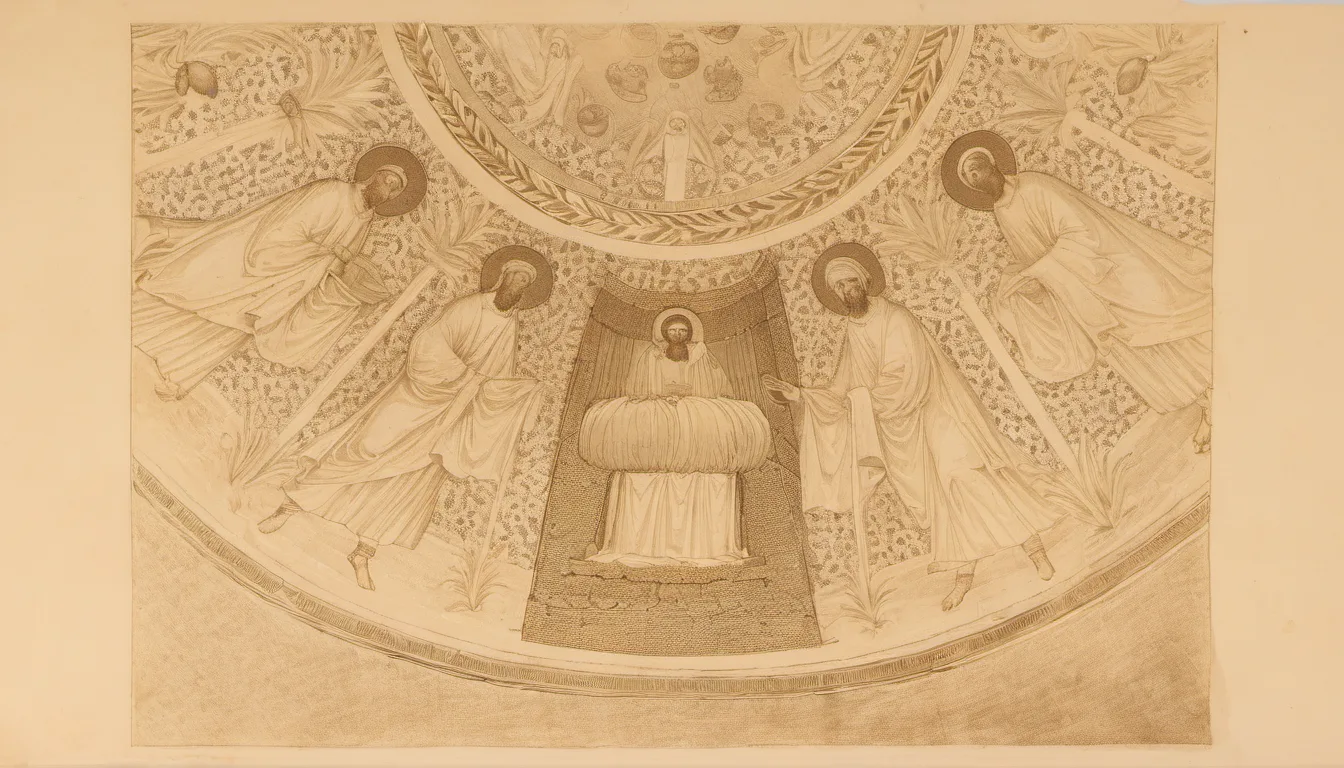
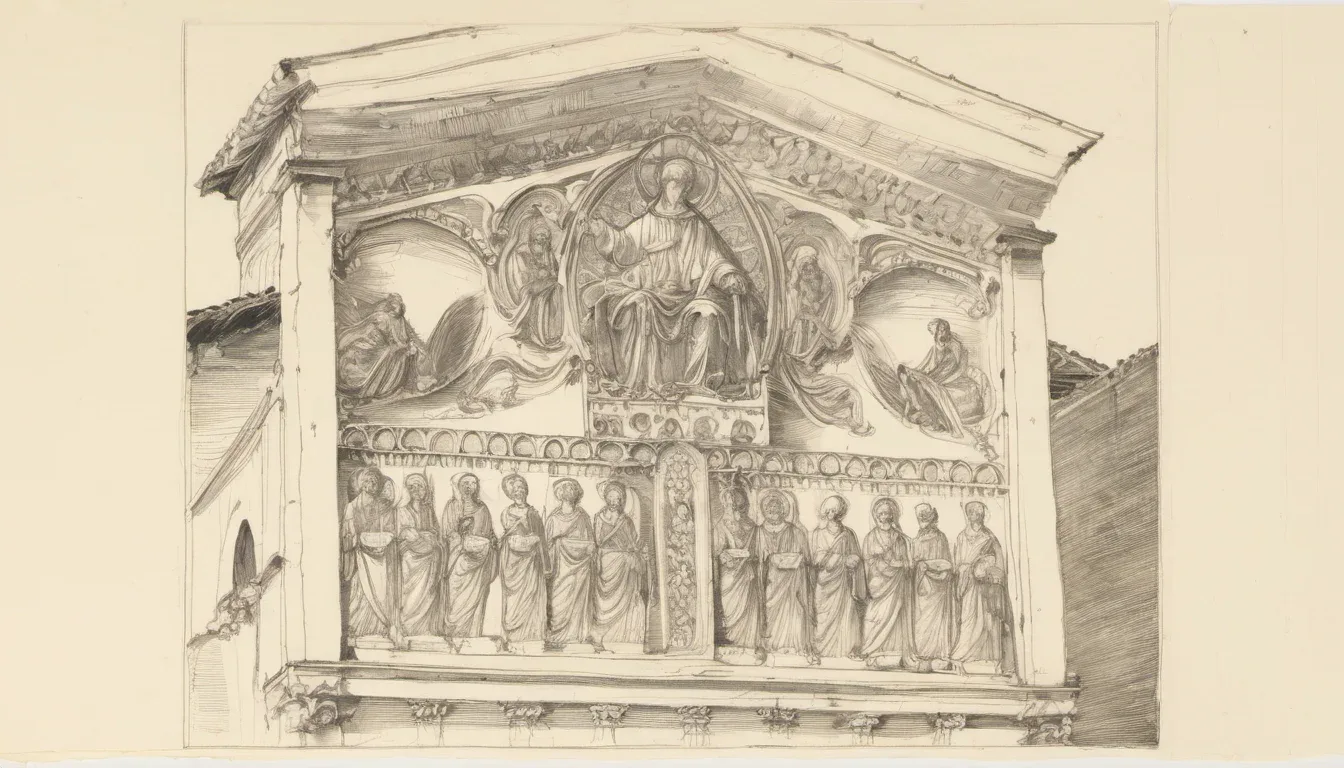
That wall of gold above you is mosaic, not paint — Christ rising into heaven, ringed by twelve apostles, laid at the end of the thirteenth century by the workshop of Berlinghiero Berlinghieri. Look closer: this facade faces east, almost unheard of for a Romanesque church, so at dawn the whole thing catches fire in the sunrise.
Frediano was an Irish-born bishop who took over this see in the sixth century and, so the story goes, stopped Lucca's floods by dragging a garden rake along the riverbank and ordering the Serchio to follow it. The river obeyed. Whether or not you believe that, the church he founded outgrew three rebuilds and got its current form between 1112 and 1147.
Step inside for the real surprise: a marble baptismal font, carved by three different sculptors in three different styles — one signed his name right into the stone, Roberto. Moses parts the Red Sea on one panel; the months of the year march around another. It looks like a committee argued and nobody won.
Then there's Zita. A servant girl who spent forty-eight years working for one wealthy family, sharing her own bread with the poor. Caught red-handed once, so the story goes, she opened her apron to show her accuser nothing but flowers. She's still here, in a glass case in the right-hand chapel, her body found undecayed three centuries after she died. Pilgrims still bring bread and flowers every April.
Gold on the outside, an incorrupt saint on the inside — a church that has spent eight hundred years being quietly impossible to look away from.
Look up at that facade for a moment. A wall of solid gold mosaic glows above the pale stone arcades below — Christ ascending into heaven, flanked by his twelve apostles, laid at the very end of the thirteenth century by the workshop of the Lucca painter Berlinghiero Berlinghieri. In all of Tuscany, only one other church wears anything like it: San Miniato al Monte, across the hills in Florence. Notice, too, which way you're facing. Churches almost always put the altar to the east and the entrance to the west. San Frediano does the reverse — the twelfth-century rebuilders ran out of room against the city walls — so this mosaic faces the sunrise, and at dawn it genuinely catches fire.
The church takes its name from Frediano, an Irish-born cleric who became bishop of Lucca in the sixth century, when the Lombards were carving up Italy and the old Roman walls were falling apart. He rebuilt them. He also, so the legend goes, stopped the Serchio river from flooding the town by dragging a garden rake along its bank and ordering the water to follow the furrow — and it obeyed. Historians have since traced several dry, abandoned riverbeds nearby that hint the Serchio really did shift course around that time, whatever role any bishop's rake actually played. Frediano was buried on this spot, in a church he'd founded for Saint Vincent of Zaragoza, and Lucca simply started calling it his instead.
What stands here now dates mostly from 1112 to 1147, when a wealthy, self-governing Lucca rebuilt the basilica in the severe, banded Romanesque style you'll see across town. Inside, three naves march past columns scavenged from Roman buildings, their capitals a mismatched, secondhand set. Near the entrance sits the church's other great oddity: a marble baptismal font carved not by one sculptor but by three, working in three distinct hands. One, a Tuscan named Roberto, carved his own signature into the stone. Between them they left the parting of the Red Sea, the months of the year as small labouring figures, and six solemn prophets — a committee project that never quite agrees with itself, and is more interesting for it.
A stranger story hides in the chapel Amico Aspertini frescoed in 1508. Aspertini, a restless, eccentric painter from Bologna, covered the walls with the legend of the Volto Santo, the carved crucifix Lucca still venerates as a true likeness of Christ's face. The tale holds that the image drifted to Italy in an unmanned boat, was hauled here by oxen, and was set down for the night in this very church. By morning it had vanished, turning up instead on the site of what is now Lucca's cathedral — a sign the city took seriously enough to build the Duomo there. Aspertini, never one for humility, painted his own face into the crowd watching Saint Ambrose baptise Saint Augustine on the opposite wall.
The chapel to the right holds the reason most visitors actually come. Zita entered service at twelve, in the household of the Fatinelli family, wool and silk merchants, and stayed forty-eight years, sharing her wages and her master's bread with anyone hungrier than she was. Caught once with her apron full of stolen loaves, so the story goes, she opened it to reveal nothing but flowers. She died in 1272. When the city exhumed her in 1580, three centuries later, her body was found entirely undecayed. She lies there still, in a glass case on a bed of brocade, and every twenty-seventh of April, Lucca still brings her bread and flowers.
Before you leave, find the Trenta chapel off the left aisle, where the Sienese sculptor Jacopo della Quercia carved a marble altarpiece and, underfoot, the tomb slab of the merchant who paid for it — easy to walk straight over without noticing. An eastward-facing gold facade, a font carved by committee, a saint who never decayed, a crucifix that chose its own church. Look at that mosaic once more before you go — it will still be catching the light.