Fortezza di San Leo
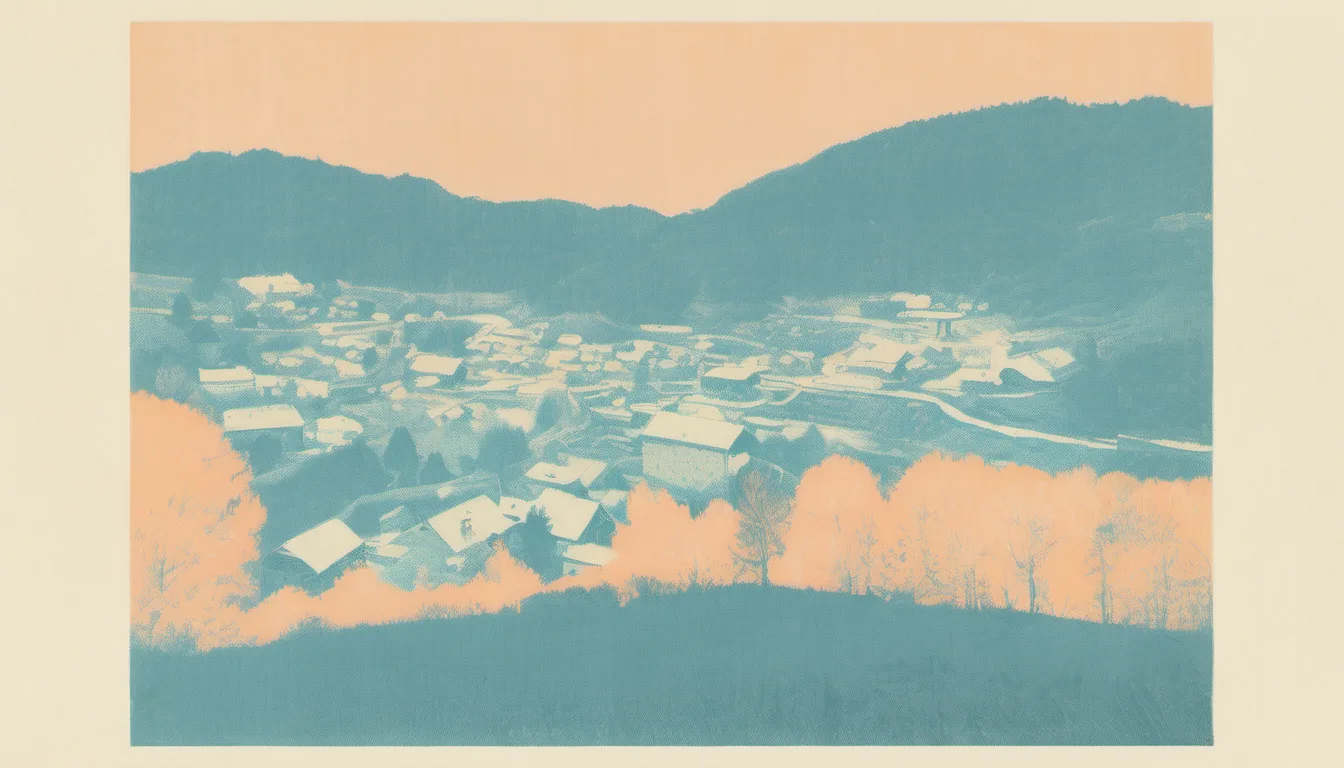
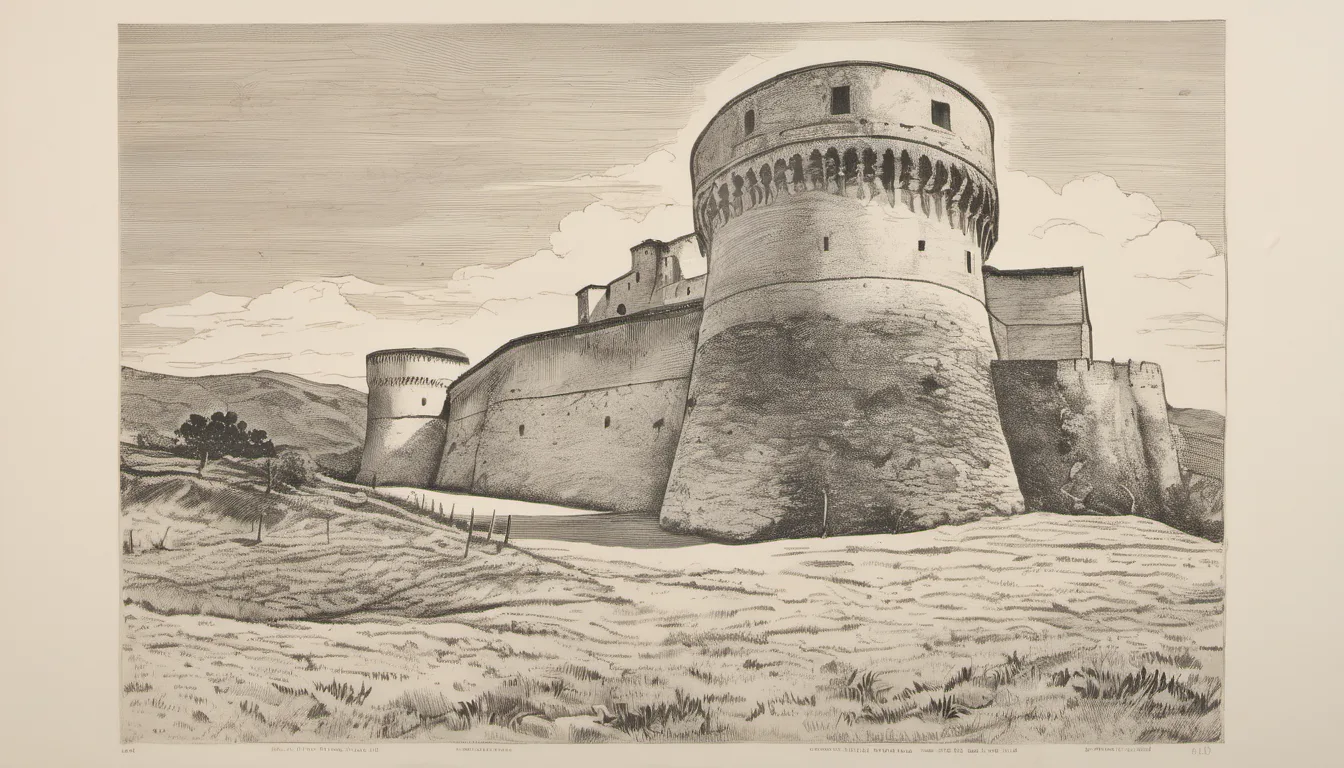
Seen from the Romagna plain, San Leo does not look like a town so much as a ship run aground on a cliff of bare rock. The bell tower stands in for a mast; a scatter of rooftops trails behind like a wake. At the prow, where the rock falls away sheer on every side, sits the fortress - a shield of stone so smooth and so high that for centuries it needed almost no defending. The mountain did the work. Everything built on top of it was, in a sense, an afterthought.
People have fortified this outcrop for a very long time. The Romans built the first works here; the Middle Ages turned it into a prize fought over in turn by Byzantines, Goths, Franks and Lombards. Between 961 and 963, Berengar II, the last king of the Lombard Kingdom of Italy, was besieged here by Otto I of Saxony - a siege that outlasted two winters. Around the mid-eleventh century the Counts of Montecopiolo arrived and took the name of the place for their own: Montefeltro, the old name for San Leo, became their title and, eventually, the name of the whole surrounding region.
Ownership kept changing hands. The Malatesta seized the fortress in the late fourteenth century, but the Montefeltro kept retaking it, and in 1441 a young Federico da Montefeltro scaled its walls himself. He never let it go again. Facing new kinds of artillery warfare, Federico had the whole fortress rebuilt by the Sienese military engineer Francesco di Giorgio Martini, who reworked it for cross-fire and counter-attack: guns on every side, and approach routes covered by outposts so that no attacker could get close without being seen and shot.
The fortress kept changing hands after Federico too - to Cesare Borgia in 1502 with Pope Alexander VI's backing, back to the Montefeltro the following year, then to Florentine troops backed by Pope Leo X in 1516. From 1527 the Della Rovere held it until 1631, when it passed to the Papal State, and it was under this ownership that San Leo turned into a prison. Its most famous inmate was the freemason and self-styled alchemist Alessandro Cagliostro, who died here. Felice Orsini was held here too. The prison closed in 1906, and for eight years after that the fortress housed a disciplinary military company.
Today the rock keeps its old outline but not its old purpose: the fortress is a museum, with an armory gallery inside the walls that once held political prisoners. San Leo itself was carved out of the Marche and folded into Emilia-Romagna only in 2009, after a local referendum. And if the silhouette looks oddly familiar from a certain 1991 action-comedy, that's because Hollywood borrowed it too - as the castle of a fictional Leonardo da Vinci in Hudson Hawk.
Seen from the Romagna plain, San Leo does not look like a town so much as a ship run aground on a cliff of bare rock. The bell tower doubles as a mast; a scatter of rooftops trails behind like a wake. This stretch of the Valmarecchia is dotted with rocky peaks that rise steeply from the surrounding land, and on nearly every one, the ruins of some castle or fort recall a restless, contested past. San Leo's fortress, at the prow of its own outcrop, is the grandest survivor of that pattern - a shield of stone so high and smooth that the mountain itself has always been most of the defense.
How old the site is remains genuinely unclear. Sixth-century chronicler Procopius of Caesarea, writing about the Gothic War, already refers to the settlement as castrum Monteferetron. Roman-era fragments have turned up here too, reused in medieval walls, though too scattered to say much about what stood on the rock in antiquity. Some historians go further and read the outcrop as a sacred site since long before Rome, pointing to one or two basins carved into the rock near the bell tower of San Leo's cathedral - sometimes described as sacrificial basins, though that reading is far from settled.
Even the place's name is a small mystery. Its Latin form, Mons Feretri, is linked by some scholars to a temple of Jupiter Feretrius, and by others to an older Umbrian root. A more prosaic theory holds that the hill was simply named for its shape, recalling a fercolo, the ancient bier used to carry the dead - higher at one end than the other, as San Leo's ridge is. The name softened into "Feltro" only in modern times: as late as 1477 Federico da Montefeltro still signed himself Montisferetri Comes. From the ninth or tenth century, the borgo took the name San Leo from a hermit, Leo, later canonized - a Dalmatian companion of San Marino, whose republic is visible from the ramparts today.
The site's military value made it a fought-over prize through the early Middle Ages. Byzantines, Goths, Franks and Lombards all held it in turn. Between 961 and 963, Berengar II - the last king of the Lombard Kingdom of Italy - was besieged here by Otto I of Saxony, a siege that stretched across two winters. Around the mid-eleventh century the Counts of Montecopiolo arrived and took the name of their new territory for themselves: Montefeltro, San Leo's old name, which would go on to name the entire surrounding region.
San Leo also saw quieter, more literary traffic. Francis of Assisi is recorded passing through in 1213, and Dante in 1306.
Ownership of the fortress itself kept turning over. The Malatesta captured it in the second half of the fourteenth century, but the Montefeltro kept retaking it, and in 1441 a young Federico da Montefeltro scaled the walls himself and made the fortress his for good. Facing a new generation of artillery warfare, he had it entirely rebuilt by the Sienese military engineer Francesco di Giorgio Martini, who reworked it for cross-fire and counter-attack, arming every side and shielding the access points behind outposts so no one could approach unseen. What stands today still shows two distinct builds side by side: an older keep with square turrets and a Gothic entrance, and a newer ring of round towers joined by a massive corbeled wall - the two enclosing a central yard known as the Place d'Armes.
There's a stranger claim attached to Federico's memory here. A study begun in 2019 argues that the moles on his face in Piero della Francesca's famous diptych portrait, when mapped onto the Montefeltro landscape, line up precisely with Urbino, San Leo, Pennabilli and the Carpegna pass - the places that shaped his life. One mole, by this reading, stands for San Leo itself: the fortress Federico took as a young man, against odds everyone at the time considered impossible. It's an evocative theory, and an unverified one.
Power kept moving through San Leo after Federico. Cesare Borgia took the fortress in 1502 with Pope Alexander VI's backing; it returned to Guidobaldo da Montefeltro the following year; Florentine troops backed by Pope Leo X seized it again in 1516. From 1527 the Della Rovere held San Leo until 1631, when the territory passed to the Papal State. It was the Della Rovere years that also produced the Palazzo Mediceo in the town below, built 1517-1523 for the governor of the Florentine republic - its facade still carved with the Medici lily and, alongside it, the arms of the Della Rovere pope Julius II.
Under papal ownership, the fortress became a prison, and it's this chapter that gives San Leo its darkest fame. Felice Orsini was held here; so was the freemason and self-declared alchemist Alessandro Cagliostro, who died within these walls - the fact for which the fortress is best known today. The prison closed in 1906. For eight years after that, until 1914, the fortress instead housed a military disciplinary company, before settling into its current, quieter role.
San Leo's own borders shifted more recently still. Administratively part of the Marche until 15 August 2009, the town was detached along with six neighboring Valmarecchia municipalities and folded into Emilia-Romagna, following a referendum held in December 2006. Umberto Eco, an honorary citizen, called it simply "the most beautiful town in Italy" - a claim the fortress, seen from the plain below, does a great deal to support.
Today the fortress holds a museum and an armory gallery, and the view from its walls still takes in San Marino and the Marecchia river below. It has also had one improbable second life on screen: in 1991 its silhouette played the fictional castle of Leonardo da Vinci in the film Hudson Hawk - a role that asks nothing of the rock it wasn't already doing on its own.