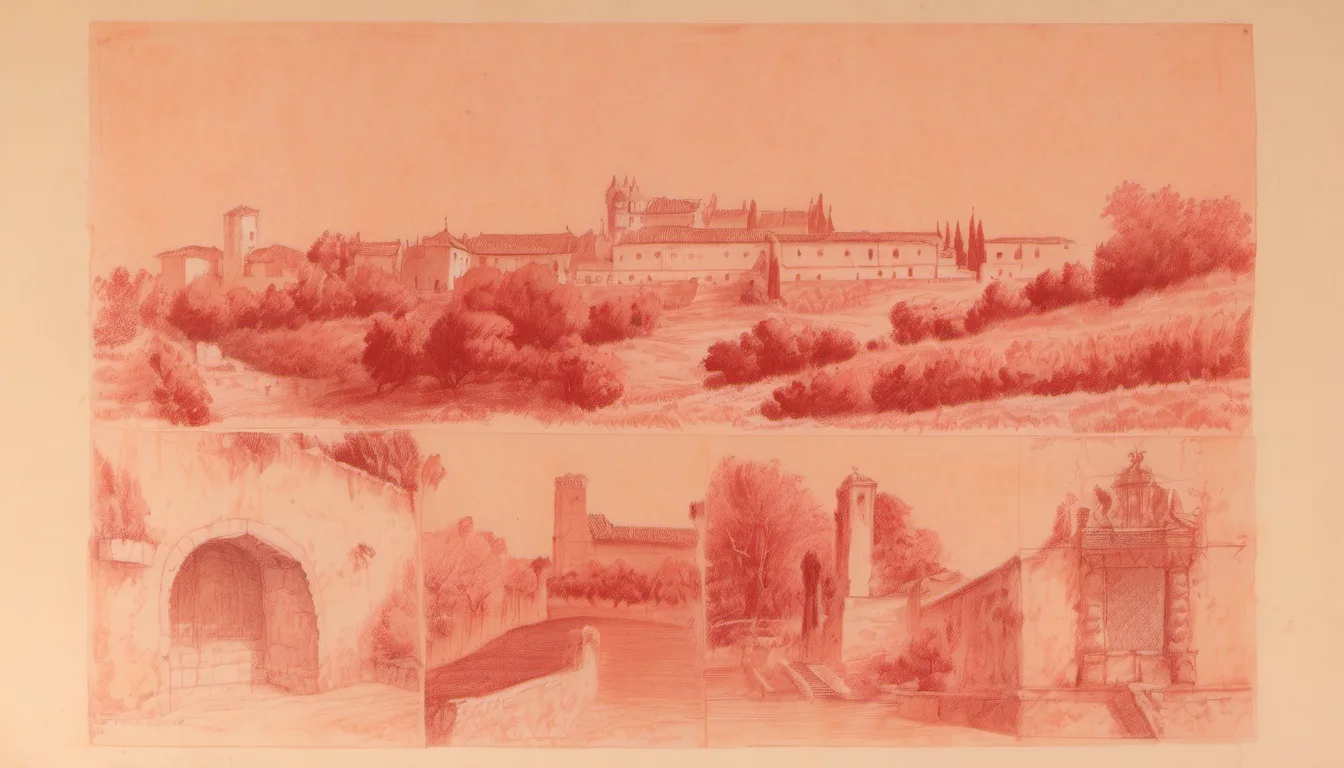
Tomar, Portugal
Tomar does not shout; it endures. Situated in the Santarém District, this town on the banks of the Rio Nabão is defined by a singular architectural gravity: the Convent of Christ. It is not merely a monument but the physical manifestation of Portugal’s founding myths, a place where faith, warfare, and exploration intersected in stone. To walk here is to trace the arc of a nation from its medieval struggles to its age of discovery, all within a compact, walkable historic center.
The city’s identity is anchored by the fortress-church that rises above the river. Originally granted to the Knights Templar by King Afonso Henriques in the 12th century, the site evolved through the suppression of the order and the creation of the Order of Christ. This transition was not a loss of continuity but a redirection of purpose. The red cross on white sails that guided Portuguese caravels was born here, under the guidance of Prince Henry the Navigator and King Manuel I. The architecture reflects this duality: the Romanesque rotunda of the Templars stands alongside the Manueline extravagance of the later expansions.
Walking through Tomar rewards the observer with layers of history that are visible in the street plan and the buildings themselves. The narrow streets of the historic center, lined with well-preserved houses and flowered balconies, lead you past the Synagogue, the Church of São João Baptista, and the Renaissance masterpiece of Nossa Senhora da Conceição. Each structure tells a fragment of the story of tolerance, conflict, and artistic patronage that defined the region. The city feels lived-in, not museumified, with a rhythm that respects its past while functioning as a modern community.
The city’s singular quality lies in its ability to hold multiple narratives simultaneously. It is a place where the Inquisition’s shadow, the Spanish occupation of 1580, and the quiet resilience of local traditions coexist. The recent restoration of the convent complex has returned the architecture to its original forms, allowing visitors to see the full scope of the engineering and artistic ambition that once drove the Portuguese state. Tomar is for those who seek to understand how power is built, lost, and rebuilt in stone.
Tomar is a city that demands to be read slowly. Located in the Santarém District within the Centro region, it sits on the banks of the Rio Nabão, a geographical position that has made it a strategic and spiritual crossroads for centuries. The town’s population of around 43,000 lives in the shadow of a monumental presence: the Convent of Christ. This is not a passive backdrop but an active participant in the city’s daily life, a fortress-monastery that dominates the landscape and the collective memory of its inhabitants. To walk through Tomar is to engage with a narrative of power, faith, and survival that spans nearly nine centuries.
The story begins in the 12th century, under the reign of Afonso Henriques, the first King of Portugal. After reconquering the area from the Muslims, the king granted the land to the Knights Templar as a reward for their support in the Reconquista. The Templar Grand Master, Gualdim Pais, began the construction of a church and, in 1162, a fortress on a hill overlooking the river. This fortress withstood an Almohad attack in 1190, proving its military significance. Over time, the structure expanded, evolving from a simple military stronghold into the complex we see today. The Romanesque rotunda of the Templar church, modeled after the Basilica of the Holy Sepulchre in Jerusalem, remains the spiritual core of the site, a testament to the order’s origins and their connection to the Holy Land.
The political landscape shifted dramatically in 1312 when Pope Clement V suppressed the Knights Templar. Rather than let the order’s wealth and influence dissipate, King Dinis founded the Order of Christ in 1318, transferring the Templar assets to this new entity. The order’s seat moved from Castro Marim to Tomar in 1356, cementing the city’s importance. The Order of Christ, closely tied to the Portuguese crown, became a driving force in Portuguese history. From 1418 to 1460, it was governed by Prince Henry the Navigator, whose patronage of exploration was funded by the order’s resources. The red cross on a white field, the symbol of the Order, was emblazoned on the sails of the caravels that charted new sea routes, linking Tomar directly to the Age of Discovery.
King Manuel I, who ruled from 1492 to 1521, further enriched the convent with his personal legacy. His reign saw the addition of the Manueline style, a uniquely Portuguese architectural expression that celebrates maritime themes and royal power. The great rectangular nave added to the Templar rotunda during this period reflects this opulence. The church’s dome and the intricate stonework are not merely decorative; they are political statements, asserting Portugal’s global reach and divine favor. The convent became a symbol of national identity, a place where the spiritual and the imperial converged. This era marked the height of the convent’s influence, embedding it deeply into the fabric of Portuguese statecraft.
However, the 16th century also brought decline. King João III, who reigned from 1521 to 1557, transformed the Order of Christ into a simple religious congregation, stripping it of its political and military power. He also instituted the Inquisition in Portugal, shifting the focus of religious authority. The convent’s role diminished, and its structures were neglected over the following centuries. The political importance of Tomar waned as the center of power shifted elsewhere. It was not until recent restoration efforts that the complex was returned to its original forms, allowing modern visitors to appreciate the full scope of its architectural and historical significance.
The year 1580 marked a pivotal moment in Tomar’s history. During a period of national decline, Philip II of Spain was crowned King of Portugal at the door of the Church of the Convent of Christ. This event symbolized the loss of Portuguese sovereignty and the subjugation of the country under Spanish rule. The convent, once a symbol of independence, became the stage for the imposition of foreign rule. This period of political uncertainty affected the city’s development, and the convent’s maintenance suffered. The legacy of this era is a reminder of the fragility of power and the resilience of the institutions that survive it.
Beyond the convent, the historic center of Tomar offers a dense tapestry of architectural styles and historical periods. The narrow streets, lined with well-preserved old houses and flowered balconies, create an intimate atmosphere. The Church of São João Baptista, a 15th-century building in the Manueline style, stands as a testament to the city’s artistic heritage. The Church of Nossa Senhora da Conceição, built in the first half of the 16th century, is one of the finest examples of Portuguese Renaissance architecture. These buildings, along with the Synagogue, form a narrative of coexistence and conflict, reflecting the complex social history of the region.
The Synagogue, constructed in the mid-16th century, is a poignant reminder of the Jewish community that once thrived in Tomar. It was in use for only 50 years before the Inquisition forced the expulsion or conversion of the Jewish population. Today, it houses a museum dedicated to Hebrew inscriptions and artifacts, preserving the memory of a community that was erased from public life but not from history. The Church of Santa Iria, also from the 16th century, is said to be built on the site of the martyrdom of Saint Irene of Portugal, adding another layer of religious significance to the city’s landscape.
Nature and industry also play a role in Tomar’s identity. The Muchãu Park, located on an islet in the Rio Nabão, features an ancient water mill with wooden paddles, a relic of the city’s industrial past. The Acueduto dos Pegoes, an arcaded aqueduct built in the late 16th century by the Bolognese architect Filippo Terzi, demonstrates the engineering prowess of the period. Terzi, who worked extensively in Portugal, designed this structure to overcome a valley, ensuring a steady water supply to the city. These elements highlight the practical aspects of urban life that supported the grandeur of the religious and royal institutions.
Cultural traditions in Tomar are vibrant and deeply rooted. The annual festival in July, lasting four days, combines ancient harvest traditions with religious processions. Women parade through the streets balancing tabulterios—artistic combinations of bread and flowers—on their heads. This tradition, dating back to the 14th century, reflects the community’s connection to the land and its faith. The festival draws large crowds, reinforcing the social bonds that hold the city together. It is a living expression of the history that surrounds it, a celebration of continuity in a changing world.
Tomar’s significance extends beyond its physical boundaries. It is home to União de Tomar, a football club founded in 1914, which holds the distinction of being the only club from the Santarém District to have competed in the Primeira Liga. The club’s history, with its promotions and relegations, mirrors the city’s own fluctuations in prominence. The club’s presence adds a contemporary layer to the city’s identity, connecting the past with the present through the universal language of sport. Tomar is a city that respects its history while engaging with the modern world, offering a unique perspective on Portuguese heritage.
Do not miss around Tomar
1 placeEvery place below is a ten-to-fifteen minute walk from the last.