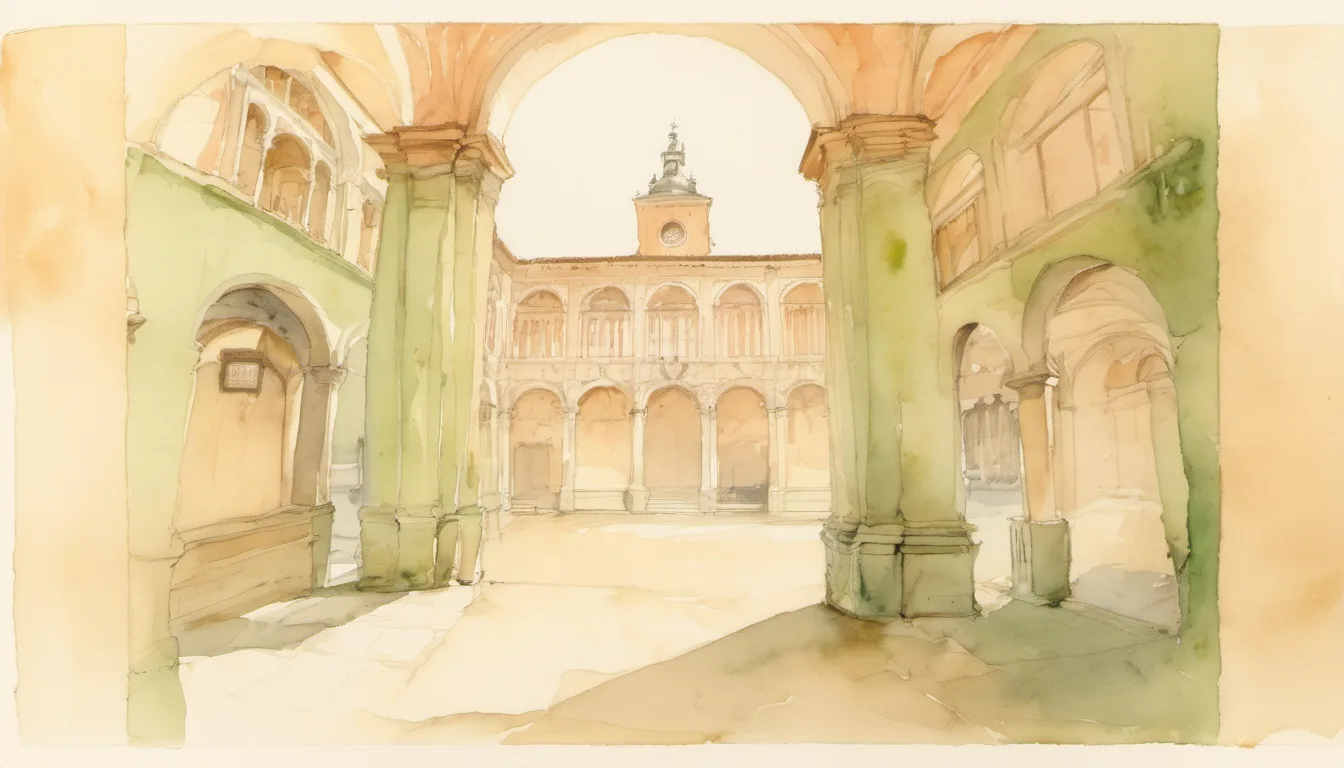
Bologna, Italy
Bologna does not announce itself with grand piazzas or sweeping vistas. It reveals itself through the rhythm of footsteps on stone, sheltered by the world’s longest covered walkways. These porticoes, recognized by UNESCO in 2021, are not merely architectural features; they are the city’s social infrastructure, creating a continuous, shaded corridor that invites you to linger, to observe, and to breathe. This is a city built for the pedestrian, where history is not behind glass but underfoot.
At its heart lies the University of Bologna, founded in 1088, making it the oldest in continuous operation. Walking here is an exercise in academic gravity. You pass the Archiginnasio, the ancient seat of learning, and feel the weight of centuries of scholars, from Dante to Petrarch, who once walked these same streets. The city’s identity is inextricably linked to this intellectual heritage. It is a place where ideas have shape, where the study of law and medicine has been a civic religion for nine hundred years.
Yet Bologna is not a museum. It is a living, breathing hub of Emilia-Romagna, a region defined by its agricultural richness and industrial precision. The city’s famous towers, remnants of a medieval era when families competed for height and power, pierce the skyline like fingers pointing to the sky. They are uneven, leaning, and deeply human. They remind you that Bologna was once a free commune, a place of fierce autonomy and political intrigue, far removed from the quiet order it presents today.
To walk Bologna is to understand the concept of 'il piacere di vivere'—the pleasure of living. It is found in the quiet corners of the Quadrilatero, where the air smells of aged cheese and cured meats, and in the silence of the basilicas that dot the urban fabric. The city rewards those who look closely, who notice the intricate stonework, the hidden courtyards, and the way light falls on terracotta roofs. It is a city that demands to be experienced, not just seen, offering a depth of culture and comfort that is rare in modern Europe.
Bologna, known in its native tongue as Bulåggna, stands as the capital of Emilia-Romagna, a city where history is not a relic but a living layer. With nearly 400,000 inhabitants and a metropolitan area exceeding one million, it is Italy’s seventh-largest city, yet it retains an intimate scale. Its story begins in the mists of antiquity, when the Etruscans established Felsina here, followed by the Celts, who named it Bona. By 196 BCE, the Romans had transformed it into Bonōnia, a colony that would become a cornerstone of imperial administration. Yet, it was in the Middle Ages that Bologna truly found its voice, emerging as a free municipality and later a signoria, one of the largest and most influential cities in Europe.
The city’s physical landscape is defined by its porticoes, a network of covered walkways that earned UNESCO World Heritage status in 2021. These are not mere shelters from rain; they are the city’s social lungs, allowing commerce and conversation to continue regardless of weather. They create a unique urban rhythm, a continuous line that connects the city’s heart to its periphery. Walking beneath them is to walk through a timeline of architectural evolution, from medieval stone arches to Renaissance elegance. They are a testament to a civic pride that valued public space and communal comfort, a philosophy that persists today.
Dominating the skyline are the towers, remnants of a turbulent past. In the 12th and 13th centuries, Bologna’s powerful families, the Pepoli, the Manfredi, and others, competed to build the tallest structures, symbols of their wealth and power. Today, only a handful remain, leaning slightly, weathered by time. They are a stark reminder of the city’s medieval autonomy, a period when Bologna was a republic, fiercely independent and often at war with its neighbors. The towers are not just monuments; they are the bones of a city that once defied emperors and popes.
The University of Bologna, founded in 1088, is the city’s intellectual anchor. It is the oldest university in continuous operation, a distinction that shapes every aspect of urban life. The university began as a center for the study of Roman law, led by scholars like Irnerius and his students, the Four Doctors. It attracted the greatest minds of the age, including Dante, Boccaccio, and Petrarch. The medical school was equally renowned, drawing students from across Europe. This academic heritage is visible in the Archiginnasio, the university’s historic headquarters, and in the countless libraries and study halls that dot the city.
Bologna’s political history is a saga of struggle and resilience. After the death of Matilda of Tuscany in 1115, the city secured significant autonomy from Emperor Henry V. It joined the Lombard League, defeating Frederick Barbarossa at the Battle of Legnano in 1176, and secured its independence at the Peace of Constance in 1183. This era of freedom allowed Bologna to flourish as a commercial hub, connected to the wider world by a system of canals that brought goods and ideas. The city’s wealth grew, and with it, its cultural and artistic output.
The 13th and 14th centuries brought political instability, with powerful families fighting for control. The Black Death in 1348 halved the population, but the city recovered, becoming a signoria under Taddeo Pepoli in 1334. The Bentivoglio family later ruled, their power challenged by the Papacy. In 1506, Pope Julius II, having deposed Giovanni II Bentivoglio, entered Bologna triumphantly, marking the beginning of nearly three centuries of Papal rule. This period was often one of decline, but it also saw the crowning of Emperor Charles V in 1530, the last such coronation, and the flourishing of the Bolognese School of painting.
Art and religion are woven into the city’s fabric. Bologna boasts ninety-six convents, more than any other Italian city, a testament to its religious devotion. The Bolognese School, including masters like Annibale Carracci, Guercino, and Domenichino, revolutionized European art during this period. Their works, filled with drama and emotion, can be found in churches and palaces throughout the city. The city’s churches, from the Basilica of Saint Dominic to the Sanctuary of the Madonna di San Luca, are not just places of worship but repositories of artistic genius, each telling a story of faith and patronage.
The city’s culinary identity is as rich as its history. Bologna is the heart of Emilia-Romagna, a region known for its agricultural abundance. The city’s markets, particularly in the Quadrilatero, are a sensory overload of colors and smells. Here, you find the finest Parmigiano Reggiano, Prosciutto di Parma, and handmade pasta. The city’s cuisine is not just food; it is a cultural expression, a reflection of the land’s fertility and the people’s skill. To eat in Bologna is to participate in a tradition that has been refined over centuries, a tradition that values quality, simplicity, and pleasure.
Modern Bologna balances its historic past with a forward-looking vision. It is a hub of industry, finance, and trade, home to one of Europe’s largest permanent trade fairs. The city has been named the best in Italy for quality of life, a testament to its infrastructure, education, and cultural offerings. Bologna aims to become carbon neutral by 2040, integrating gender perspectives into urban planning and focusing on sustainable mobility. This commitment to sustainability, combined with its rich history, makes Bologna a model for urban development in the 21st century.
To walk Bologna is to walk through layers of time, from Etruscan settlements to medieval towers, from Renaissance art to modern sustainability. It is a city that rewards the curious walker, offering discoveries around every corner. The porticoes shelter you, the towers guide you, and the university inspires you. Bologna is not just a destination; it is an experience, a place where the past and present coexist in harmony. It is a city that invites you to slow down, to look closely, and to appreciate the beauty of a life well-lived.
Do not miss around Bologna
11 placesEvery place below is a ten-to-fifteen minute walk from the last.