Anatomical Theatre of the Archiginnasio
Look up at the professor's high seat, and you'll find it held up by two men with no skin. Every muscle, every tendon, carved in wood, arms raised to support a canopy over the lecturer's chair. They're called the Spellati, the skinned ones, and they've stood guard since 1734.
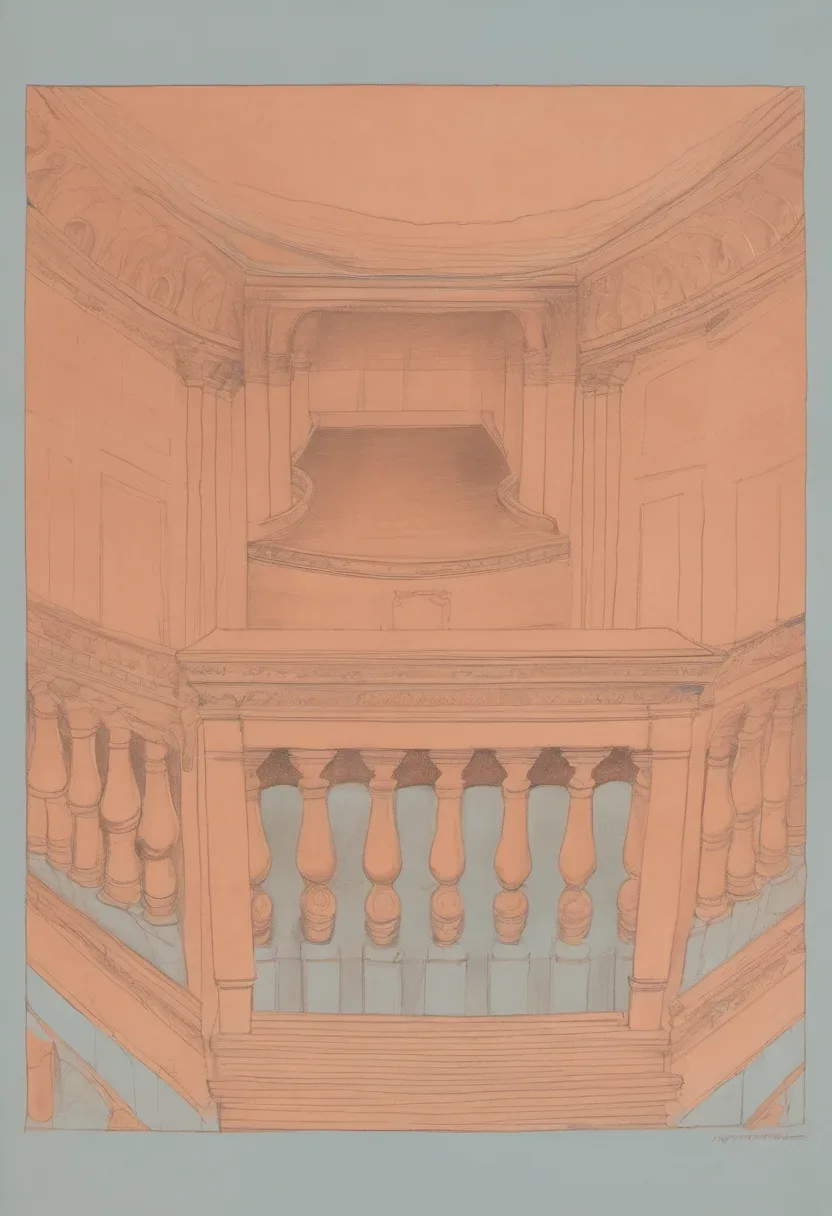
This is the Anatomical Theatre of the Archiginnasio, built in 1637 inside the old seat of the University of Bologna, the oldest continuously run university in the world. Bologna had pioneered public human dissection three centuries earlier, when the anatomist Mondino de' Liuzzi cut open a corpse in front of students and rewrote what doctors thought they knew. This room, paneled floor to ceiling in spruce, gave that tradition its stage: six curved tiers of benches wrapping a marble table, built for a few hundred students to watch a single scalpel.
Sessions happened in the dead of winter, timed to Carnival, when the cold slowed decomposition and the city was already full of crowds. The story goes that some spectators turned up in festival masks. Bodies came from the gallows, and tall, thin convicts were reportedly preferred, simply because they were easier to see from the back row.
Then, on the night of 29 January 1944, an air raid tore the roof off and shattered the wood. The carved statues survived, buried in the rubble; almost nothing else did. Every panel around you was rebuilt afterward, piece by piece, around those salvaged figures. What looks four centuries old is, in part, barely seventy. Bologna's dead, it turns out, have helped the living more than once.
Look up before anything else. The ceiling above you is coffered wood, and at its center sits Apollo, god of medicine, ringed by symbols for the fourteen constellations that seventeenth-century Bolognese doctors still associated with the body's humors. Now look down, past six curved tiers of spruce benches, to a plain marble table at the center of the room. Everything here was built to funnel a few hundred pairs of eyes onto whatever lay on that table.
This is the Anatomical Theatre of the Palazzo dell'Archiginnasio, and the building around it matters as much as the room itself. The Archiginnasio went up in 1562 and 1563, commissioned to gather the scattered schools of the University of Bologna — the oldest continuously operating university in the Western world, founded in 1088 — under a single roof. It served as the university's seat until 1803. The theatre came later, in 1637, tucked into the upper floor and designed by Antonio Paolucci, a Bolognese architect nicknamed 'il Levanti,' who trained under the painters of the Carracci family rather than in a mason's yard. It may explain why the room reads more like theatre design than lecture hall.
Bologna had good reason to want a room like this. Three centuries earlier, the anatomist Mondino de' Liuzzi had performed some of medieval Europe's first public human dissections here in the city, and his 1316 textbook, the Anathomia, stayed in use for two hundred years. One of the theatre's twelve carved physicians honors him; another shows Gaspare Tagliacozzi holding a nose, a nod to his pioneering work reconstructing noses lost to syphilis and to duelling. Those twelve statues, and twenty more anatomists ringing the upper gallery, were not part of Paolucci's original room. They were added between 1733 and 1736, carved by the sculptor Silvestro Giannotti, nearly a century after the theatre first opened.
Giannotti also carved the room's strangest residents: two life-sized men with no skin, flexed and straining to hold up the canopy over the lecturer's high seat. They're known simply as the Spellati, the skinned ones — modeled first in wax by the anatomist and artist Ercole Lelli, then translated into wood by Giannotti in 1734. Lelli was barely thirty at the time, already Bologna's finest anatomical modeller, and his flayed men were built to teach as much as to decorate: every visible muscle is anatomically correct.
Why here, and why then? Sessions were scheduled for the coldest weeks of the year, usually around Carnival, when low temperatures slowed decomposition. But the timing may not have been only practical. The historian Giovanni Ferrari has argued that Bolognese officials chose Carnival deliberately, to draw the largest possible crowd from a city already gathered for the festivities — and, the story goes, some spectators turned up in their carnival masks. The bodies were almost always executed criminals, and tall, thin men were reportedly preferred, simply because their outlines were easiest to make out from the back tiers.
This was never the first anatomical theatre in Europe. That distinction belongs to Padua, whose 1594 theatre still stands as the oldest surviving example anywhere. Bologna's own theatre, in fact, had already fallen out of active teaching use by the later nineteenth century, as anatomy instruction shifted to newer institutes across the city.
What you're standing in, in any case, is not quite the room Paolucci built. On the night of 29 January 1944, an Allied air raid tore through the Archiginnasio and gutted the theatre — roof, wood paneling, ceiling, nearly all of it. By extraordinary luck, the carved statues and heraldic crests survived, buried under the debris. Reconstruction began the following year, led by the superintendent Alfredo Barbacci with professor Vincenzo Gabelli, and continued through the 1950s: the wooden shell was rebuilt to the original design, and every salvaged statue was reinstalled in its exact original position.
So the theatre in front of you is both entirely original and almost entirely new — a seventeenth-century idea, rebuilt piece by rescued piece out of twentieth-century rubble. An old motto for rooms like this held that the dead help the living. Here, in a stranger way, the dead helped the room outlive its own destruction.