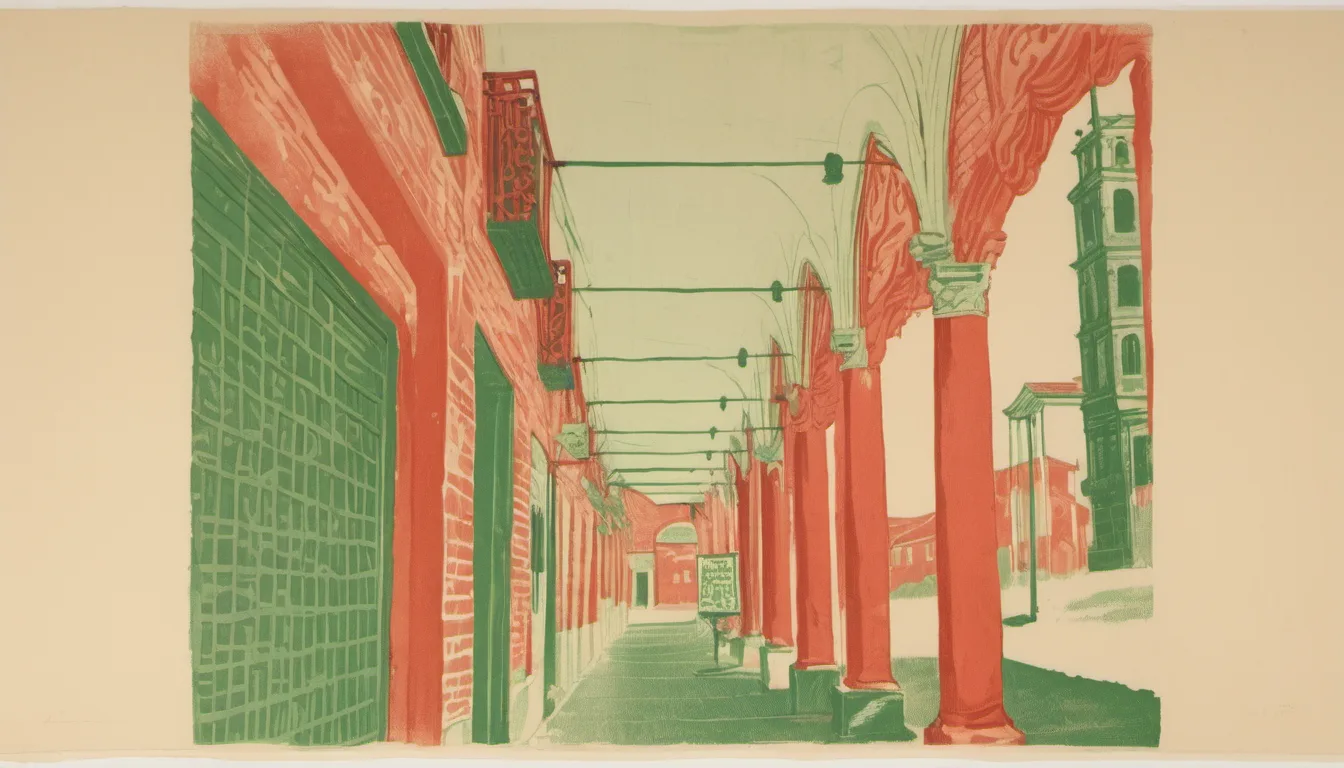
Faenza, Italy
Faenza does not shout. It sits quietly in the foothills of the Apennines, where the Po Valley surrenders to the first gentle slopes of the hills. This is not a city of dramatic cliffs or coastal breezes, but of earth and fire. For centuries, the soil here has been defined by its capacity to hold shape, to be molded, and to endure. The city’s name, derived from the Latin Faventia, whispers of this ancient bond with the land, a place where agriculture and artistry have long shared the same hands.
To walk Faenza is to walk through a living archive of ceramic history. Here, the word 'faience' was born—not as a marketing term, but as a testament to local craftsmanship that became so renowned it renamed itself in the global lexicon. Maiolica is not merely a product here; it is the city’s identity. From the Roman centuriation that still underpins the grid to the intricate glazes of the Renaissance, every street corner seems to hold a fragment of this enduring legacy.
The urban fabric reveals a city that has reinvented itself repeatedly. After the devastation of World War II, Faenza did not retreat. Instead, it leaned into its Neoclassical heritage, transforming its center with the work of architects like Giuseppe Pistocchi and Giovanni Antonio Antolini. The result is a cityscape that balances the solemnity of 18th-century order with the vibrant, tactile warmth of its ceramic traditions. It is a place where history is not locked behind glass, but integrated into daily life.
Today, Faenza stands as a UNESCO Creative City for Crafts and Folk Art, a designation that recognizes its ongoing contribution to the world of design and material culture. The National Museum of Palazzo Milzetti stands as a testament to this era, housing the finest examples of Neoclassicism in Italy. Walking here rewards you with a sense of continuity—a city that honors its past without being trapped by it, constantly evolving while remaining deeply rooted in the earth that shaped it.
Faenza lies in the southwestern pocket of the Province of Ravenna, a municipality of nearly 60,000 souls nestled along the Lamone River and the historic Via Emilia. It is a city of thresholds, positioned between the vast, flat expanse of the Po Valley and the rising, wooded slopes of the Faenza Apennines. At just 35 meters above sea level in its center, the city feels grounded, earthy, and unpretentious. This geographical positioning has always been its fortune. The boundary between plain and hill has provided not only a defensive buffer but also the raw materials—clays and waters—that would eventually define the city’s global reputation.
The story of Faenza begins in the mists of antiquity, though its precise origins are lost to time. Mythological tales speak of its founding, but archaeological evidence points to a Neolithic presence that evolved into a Roman colony, Faventia, in the second century BC. The Romans recognized the strategic and economic value of this spot, establishing a settlement that thrived on agriculture and early ceramic production. The geometric layout of the modern city still bears the faint, enduring imprint of Roman centuriation, the grid system that organized the land for centuries.
As the Roman Empire fractured, Faenza found itself at the center of shifting powers. In 542 AD, the city witnessed the Battle of Faenza, a pivotal clash in the Gothic War where Totila’s Ostrogoths defeated the Byzantines. This victory secured Ostrogothic control for a time, but the region’s fate was soon sealed by Charlemagne, who ceded the territory to the Papal States in 774. The Middle Ages brought the communal system, a model of self-governance spreading across northern Italy. From 1045, consuls began to rule, and by the 12th century, Faenza was a bustling commune, torn between the Guelf and Ghibelline factions that divided Italy.
Amidst these political storms, the Manfredi family emerged as the dominant force. From 1313, they governed Faenza, initiating a period of profound cultural flourishing known as the Renovatio umanistica. Under their patronage, the city’s ceramic production reached new heights of sophistication. The maiolica produced here was so exceptional that it became known across Europe as 'faïence,' a name that persists to this day. The Manfredi also fostered artistic and architectural developments, leaving a legacy that would culminate in the Renaissance and Baroque eras, shaping the city’s aesthetic identity.
The 16th century brought a violent end to the Manfredi rule. Cesare Borgia laid siege to the city in 1500, capturing Astorre III Manfredi and bringing the dynasty to a close. Faenza then passed under Venetian control before being returned to the Papal States. As part of the Romagna pontificia, the city became a center of inquisitorial tribunals, but it also saw significant hydraulic engineering, including the construction of the Errano aqueduct between 1583 and 1614. This infrastructure supported the city’s growth and enabled the construction of monumental public works.
The 18th and 19th centuries marked Faenza’s transformation into a leading center of Neoclassicism. Architects such as Giuseppe Pistocchi, Giovanni Antonio Antolini, and Pietro Tomba led a series of building transformations that redefined the city’s appearance. The National Museum of Palazzo Milzetti stands as the finest example of this movement, showcasing the elegance and order that characterized the era. This period of intense artistic and cultural activity positioned Faenza as a key player in the European Neoclassical movement, a status it maintains today.
The city’s religious architecture reflects this layered history. The oldest surviving structure is the bell tower of Santa Maria ad Nives, or Santa Maria Vecchia, dating from the 9th to 10th centuries. The Cathedral of San Pietro Apostolo, designed by Giuliano da Maiano, began construction in 1474 and was completed before 1515, though its facade remains unfinished. These buildings stand alongside the Clock Tower, or Torre dell’Orologio, a quadrangular landmark with five superimposed orders and a dome. Originally designed by Friar Domenico Paganelli in 1604, the tower was destroyed by retreating German forces in 1944 and faithfully reconstructed in 1953, retaining its original 17th-century statue of the Madonna and Child.
Faenza’s civic pride is embodied in its symbols and monuments. The coat of arms, featuring a rampant lion, appears on seals dating back to the 14th century. The Main Fountain, located between the Cathedral and the Clock Tower, was commissioned by Paganelli and completed by Domenico Castelli in 1621. Adorned with bronze sculptures by Tarquinio Jacometti, it features eagles and dragons representing Pope Paul V and three rampant lions symbolizing the city’s arms. These details speak to a city that values heraldry, history, and artistic precision.
The 20th century brought both tragedy and resilience. Faenza suffered heavy bombing during World War II, but its people played a significant role in the partisan struggle for liberation. The city was awarded the War Cross of Military Valor for its sacrifices. In the post-war period, Faenza reinvented itself as a cultural and industrial hub. The 1908 Esposizione Torricelliana led to the founding of the Museo internazionale delle ceramiche, and in 1968, Faenza became the third Italian city to receive the Europe Prize for its commitment to the European ideal.
Today, Faenza is recognized as an area of established ceramic tradition by the National Ceramic Council. In October 2025, it received the designation of UNESCO Creative City for Crafts and Folk Art, a testament to its ongoing contribution to global design. The city’s economy integrates agricultural, manufacturing, and service activities, with a strong focus on advanced materials and environmental sustainability. Walking through Faenza is to walk through a city that has mastered the art of balance—between past and present, tradition and innovation, earth and art.
For the visitor, Faenza offers a unique experience. It is a city that invites you to slow down, to touch the textures of its history, and to appreciate the quiet dignity of its Neoclassical streets. The blend of Roman geometry, medieval fortifications, and 18th-century elegance creates a landscape that is both intellectually stimulating and aesthetically pleasing. It is a place where the spirit of the Apennines meets the openness of the plain, creating a singular urban environment that is distinctly Faenzese.
Do not miss around Faenza
3 placesEvery place below is a ten-to-fifteen minute walk from the last.